What to Expect in Faith Based Alcohol Rehab
Choosing to address alcohol dependence is a courageous step toward lasting personal wellness and spiritual renewal. In a faith-integrated setting, we understand that substance use challenges affect every dimension of life, including biological factors, emotional coping patterns, family relationships, and spiritual connections. Rather than viewing recovery solely through a clinical or purely spiritual lens, holistic outpatient care bridges the gap between clinical psychology and Christ-centered hope.
For many clients, faith based alcohol rehab begins with a simple but meaningful question: “Can I be honest about what I am facing and still be met with compassion?” At Grace Recovery Services, the answer is yes. Our outpatient experience is designed to help clients feel emotionally safe while they explore patterns of substance use, stress, grief, anxiety, relationship strain, and questions of purpose. Sessions may include individual counseling, group support, practical relapse-prevention planning, spiritual encouragement, and opportunities to practice healthier responses in everyday life.
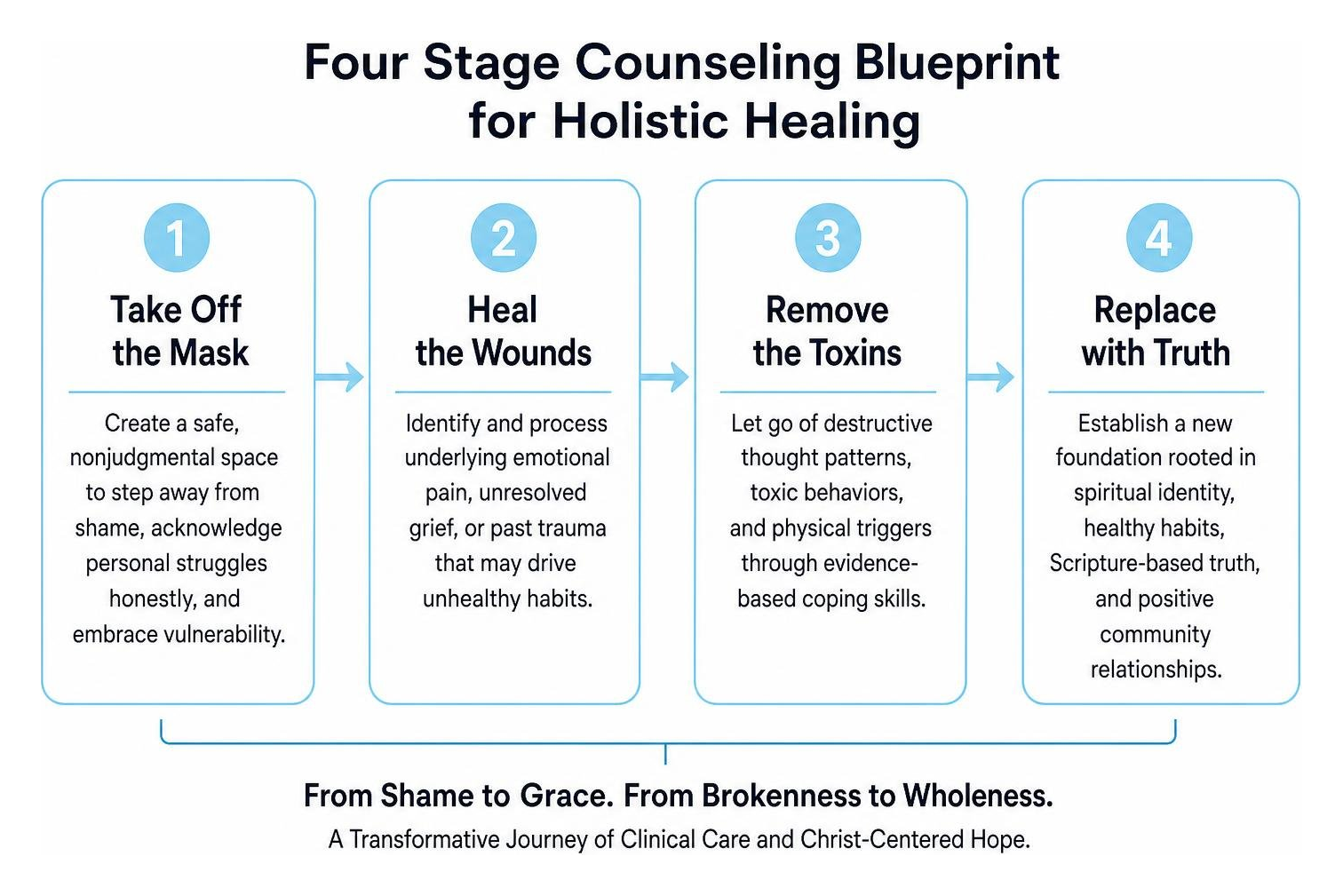
At Grace Recovery Services, we walk alongside clients using a clear, compassionate framework known as our Counseling Blueprint. This transformative journey moves through four intentional stages:
- Take Off the Mask: Creating a safe, nonjudgmental space to step away from shame, acknowledge personal struggles honestly, and embrace vulnerability.
- Heal the Wounds: Identifying and processing underlying emotional pain, unresolved grief, or past trauma that may drive unhealthy habits.
- Remove the Toxins: Letting go of destructive thought patterns, toxic behaviors, and physical triggers through evidence-based coping skills.
- Replace with Truth: Establishing a new foundation rooted in spiritual identity, healthy habits, Scripture-based truth, and positive community relationships.
This blueprint is not a rigid formula. It is a guided pathway that allows each client to move at a clinically appropriate pace with support from counselors who understand both substance use disorder and the healing role of faith. Clients in the Pittsburgh, Penn Hills, North Huntingdon, Irwin, and greater Western Pennsylvania areas can receive care that respects their real schedules, personal histories, and spiritual questions.
Clients experience a setting where grace replaces shame. Participating in faith-based recovery offers access to both clinical expertise and uplifting fellowship, helping clients navigate life’s daily responsibilities while building sustainable sobriety through faith-anchored community and intentional psychological support.
| Feature | Secular Outpatient Recovery | Faith-Integrated Outpatient Recovery |
|---|---|---|
| Core Focus | Psychological coping skills & behavioral modification | Clinical interventions combined with spiritual renewal |
| Identity Foundation | Self-efficacy and behavioral change | Identity rooted in grace, purpose, and spiritual truth |
| Community Support | Secular peer groups and mutual aid | Faith-centered fellowship, pastoral guidance, and church ministries |
| Coping Strategies | Mindfulness, cognitive reframing, stress management | Prayer, Scripture meditation, cognitive reframing, and worship |
| Guilt & Shame Handling | Cognitive processing and psychological acceptance | Spiritual forgiveness, grace-centered healing, and emotional repair |
Core Levels of Faith-Integrated Outpatient Care
Addiction recovery is not a one-size-fits-all process. Outpatient care allows clients to receive comprehensive clinical oversight and spiritual encouragement without putting their everyday life on hold. Clients remain in their home environments, applying newly learned coping skills immediately within their families, workplaces, and local communities.
Grace Recovery Services provides flexible outpatient options designed to match each individual’s unique recovery goals in Western Pennsylvania, with locations serving both the Pittsburgh (Penn Hills area) and North Huntingdon communities.
Medical Detox Support and Faith Based Alcohol Rehab
For someone experiencing moderate to severe alcohol dependence, the first and most vital clinical step is ensuring physical safety. Alcohol withdrawal symptoms can range from mild anxiety and shakiness to potentially life-threatening complications such as seizures or delirium tremens.
While our outpatient centers focus on therapeutic and spiritual care, we prioritize client safety above all else. When a person requires medical stabilization, we collaborate closely with trusted medical partners to facilitate clinical referral for supervised medical detox. During this physical transition, faith elements—such as prayer support, chaplain guidance, and emotional encouragement—provide spiritual grounding so clients feel supported before transitioning smoothly into our outpatient counseling programs.
Intensive Outpatient Programming for Flexible Healing
An intensive outpatient program (IOP) serves as an effective bridge for individuals seeking structured, intensive clinical care while maintaining their daily family or employment obligations. IOP typically involves several group and individual sessions per week, offering structured accountability while allowing clients to maintain their everyday routines at home.
Our outpatient program tracks allow clients to engage in deep therapeutic work, establish healthy boundary systems, and develop strong peer fellowship. Through regular group interactions, clients realize they are not alone, drawing strength from others walking a similar path of faith, mutual encouragement, and healing.
Spiritual Aftercare and Relapse Prevention
Long-term recovery is sustained through consistent, daily practices and a nurturing support network. Completing a structured outpatient track is a major milestone, but sustained freedom requires an ongoing connection to healthy community resources and spiritual disciplines.
Through structured faith-based aftercare, individuals stay anchored to their recovery goals. Aftercare incorporates ongoing discipleship, localized sober support networks, participation in faith-based recovery ministries, and tailored relapse prevention plans that equip individuals to handle stress, cravings, and life transitions with confidence, resilience, and peace.
Combining Evidence-Based Therapy with Spiritual Growth

A truly holistic approach honors both scientific understanding and spiritual truth. Western medicine increasingly acknowledges the profound, positive impact of spiritual practices on mental and emotional resilience. In our therapeutic sessions, evidence-based psychological tools work hand-in-hand with spiritual disciplines to bring about comprehensive healing.
We also assist clients navigating co-occurring mental health conditions, such as anxiety or depression alongside substance use challenges. When seeking regional guidance and community support, county-level coordination like Drug and Alcohol Resources & Treatment Facilities helps individuals connect with vital civic resources and support networks throughout Western Pennsylvania.
Clinical Modalities in Faith Based Alcohol Rehab
Our licensed clinicians utilize proven clinical methods to help clients understand behavioral triggers, reframe distorted thinking, and process emotional distress:
- Cognitive Behavioral Therapy (CBT): Identifies negative thought patterns and replaces them with constructive behaviors and biblical truth.
- Dialectical Behavior Therapy (DBT): Teaches emotional regulation, distress tolerance, mindfulness, and healthy interpersonal communication skills.
- Eye Movement Desensitization and Reprocessing (EMDR): Helps process underlying traumatic memories that contribute to substance use challenges.
- Trauma-Informed Care: Ensures physical, psychological, and emotional safety for every client, recognizing how past trauma shapes current struggles.
These methods form the foundation of our evidence-based addiction treatment, ensuring clinical rigor in a warm, welcoming environment where clinical excellence meets authentic pastoral compassion.
Biblical Counseling, Prayer, and Scripture Integration
Clinical psychology provides practical tools for behavior change, while faith addresses the deep human need for purpose, forgiveness, and unconditional love. Through Christian addiction counseling, clients can integrate prayer, Scripture study, and pastoral guidance directly into their healing journey.
This spiritual dimension extends to the entire family unit. Substance use disorder affects parents, spouses, and children alike. Incorporating family support in addiction recovery allows loved ones to heal together, dismantle codependency, rebuild healthy communication patterns, and restore mutual trust within the home.
Navigating Costs, Insurance Coverage, and Program Access
Understanding the financial aspects of recovery should never be an obstacle to receiving care. Under the Mental Health Parity and Addiction Equity Act and the Affordable Care Act (ACA), most major commercial insurance plans, Medicaid, and Medicare provide coverage for substance use disorder treatment as essential health benefits.
Because individual coverage varies by plan, network, and level of care, we encourage individuals to contact our team for a personalized benefit verification. We assist in navigating insurance pre-authorizations, explaining out-of-network benefits, exploring sliding-scale arrangements, and identifying flexible payment solutions so clients can access the quality outpatient care they need with clarity, dignity, and peace of mind.
Frequently Asked Questions About Faith-Based Recovery
Can non-Christians attend faith-based alcohol rehab programs?
Yes. Faith-based outpatient programs welcome individuals from all backgrounds, regardless of where they are on their spiritual journey. While treatment is rooted in Christian values and principles, participation in specific spiritual exercises is open, compassionate, and non-coercive. Our primary goal is to provide a safe, respectful environment focused on clinical healing, dignity, and recovery.
Does health insurance cover faith-based outpatient treatment?
Yes. Health insurance policies evaluate treatment based on clinical licensing, evidence-based practices, and medical necessity rather than spiritual affiliation. Because programs like Grace Recovery Services deliver accredited, evidence-based therapies, most private insurance plans and public programs offer coverage for outpatient and intensive outpatient services.
How do outpatient faith programs accommodate work and family responsibilities?
Outpatient programs are intentionally structured for flexibility. With morning, daytime, and evening group sessions available, clients can attend therapy, meet with counselors, and participate in peer fellowship while continuing to work, care for family members, and sleep in the comfort of their own homes each night.
Conclusion
Recovery from alcohol dependence is a journey of reclaiming hope, restoring personal relationships, and discovering renewed purpose. By integrating clinical excellence with the timeless power of faith, outpatient recovery provides a sustainable path toward whole-person healing.
If you or a loved one is ready to take the next step toward lasting freedom in Western Pennsylvania, we invite you to connect with our caring team. Explore how our North Huntingdon Christian IOP and Pittsburgh-area outpatient services can support your healing today. Reach out to Grace Recovery Services for a confidential, personalized assessment and begin your recovery journey surrounded by grace.
This article was researched with AI and heavily edited by Stephen Luther for accuracy and relevance.
Stephen Luther is the Executive Director and Founder of Grace Christian Counseling, Grace Recovery Services, WPA Counseling, NuWell Online Counseling and Coaching, and NuWell Health. He holds a Master’s degree in Education from the University of Georgia and a Master’s degree in Marriage and Family Therapy from Duquesne University. He is a licensed professional counselor in Pennsylvania.
Since 1997, Steve has been helping children, adolescents, and adults overcome a wide range of emotional and relational challenges. He specializes in working with hurting families, including those with foster, adopted, or traumatized children. Steve uses Attachment-Based Therapy, Splankna Healing, and Therapeutic Parent Coaching to support healing and restoration.
This guide is for educational and spiritual encouragement and is not a substitute for personalized professional counseling. If you are in crisis, please reach out for immediate help.