
Faith-Based Outpatient Recovery in Westmoreland County
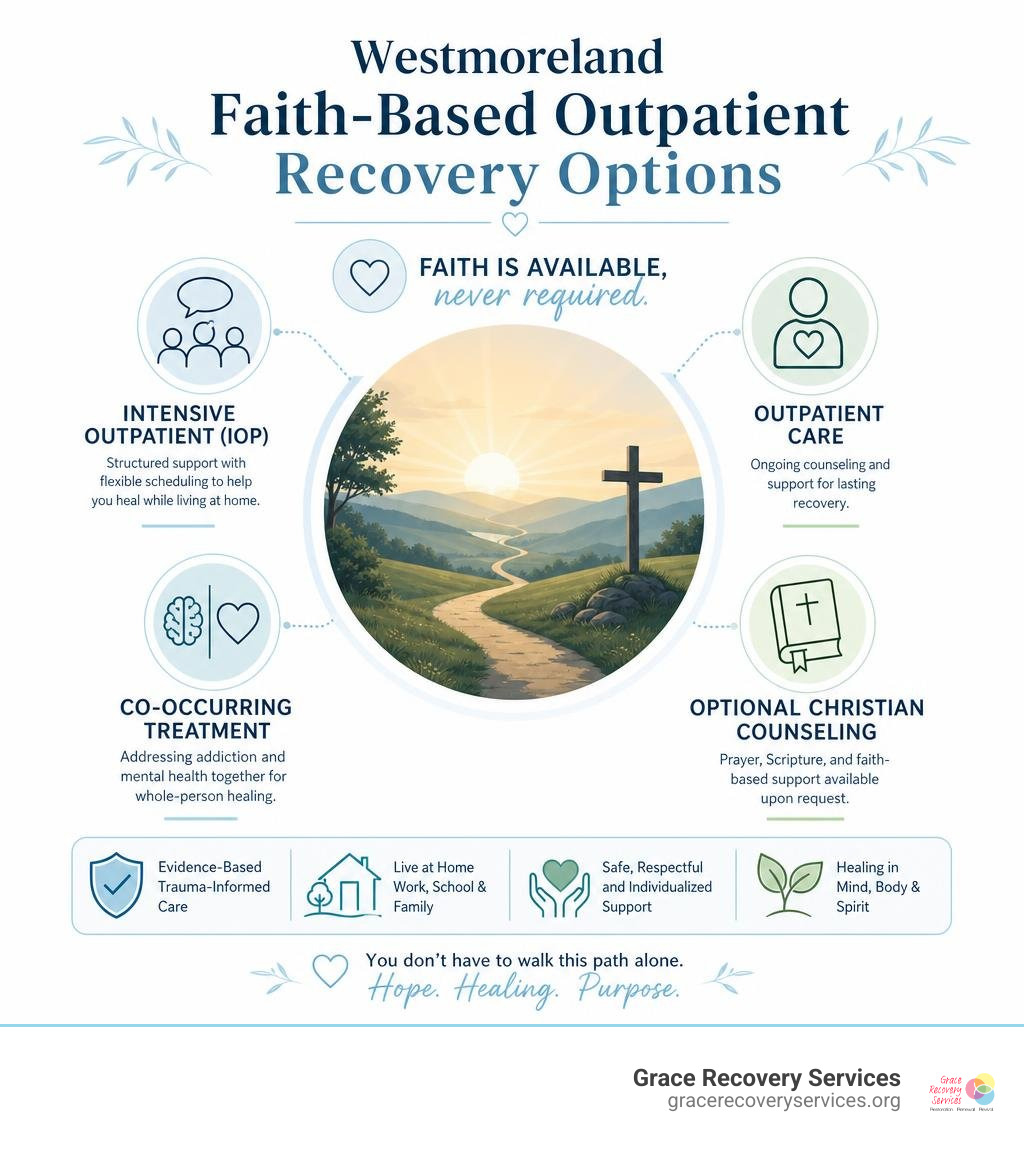
For people seeking a Westmoreland faith based rehab option, Grace Recovery Services offers outpatient addiction care near Irwin and North Huntingdon that combines evidence-based counseling with Christian support. Clients can explore Intensive Outpatient (IOP), regular outpatient care, co-occurring treatment for addiction and mental health concerns, and optional Christian counseling.
Faith is available, never required. The goal is to provide a safe, respectful place where someone experiencing substance use disorder can work toward healing in mind, body, and spirit.
Outpatient care can be a practical fit for clients who need structured support while continuing to live at home, care for family, work, or attend school. At Grace Recovery Services, treatment is trauma-informed and individualized. Clinical care remains central, while clients who want spiritual support can include prayer, Scripture, and Christian counseling in their recovery plan.
Related Grace Recovery resources include guidance on evidence-based trauma treatment and Western PA Christian counseling.
Understanding Westmoreland Faith Based Rehab: Integrating Faith and Clinical Care

Navigating addiction recovery involves addressing the whole person: emotional patterns, psychological triggers, biological dependencies, and spiritual health. A faith-integrated model recognizes that while evidence-based clinical practices heal the mind and stabilize behavioral patterns, spiritual renewal provides lasting purpose, hope, and internal strength. The National Institute on Drug Abuse also notes that effective addiction treatment and recovery often involves addressing a person’s broader medical, psychological, social, and recovery needs.
At Grace Recovery Services, we blend licensed psychological modalities with biblical principles to create an environment of whole-person restoration. We believe that true healing takes place when clinical expertise and faith work hand in hand. Clients can also explore faith-integrated recovery, which combines structured clinical support with the spiritual beliefs that anchor their daily lives.
To help guide our clients through deep, lasting change, we utilize Grace’s Counseling Blueprint, which consists of four progressive stages:
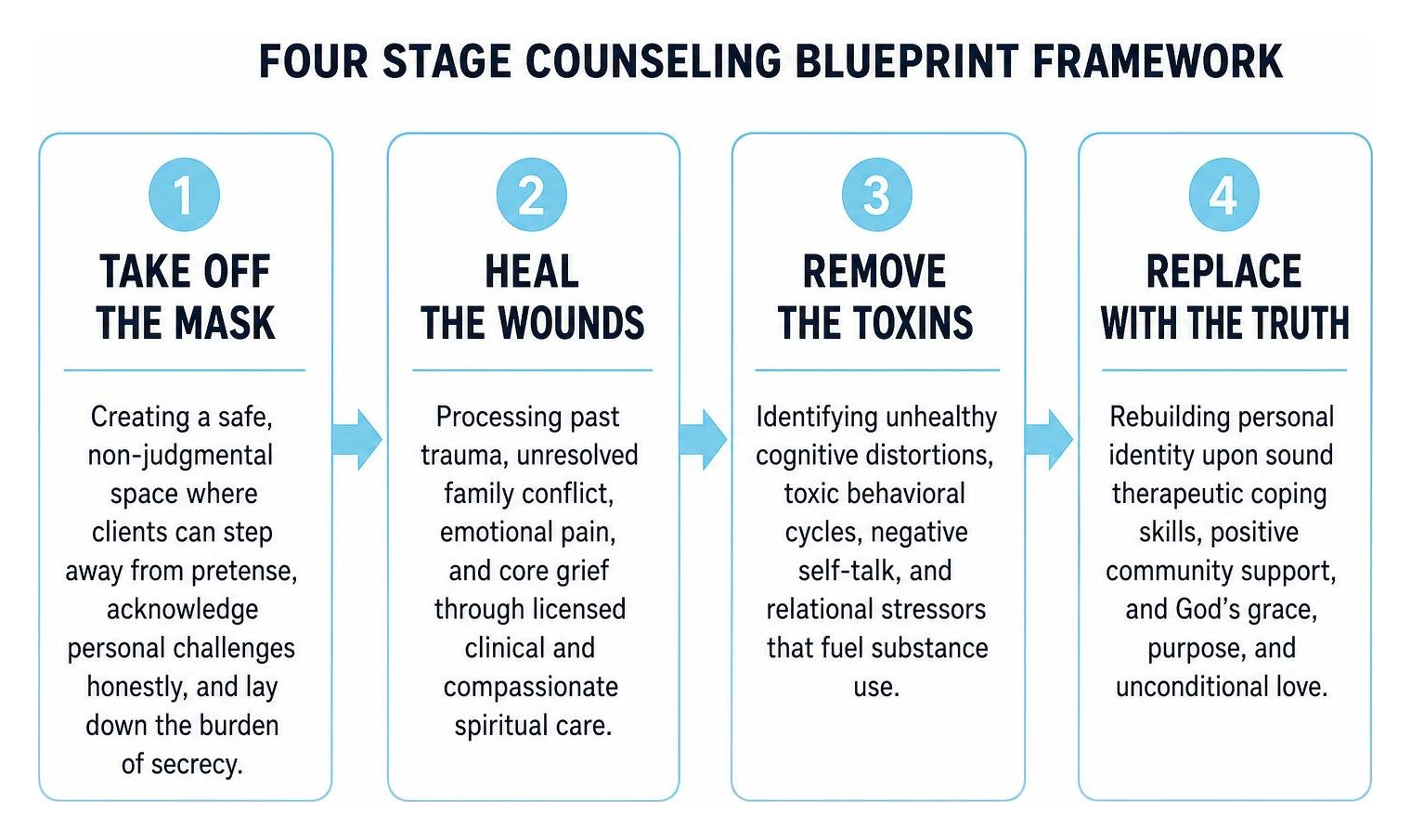
- Take Off the Mask: Creating a safe, non-judgmental space where clients can step away from pretense, acknowledge personal challenges honestly, and lay down the burden of secrecy.
- Heal the Wounds: Processing past trauma, unresolved family conflict, emotional pain, and core grief through licensed clinical and compassionate spiritual care.
- Remove the Toxins: Identifying unhealthy cognitive distortions, toxic behavioral cycles, negative self-talk, and relational stressors that fuel substance use.
- Replace with the Truth: Rebuilding personal identity upon sound therapeutic coping skills, positive community support, and God’s grace, purpose, and unconditional love.
How Faith Integration Supports Outpatient Care
Outpatient addiction programs commonly include Cognitive Behavioral Therapy (CBT), Dialectical Behavior Therapy (DBT), and relapse prevention planning. These clinical interventions are vital and form the backbone of modern addiction care.
A faith-integrated outpatient program incorporates proven clinical tools while also making room for spiritual support when clients request it. Through Christian addiction recovery, clients may experience:
- Spiritual Grounding: Connecting recovery principles to God’s grace, prayer, and Scripture to provide sustained inner resilience during moments of distress.
- Supportive Community: Engaging in group sessions with peers who share similar values, fostering encouragement without judgment or shame.
- Identity Rebuilding: Moving beyond clinical labels to understand one’s true value, purpose, and spiritual identity.
- Freedom of Choice: Spiritual discussions are open and encouraging, yet never forced, ensuring that clinical care remains accessible to everyone regardless of where they stand spiritually.
The Role of Spirituality and Christian Counseling in Healing
Addiction rarely occurs in isolation; it frequently intertwines with emotional distress, deep-seated grief, or past traumatic experiences. When people attempt to numb these painful emotions through substances, the underlying spiritual and emotional wounds remain unaddressed.
Christian counseling bridges this gap by combining licensed therapeutic interventions with compassionate pastoral principles. Our licensed therapists help clients process emotional pain, untangle relational conflicts, and establish healthy emotional boundaries. For clients who desire biblical integration, faith-based addiction counseling provides an opportunity to invite prayer, biblical reflection, and grace into clinical processing.
Spiritual practices such as prayer and meditation may support calm, reduce baseline anxiety, and enhance overall emotional regulation. By addressing both the clinical and spiritual dimensions of healing, clients develop enduring resilience against life stressors.
Outpatient Treatment Modalities and Levels of Care
Outpatient recovery allows individuals experiencing substance use disorders to receive comprehensive, structured treatment while maintaining daily responsibilities at home, work, and within their families.
| Program Type | Weekly Commitment | Focus Areas | Best Suited For |
|---|---|---|---|
| Intensive Outpatient (IOP) | 9 to 15 hours per week (multiple days) | Intensive group therapy, individual counseling, coping strategies, relapse prevention, optional faith tracks | Individuals needing structured clinical support while living at home |
| Standard Outpatient (OP) | 1 to 3 hours per week (flexible scheduling) | Ongoing individual therapy, targeted skill refinement, long-term emotional resilience, faith integration | Clients maintaining stable routines who require continuous weekly support and accountability |
| Virtual Telehealth Outpatient | 1 to 9 hours per week (secure digital platform) | Remote individual and group therapy, digital clinical tools, flexible scheduling | Individuals with transportation barriers, family care obligations, or scheduling limitations |
Levels of Outpatient Care in a Westmoreland Faith Based Rehab
Understanding the appropriate level of outpatient support ensures clients receive clinical care matched to their daily needs:
- Intensive Outpatient Program (IOP): Designed for individuals who need structured, concentrated clinical care. Clients who participate in faith-based IOP programs receive intensive group therapy, individual counseling, and family education. Christian intensive outpatient treatment can help clients build actionable coping mechanisms alongside a supportive community.
- Standard Outpatient Program (OP): As clients progress and establish healthy routines, outpatient therapy provides consistent, weekly clinical contact. Sessions focus on long-term relapse prevention, healthy boundary setting, processing life transitions, and sustained spiritual development.
Addressing Co-Occurring Mental Health Conditions and Trauma
Effective substance use recovery requires treating co-occurring mental health conditions simultaneously. Many individuals experiencing addiction also navigate anxiety disorders, depressive symptoms, post-traumatic stress, or mood dysregulation.
Our trauma-informed clinical team provides comprehensive dual-diagnosis support. Rather than addressing symptoms in isolation, we use holistic Christian addiction support to care for mind, body, and spirit together. Clinical interventions such as cognitive restructuring and emotional regulation skills work harmoniously with faith-based principles of forgiveness, hope, and personal grace to restore psychological stability.
Virtual and Telehealth Addiction Support
Modern recovery must fit into the real-world demands of everyday life. For individuals in Westmoreland County facing transportation challenges, busy work shifts, or childcare responsibilities, virtual care bridges the gap.
Through secure, HIPAA-compliant platforms, clients can participate in faith-based outpatient addiction treatment from home. Telehealth sessions provide the same licensed clinical therapists, evidence-based curricula, and spiritual encouragement as our on-site sessions, ensuring consistent care regardless of geographic proximity.
Navigating Admissions, Insurance, and Community Accessibility
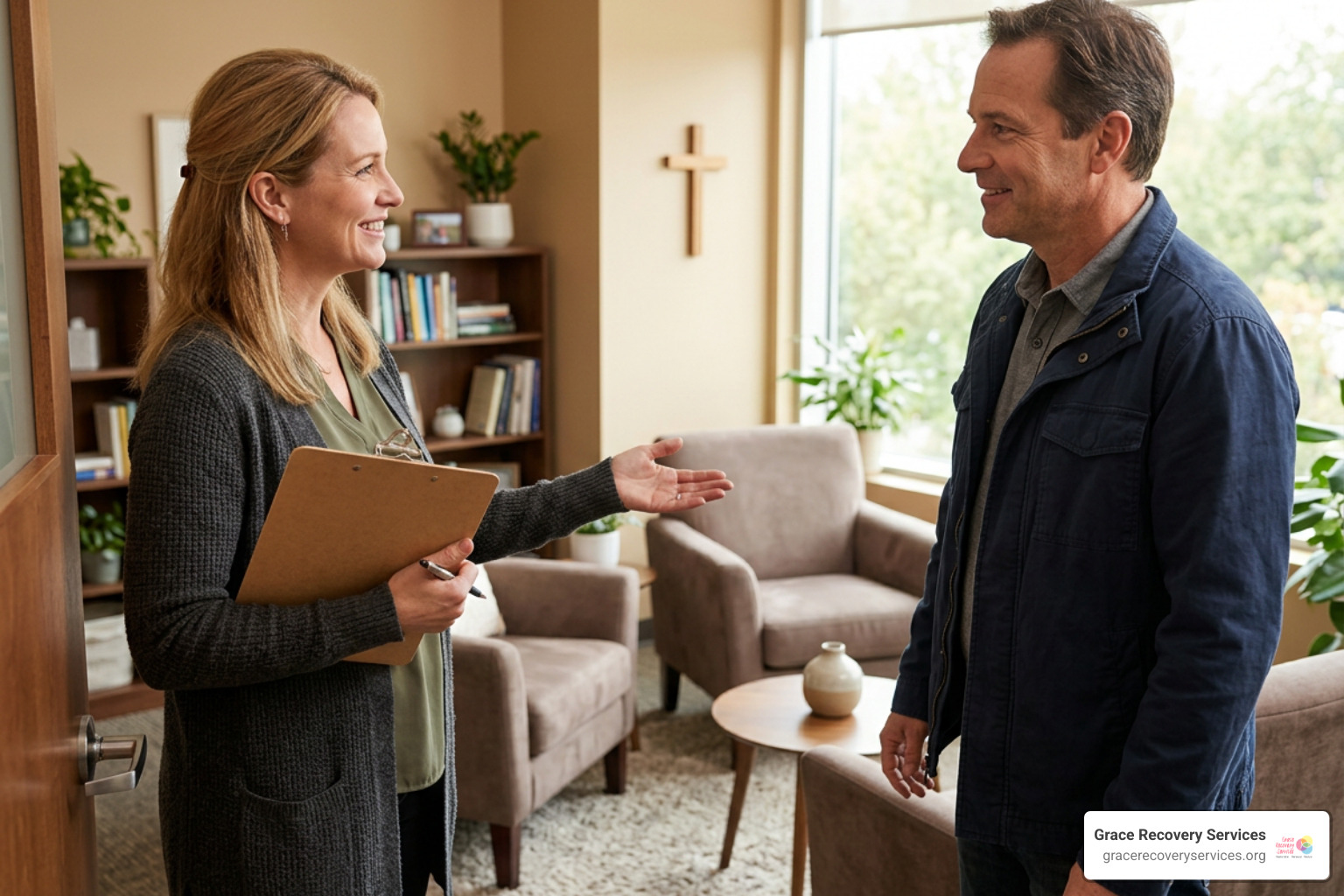
Taking the first step toward recovery can feel overwhelming, but connecting with care should always be straightforward, compassionate, and transparent. Connecting with licensed treatment resources across Western Pennsylvania ensures individuals and their families find the clinical guidance they need.
During the initial intake consultation, our team conducts an individualized clinical assessment to evaluate treatment needs, mental health considerations, and personal goals. From there, a collaborative care plan is created to support long-term recovery.
Insurance Coverage and Self-Pay Options
Navigating healthcare coverage should never be an obstacle to receiving help. Grace Recovery Services partners with major commercial and regional behavioral health insurance providers, including:
- Highmark Blue Cross Blue Shield
- UPMC Health Plan
- UnitedHealthcare (UHC) / Optum
- Community Care Behavioral Health (CCBH)
For individuals without insurance or those utilizing out-of-network benefits, our team can discuss self-pay and sliding-scale options during a personalized assessment. Families exploring local addiction treatment options in North Huntingdon can better understand the local resources and payment flexibility available to them.
How to Choose the Right Westmoreland Faith Based Rehab for Your Journey
When evaluating outpatient addiction treatment centers in Westmoreland County, consider the following key factors:
- Clinical Credentials: Ensure the center employs licensed professional counselors (LPC), licensed clinical social workers (LCSW), and credentialed addiction specialists who utilize evidence-based modalities.
- Faith Alignment and Voluntariness: Look for a center where faith-based counseling is authentic, trauma-informed, and entirely voluntary, ensuring respect for every client’s personal spiritual journey.
- Level of Care Flexibility: Verify that the program offers both Intensive Outpatient (IOP) and standard Outpatient (OP) tracks, as well as telehealth options, allowing you to transition between levels of support as you progress.
- Co-Occurring Capability: Confirm that the staff is fully equipped to treat co-occurring mental health conditions, such as anxiety, depression, and trauma.
Our guide to choosing a Christian recovery center can provide practical insights for making an informed, confident decision.
Frequently Asked Questions About Faith-Based Addiction Treatment
Is religious participation mandatory in faith-based outpatient programs?
No. At Grace Recovery Services, faith integration is entirely optional. While Christian counseling, Scripture reflection, and prayer are readily available for clients who desire them, our core clinical programming is evidence-based and welcomes individuals from all backgrounds. We respect each client’s unique spiritual journey and provide compassionate care without pressure or dogma.
What insurances cover faith-based outpatient rehab in Westmoreland County?
Most major insurance providers cover licensed outpatient addiction treatment. We accept Highmark, UPMC, UnitedHealthcare/Optum, and CCBH, among others. Because our programs are clinically licensed and delivered by credentialed therapists, behavioral health benefits apply directly to outpatient and intensive outpatient care. We also offer sliding-scale fees and flexible self-pay arrangements.
Can I receive treatment for trauma and mental health alongside addiction?
Yes. Co-occurring mental health conditions—such as post-traumatic stress, generalized anxiety, and depression—are common among individuals experiencing substance use disorders. Our clinical team uses trauma-informed care and dual-diagnosis approaches to address mental health conditions and addiction simultaneously, ensuring true whole-person recovery.
Conclusion
Recovery is a journey of reclaiming your life, rebuilding your health, and rediscovering your purpose. Through compassionate outpatient care, evidence-based clinical therapy, and optional faith-based counseling, meaningful progress in substance use recovery is possible.
Whether you are looking for structured intensive outpatient programming or flexible individual therapy in Western Pennsylvania, our dedicated team is here to walk alongside you every step of the way. If you would like to understand whether North Huntingdon Christian IOP fits your needs, contact our compassionate team for a confidential conversation.
This article was researched with AI and heavily edited by Stephen Luther for accuracy and relevance.
Stephen Luther is the Executive Director and Founder of Grace Christian Counseling, Grace Recovery Services, WPA Counseling, NuWell Online Counseling and Coaching, and NuWell Health. He holds a Master’s degree in Education from the University of Georgia and a Master’s degree in Marriage and Family Therapy from Duquesne University. He is a licensed professional counselor in Pennsylvania.
Since 1997, Steve has been helping children, adolescents, and adults overcome a wide range of emotional and relational challenges. He specializes in working with hurting families, including those with foster, adopted, or traumatized children. Steve uses Attachment-Based Therapy, Splankna Healing, and Therapeutic Parent Coaching to support healing and restoration.
This guide is for educational and spiritual encouragement and is not a substitute for personalized professional counseling. If you are in crisis, please reach out for immediate help.