
A Whole-Person Path to Christian Holistic Recovery
A Christian holistic rehab center combines proven addiction counseling with care for the mind, body, and spirit. For someone experiencing substance use disorder, this may include therapy for thoughts and behaviors, support for physical wellness, and faith-based practices such as prayer, Scripture reflection, or pastoral support.
The key is balance: faith can be a meaningful source of hope and community, but it should complement – not replace – qualified behavioral health care. Look for an outpatient program that uses licensed clinicians, trauma-informed support, individualized treatment plans, and clear coordination with medical providers when needed.
At Grace Recovery Services in the Pittsburgh area, Christian principles can help clients explore recovery with compassion, purpose, and practical support. Holistic care may include:
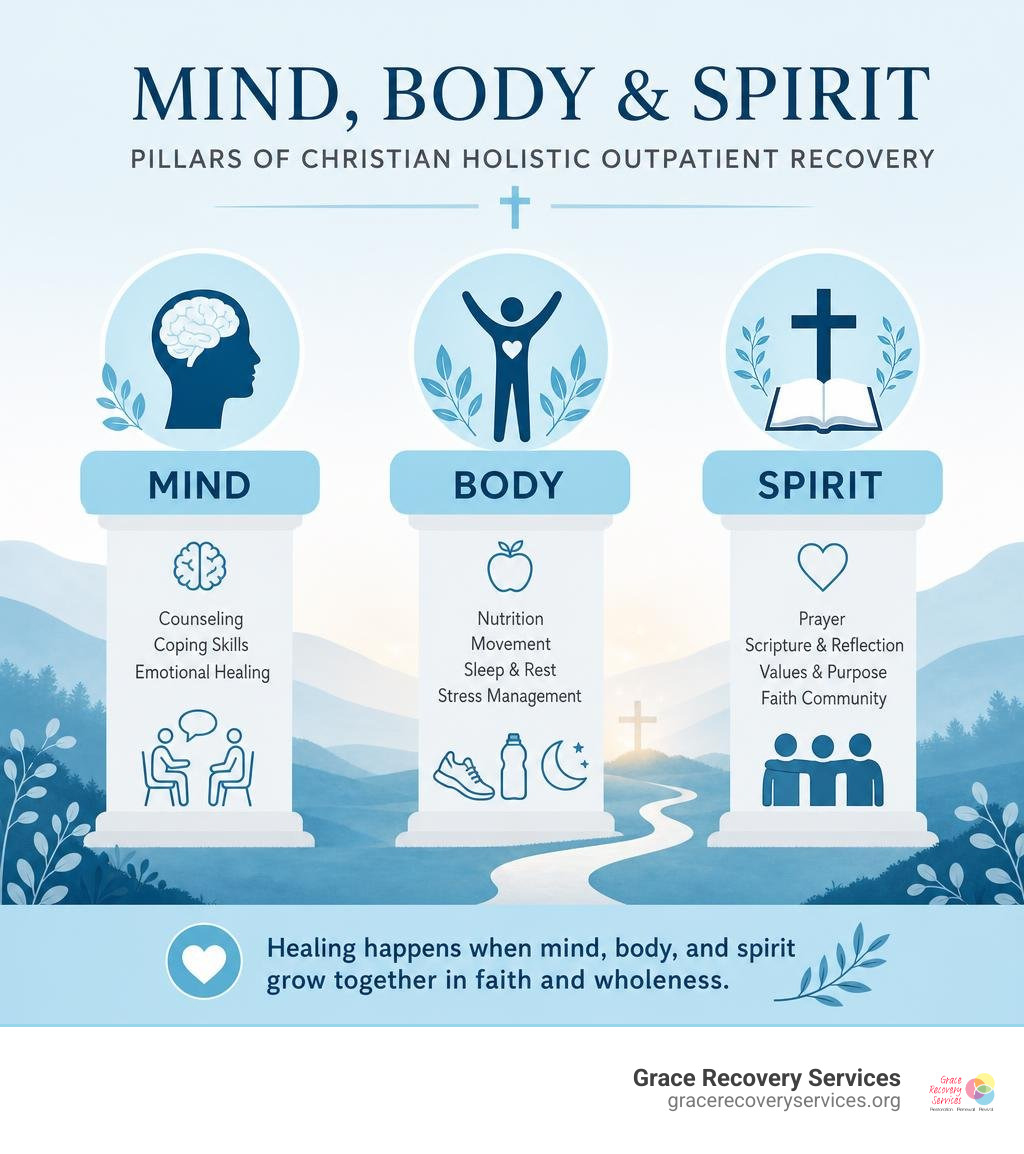
- Mind: counseling, coping skills, and support for anxiety, depression, trauma, or other co-occurring concerns
- Body: nutrition, movement, sleep routines, and healthy ways to manage stress
- Spirit: prayer, biblical encouragement, values-based reflection, and connection with a supportive community
Many addiction treatment programs in the United States include spiritual elements. The most helpful programs pair those elements with evidence-based care, respect each client’s choices, and create a realistic plan for ongoing recovery.
Christian holistic rehab center terms explained:
- Holistic trauma Christian treatment
- Christian alcohol recovery program
- Bible principles substance recovery
What Defines a Christian Holistic Rehab Center?
A faith-based holistic program operates on the understanding that substance use does not occur in a vacuum. Addiction impacts every dimension of human life: our thoughts, our relationships, our biological health, and our spiritual foundation. Rather than focusing solely on symptom reduction, our model views each client as a whole person created with inherent dignity and purpose.
In contemporary behavioral health, faith-centered treatment bridges clinical science and biblical wisdom. True holistic drug rehabilitation integrates licensed therapeutic interventions with spiritual disciplines such as prayer, biblical meditation, and fellowship. When searching for treatment and regional resources, finding a center that balances spiritual vitality with rigorous clinical standards is essential.
Core Differences Between Traditional and Holistic Christian Care
Standard faith-based recovery approaches sometimes focus primarily on spiritual disciplines—such as attending services, group Bible studies, and pastoral prayer. While these practices provide vital encouragement and community, they may not fully address underlying neurobiological imbalances or deep-rooted psychological distress.
A holistic Christian approach expands the recovery model to encompass:
- Biological Restoration: Supporting the nervous system, addressing nutritional deficits caused by substance use, and practicing healthy sleep hygiene.
- Emotional and Mental Wellness: Utilizing cognitive and behavioral therapies to process core beliefs, emotional triggers, and unaddressed pain.
- Spiritual Alignment: Inviting God’s grace into the healing journey, helping clients understand their true identity, and cultivating a renewed sense of purpose.
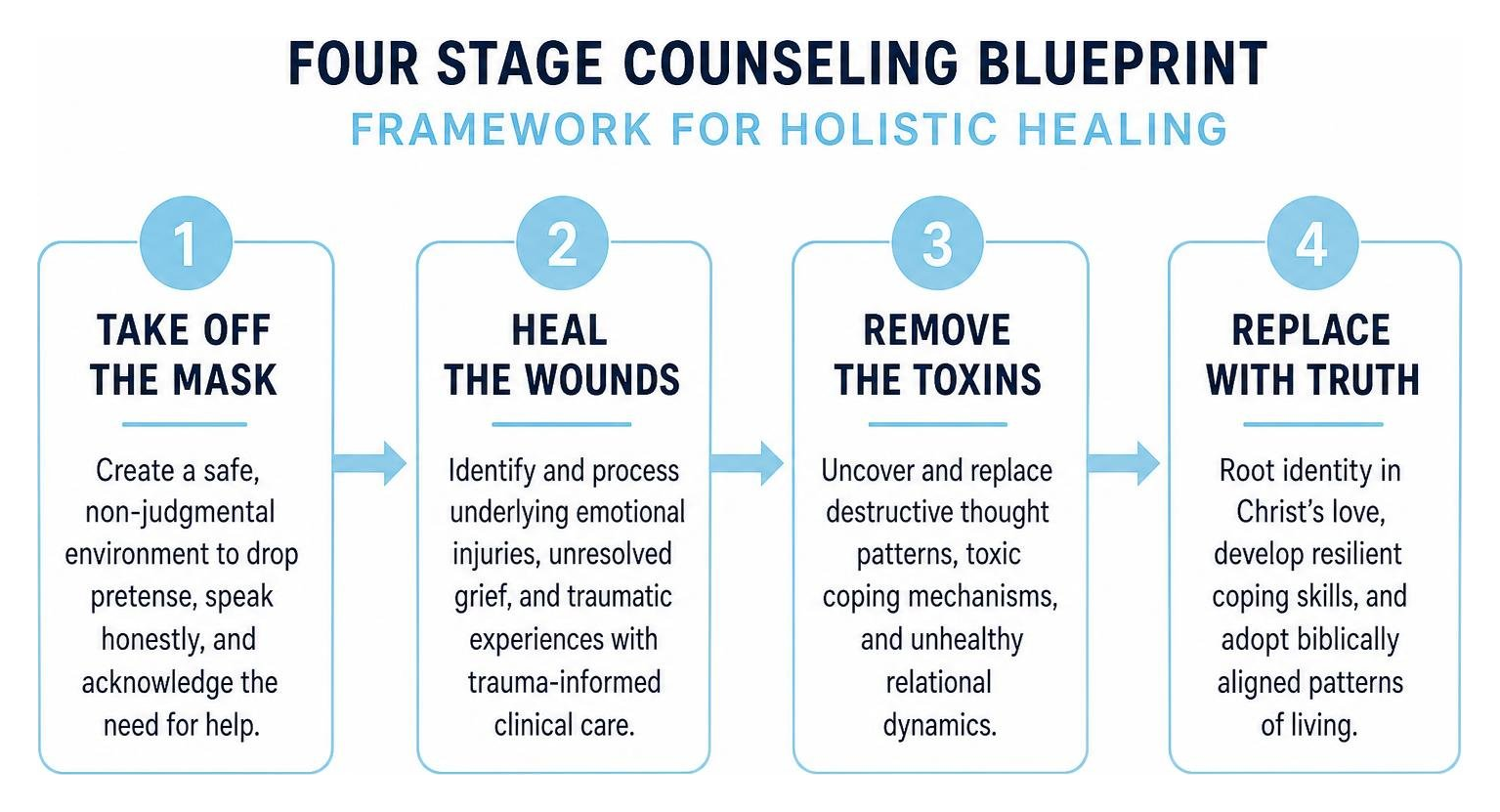
At Grace Recovery Services, our care is guided by our Counseling Blueprint, an intentional four-stage therapeutic journey designed to foster complete, lasting transformation:
- Take Off the Mask: Creating a safe, non-judgmental environment where clients can drop pretense, speak honestly about their struggles, and acknowledge their need for help.
- Heal the Wounds: Identifying and processing underlying emotional injuries, unresolved grief, and traumatic experiences with trauma-informed clinical care.
- Remove the Toxins: Uncovering and replacing destructive thought patterns, toxic coping mechanisms, and unhealthy relational dynamics.
- Replace with Truth: Rooting personal identity in Christ’s love, developing resilient coping skills, and adopting biblically aligned patterns of living.
Evaluating Clinical Standards in a Christian Holistic Rehab Center
High spiritual standards must be paired with exemplary clinical standards. A reputable center ensures that faith principles enhance, rather than substitute for, high-level clinical care. When evaluating an outpatient facility in Western Pennsylvania—whether in Penn Hills, North Huntingdon, or Westmoreland County—look for:
- State Licensing and Accreditations: Verification that the agency meets state behavioral health licensing requirements and adheres to recognized standards (such as CARF or Joint Commission benchmarks).
- Licensed Clinicians: Treatment led by licensed professional counselors (LPCs), licensed clinical social workers (LCSWs), and credentialed addiction specialists.
- Trauma-Informed Training: Clinical staff trained to navigate complex trauma with empathy, emotional safety, and evidence-based methods.
- Pastoral Integration: Spiritual mentors or pastoral counselors working in direct collaboration with licensed behavioral health therapists.
Essential Holistic Therapies Integrated with Faith-Based Treatment

Holistic care uses therapeutic modalities that support the body’s natural capacity to heal while calming an overactive nervous system. When paired with scripture and Christian reflection, these practices offer tangible relief from cravings, anxiety, and stress.
Understanding the whole person approach to faith-based trauma recovery helps clients realize that healing is not just a mental exercise; it is an embodied experience.
| Clinical Dimension | Evidence-Based Modality | Integrated Christian Holistic Practice |
|---|---|---|
| Mind | Cognitive Behavioral Therapy (CBT), EMDR | Scripture-aligned cognitive reframing, Christian mindfulness |
| Body | Somatic regulation, nervous system reset | Breathwork grounded in prayer, nutritional restoration |
| Spirit | Values clarification, community engagement | biblical counseling, pastoral support, Christ-centered fellowship |
Nutritional Counseling and Physical Wellness
Substance use frequently depletes essential vitamins, disrupts gut health, and impairs neurotransmitter production. In early recovery, physical fatigue and mood instability are often exacerbated by poor nutrition and irregular sleep.
Our holistic approach views the body as a temple to be stewarded with grace. Nutritional education helps clients:
- Rebuild dopamine and serotonin levels naturally through nutrient-dense foods.
- Stabilize blood sugar to minimize mood swings, anxiety spikes, and physical cravings.
- Establish balanced daily routines that emphasize restful sleep and gentle movement.
Faith-Integrated Somatic and Expressive Therapies
Trauma and chronic stress are often stored physically in the body, manifesting as muscle tension, hypervigilance, and nervous system dysregulation. Expressive and somatic therapies offer non-verbal pathways for releasing distress.
- Christian Breathwork and Meditation: Utilizing calming diaphragmatic breathing while meditating on calming passages of Scripture (such as Psalm 23 or Philippians 4:6–7) to regulate the autonomic nervous system.
- Expressive Art Therapy: Providing creative outlets to process complex emotions when words feel inadequate.
- Mindful Reflection in Nature: Stepping outside for reflective walks in God’s creation to foster groundedness and peace.
Healing Mind, Body, and Spirit: Dual Diagnosis and Clinical Care
A cornerstone of quality addiction treatment is dual-diagnosis care-the simultaneous treatment of substance use disorders and co-occurring mental health conditions such as major depressive disorder, generalized anxiety, or PTSD.

True healing occurs when we explore faith integrated recovery in Pittsburgh where science meets spirit. Scripture and clinical psychology work hand in hand to address the roots of psychological pain.
Addressing Co-Occurring Mental Health Disorders with Scripture and Science
In the past, some faith communities inadvertently minimized mental health challenges, suggesting that depression or anxiety could be resolved through willpower or prayer alone. In our outpatient programs, we recognize mental health struggles as real conditions requiring compassionate clinical attention.
Through Cognitive Behavioral Therapy (CBT) and Acceptance and Commitment Therapy (ACT), clients learn to identify cognitive distortions and destructive internal scripts. We then help clients “Replace with Truth” by aligning their thought life with biblical affirmations of worth, forgiveness, and peace.
The Role of MAT and Medical Collaboration in Holistic Settings
Medication-Assisted Treatment (MAT)-such as buprenorphine or naltrexone for opioid or alcohol use disorders-is an evidence-based clinical tool that can ease severe cravings and support stabilization when prescribed and monitored by qualified medical professionals.
In our holistic outpatient philosophy:
- MAT is embraced as a valid medical intervention, similar to insulin for diabetes or blood pressure medication for heart health.
- Clients receiving MAT are treated with complete respect, dignity, and acceptance, free from shame.
- Our clinicians coordinate with independent medical professionals and primary physicians to ensure comprehensive care.
Navigating Levels of Outpatient Care and Program Costs
Choosing an outpatient recovery path allows clients to receive structured, intensive care while continuing to live at home, care for their families, and maintain work or school commitments.
At Grace Recovery Services, our Christian intensive outpatient treatment (IOP) provides structured group therapy, individual counseling, and family support multiple days each week. This level of care offers strong accountability while allowing clients to apply real-world recovery tools immediately within their daily environments.
Choosing the Right Christian Holistic Rehab Center for Your Needs
When exploring outpatient centers in Western Pennsylvania, consider asking the following questions:
- Is your program fully outpatient, and what schedules are offered? Ensure the session frequency (such as IOP or standard outpatient) fits your work and family responsibilities.
- Are your clinicians licensed to treat co-occurring mental health disorders? Dual-diagnosis capabilities are essential for long-term health.
- How are Christian faith and holistic wellness woven into therapy? Clarify whether spiritual participation is voluntary and how faith is integrated with clinical modalities.
- What does ongoing aftercare look like? Ask about alumni check-ins, recovery groups, and transition planning.
Insurance, Costs, and Financial Accessibility
Navigating treatment costs should not add unnecessary stress to an already challenging season. Most accredited outpatient programs work with commercial health insurance plans and Medicaid to minimize out-of-pocket expenses.
Because financial structures and insurance benefits vary based on individual plans, we encourage anyone seeking support to reach out to our team for a personalized benefit verification and clinical assessment.
Frequently Asked Questions About Christian Holistic Treatment
Do I have to be a practicing Christian to attend a faith-based holistic program?
No. While our programs are rooted in Christian values of grace, compassion, and redemption, clients from all faith traditions—or no spiritual background at all—are welcome. We respect every client’s personal autonomy and meet each person wherever they are on their life journey.
Are Christian holistic recovery programs as effective as secular treatment?
Yes. Research indicates that many addiction treatment programs incorporate spiritual elements, and studies show that faith-integrated care achieves comparable or superior outcomes to secular programs when evidence-based clinical practices are maintained alongside improvements in overall psychological well-being and life satisfaction. Because each individual’s path to healing is unique, we encourage individuals to contact Grace Recovery Services for a personalized assessment.
What aftercare options exist to prevent relapse after outpatient treatment?
Sustainable recovery requires ongoing support. Post-treatment aftercare often includes step-down individual counseling, participation in Christ-centered 12-step or recovery groups (such as Celebrate Recovery), alumni check-ins, and active connection to a supportive local church community.
Conclusion
Recovery is not merely about stopping the use of a substance; it is about uncovering your true identity, healing deep emotional wounds, and stepping into a life filled with hope and purpose. By caring for your mind, body, and spirit in unison, lasting transformation is entirely possible.
If you or a loved one in Western Pennsylvania is ready to begin a journey toward whole-person healing, we invite you to learn more about our intensive outpatient program at Grace Recovery Services. Our compassionate, clinically trained team is here to walk alongside you every step of the way. Reach out today for a confidential, personalized assessment.
This article was researched with AI and heavily edited by Stephen Luther for accuracy and relevance.
Stephen Luther is the Executive Director and Founder of Grace Christian Counseling, Grace Recovery Services, WPA Counseling, NuWell Online Counseling and Coaching, and NuWell Health. He holds a Master’s degree in Education from the University of Georgia and a Master’s degree in Marriage and Family Therapy from Duquesne University. He is a licensed professional counselor in Pennsylvania.
Since 1997, Steve has been helping children, adolescents, and adults overcome a wide range of emotional and relational challenges. He specializes in working with hurting families, including those with foster, adopted, or traumatized children. Steve uses Attachment-Based Therapy, Splankna Healing, and Therapeutic Parent Coaching to support healing and restoration.
This guide is for educational and spiritual encouragement and is not a substitute for personalized professional counseling. If you are in crisis, please reach out for immediate help.