When you’re worried a loved one is struggling, trying to figure out the signs of substance abuse can feel incredibly overwhelming. These signs usually fall into three main categories: physical, behavioral, and psychological changes. Learning to recognize them isn't about gathering evidence for an accusation; it's the first step toward offering support with compassion and grace.
Understanding the Signs of a Struggle
Watching someone you care about change before your eyes can be a lonely and deeply confusing experience. It’s completely natural to second-guess what you're seeing, but understanding what to look for can bring clarity and empower you to act with love instead of fear.
These signs are not proof of a moral failing. They are the symptoms of a complex health condition that deserves compassionate care, not judgment.
This is the foundation of what we do at Grace Recovery Services. We believe every person is worthy of redemption and healing. When we see these struggles through a lens of hope, we can respond with unwavering support that can make all the difference. As it says in 2 Corinthians 12:9, "My grace is sufficient for you, for my power is made perfect in weakness." This divine promise reminds us that even in our most broken moments, there is a source of strength and healing greater than ourselves.
Three Key Categories of Substance Abuse Signs
To help make sense of the changes you might be noticing, it's useful to group them into the three primary areas they affect. This table provides a quick reference for the most common signs.
| Category of Signs | Common Examples |
|---|---|
| Physical Changes | Sudden weight loss or gain, poor hygiene, bloodshot eyes, or track marks. |
| Behavioral Changes | Secrecy, social withdrawal, loss of interest in hobbies, or financial problems. |
| Psychological Changes | Mood swings, increased anxiety or paranoia, lack of motivation, or defensiveness. |
Seeing one or two of these signs in isolation might not mean much, but a pattern of changes across these categories often indicates a deeper issue that needs attention.
Noticing the Physical Warning Signs
The body has a way of telling a story when someone is struggling internally. It can be unsettling to see physical changes in someone you love, but it’s important to remember that these signs aren’t accusations. They are symptoms of a health crisis that needs compassionate attention.
Some of the first things you might notice are sudden and unexplained weight changes, whether it's a significant loss or gain. You may also see a decline in personal hygiene or grooming, which often happens when energy and self-care fall by the wayside. Disrupted sleep patterns—like constant exhaustion or strange bouts of insomnia—are also very common.
These physical changes are like an alarm bell, signaling that something is wrong. Other specific indicators you might see include:
Changes in their Eyes: Look for pupils that seem consistently larger (dilated) or smaller (pinpoint) than normal. You might also notice their eyes are frequently bloodshot.
Coordination Issues: A new and noticeable lack of balance, unusual clumsiness, or slurred speech can be a red flag.
Unusual Smells: Pay attention to any strange, lingering scents on their breath, body, or clothing that could point to alcohol or other substances.
Identifying Behavioral and Lifestyle Shifts

While physical symptoms can be revealing, the most painful and confusing signs of substance abuse often show up in a person’s day-to-day life. Watching someone you care about change their habits and priorities can be heartbreaking, but these shifts are important clues that something deeper is going on.
When addiction takes root, it fundamentally rewires a person’s priorities. The brain’s reward system begins to value the substance above all else, pushing aside things that were once central, like family, work, and personal passions.
This is why you might notice a loved one becoming more secretive or withdrawing from family life. They might suddenly lose interest in hobbies that used to bring them joy, or you may see unexplained financial problems and a decline in their performance at work or school.
If these patterns feel familiar, please know you are not witnessing an isolated struggle. This is a deeply human experience affecting millions of families. Drug use is a growing global challenge, with recent reports showing that around 316 million people used drugs worldwide in 2023—a major increase over the last decade. You can learn more about these global trends on dianova.org to better understand the scale of this issue.
The Emotional and Psychological Toll

While outward behaviors often signal a problem, some of the deepest struggles with substance abuse happen on the inside. These aren't just personality changes or bad moods; they are the direct results of how drugs and alcohol hijack the brain’s chemistry and disrupt emotional balance.
You might see this as sudden mood swings, uncharacteristic irritability, or a growing sense of anxiety and paranoia. For many, it feels like a heavy fog of depression that settles in, or a complete loss of interest in the things they once loved. These internal shifts can be especially intense depending on the substance. For instance, cocaine use is often connected to severe mental health challenges, and its global use has surged by 47% in the last decade. You can learn more about this growing concern from the UN Vienna's press release.
From a faith perspective, this emotional turmoil often reflects a deeper spiritual void. Healing is not just about stopping use; it's about restoring the soul and finding peace in God’s presence. Addressing these psychological wounds with a trauma-informed approach is essential for true recovery.
Responding with Grace and Courage
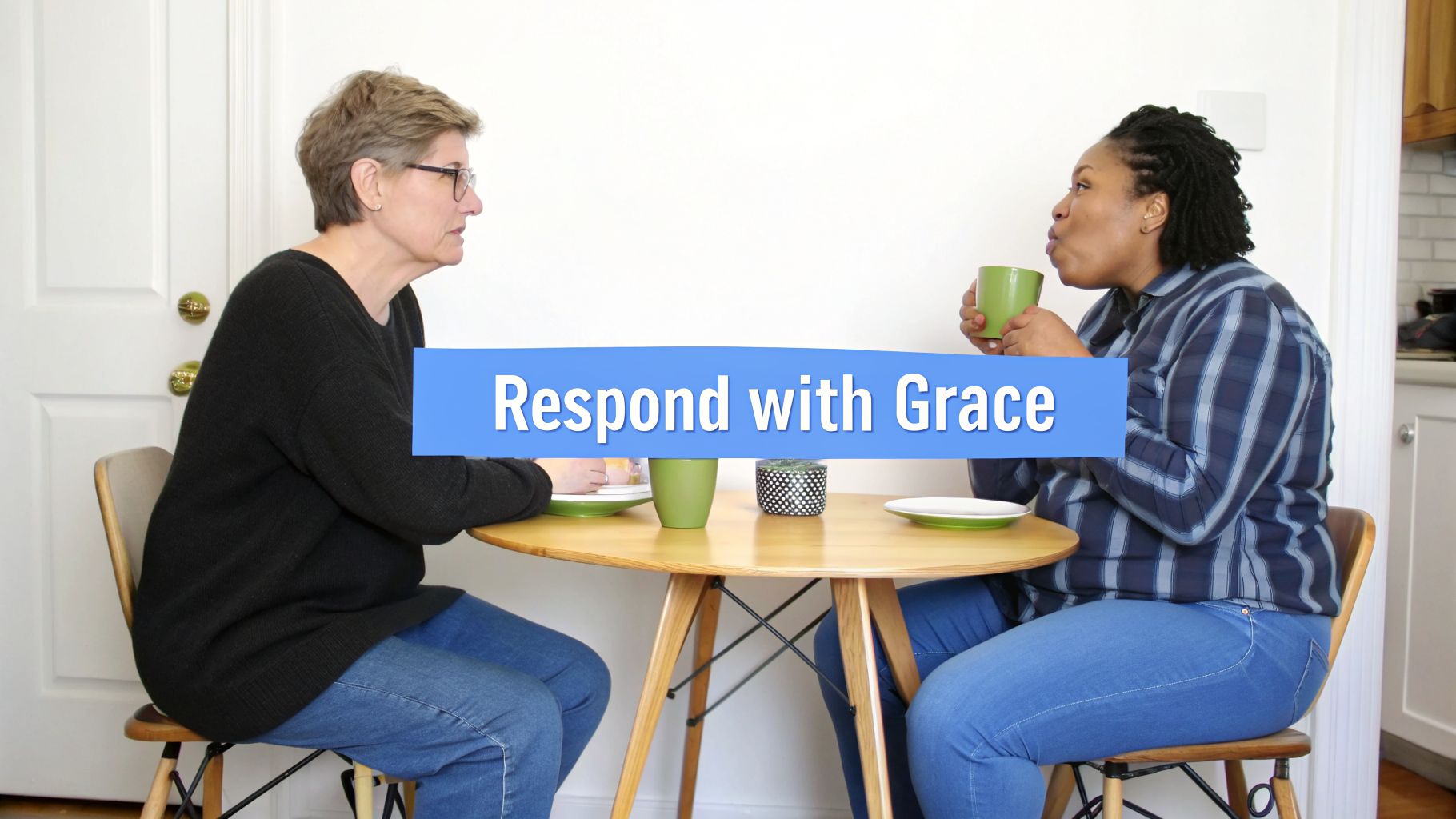
Seeing the signs of substance use in someone you love is one thing; knowing how to respond is another. It takes immense courage to step into that space, but speaking the truth in love can be a powerful act of faith that opens the door to healing.
When you're ready to talk, find a quiet, private moment. Start with gentle "I" statements to express your concern without placing blame. Something as simple as "I've been worried about you lately" can create a safe space for conversation rather than confrontation.
It is essential to set healthy boundaries for your own well-being while offering unwavering support for their recovery. This isn't about controlling them; it's about refusing to enable destructive behaviors while keeping the door to healing wide open.
Your family is not alone in this struggle. In 2021, an estimated 46.3 million people in the U.S. had a substance use disorder, yet a staggering few—only 6.3%—received any form of treatment. This is a quiet crisis affecting millions of families, as detailed in the AMA's 2025 report.
Encouraging them to seek professional help is one of the most loving things you can do. It's a journey you don't have to walk alone, and our guide on family support in addiction recovery can offer the guidance and strength you need for the path ahead.
Finding Hope and Healing on the Path to Recovery
Recognizing the signs we’ve discussed is a difficult but crucial first step toward healing. The path out of addiction starts with a single flicker of hope, and it’s a journey no one should ever have to make alone.
At Grace Recovery Services, we provide a place of peace and genuine restoration for our neighbors in North Huntingdon, Penn Hills, and across Pennsylvania through virtual counseling options. We believe real recovery is more than just stopping a behavior; it’s a revival of the soul.
Our approach is built on compassionate, evidence-based care that addresses the whole person, mind, body, and spirit. We offer both Intensive Outpatient (IOP) and Outpatient Programs that integrate proven clinical therapies with a trauma-informed perspective and optional Christian faith principles.
If you or someone you love is ready to find freedom, we are here to listen. Contact us for a confidential, respectful conversation about starting your journey toward wholeness.
Frequently Asked Questions About Substance Abuse
Taking those first steps toward understanding addiction can bring up a lot of questions and uncertainty. We've gathered some common concerns here and offer answers with the compassion and clarity you need to find a way forward.
How Should I First Approach My Loved One About Their Substance Use?
Your first step is often the most courageous one. We always advise finding a calm, private moment to talk. The key is to express your concerns from a place of love, focusing on how their actions are affecting you and others, rather than placing blame. The goal here isn't to force a confession, but to gently open a door for honest communication.
What if they Deny Having a Problem?
Denial is a powerful and very common part of addiction, and it's important not to get drawn into an argument. If your loved one denies there's an issue, your best response is to calmly state what you’ve observed and how it makes you feel.
From there, focus on setting healthy boundaries for yourself. Let them know that when they are ready to talk or seek help, you will be there to support them. In moments of doubt, lean on faith. Remember that God can work in hearts even when we can’t see it, and our role is to plant seeds of love and truth with patience.
How Can I Support Them Without Enabling Their Behavior?
This is one of the most difficult lines to walk. Supporting someone means encouraging them to seek treatment and offering emotional care, while enabling involves actions that shield them from the natural consequences of their addiction.
Establishing clear boundaries is the key to supporting without enabling. This might look like refusing to give them money, not making excuses for them, or insisting they find their own ride if they’re under the influence. It feels tough, but it's a crucial act of love that creates an environment where they can finally see the need for change.