
Outpatient Addiction Treatment Referrals Near Pittsburgh
Grace Recovery Services welcomes outpatient addiction treatment referrals near Pittsburgh from professionals and community partners. We provide Christ-centered, trauma-informed outpatient and intensive outpatient care for adults, including support for co-occurring mental health needs, at our North Huntingdon and Penn Hills offices. Faith is part of care only when the client wants it.
Who can contact GRS about addiction treatment referrals
You don't need to know the exact level of care before you ask. A therapist, primary care or specialty practice, hospital or discharge team, case manager, employee assistance professional, community organization, or church can start with one general question. An adult can also contact GRS directly.
The adult should take part in decisions about treatment and information sharing whenever possible. Family members and other supporters can ask about our services in general. Access to an adult client's treatment information depends on that person's consent and on privacy law.
When an outpatient referral makes sense
- An adult is looking for addiction treatment while living at home.
- The person may need more structure than occasional counseling.
- Substance use and mental health needs should be addressed together.
- Christian care matters to the person, or they want the choice to include faith.
When an outpatient referral may not fit
Outpatient care isn't right for every situation, and a clinical assessment should guide the level of care. GRS does not provide emergency services, medical detox, residential treatment, partial hospitalization, or hospital care.
If withdrawal risk, severe intoxication, medical instability, or immediate danger is present, address that first. Our guide on whether withdrawal management may need to come first explains why this order matters, especially with alcohol or benzodiazepines.
Services you can ask about
Outpatient addiction treatment referrals near Pittsburgh can involve any of three GRS services, and care can address co-occurring mental health needs. The care team will confirm current availability and whether a GRS program fits the person.
Outpatient Program
Scheduled, ongoing care for adults who live at home and need less structure than an intensive program.
Read about outpatient careIntensive Outpatient Program
More structure than standard outpatient care, without 24-hour residential treatment. It may fit an adult stepping down from a higher level of care. An assessment decides whether it fits.
Read about intensive outpatient careCo-occurring treatment
Care that addresses addiction alongside mental health concerns such as depression, anxiety, or PTSD. Ask how GRS would handle the person's specific needs.
Read about co-occurring treatmentHow Outpatient Addiction Treatment Referrals Work Near Pittsburgh
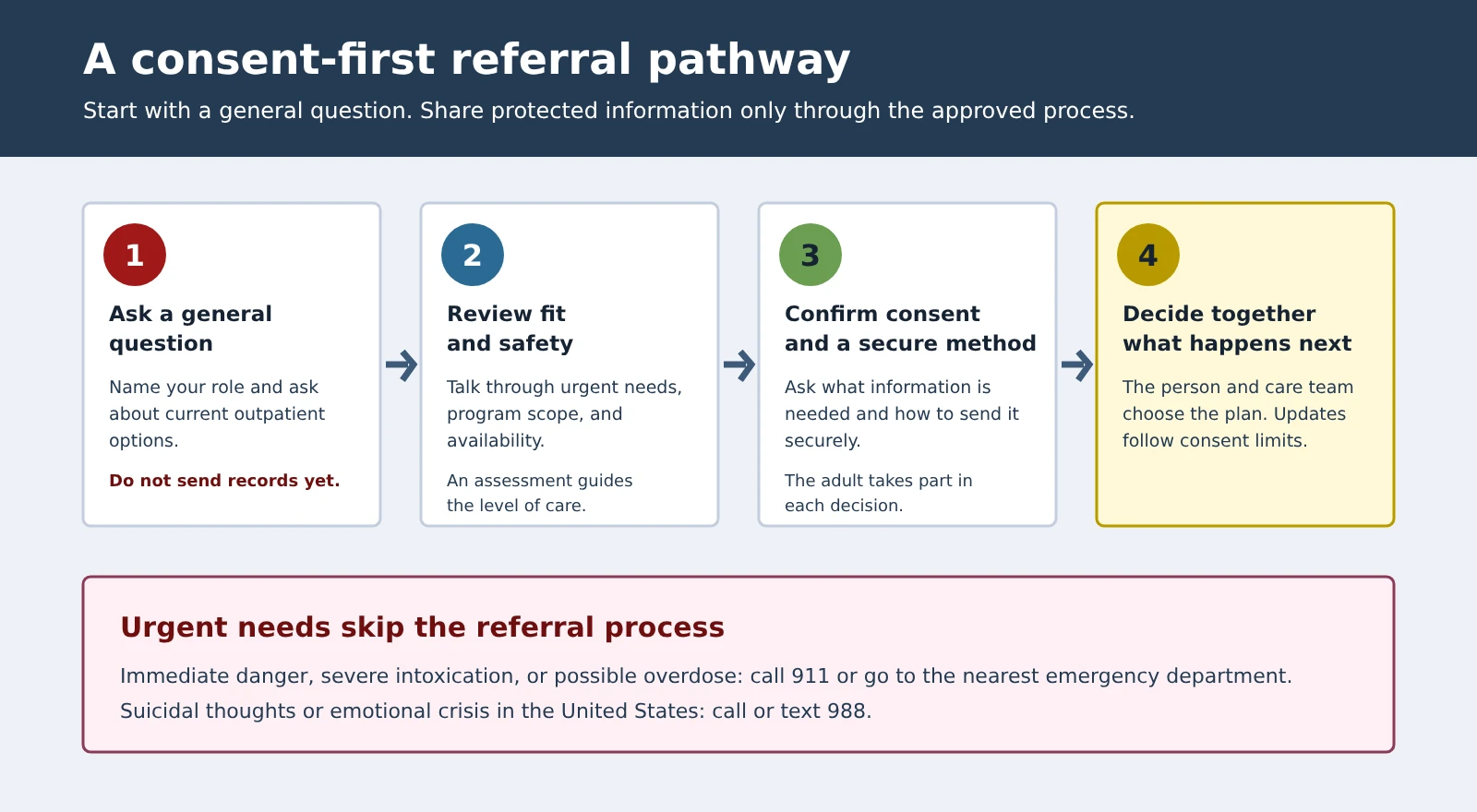
Start with a general question. The care team will explain current services and what should happen next.
- Step 1
Ask a general referral question
Call, text, email, or use the Contact page. Tell us your role and ask about current services. Keep the first message general: no records, diagnoses, or medication lists by ordinary email or text.
- Step 2
Review fit and safety
The care team can talk through the person's age, the broad reason for seeking care, any urgent safety or withdrawal concern, mental health needs, and current program availability. This conversation is not a diagnosis or a promise of placement.
- Step 3
Confirm consent and a secure method
Ask what information is needed, what consent applies, and how to send records securely.
- Step 4
Decide together what happens next
When possible, help the adult join the call or contact the care team directly. With the person's permission, you can support a warm handoff and later coordination within consent limits. We cannot promise admission, a particular counselor, or a specific result.
Privacy matters. Federal law (42 CFR Part 2) protects the confidentiality of many substance use treatment records and limits how identifying information may be shared. Which rules apply depends on the provider, the record, the purpose, and the person's consent, so make your first contact a general inquiry and follow the care team's instructions before sending protected information. This is not legal advice.
Prepare for the first outpatient referral conversation
Keep the first call brief and practical. It helps to know:
- Your role in the referral
- The general reason treatment is being considered
- The level of support being considered
- Any urgent safety or withdrawal concern
- Whether Christian faith integration matters to the person
- How the person wants to take part in the conversation
Questions to ask the care team
- Which GRS services should we discuss?
- What information is needed before an assessment or admission decision?
- How should information be sent securely?
- What consent is needed for updates or coordination?
- How are co-occurring mental health needs handled?
- Which office, format, and appointment times are available now?
- What happens if GRS is not the right level or type of care?
How Christian faith fits into a referral
A referral to GRS does not require a particular belief or agreement to spiritual practices. Christian faith shapes how we see each person's dignity and hope. When a client wants faith included, treatment may involve prayer, Scripture, or Christian discussion. The client decides whether and how to take part.
Faith does not replace clinical assessment, medication, emergency care, or withdrawal management. It is never used to pressure anyone toward disclosure, forgiveness, or contact with someone unsafe.
When GRS is not the right level of care
Not every outpatient addiction treatment referral near Pittsburgh ends in a GRS admission. The call can still point to other options. The Pennsylvania Department of Drug and Alcohol Programs lists licensed treatment facilities and county drug and alcohol offices.
County offices can assess the need for treatment, help with funding questions, and make referrals. The state's Get Help Now line is 1-800-662-HELP (4357).
Questions about addiction treatment referrals
Do I need a formal referral to contact GRS?
No. A professional or community partner can start with a general question, and an adult may also contact GRS directly. A referral does not guarantee admission or a particular program.
What should I send with the first message?
Start with your role and a general question. Do not email or text protected records. Ask the care team what information is needed, how it should be sent securely, and what consent applies.
Does GRS provide detox or residential treatment?
No. GRS provides outpatient services and does not provide medical detox, residential treatment, hospital care, or emergency services. Confirm current program scope and availability with the care team.
Can a referring professional receive treatment updates?
Updates depend on the client's consent, the purpose of the communication, and applicable privacy requirements. Ask the care team what authorization is needed and what information may be shared.
Talk with the GRS care team about an outpatient referral
For a non-emergency question about outpatient addiction treatment referrals near Pittsburgh, call, text, email, or use the Contact page.
Discuss a ReferralPrefer to talk it over first? Book a free discovery call.
Please don't email or text records or other protected health information. The care team will tell you how to send it securely.
Offices: 8700 Pennsylvania Ave, North Huntingdon, PA 15642 and 665 Rodi Rd, Suite 302, Pittsburgh, PA 15235 (Penn Hills)
Need immediate help?
This page provides general information. It is not a diagnosis or individual medical, mental health, or legal advice, and contact does not guarantee admission, a program, or a start date.