
You may be reading this after another broken promise, another late-night phone call, or another moment when you looked at someone you love and thought, “This isn’t who they are.”
That fear is real. So is the exhaustion. Families often swing between vigilance, anger, bargaining, prayer, and silence, sometimes all in the same day. If that’s where you are, start with this truth: your concern matters. Love that becomes informed and steady can help interrupt the chaos of substance use and point a person toward healing.
This guide focuses on the first stretch: noticing the problem, starting the conversation, and guiding someone toward an assessment. For the bigger picture of how families can stay involved through treatment and beyond, see our guide to family support in addiction recovery.
The first step is yours to take
It often begins subtly. A mother notices her son avoids eye contact. A spouse starts covering for missed obligations. A sister rehearses what to say, then says nothing because she’s afraid the wrong words will push him further away. Many families live in that tension for a long time.

If you’re trying to understand what may be happening, learning the signs of substance abuse can help you move from vague worry to clear action.
What your concern already means
Your loved one may be minimizing the problem. Other people may be telling you to back off. Part of you may wonder if you’re overreacting. You probably aren’t. Pay attention to patterns, not isolated moments. Repeated secrecy, volatility, disappearing money, unexplained absences, or a personality change that lingers usually deserve a response.
What helps at this stage
Before you confront, rescue, or threaten, do these simpler things first:
- Write down what you’ve seen. Specific observations keep you grounded when emotions rise.
- Pray for wisdom, not control. Faith doesn’t mean forcing an outcome. It means asking God to help you respond with truth and grace.
- Talk to one trusted person. Choose someone calm and discreet, not someone who will inflame the situation.
- Prepare for a process. Expect more than one conversation.
The first step isn’t fixing them. It’s choosing not to stay frozen.
Seeing the person behind the problem
Substance use is often visible. The deeper pain behind it usually isn’t. Families tend to focus on behavior because behavior disrupts the household. But many people use substances for reasons that are harder to see: shame, anxiety, grief, trauma, emotional numbness, or a mind that never seems to quiet down.

Why a trauma-informed view matters
Mental health conditions and substance use often occur together, and trauma may be part of the story. That doesn’t mean families cause addiction, and it doesn’t mean you should press for disclosure. It means even loving people can say things that deepen shame when they don’t understand the pain underneath the behavior. This overview of trauma-informed care is a useful starting point.
A trauma-informed lens changes the question from “Why are they doing this to us?” to “What might they be trying to survive?” It doesn’t excuse lying, manipulation, or dangerous choices. It helps you respond in a way that lowers defensiveness and makes an honest conversation more likely.
| Instead of | Try |
|---|---|
| “You’re destroying your life.” | “I can see you’re hurting, and I’m concerned about where this is going.” |
| “Why can’t you just stop?” | “I know this may be more complicated than willpower.” |
| Digging for a confession | Calm questions, and listening for pain, fear, and hopelessness |
| Public confrontation or lecturing while they’re intoxicated | A private, sober moment when you can both stay calm |
How to start a supportive conversation about treatment
The conversation goes better when you stop trying to win it. Many families enter this moment loaded with evidence and emotion. That’s understandable, and it also tends to trigger denial. A better approach is calm, direct, and specific.
Pick the right moment
Don’t start this talk when your loved one is intoxicated, withdrawing, enraged, or rushing out the door. Choose a private setting, turn off distractions, sit down, and keep your voice level. If two family members are present, make sure both can stay calm. A tense group confrontation usually backfires unless a professional is guiding it.
Use honest language without accusation
Start with what you’ve seen and how it affects you:
- “I’m worried about you.” Simple and hard to argue with.
- “I’ve noticed you’ve been missing work and pulling away from us.” Concrete observations work better than labels.
- “I’m not here to shame you. I want to help you get support.”
- “You don’t have to carry this alone.”
Avoid courtroom language. Words like “always,” “never,” “liar,” and “addict” tend to shut people down.
Keep the goal small
The goal of the first conversation isn’t a full confession. It may only be agreement on one next step:
- 1Making one phone call to a treatment provider or helpline.
- 2Letting you research options and bring back what you find.
- 3Scheduling an assessment with a qualified professional.
- 4Agreeing to talk again tomorrow.
If they refuse help, end the conversation calmly. You can say, “I hear that you’re not ready today. I still love you, and I’m still concerned. We need to make some changes in this house.” That keeps the door open while protecting the home.
Set boundaries and a simple safety plan
Families often confuse love with rescue. When you pay the debt, call the boss, lie to relatives, hand over cash, or clean up every crisis, you may reduce immediate fallout while increasing long-term harm. A boundary says, “I care about you, and I won’t participate in what is harming you.”
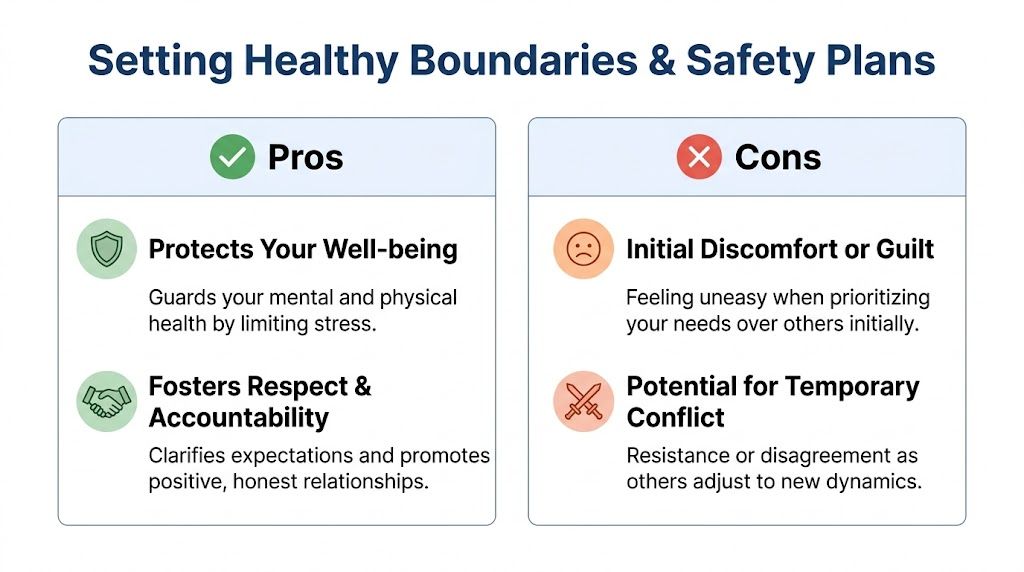
- No money without transparency. If you want to help with groceries, buy groceries directly.
- No substance use in the home. State it plainly and repeat it consistently.
- No covering up consequences. Don’t call employers or professors to smooth things over.
- Yes to treatment logistics. Offer rides, childcare, or help with paperwork.
Write a short safety plan so everyone in the home knows what to do:
| Situation | Family response |
|---|---|
| Intoxication at home | Reduce conflict, protect children, avoid arguing |
| Threats or violence | Leave the area and call 911 |
| Suspected overdose | Call 911 immediately; use naloxone if available |
| Boundary violation | Follow the stated consequence, calmly and consistently |
Boundaries are not punishment, and they work best when they protect safety. For more on setting limits that fit your situation, including when abuse or coercive control is present, see family support in addiction recovery.
Guiding them toward professional help
When someone says, “Fine, I’ll get help,” families often feel relief and confusion at the same time. The next step is finding care that fits the person, not just the crisis. Quality care looks beyond substance use alone. If trauma, anxiety, depression, or family conflict are driving the cycle, treatment that ignores them often leaves the root untouched. This guide to types of substance use disorders and how to treat them can help you understand the options.
Not everyone needs the same level of care. Some people need a highly structured or medical setting. Others can begin with outpatient treatment or intensive outpatient treatment while keeping parts of daily life in place. A professional assessment is what determines the right fit.
A solid outpatient program often includes:
- A clinical assessment of substance use patterns, risks, and co-occurring concerns
- Individual counseling for beliefs, triggers, grief, shame, and avoidance
- Group therapy to reduce isolation and build accountability
- Family involvement, with the client’s consent, so home supports recovery
- Relapse prevention planning before a crisis, not after
Cognitive behavioral therapy (CBT) is one of the most established approaches for substance use disorders. It helps people recognize thinking patterns that lead to use, practice coping skills, and plan for high-risk moments.
After they say yes
Getting into treatment is a beginning, not the finish line. Your role shifts from opening the door to supporting steady, everyday recovery: predictable routines, honest communication, and a plan for setbacks. Our guide on how to support someone in recovery covers that season in detail.
Frequently asked questions
What should I say to someone with a substance abuse problem?
Start with specific, observable facts and your concern, such as “I’ve noticed you’ve missed work and pulled away, and I’m worried about you.” Avoid labels like “addict” or “liar,” keep your voice calm, and ask for one small next step rather than a full commitment.
What if my loved one refuses help?
End the conversation calmly and keep the door open. Hold your boundaries, keep your safety plan in place, and look for another calm moment to talk. You can also get support for yourself through counseling or a family support group while you wait.
Should I stage an intervention?
Surprise group confrontations often increase shame and defensiveness. If you are considering a structured family meeting, it is safer to plan it with a qualified professional who can guide the conversation and respond to safety concerns.
Sources
- 1Lifesaving Naloxone. Centers for Disease Control and Prevention.
- 2988 Suicide & Crisis Lifeline. Substance Abuse and Mental Health Services Administration.
- 3SAMHSA’s National Helpline. Substance Abuse and Mental Health Services Administration.