When you're trying to manage drug addiction and bipolar disorder at the same time, life can feel like being caught in a brutal storm. The manic highs and depressive lows are disorienting enough on their own. It’s no wonder so many people turn to substances for a moment of relief, a temporary anchor in the middle of the chaos.
This isn't a sign of weakness or a moral failing. It’s a very real and recognized medical challenge known as a dual diagnosis, and it’s a journey you do not have to walk alone.
The Storm of a Dual Diagnosis
Living with both drug addiction and bipolar disorder is an exhausting, day-in-day-out struggle. Imagine trying to steer a ship while being pulled by two powerful, opposing currents. The frantic energy of a manic episode can demolish your impulse control, making substance use feel not just tempting, but inevitable. Then, the crushing weight of a depressive swing can make those same substances seem like the only possible escape from the pain.
This cycle is incredibly common and deeply human.

The link between these two conditions is more than just anecdotal; it's a well-documented reality. Research shows that adults with a serious mental illness (SMI) like bipolar disorder have far higher rates of substance use. In fact, a staggering 51.9% of adults with an SMI used illicit drugs in the past year, compared to just 21.0% of adults without any mental illness. You are far from alone in this fight.
In the heart of this storm, faith can become a powerful anchor. It offers a spiritual foundation, a reminder that you are more than your diagnoses and that profound healing for both your mind and spirit is truly possible.
Understanding that you're facing a dual diagnosis is the first crucial step toward finding calm waters. Specialized, effective care that addresses both conditions together isn't just a possibility—it's the standard for real recovery. You can learn more about how our co-occurring treatment programs provide this integrated support. With the right help, you can navigate this storm and find your way to lasting peace.
How Bipolar Symptoms Can Fuel Addiction
The connection between bipolar disorder and addiction isn't just a coincidence—it's a powerful, self-perpetuating cycle where each condition makes the other worse. The extreme emotional highs and lows of bipolar disorder can create a desperate need for relief, making self-medication feel like a solution when it’s actually gasoline on a fire.
During a manic episode, you might experience a powerful rush of energy, euphoria, and impulsivity. In this state, it’s common to seek out stimulants like cocaine or amphetamines, either to prolong the high or to find a substance that matches the frantic energy you feel inside.
Then, the pendulum swings. A major depressive episode brings a crushing weight of sadness, emptiness, and hopelessness. To escape this profound pain, many turn to depressants like alcohol or opioids, hoping to numb the emotional agony.
Our Experience at Grace Recovery Services
In our clinical work at Grace Recovery Services, we frequently see this exact cycle play out in the lives of clients with co-occurring bipolar disorder and substance use. The intense highs of mania often lead to impulsive substance use that feels energizing in the moment, while the deep lows of depression drive self-medication with alcohol or opioids to numb overwhelming pain. Without addressing both conditions together, the cycle typically continues — until integrated treatment helps break the pattern and brings real stability.
The Cycle of Bipolar Symptoms and Substance Use
This table shows how the distinct phases of bipolar disorder can lead people to use specific types of substances to cope with their symptoms.
| Bipolar Phase | Common Symptoms | Substances Used to Cope or Self-Medicate |
|---|---|---|
| Manic Phase | Euphoria, racing thoughts, high energy, impulsivity, grandiosity | Stimulants (cocaine, amphetamines, methamphetamines) to enhance or sustain the high |
| Depressive Phase | Deep sadness, hopelessness, low energy, loss of interest, emotional pain | Depressants (alcohol, opioids, benzodiazepines) to numb feelings and escape despair |
Understanding this pattern is crucial, as it shows that the substance use isn’t random; it’s a direct, though destructive, attempt to manage unbearable symptoms.
This back-and-forth creates a devastating feedback loop. The statistics paint a sobering picture: for individuals with bipolar disorder, the lifetime risk of suicide can be as high as 15-20%, a staggering figure compared to the 1% risk in the general population. Substance use dramatically worsens these outcomes, especially since more than 50% of patients with bipolar disorder struggle to stick with their treatment plan, heightening the danger of relapse. You can read more about the year in drugs 2026 on opioiddata.org.
In the midst of this cycle, it’s easy to feel trapped. Remember that God’s grace is present even in the deepest valleys, offering a path to untangle these intertwined struggles and find peace.
Because these two conditions are so deeply interwoven, trying to manage one without addressing the other is nearly impossible. To learn more about this dynamic, you can check out our guide on the types of substance use disorders and how to treat them. Seeing and acknowledging this cycle for what it is becomes the first real step toward finding an integrated treatment that can heal both at the same time.
Why Integrated Treatment Is Essential for Healing
Trying to treat a substance use disorder without also addressing bipolar disorder is like bailing water out of a boat with two holes, but only patching one. You might slow the leak, but you’re still going to sink. When these two conditions show up together, they have to be treated together. This is the heart of integrated treatment—the gold standard for anyone navigating a dual diagnosis.
An integrated approach means you have one dedicated team managing every part of your recovery. Your therapy, medication, and support systems all work in harmony, tackling both the mental health and substance use challenges at the same time. It’s a unified front against a complex problem.
This is critical because bipolar disorder and addiction often create a vicious cycle, with one fueling the other.
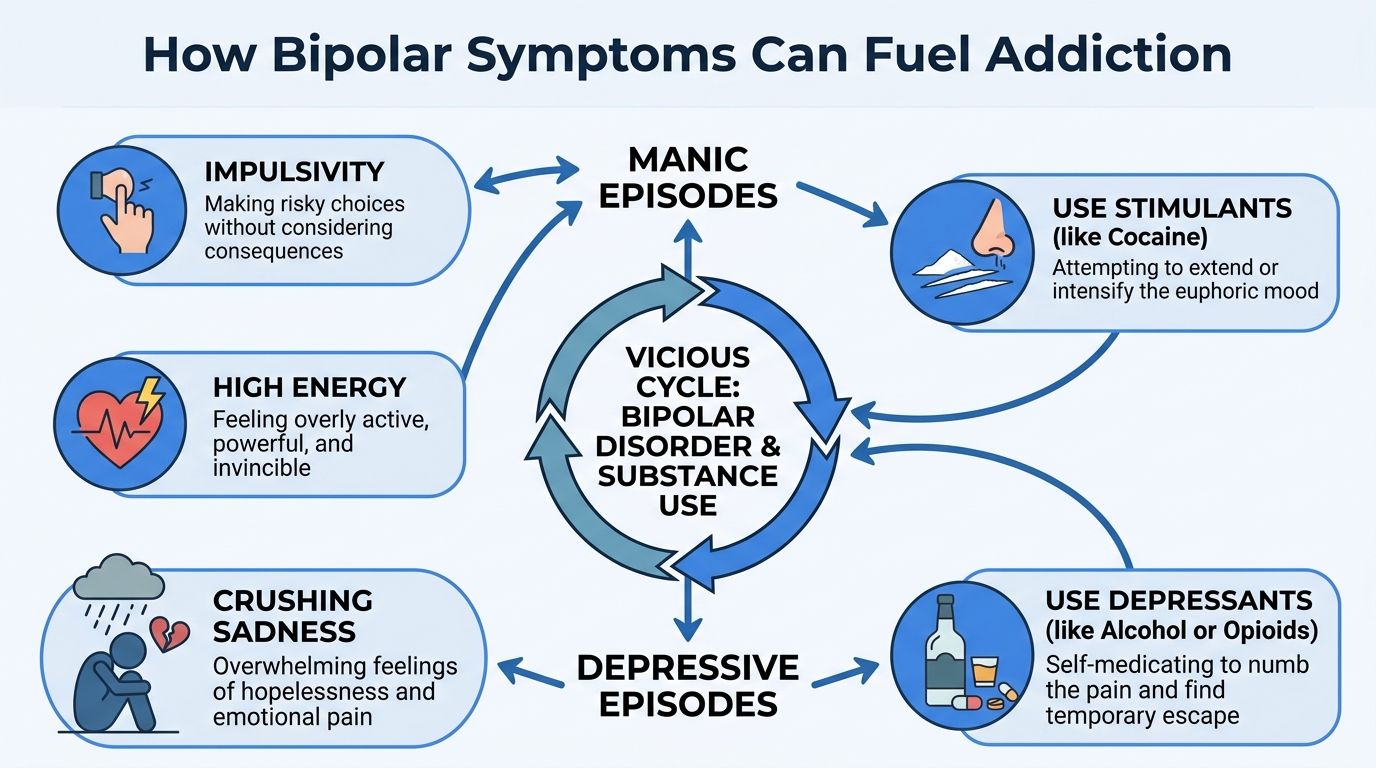
As you can see, the extreme highs of mania and the deep lows of depression can each push someone toward self-medication. Stimulants might be used to prolong a manic episode, while alcohol or opioids might be used to numb depressive pain. Breaking this cycle requires a plan that understands how these two forces interact, incorporating various therapeutic approaches to heal the whole person.
The stakes are incredibly high. Studies show that a staggering 50% of people with bipolar disorder struggle with treatment adherence, which dramatically increases their vulnerability to addiction. When the underlying mood instability isn’t managed, the pull toward substance use becomes almost irresistible.
In a faith-based context, integrated care honors the deep connection between mind, body, and spirit. True restoration comes when we heal the whole person, bringing God’s light into every part of the recovery journey.
By addressing both conditions at once, we can build a strong foundation for stability, restore hope, and reclaim a life of purpose. You can learn more about how our mental health and addiction services put this vital approach into practice.
Our Compassionate Approach to Your Recovery
When you’re facing both bipolar disorder and addiction, effective care isn’t just about managing symptoms—it’s about healing the whole person. We see you, not just a diagnosis. Our entire approach is built on understanding your unique story and walking alongside you with genuine empathy and respect, reflecting the grace and compassion we believe every person deserves.
We know the path to a dual diagnosis is often paved with unresolved pain. This is why our care is fundamentally trauma-informed. We focus on creating a truly safe space where you can begin to heal the deep-rooted causes of both your substance use and mood instability.
Healing Mind, Body, and Spirit
At Grace Recovery Services, we believe true, lasting recovery must involve the mind, body, and spirit. We integrate proven, evidence-based therapies that help you build resilience, restore stability, and guide you toward a life filled with meaning and purpose.
For those who desire it, our optional faith-based track can be a profound source of strength. We believe that connecting with God offers a unique wellspring of hope, forgiveness, and community that can anchor you during the most challenging moments of your recovery journey.
This balanced approach ensures that every aspect of your well-being is nurtured. By combining clinical excellence with spiritual support, we help you heal emotional wounds, replace destructive beliefs with truth, and finally find the peace you deserve.
Building a Life of Hope and Sustainable Recovery
Thinking of recovery as a final destination is a common mistake. It’s not a place you arrive at, but a lifelong path of growth and healing. Your time in initial treatment gives you the essential map and tools, but long-term aftercare is where you truly start building a life that supports your wellness, one day at a time. This next chapter is all about laying a strong foundation for a future filled with hope.
A huge part of that foundation is your support system. We’re talking about the friends, family, therapists, and faith community who really get what you’re going through. These are the people who offer both encouragement and accountability when the path gets steep.
From Coping to Thriving
Lasting success isn’t just about stopping old behaviors; it’s about intentionally creating new, healthier ways to navigate life. This starts with learning to pinpoint your personal triggers—the specific people, places, or even feelings that used to push you toward substance use.
Once you know what they are, you can make a plan to handle them without turning back. This might look like:
-
Using mindfulness and prayer to ground yourself when stress hits.
-
Diving into new hobbies that give you a sense of joy and real purpose.
-
Making regular exercise a priority to naturally lift your mood and quiet anxiety.
On this journey, faith can be an incredible anchor. Believing in a power greater than yourself is a constant reminder that you are never walking this path alone and that every single day offers a fresh start for renewal and grace.
With these kinds of practical and spiritual tools, a stable, fulfilling life isn’t just a distant dream. It’s absolutely within your reach.
Guidance for Families and Loved Ones
Watching a person you love grapple with both drug addiction and bipolar disorder is an incredibly painful and lonely experience. It’s easy to feel lost and overwhelmed, but please know you are not alone. There is real hope for healing—not just for your loved one, but for you, too.
Walking this road requires finding a tough balance between compassion and strength. Your support can be one of the most powerful forces in their recovery, but it has to be a healthy support that doesn’t accidentally fuel the destructive behaviors. This means learning how to communicate with love while also setting clear, firm boundaries that protect your own well-being.
In our work at Grace Recovery Services supporting families affected by co-occurring bipolar disorder and addiction, we’ve walked alongside many loved ones who feel exhausted, hopeless, and unsure how to help without enabling. We consistently see that when family members learn to combine genuine compassion with healthy boundaries, both the person struggling and the entire family begin to experience greater peace, clearer communication, and real forward momentum in recovery.
Offering Support Without Enabling
It’s essential to learn the difference between genuinely helping and unintentionally enabling. True support empowers their recovery, but enabling can keep the cycle of addiction and instability going.
-
Healthy Support Looks Like: Encouraging them to stick with therapy, offering a ride to appointments, celebrating small victories, and listening with an open heart.
-
Enabling Looks Like: Making excuses for their choices, giving them money that might be spent on substances, or protecting them from the natural consequences of their actions.
Your most powerful role is to be a source of unwavering love and encouragement for the person, not for their illness. From a faith perspective, this means praying for their strength and healing while entrusting the outcome to God. This can free you from the impossible burden of trying to control their choices.
Seeking support for yourself is not selfish—it’s an act of strength. Going to therapy or joining a family support group gives you the tools to be a more effective, loving presence in their life while also finding your own path to peace.
If you are supporting a loved one through the complexities of drug addiction and bipolar disorder, help is here for both of you. Contact Grace Recovery Services to learn how our compassionate, integrated approach can guide your family toward lasting healing and restoration. Visit us online at https://www.gracerecoveryservices.org.
This article was researched with AI and heavily edited by Stephen Luther for accuracy and relevance.
Stephen Luther is the Executive Director and Founder of Grace Christian Counseling, Grace Recovery Services, WPA Counseling, NuWell Online Counseling and Coaching, and NuWell Health. He holds a Master’s degree in Education from the University of Georgia and a Master’s degree in Marriage and Family Therapy from Duquesne University. He is a licensed professional counselor in Pennsylvania.
Since 1997, Steve has been helping children, adolescents, and adults overcome a wide range of emotional and relational challenges. He specializes in working with hurting families, including those with foster, adopted, or traumatized children. Steve uses Attachment-Based Therapy, Splankna Healing, and Therapeutic Parent Coaching to support healing and restoration.