
Why Faith-Based Relapse Prevention Could Be the Missing Piece in Your Recovery
Faith-based relapse prevention is an approach to long-term sobriety that weaves spiritual practices — such as prayer, scripture reflection, and community fellowship — together with evidence-based clinical treatment like Cognitive Behavioral Therapy (CBT) and trauma-informed care.
Here is a quick overview of what it involves:
- What it is: A holistic recovery model that treats the whole person — body, mind, and spirit
- Who it’s for: Anyone seeking a deeper sense of purpose and community in their recovery, regardless of where they are in their faith journey
- How it works: Spiritual history assessments, daily prayer and meditation, peer accountability, and clinical therapy work together as one integrated plan
- Why it matters: More than 84% of scientific studies identify faith as a positive factor in addiction recovery — and clients who experience a spiritual awakening during treatment are abstinent at a 1-year follow-up at a rate of 82%, compared to 55% for those who do not
- Where to start: Programs like those offered at Grace Recovery Services in Western Pennsylvania combine Christian counseling with outpatient clinical care in a compassionate, non-judgmental setting
If you are somewhere in the Pittsburgh area — or anywhere in Western Pennsylvania — and you feel like something is still missing from your recovery, you are not alone. Many people move through therapy, 12-step meetings, and outpatient programs and still sense a gap. That gap is often spiritual.
Recovery is not just about stopping a behavior. It is about rebuilding a life — one rooted in purpose, restored relationships, and renewed hope. Faith-based relapse prevention takes that truth seriously.
At Grace Recovery Services, we believe that grace, not shame, is the foundation of lasting change. We walk alongside clients in North Huntingdon, Pittsburgh, and throughout Allegheny and Westmoreland counties, offering a path that honors both the science of addiction and the healing power of faith.
This guide will walk you through everything you need to know — from the evidence behind faith-integrated recovery to practical daily strategies and how to find the right program for your needs.
Understanding Faith-Based Relapse Prevention

At its core, faith-based relapse prevention means we do not treat recovery as only a willpower problem or a symptom-management project. We look at the whole person.
That includes:
- physical health and cravings
- thoughts, emotions, and behavior patterns
- trauma history and stress responses
- relationships and support systems
- spiritual beliefs, values, and meaning
In practical terms, this approach may include CBT, relapse prevention planning, trauma-informed counseling, group support, and Christian counseling woven together instead of kept in separate boxes. For many people, that integration matters. They do not want clinical care on one side and their faith on the other like two awkward relatives at a wedding.
Research also shows that spirituality is already common in treatment. About 73% of addiction treatment programs in the United States include some spirituality-based element, often through 12-step traditions or other recovery supports. A large review summarized in Belief, Behavior, and Belonging: How Faith is Indispensable found that faith is often associated with lower substance use risk and better recovery outcomes.
At Grace Recovery Services, we see faith as a support for evidence-based care, not a substitute for it. That is why our approach in Western Pennsylvania centers both compassion and clinical credibility. If you want a broader overview of relapse planning, visit Addiction Recovery and Relapse Prevention.
The Science Behind Faith Based Relapse Prevention
The research base is not perfect, and it does not mean faith is a magic wand. But it is substantial enough to take seriously.
Here are several findings that stand out:
- More than 84% of scientific studies reviewed show faith as a positive factor in addiction prevention or recovery
- In studies on alcohol misuse, 86% found faith reduced risks linked to alcohol use, abuse, or dependence
- In studies on drug misuse, 84% found faith reduced the risks of drug abuse
- Up to 82% of clients who reported a spiritual awakening during treatment were abstinent at one year, compared with 55% of those who did not
- One longitudinal study found that initial religiosity, growth in religiosity, religious support, and religious meaning were all linked with greater odds of abstinence
Why might this help? Several mechanisms are likely involved:
- faith can increase hope and future orientation
- prayer and meditation may support emotional regulation and reduce reactivity
- spiritual meaning can help people endure cravings and setbacks without giving up
- congregational and peer support can reduce isolation, which is a major relapse risk
- beliefs about forgiveness and redemption may weaken shame, which often fuels relapse cycles
There is also an important caution here. Research distinguishes between positive religious coping and negative religious coping. Positive coping looks like seeking comfort, meaning, support, and guidance. Negative coping looks like feeling punished by God, overwhelmed by spiritual shame, or trapped in religious fear. The first tends to support recovery. The second can make distress worse.
That is one reason trauma-informed, clinically grounded faith integration matters so much.
Economic and Societal Benefits
Faith-based recovery is not only personal. It also affects families, neighborhoods, and local communities.
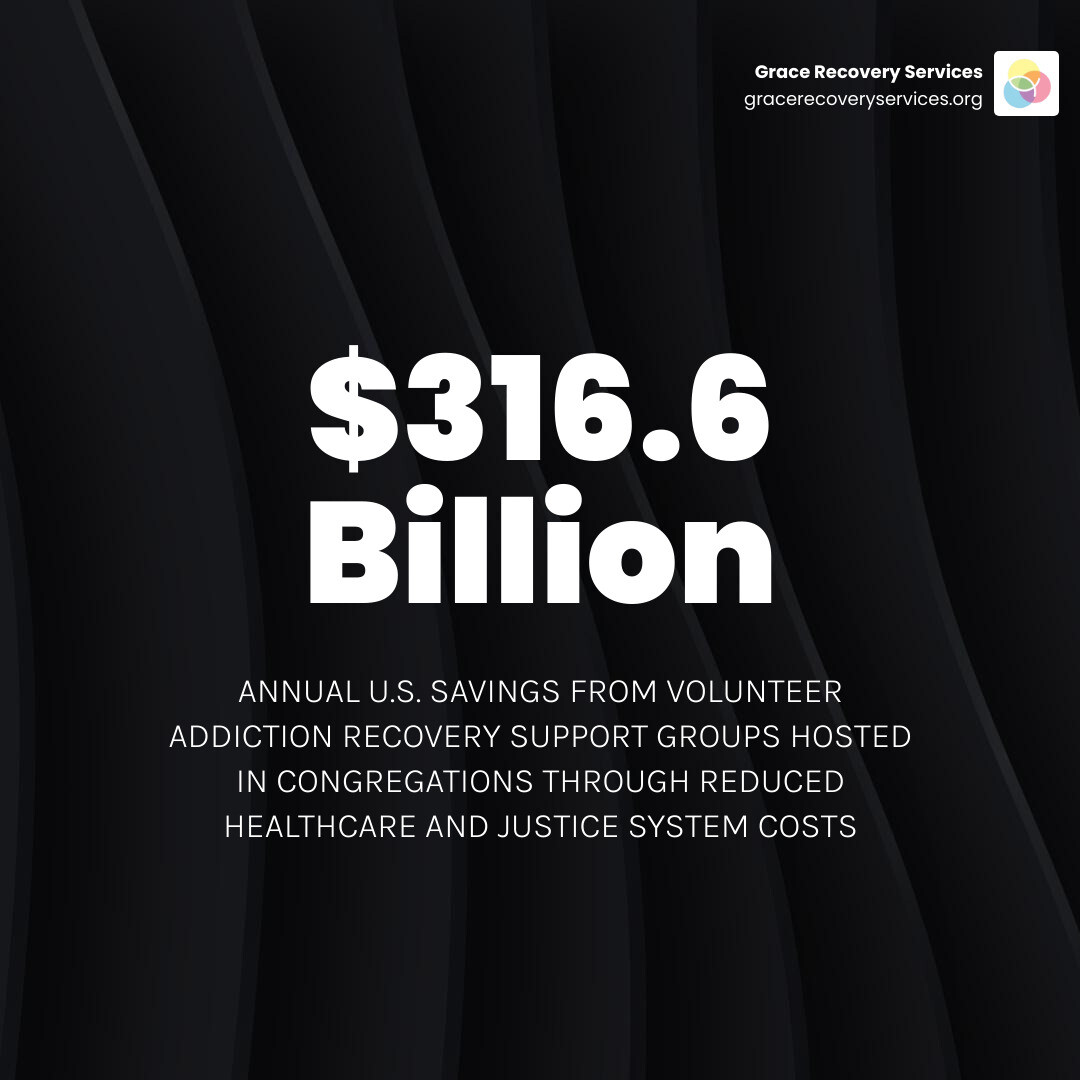
A major economic analysis found that volunteer addiction recovery support groups meeting in congregations across the United States contribute an estimated $316.6 billion in savings every year. Those savings come from support that reduces strain on healthcare systems, criminal justice systems, and other public resources.
In Western Pennsylvania, that community value matters. Recovery rarely happens in isolation. It grows through networks of support:
- faith communities that offer belonging
- peer groups that provide accountability
- local prevention partnerships
- families learning healthier patterns together
- service opportunities that rebuild purpose
When a person finds lasting sobriety, the benefits ripple outward. Children experience more stability. Employers retain workers. Communities become safer and stronger. That is one reason local prevention efforts, such as those highlighted by Westmoreland County community prevention resources, matter alongside formal treatment.
Core Spiritual Practices for Sustained Sobriety

Faith-based recovery is not just about believing the right things. It is about practicing recovery in daily life.
The most common spiritual practices used in relapse prevention include:
- prayer
- meditation or quiet reflection
- scripture reading
- gratitude journaling
- fellowship and shared worship
- service to others
- breathwork or other calming body-based practices done with spiritual intention
Why are these effective? Because relapse risk often rises in ordinary moments: stress after work, loneliness at night, conflict at home, boredom on the weekend. Daily spiritual practices create small pauses between the trigger and the reaction. That pause can be the difference between reaching for support and returning to substance use.
Prayer can help clients name fear, ask for help, and step out of isolation. Meditation can calm the nervous system. Scripture reflection can reorient the mind toward hope and truth rather than shame and panic. Gratitude journaling can shift attention away from scarcity and despair. None of these replace therapy, but they can reinforce it powerfully.
We often encourage clients to build simple, repeatable rhythms rather than dramatic all-or-nothing routines. Five faithful minutes done consistently usually beat one heroic hour done once and then forgotten forever.
For encouragement on steady recovery habits, see Finding Grace in the Grind of Recovery.
Daily Routines in Faith Based Relapse Prevention
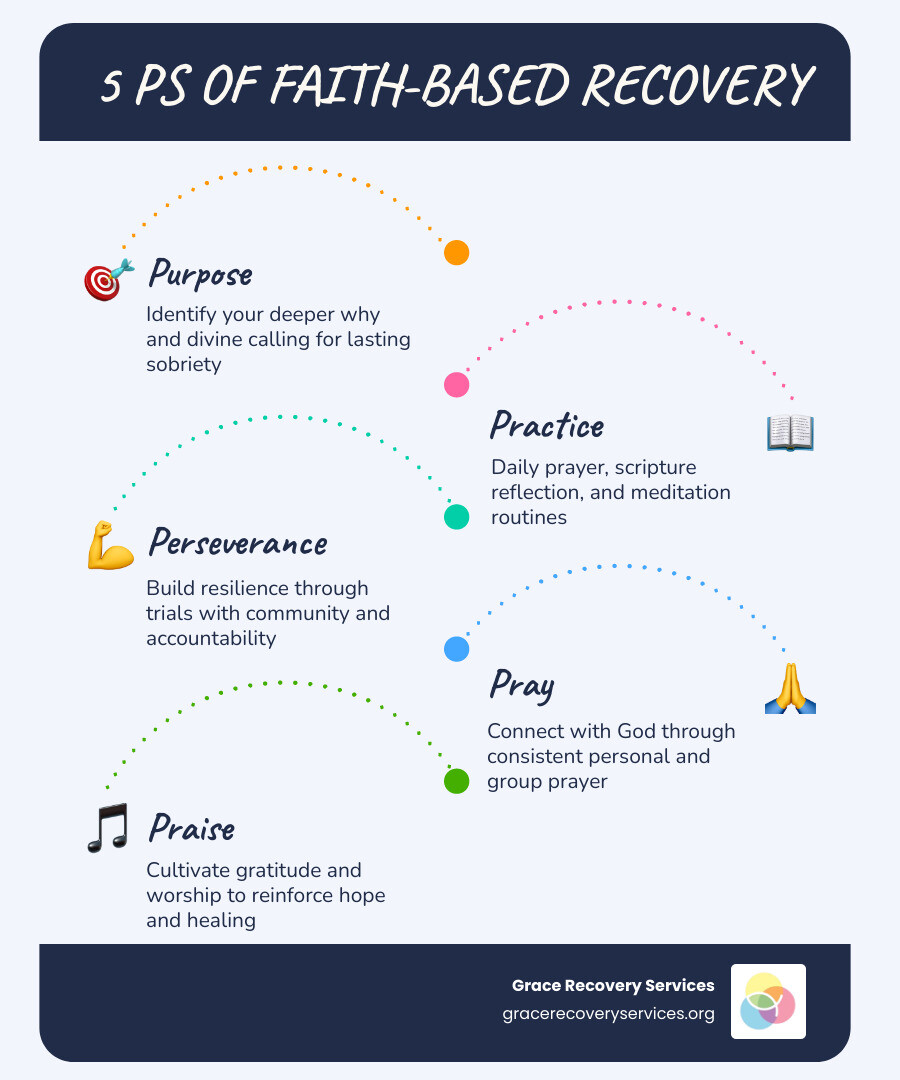
A helpful way to organize spiritual relapse prevention is the 5 Ps framework:
- Purpose
- Practice
- Perseverance
- Pray
- Praise
Here is what that can look like in real life:
- Purpose: Remember why sobriety matters. Family. calling. health. peace. service. freedom.
- Practice: Build daily habits that support recovery before a crisis hits.
- Perseverance: Expect hard days without treating them as failure.
- Pray: Bring cravings, anger, fear, and confusion honestly before God.
- Praise: Notice progress, express gratitude, and celebrate growth.
A basic daily routine might include:
- morning prayer or intention setting
- a short Bible passage or devotional reading
- reviewing triggers for the day
- using CBT coping tools when stress rises
- texting a sponsor, mentor, or trusted support person
- ending the day with gratitude and honest reflection
Here is a simple comparison of religious coping styles:
| Coping style | What it sounds like | Likely effect on recovery |
|---|---|---|
| Positive religious coping | “I can ask for help. God has not abandoned me. This struggle can have meaning.” | More hope, support, and emotional stability |
| Negative religious coping | “I am being punished. I am too far gone. My struggle proves I have failed spiritually.” | More shame, distress, and relapse vulnerability |
A good faith-based program helps clients move toward grace, honesty, and accountability rather than guilt and spiritual pressure.
The Role of Community and Fellowship
Recovery is deeply personal, but it is not meant to be private.
Community and fellowship help prevent relapse by providing:
- accountability when motivation drops
- encouragement during grief, stress, or temptation
- sober social connection
- practical support like rides, check-ins, or prayer
- a place to belong without pretending
Congregations and faith communities can play a major role after formal treatment ends. That may include recovery groups, small groups, pastoral support, volunteer opportunities, meals, mentoring relationships, or simply being a place where someone is known by name.
Service projects can also be surprisingly powerful. When people move from “I am a problem” to “I have something to give,” identity begins to change. That shift can strengthen long-term sobriety.
Of course, not every congregation knows how to support addiction recovery well. The healthiest faith communities are nonjudgmental, informed about trauma, respectful of boundaries, and willing to partner with clinical care when needed.
For practical next steps after treatment, read How to Stay Sober After Rehab.
Trauma-Informed Care and Spiritual Healing
Many people experiencing substance use disorder also carry trauma. Sometimes it is obvious. Sometimes it is buried under years of survival mode.
Trauma-informed care means we recognize that addiction may be tied to:
- abuse or neglect
- grief and loss
- family instability
- violence
- chronic stress
- betrayal or relational wounds
When trauma is present, shame-based spiritual messages can do real harm. That is why healthy faith-based relapse prevention should never pressure clients to “just pray harder” or skip evidence-based therapy. Spiritual practices should support safety, not replace clinical treatment.
Trauma-informed faith integration often includes:
- emotional regulation skills
- CBT or other evidence-based therapies
- careful attention to triggers
- body-based calming practices
- spiritual reflection that emphasizes grace, dignity, and hope
- permission to be honest about anger, fear, doubt, and pain
Research and clinical writing in this area continue to support a whole-person approach that respects spiritual beliefs while addressing trauma directly. The article at Gexin Publications reflects this growing interest in integrating faith with recovery support.
At Grace Recovery Services, our trauma-informed model in Western Pennsylvania is built around emotional safety. We want clients to experience faith as a source of restoration, not as another burden to carry.
Reframing the Recovery Narrative
One of the most healing parts of faith-based recovery is the story it offers.
Instead of:
- “I relapsed, so I am hopeless”
The new story becomes:
- “I had a setback, and I need support, honesty, and a plan”
Instead of:
- “My life is ruined”
The new story becomes:
- “My life can still be restored”
Instead of:
- “I should be over this by now”
The new story becomes:
- “Healing is a journey, and growth often takes time”
This reframing matters because relapse prevention is not only behavioral. It is also narrative. The story someone believes about themselves affects what they do next.
Christian counseling can help clients explore forgiveness, redemption, purpose, and identity in ways that reduce shame and increase responsibility. Grace does not mean minimizing consequences. It means consequences do not get the final word.
That perspective aligns closely with our belief that recovery is not about perfection. It is about renewal. If that message resonates, Recovery is a Journey offers a helpful reflection.
Finding Support in Western Pennsylvania
If you are looking for support in Pittsburgh, Penn Hills, North Huntingdon, Irwin, or the surrounding Western Pennsylvania area, it helps to know what to look for in a faith-based program.
At Grace Recovery Services, we provide outpatient support designed for real life. That includes faith-based addiction recovery, Christian counseling, trauma-informed treatment, and structured levels of care such as intensive outpatient programming. For many clients in Allegheny County and Westmoreland County, outpatient care makes it possible to receive meaningful support while staying connected to family, work, and community.
Local support matters because recovery is lived locally. The drive home after therapy, the church you may attend, the people you text when cravings hit, the county resources available to your family, all of that shapes what healing looks like day to day.
Selecting the Right Program
Not every faith-based program is the right fit for every person. Here are wise questions to ask:
- How is faith integrated into treatment?
- Is spiritual participation invitational and respectful, or pressured?
- Are evidence-based therapies like CBT included?
- Is the program trauma-informed?
- Are co-occurring mental health needs addressed?
- What does aftercare or ongoing relapse prevention support look like?
- Does the program follow accepted standards for level-of-care decisions, such as ASAM guidance?
- Can the team help connect clients with healthy community support in Western Pennsylvania?
A strong program should be able to explain both its spiritual approach and its clinical approach clearly. That balance matters.
Look for signs of quality such as:
- individualized treatment planning
- licensed clinical professionals
- clear relapse prevention planning
- support for family systems and relationships
- coordinated aftercare
- respect for the client’s pace and spiritual background
If you want to understand our approach more fully, Recovery is a Journey is a good place to continue reading.
Frequently Asked Questions about Faith-Based Recovery
Do I need to be religious to participate in a faith-based program?
No. Many people begin faith-based recovery feeling unsure, hurt, skeptical, or simply curious.
A healthy program meets people where they are. At Grace Recovery Services, we aim to create a non-judgmental environment where clients can explore recovery goals honestly. Some come with a strong Christian background. Others are just open to the idea that healing may involve more than symptom control.
Faith integration should invite, not force.
How does faith-based relapse prevention differ from secular approaches?
The main difference is not that one uses therapy and the other does not. Good faith-based care still uses evidence-based treatment.
The difference is that faith-based relapse prevention also addresses:
- spiritual meaning
- relationship with God
- forgiveness and grace
- biblical hope and identity
- fellowship in faith communities
In other words, it adds the heart-and-soul dimension. For some people, that is exactly the missing piece that helps recovery finally feel sustainable.
Is faith-based treatment evidence-based?
It can be, yes.
Faith-based treatment is most credible when it includes evidence-based methods such as CBT, trauma-informed care, relapse prevention planning, and appropriate outpatient support, while also integrating spiritual practices in a clinically thoughtful way.
The research reviewed above suggests that faith can improve abstinence, resilience, and long-term engagement for many people. That does not mean every spiritual approach is automatically effective. It means faith works best when it is integrated wisely, respectfully, and alongside sound clinical care.
Conclusion
Faith-based relapse prevention offers something many people are quietly searching for: not just sobriety, but restoration.
It helps connect practical coping skills with deeper purpose. It replaces shame with grace. It strengthens recovery through prayer, Scripture, fellowship, evidence-based counseling, and trauma-informed care that sees the whole person.
Here in Western Pennsylvania, we are honored to walk with clients and families in Pittsburgh, Penn Hills, North Huntingdon, and nearby communities as they pursue healing of mind, body, and spirit.
If you are ready to explore a compassionate, clinically grounded, faith-based path forward, we invite you to Start Your Journey Toward Lasting Recovery.
This article was researched with AI and heavily edited by Stephen Luther for accuracy and relevance.
Stephen Luther is the Executive Director and Founder of Grace Christian Counseling, Grace Recovery Services, WPA Counseling, NuWell Online Counseling and Coaching, and NuWell Health. He holds a Master’s degree in Education from the University of Georgia and a Master’s degree in Marriage and Family Therapy from Duquesne University. He is a licensed professional counselor in Pennsylvania.
Since 1997, Steve has been helping children, adolescents, and adults overcome a wide range of emotional and relational challenges. He specializes in working with hurting families, including those with foster, adopted, or traumatized children. Steve uses Attachment-Based Therapy, Splankna Healing, and Therapeutic Parent Coaching to support healing and restoration.
This guide is for educational and spiritual encouragement and is not a substitute for personalized professional counseling. If you are in crisis, please reach out for immediate help.