
Finding Faith-Based Recovery That Feels Safe
Trauma-informed faith rehab pairs addiction treatment with care that respects how past harm can affect trust, safety, and spiritual beliefs. If you are looking for a program, ask whether trained clinicians address trauma, whether prayer and other faith practices are your choice, and how staff respond to spiritual abuse. You should be able to seek help without pressure or shame.
At Grace Recovery Services, we believe recovery should care for the whole person. Our Christian approach in the Pittsburgh area brings faith and clinical care together through outpatient support. Whether you are evaluating trauma-informed addiction care for yourself or exploring holistic Christian addiction help rooted in evidence based faith treatment, your questions and boundaries matter.
The Intersection of Trauma, Addiction, and Faith
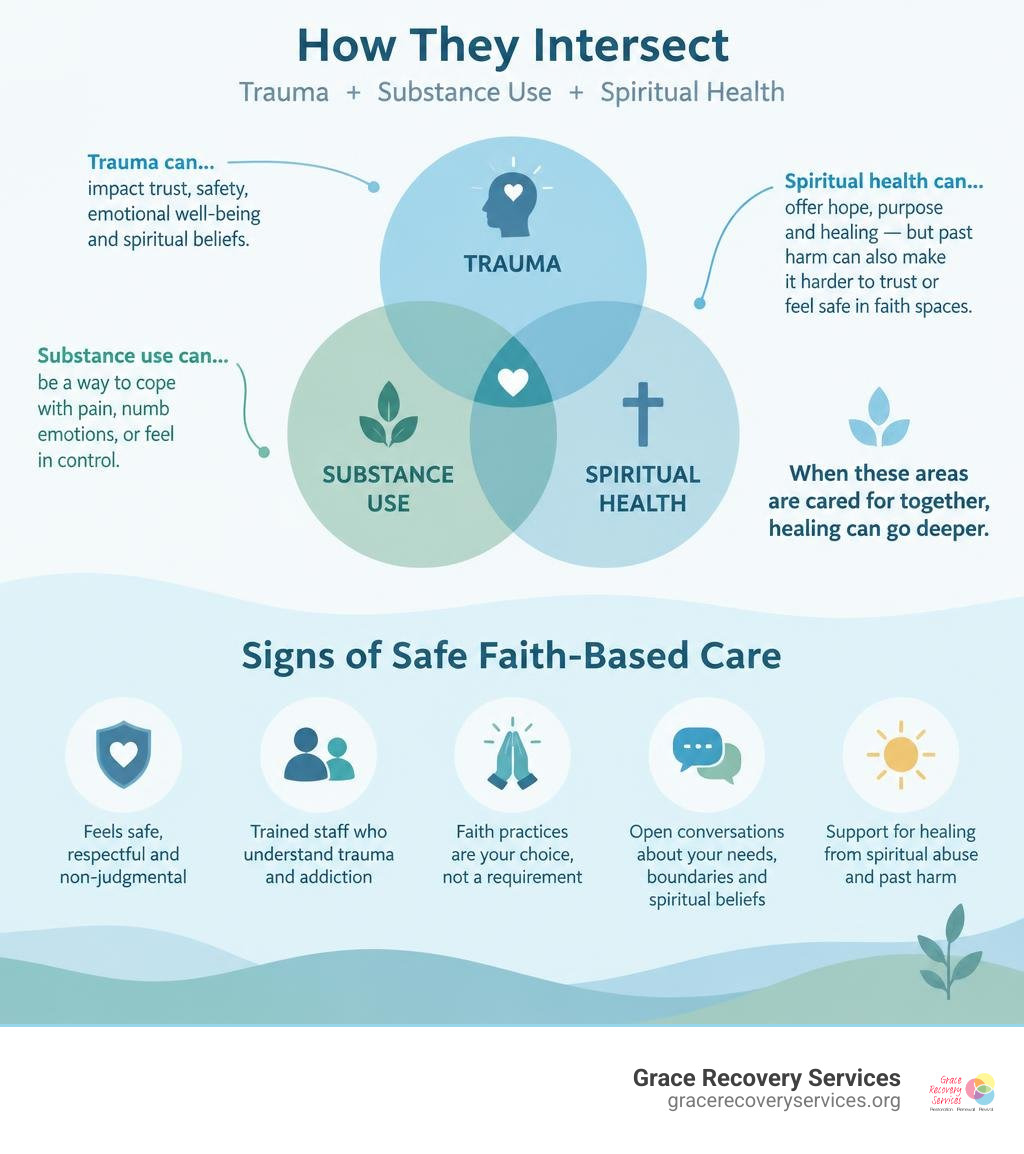
Living with emotional pain while navigating substance use disorder can feel like carrying an unbearable weight. For many individuals, substance use does not begin as a desire to cause self-harm; it often starts as an attempt to self-soothe an overwhelmed nervous system. When severe distress or relational wounds occur, the mind and body adapt to survive. Without healthy avenues for relief, substances frequently become a temporary shield against deep-seated pain.
Trauma can deeply disrupt one’s sense of self, safety, and relationship with God. In our clinical work across Western Pennsylvania, we frequently see how unaddressed wounds complicate substance use disorders. However, clinical literature and research on faith and spirituality in trauma resilience emphasize that when spirituality is integrated thoughtfully, it fosters meaningful post-traumatic growth.
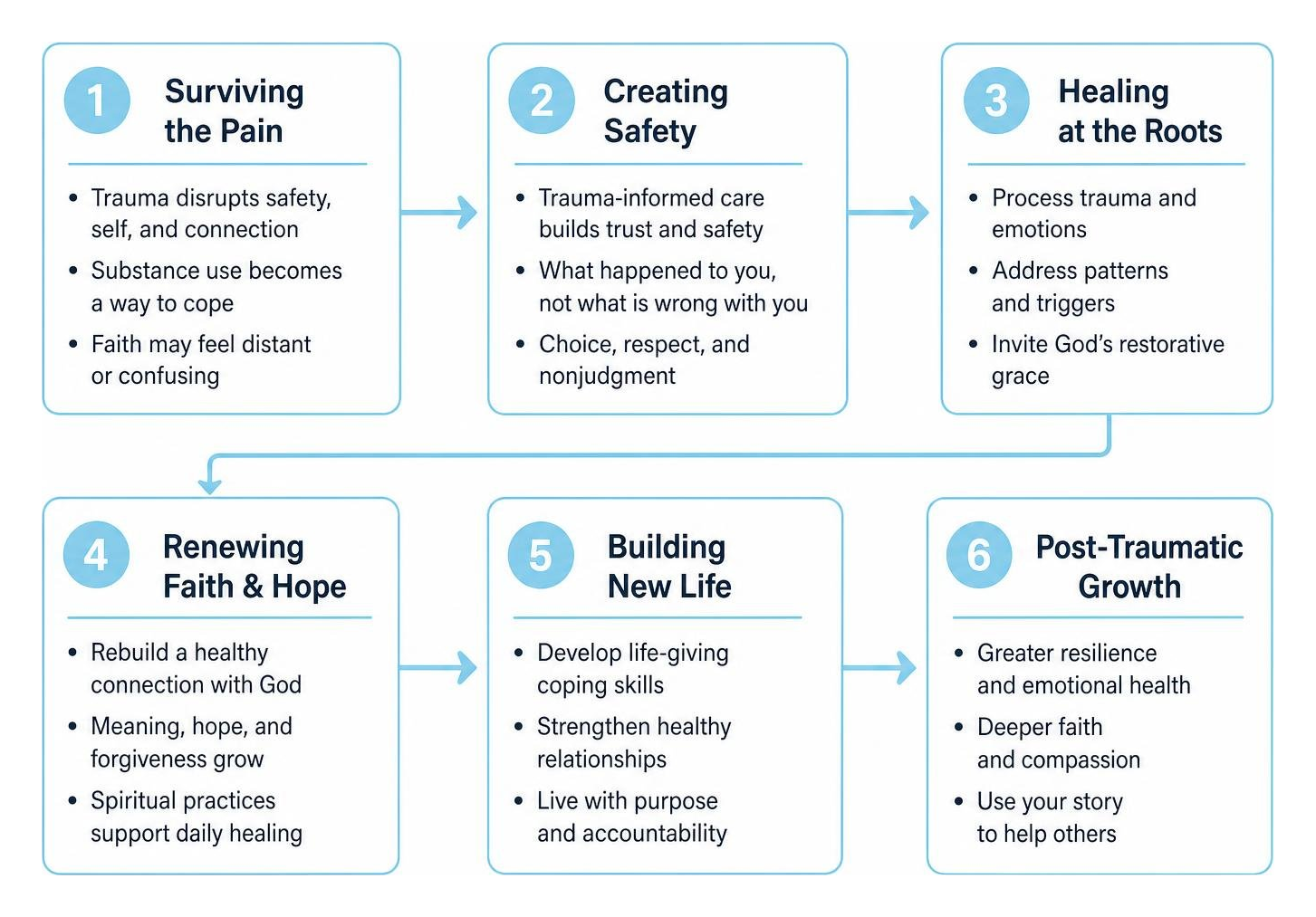
Implementing trauma-informed care within a faith setting means shifting the fundamental clinical question. Instead of asking, “What is wrong with you?” we ask, “What happened to you, and how can we support your healing?” This clinical posture validates a client’s lived experiences while inviting God’s restorative grace into the process.
Understanding the Dual Role of Faith in Healing
Faith and spirituality hold a complex, dual role in addiction recovery. On one hand, healthy spiritual engagement provides powerful protective factors. It offers a framework for meaning-making, instills hope, provides healthy community, and encourages life-giving coping strategies such as contemplative prayer and meditation. Research demonstrates that individuals who utilize positive religious coping often experience lower levels of psychological distress and greater emotional resilience.
On the other hand, religion can inadvertently become a source of profound emotional distress when mixed with punitive theology. When an individual in recovery is told that their addiction is purely a “lack of faith” or the result of personal sin, it compounds their trauma with toxic guilt and shame.
At Grace Recovery Services, we emphasize grace over shame. We recognize that:
- Healthy faith builds connection, personal agency, and psychological safety.
- Harmful religious messaging fosters isolation, fear, and worthlessness.
- Non-judgmental support creates an environment where clients can safely explore their doubts, pain, and relationship with God.
How Trauma Informed Faith Rehab Addresses Spiritual Wounds and Religious Trauma
Spiritual abuse and church hurt are heavy burdens that many carry into recovery. When spiritual authority has been used to manipulate, silence, or control, traditional faith settings can trigger fear and emotional dysregulation. A person who has experienced abuse within a religious environment may struggle to view God as loving or trustworthy.
In a clinical setting dedicated to faith-based trauma recovery, addressing these spiritual injuries is an integral part of the process. We utilize a trauma-sensitive theology that honors personal boundaries and client autonomy. Our clinicians walk alongside clients as they untangle God’s character from the harmful actions of people, fostering an environment where spiritual exploration is voluntary, gentle, and unforced.
Core Principles of a Trauma Informed Faith Rehab Program
A genuinely trauma-informed faith-based program operates on foundational clinical pillars established by trauma experts, including safety, trustworthiness, peer support, collaboration, and empowerment. By understanding how to evaluate trauma-informed addiction care, we can see how addressing underlying dysregulation provides lasting stability rather than short-term behavioral compliance.
| Dimension | Traditional Faith-Based Recovery | Trauma-Informed Clinical Faith Care |
|---|---|---|
| View of Addiction | Primarily viewed as a moral failing or spiritual deficit | Recognized as a complex medical condition often rooted in trauma |
| Emotional Safety | Focuses on confession, discipline, and conformity | Prioritizes physical, emotional, and psychological safety first |
| Clinical Integration | Employs non-clinical facilitators or pastoral counsel alone | Utilizes licensed clinicians integrating evidence-based therapies |
| Spiritual Practices | Often mandatory (required prayer, chapel, Bible study) | Always voluntary, client-led, and paced to individual comfort |
| Tone & Culture | Can unintentionally use shame- or guilt-based motivation | Centered on grace, empowerment, and non-judgmental support |
To guide this transformative journey, our team utilizes a four-stage clinical blueprint tailored to whole-person restoration:
- Take Off the Mask: Building genuine rapport, establishing felt safety, and dismantling the protective walls built around emotional pain.
- Heal the Wounds: Carefully identifying and processing underlying relational trauma, domestic distress, or past abuse with licensed professionals.
- Remove the Toxins: Uncovering cognitive distortions, shame narratives, and spiritual lies that fuel the cycle of addiction.
- Replace with Truth: Integrating empowering biblical truths and healthy behavioral patterns that reinforce self-worth, emotional regulation, and lasting recovery.
Integrating Clinical Modalities with Scripture

True healing occurs when clinical excellence works hand in hand with spiritual truth. Evidence-based psychotherapy—such as Cognitive Behavioral Therapy (CBT), Eye Movement Desensitization and Reprocessing (EMDR), and somatic therapies—helps regulate the nervous system and reprocess traumatic memories.
By integrating scripture with clinical therapy, we help clients connect scientific principles of neuroplasticity with biblical renewal. For example, scripture teaches us to be transformed by the renewing of our minds. Clinically, this aligns with cognitive reframing: identifying automatic negative thoughts, dismantling destructive belief systems, and replacing them with grounding truths. Contemplative prayer and scripture meditation are introduced to help calm an overactive stress response, allowing clients to experience God’s peace in both mind and body.
Culturally Responsive and Community-Centered Spiritual Support
Addiction affects diverse communities across Western Pennsylvania, and healing requires cultural humility. For many marginalized groups—including Black and Latine individuals—faith communities have historically served as vital centers of resilience, social justice, and mutual aid.
Research highlights that culturally tailored, faith-integrated initiatives effectively address health disparities by building on existing community trust and natural support systems. By offering culturally sensitive counseling that honors each person’s unique background, outpatient programs ensure that everyone feels respected, valued, and understood.
Navigating Outpatient Treatment and Recovery Pathways
Recovery is not an isolated event; it is an ongoing journey of restoration and renewal. Because substance use disorders disrupt everyday routines, outpatient care offers the unique benefit of allowing clients to receive intensive clinical treatment while staying connected to their families, jobs, and supportive local communities.
Flexible levels of care provide the necessary structure to build lasting sobriety:
- Christian Intensive Outpatient Programs (IOP): For clients needing comprehensive, multi-day clinical support, Christian trauma-informed IOP programs offer a structured blend of group therapy, individual trauma counseling, and spiritual exploration.
- Partial Hospitalization Programs (PHP): While we focus on outpatient levels of care, partial hospitalization serves as an intensive daytime outpatient pathway for individuals requiring daily clinical stabilization before stepping down into standard IOP.
- Individual Christian Counseling: Focused, one-on-one sessions with licensed professional counselors to navigate deep-seated wounds, marital challenges, and personal goals.
- Relapse Prevention & Aftercare Planning: Establishing healthy routines, boundary-setting strategies, and ongoing alumni support networks across Allegheny and Westmoreland counties.

Choosing an Outpatient Trauma Informed Faith Rehab in Western Pennsylvania
Selecting a recovery program is a deeply personal decision. When evaluating treatment options in the Pittsburgh, Penn Hills, or North Huntingdon areas, it is vital to look for centers that embody a whole-person approach to faith-based trauma recovery.
When researching trauma-informed addiction treatment options, consider asking potential providers the following questions to ensure they maintain clinical safety:
- Are your counselors licensed clinicians? Ensure therapists hold recognized state credentials (such as LPC, LCSW, or LMFT) with specialized training in trauma processing.
- How is spirituality integrated? Confirm that faith practices are invitational and restorative rather than mandatory, coercive, or shame-based.
- Do you treat co-occurring trauma and mental health conditions? True healing addresses underlying PTSD, depression, and anxiety alongside substance use.
- What physical and emotional safety protocols are in place? Safe environments protect client confidentiality, maintain clear personal boundaries, and respect survivor autonomy.
Frequently Asked Questions About Trauma-Informed Faith Recovery
How does a trauma-informed faith program differ from traditional Christian rehab?
Traditional faith-based programs often rely solely on spiritual disciplines—such as prayer, Bible reading, and pastoral mentorship—to address addiction, sometimes viewing substance use through a moral lens. A trauma-informed faith program combines Christian principles with licensed clinical care. It addresses the neurological, emotional, and relational wounds beneath addiction, utilizing evidence-based modalities while honoring personal boundaries in a shame-free environment.
Can someone who experienced religious abuse benefit from faith-based treatment?
Yes, provided the program adheres to strict trauma-informed standards. In a clinical faith-based setting, spiritual practices are entirely voluntary. Clinicians help clients deconstruct harmful theological messages, process church hurt, and rebuild a healthy, autonomous sense of spirituality at their own pace without coercion.
What should survivors of domestic or sexual violence look for in a faith rehab?
Survivors should prioritize outpatient centers with licensed clinicians trained in trauma-specific modalities. Look for programs that emphasize physical and emotional safety, transparent clinical boundaries, person-first language, and confidentiality. The program should never pressure a survivor to forgive prematurely or stay in unsafe relational environments.
Conclusion: Embracing Whole-Person Healing
Overcoming substance use disorder while carrying the weight of past trauma can feel daunting, but you do not have to walk this path alone. True healing does not come through condemnation, rigid compliance, or white-knuckling sobriety—it happens when your story is met with safety, clinical expertise, and transformative grace.
At Grace Recovery Services, our outpatient centers in Penn Hills (Pittsburgh) and North Huntingdon, PA, are dedicated to walking alongside you. We combine evidence-based therapy with Christian counseling to help restore your mind, body, and spirit. Whether you are seeking a fresh start through intensive outpatient care or focused individual therapy, we are here to support your journey of renewal and long-term sobriety.
If you or a loved one is ready to take the next step, explore our outpatient addiction treatment services or contact our team today for a compassionate, personalized assessment.
This article was researched with AI and heavily edited by Stephen Luther for accuracy and relevance.
Stephen Luther is the Executive Director and Founder of Grace Christian Counseling, Grace Recovery Services, WPA Counseling, NuWell Online Counseling and Coaching, and NuWell Health. He holds a Master’s degree in Education from the University of Georgia and a Master’s degree in Marriage and Family Therapy from Duquesne University. He is a licensed professional counselor in Pennsylvania.
Since 1997, Steve has been helping children, adolescents, and adults overcome a wide range of emotional and relational challenges. He specializes in working with hurting families, including those with foster, adopted, or traumatized children. Steve uses Attachment-Based Therapy, Splankna Healing, and Therapeutic Parent Coaching to support healing and restoration.
This guide is for educational and spiritual encouragement and is not a substitute for personalized professional counseling. If you are in crisis, please reach out for immediate help.