
What a Trauma-Informed Christian IOP Can Offer
A Christian IOP trauma-informed program combines structured addiction and mental health care with faith integration that respects each client’s story, choices, and pace. It can be a helpful option for someone whose trauma symptoms, substance use triggers, or emotional distress need more support than a weekly counseling appointment provides.
In a well-designed program, clients can expect:
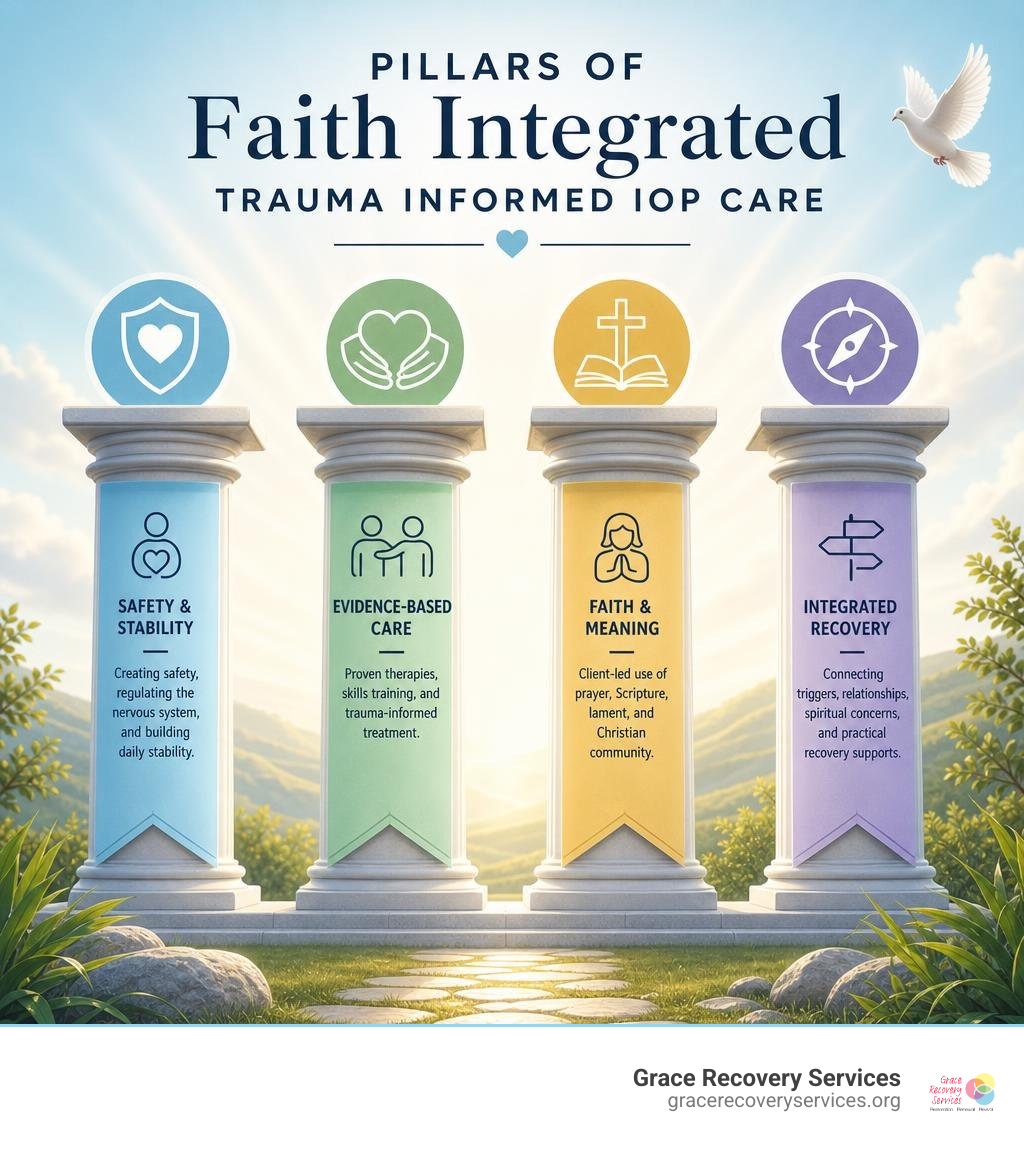
- Evidence-based care such as CBT, coping-skills practice, group therapy, and trauma-focused treatment when clinically appropriate
- A focus on safety, trust, nervous system regulation, and rebuilding daily stability before deep trauma processing
- Optional, client-led use of prayer, Scripture, lament, and Christian community as sources of hope and meaning
- Relapse-prevention planning that connects emotional triggers, relationships, spiritual concerns, and practical recovery supports
Faith is not a replacement for qualified clinical care. Instead, it can support the work by helping clients name shame, grief, fear, and disrupted beliefs with honesty and compassion. At Grace Recovery Services in the Pittsburgh area, a trauma-informed approach means no one has to minimize what happened to them in order to pursue recovery.
Know your Christian IOP trauma-informed terms:
Understanding the Core Foundations of a Christian IOP Trauma-Informed Approach
Trauma deeply impacts how a person experiences safety, relationships, and even their view of God. When painful life events collide with substance use disorders, the road to healing requires more than well-meaning spiritual platitudes. It requires clinical excellence, psychological safety, and an understanding of human neurobiology.
A trauma-informed Christian intensive outpatient program (IOP) meets individuals at this precise intersection. Rather than asking, “What is wrong with you?”, our clinicians ask, “What happened to you, and how has your nervous system learned to survive?”
True faith-based trauma recovery honors both the physical realities of trauma and the restorative power of Christian truth. The goal is to provide a stabilizing environment where the body learns it is safe, the mind is renewed through clinically sound strategies, and the spirit discovers renewed hope without judgment.
How Clinical Science and Biblical Principles Intersect
For decades, many people assumed that psychological science and Christian faith were at odds. In a modern trauma-informed clinical setting, we recognize that science simply reveals the intricate way God designed the human mind and body to respond to distress.
When a person experiences trauma, the brain’s survival alarms (the amygdala) can become hyperactive, while the thinking center (the prefrontal cortex) goes offline during moments of overwhelm. This neurobiological dysregulation frequently drives individuals to seek relief through substances.
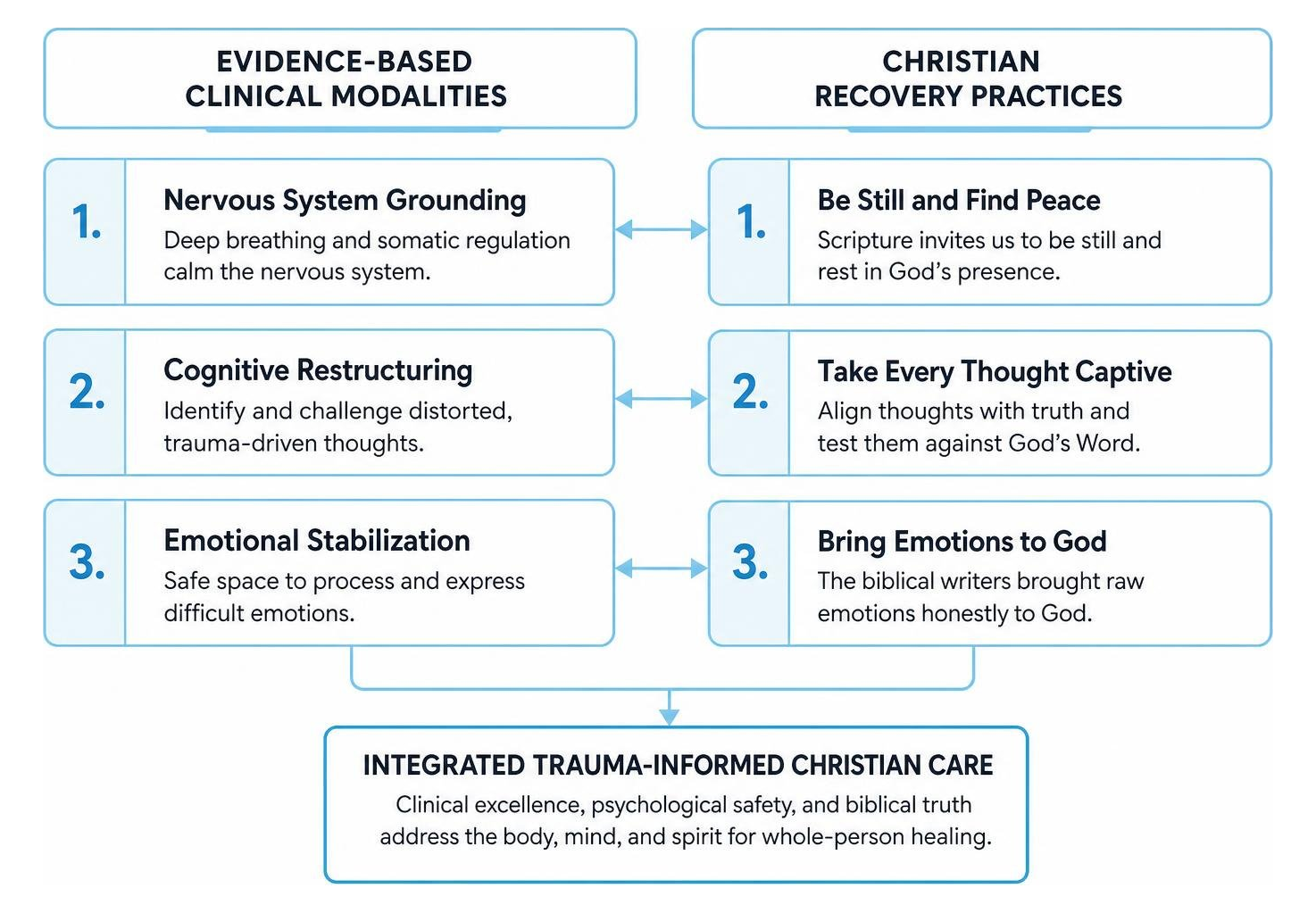
In our sessions, somatic regulation and cognitive reframing work hand-in-hand with Scripture reflection. For example:
- Nervous System Grounding: Teaching deep diaphragmatic breathing calms the vagus nerve, which mirrors the scriptural invitation to “be still” and find peace in God’s presence.
- Cognitive Restructuring: Identifying distorted, trauma-driven automatic thoughts aligns naturally with the biblical call to take every thought captive and test it against truth.
- Emotional Stabilization: Providing space for honest expression allows clients to process difficult feelings, just as the biblical writers regularly brought raw emotions to God.
By pairing clinical methods found in our guide to evidence-based trauma treatment with intentional spiritual formation, clients receive complete care that addresses the whole person.
How Christian IOP Trauma-Informed Care Integrates Evidence-Based Therapies
A high-standard Christian intensive outpatient treatment model uses research-backed counseling tools as the baseline of all clinical care. Faith serves as a catalyst for deeper honesty, rather than an excuse to skip essential psychological work.
Our clinical teams utilize evidence-based modalities adapted with sensitivity:
- Cognitive Behavioral Therapy (CBT): Helps clients examine how core beliefs formed during traumatic events (such as “I am unlovable” or “I am permanently broken”) fuel substance use. These beliefs are gently challenged and replaced with grounded truth and biblical affirmation of inherent worth.
- Dialectical Interventions: Equips individuals with distress-tolerance skills, mindfulness practices, and emotional-regulation techniques to navigate overwhelming cravings or flashbacks.
- Component-Based Strategies: Emphasizes relational safety, parts work, and narrative restructuring, reflecting principles highlighted in complex trauma treatment research in Christian contexts.
At Grace Recovery Services, we structure our clinical approach through our Counseling Blueprint, which guides clients through four intentional stages of healing:
- Take Off the Mask: Creating a safe, nonjudgmental environment where clients can drop defensive facades and acknowledge their genuine struggles with substances and emotional pain.
- Heal the Wounds: Identifying the root traumas, childhood attachment injuries, and unresolved grief that drive self-medicating behaviors.
- Remove the Toxins: Addressing unhelpful relationship dynamics, destructive thought loops, and behavioral triggers that sabotage recovery.
- Replace with Truth: Embedding core identity in Christ, establishing healthy boundaries, and building sustainable life skills.
Navigating the Three-Phase Framework of Faith-Integrated Trauma Healing
Healing from complex trauma cannot be rushed. Moving into deep trauma memories before an individual has reliable coping skills can lead to retraumatization and increased substance cravings.
To maintain safety, our approach to trauma-informed care utilizes the classic three-phase clinical framework established by trauma pioneer Judith Herman and expanded in the Restoring the Shattered Self complex trauma framework.
Phase 1: Establishing Safety and Nervous System Regulation
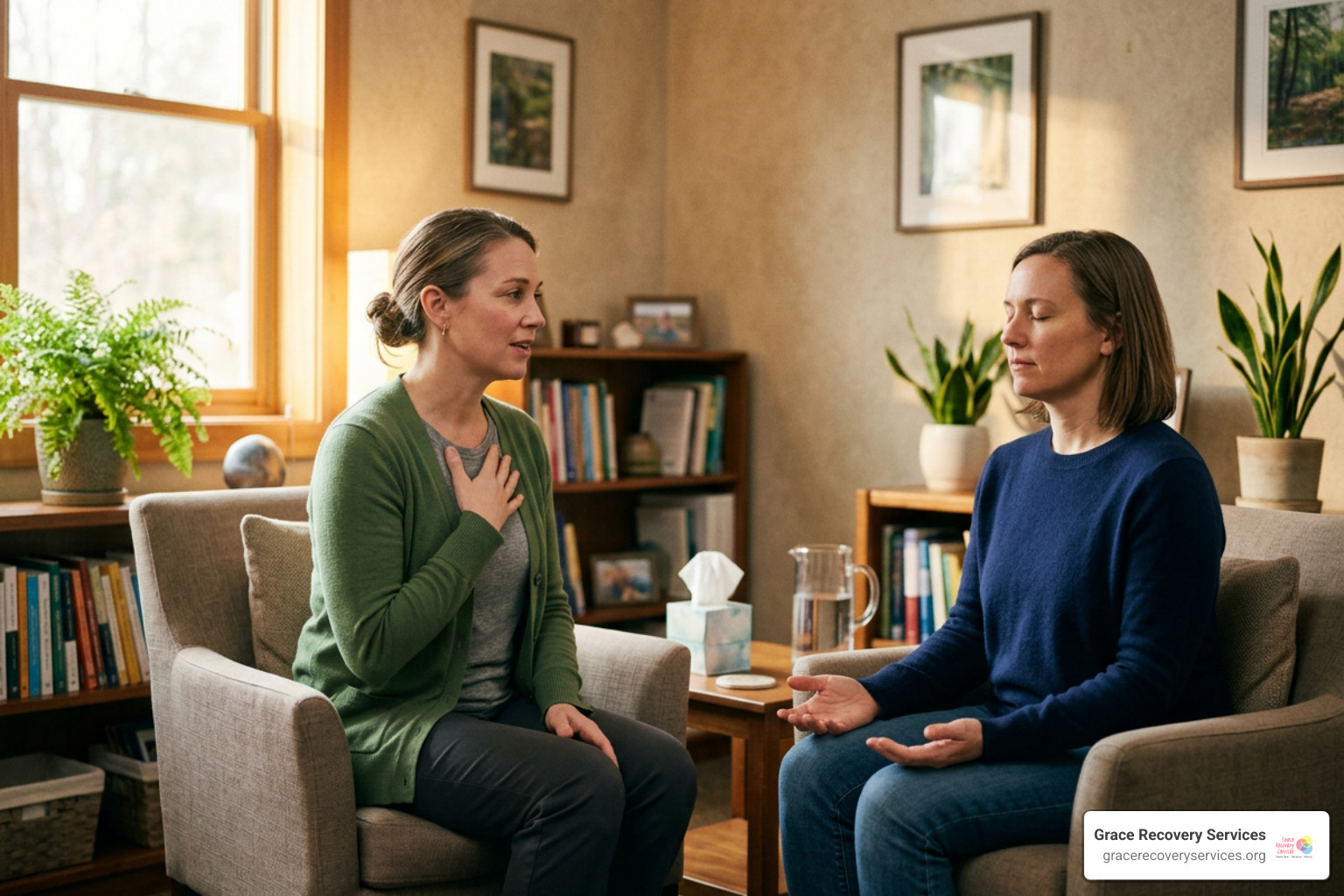
The first priority in any trauma-informed IOP is establishing physical, psychological, and relational safety. Before exploring past pain, clients must develop a grounded nervous system and trust in their therapeutic team.
During Phase 1, the clinical focus includes:
- Building a reliable therapeutic alliance where the client feels heard, respected, and in control of their therapeutic pace.
- Practicing somatic awareness and distress-tolerance techniques to manage triggers without turning to substances.
- Creating external stability in daily routines, including sleep hygiene, nutrition, and healthy interpersonal boundaries.
- Exploring the character of God as a safe refuge rather than a source of punitive fear.
Phase 2: Trauma Processing, Narrative Restorying, and Meaning-Making
Once a client exhibits consistent emotional regulation and coping stability, they may enter Phase 2. This stage involves processing painful memories, grieving significant losses, and addressing disrupted spiritual beliefs.
In a secular setting, this is often called narrative exposure or cognitive reprocessing. In our whole-person approach to faith-based trauma recovery, we weave in the biblical tradition of lament. Lament gives voice to sorrow, asks hard questions about suffering, and releases deep pain without fear of spiritual rejection.
Processing trauma within a grace-filled framework allows clients to experience profound shame reduction. They discover that their trauma responses were natural survival adaptations, not moral failures.
Phase 3: Spiritual Consolidation and Relapse Prevention
The final phase focuses on integration, purpose, and long-term sustainability. Clients transition from surviving past trauma to building a meaningful future in lasting recovery.
Key elements of Phase 3 include:
- Identity Reconstruction: Moving away from the identity of a “damaged victim” or “hopeless addict” toward seeing oneself as a resilient, redeemed child of God.
- Comprehensive Relapse Prevention: Developing detailed plans that connect physical, emotional, relational, and spiritual warning signs.
- Community Reconnection: Establishing healthy connections within local recovery fellowships, supportive church bodies, and family relationships.
- Aftercare Planning: Transitioning smoothly from intensive outpatient treatment to weekly outpatient counseling and peer support networks.
Outpatient Levels of Care and Signs You Need Intensive Support
Understanding which level of outpatient care fits your current situation is critical for finding lasting freedom from co-occurring trauma and substance use.
| Treatment Level | Weekly Time Commitment | Clinical Structure & Modalities | Best Suited For |
|---|---|---|---|
| Standard Outpatient Therapy | 1–2 hours per week | Weekly individual or couples counseling sessions focused on general maintenance and insight. | Individuals with stable daily routines, strong sobriety foundations, and mild symptoms. |
| Intensive Outpatient Program (IOP) | 9–15 hours per week (3–5 days) | Structured group therapy, weekly individual counseling, family support, and dual-diagnosis education. | Individuals experiencing active cravings, trauma triggers, or functional difficulty who need structured daytime/evening care while living at home. |
To learn more about structured outpatient pathways, review our overview of trauma-informed addiction treatment options.
Evaluating When Weekly Counseling Is No Longer Sufficient
While standard weekly therapy is valuable, it can feel like trying to empty a flooded basement with a teaspoon when severe trauma triggers and substance cravings are active.
You may benefit from our in-depth guide to what is an intensive outpatient program if you recognize any of the following signs:
- Escalating Substance Use: Cravings feel unmanageable between weekly appointments, leading to frequent slips or increasing dependency.
- Chronic Dissociation or Hyperarousal: You find yourself stuck in severe fight-or-flight panic, or feeling numb and disconnected from everyday life.
- Functional Impairment: Work performance, family responsibilities, or basic self-care are slipping due to emotional exhaustion.
- Isolation and Shame: You are withdrawing from healthy relationships and hiding the extent of your emotional distress from loved ones.
Assessing If a Christian IOP Trauma-Informed Model Is Right for You
A faith-integrated IOP allows individuals to receive intensive, multi-day clinical support while continuing to sleep in their own beds, maintain employment, and stay connected with family life.
For individuals in Western Pennsylvania, programs offering faith integrated recovery in Pittsburgh provide the ideal balance: rigorous clinical structure combined with local community immersion and peer accountability.

Essential Questions to Ask When Choosing a Faith-Centered Outpatient Provider

Not all faith-based programs approach trauma with clinical rigor. When seeking care for yourself or a loved one, asking clear questions ensures you find a program that provides true psychological safety.
- Are your counselors licensed mental health professionals? Verify that therapists hold state licenses (such as LPC, LCSW, or LMFT) and have specific training in dual-diagnosis treatment.
- What specific trauma-informed models do you use? Look for established modalities such as CBT, somatic regulation tools, and phased trauma treatment rather than informal counseling alone.
- How is Christian faith integrated into daily sessions? Ensure that faith is treated as an empowering resource and that participation in spiritual exercises is supportive rather than coercive.
- How do you address spiritual pain or church hurt? A safe provider will welcome your honest doubts and respect your boundaries if you have experienced religious manipulation in the past.
- What does aftercare planning look like? Ask how the clinical team helps clients transition from IOP into long-term outpatient counseling and local recovery communities.
Frequently Asked Questions About Faith-Based Trauma Treatment
Can I participate if my faith feels fragile or wounded by spiritual trauma?
Yes. A truly trauma-informed Christian program provides a safe, nonjudgmental environment for individuals at any point in their spiritual journey. If you are experiencing spiritual distress, wrestling with doubt, or carrying wounds from past religious environments, your experience will be honored. We never use guilt, pressure, or shame in our clinical care.
How many hours per week does intensive outpatient care require?
Most intensive outpatient programs provide between 9 and 15 hours of structured clinical therapy per week. These hours are typically divided across three to four days in convenient morning or evening blocks, allowing clients to maintain work, school, and family obligations while receiving comprehensive care.
How does trauma-informed treatment differ from traditional Bible study?
While Bible study focuses on devotional learning and spiritual instruction, trauma-informed clinical treatment is led by licensed mental health professionals who address the biological, psychological, and relational impacts of trauma. It utilizes clinical techniques to regulate the nervous system, reframe harmful core beliefs, and treat substance use disorders at their root.
Conclusion
Overcoming co-occurring trauma and substance use is a journey of whole-person restoration. True healing does not ask you to choose between scientific excellence and deep spiritual hope. By addressing the nervous system, resolving past wounds, and anchoring your identity in enduring truth, sustainable recovery is possible.
At Grace Recovery Services, our dedicated clinical teams in Penn Hills and North Huntingdon are here to walk beside you with warmth, professional expertise, and genuine compassion.
If you or someone you care about is ready to take the next step toward lasting freedom, explore our comprehensive outpatient program and reach out to our team today for a confidential, personalized assessment.
This article was researched with AI and heavily edited by Stephen Luther for accuracy and relevance.
Stephen Luther is the Executive Director and Founder of Grace Christian Counseling, Grace Recovery Services, WPA Counseling, NuWell Online Counseling and Coaching, and NuWell Health. He holds a Master’s degree in Education from the University of Georgia and a Master’s degree in Marriage and Family Therapy from Duquesne University. He is a licensed professional counselor in Pennsylvania.
Since 1997, Steve has been helping children, adolescents, and adults overcome a wide range of emotional and relational challenges. He specializes in working with hurting families, including those with foster, adopted, or traumatized children. Steve uses Attachment-Based Therapy, Splankna Healing, and Therapeutic Parent Coaching to support healing and restoration.
This guide is for educational and spiritual encouragement and is not a substitute for personalized professional counseling. If you are in crisis, please reach out for immediate help.