
What You Need to Know Before Choosing an Intensive Outpatient Program
What is an intensive outpatient program (IOP)? Here is a quick answer:
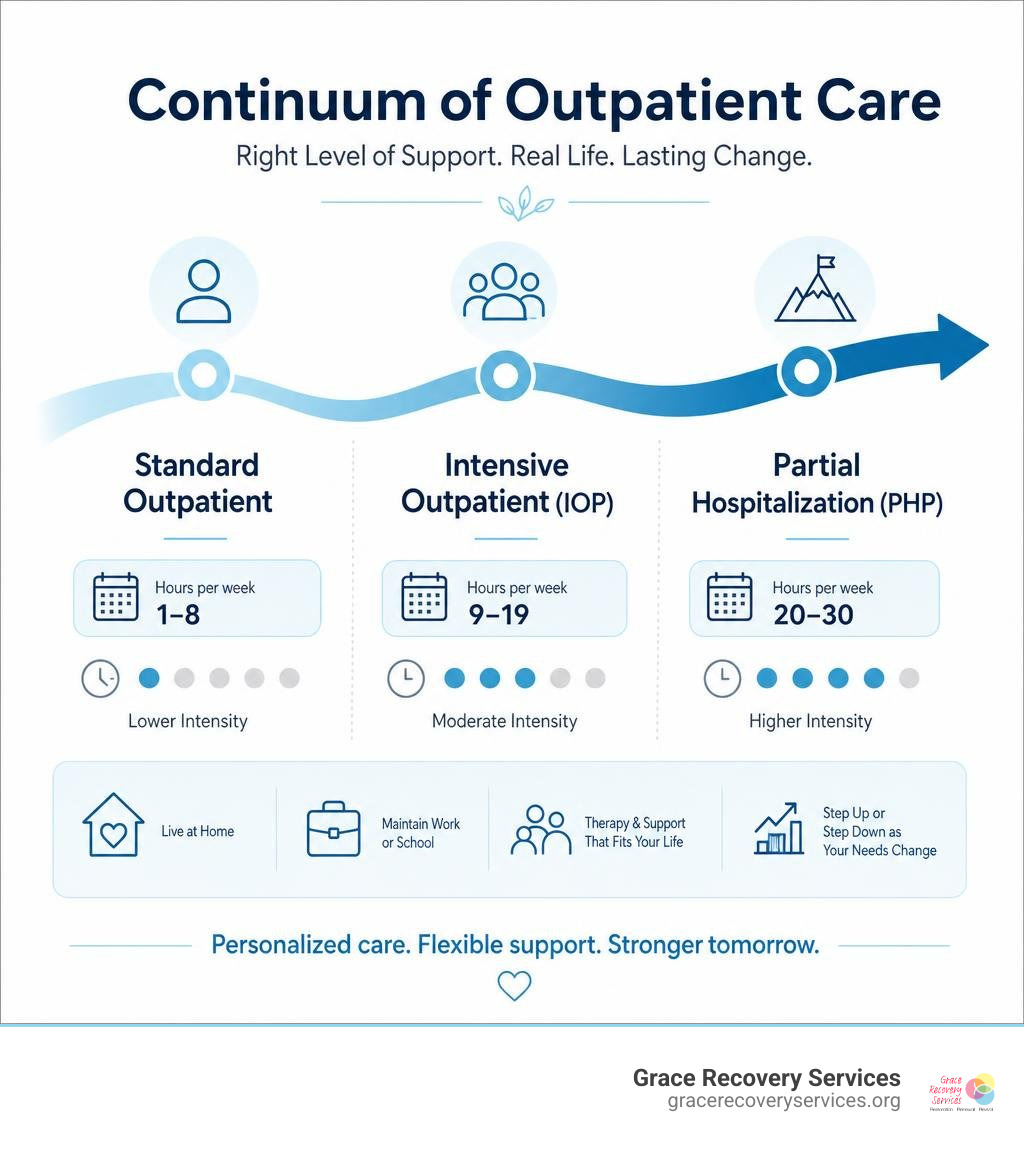
An intensive outpatient program (IOP) is a structured, supportive outpatient treatment program for substance use disorders and co-occurring mental health conditions. It provides a minimum of 9 hours of clinical therapy per week for adults — through group counseling, individual therapy, and psychoeducation — while allowing you to live at home, maintain your daily routine, and keep up with work, school, or family responsibilities.
At a glance:
- Who it’s for: Adults or adolescents dealing with substance use disorders, co-occurring mental health conditions, or those transitioning from a higher level of structured care
- Hours per week: 9 to 19 hours for adults (minimum 6 hours for adolescents)
- Where you live: At home — maintaining your daily life and community connections
- Typical length: Around 12 to 16 weeks of active treatment, with a median completion time of 81 days
- What it treats: Alcohol use disorder, drug use disorders, anxiety, depression, trauma, and dual diagnosis conditions
If you or someone you love is seeking more support than weekly therapy can provide, but still needs the flexibility to remain at home, an IOP may be exactly the right fit.
According to SAMHSA, nearly 46% of substance use disorder treatment facilities in the United States offer IOP — and research consistently shows that for people with manageable withdrawal risk, structured outpatient programs offer highly effective, robust clinical outcomes with minimal disruption to daily life.
At Grace Recovery Services, we offer faith-integrated, trauma-informed intensive outpatient care in the Pittsburgh area — because we believe recovery is not just about stopping a behavior. It is about restoring a life.
Quick look at what is intensive outpatient program:
What Is Intensive Outpatient Program Care?
To truly understand what is intensive outpatient program care, it helps to look at how medical and behavioral health professionals organize treatment. The American Society of Addiction Medicine (ASAM) establishes a continuum of care framework used across the country. Within this framework, an Intensive outpatient program (sometimes called IOT or Intensive Outpatient Treatment) is classified as Level 2.1 care.
This level of care is designed to be a highly structured, evidence-based therapeutic option. As a fully outpatient option, an IOP allows you to receive intensive support without staying overnight at a facility. Instead, clients live at home, sleep in their own beds, and continue to participate in their communities while receiving professional, multi-day clinical support.
At Grace Recovery Services, we recognize that the traditional acute care model—which treats addiction as a short-term crisis—is often not enough. True healing requires a chronic care, continuum-of-care model that supports you as you transition back into the rhythms of everyday life. For a deeper look at how outpatient structures are organized, you can explore our Detailed Guide to Outpatient Programs.
Core Components of a What Is Intensive Outpatient Program Structure
An IOP is defined by its structure, clinical standards, and scheduling flexibility. According to federal guidelines, the core structure of an adult IOP must include:
- Minimum Hour Requirements: A minimum of 9 hours of therapeutic contact per week for adults (and a minimum of 6 hours for adolescents). Most programs facilitate between 9 and 19 hours of weekly programming.
- Group Therapy: The foundation of the IOP model. Groups typically range from 8 to 15 members (and 6 to 8 for deeper process-oriented groups). Group therapy allows clients to practice communication skills, build peer support, and reduce the isolation that so often feeds addiction.
- Individual Counseling: One-on-one sessions, usually lasting 30 to 50 minutes, focusing on short-term recovery goals, identifying triggers, and tracking individual progress.
- Psychoeducation: Educational sessions that teach the science of addiction, the impact of trauma on the brain, and practical relapse prevention skills.
- Scheduling Flexibility: To accommodate school, work, and family, sessions are often offered in the mornings or during evening hours.
This structured yet flexible approach is what makes Intensive outpatient therapy: What it is, programs, and more such a valuable option for those who need professional help but cannot pause their daily lives. You can read more about how we structure these sessions on our Intensive Outpatient page.
Who is a Good Candidate for a What Is Intensive Outpatient Program Level of Care?
An IOP is an incredibly effective level of care, but it is not the right fit for everyone. To ensure clinical safety and the best possible outcomes, specific criteria must be met. A good candidate for an IOP typically meets the following profile:
- Low Risk of Acute Withdrawal: The client does not require immediate, medically supervised 24-hour acute detoxification. If ambulatory (outpatient) detoxification is utilized, symptoms must be mild and monitored closely.
- Stable Physical and Psychological Health: Any co-occurring medical or mental health conditions must be stable enough that they do not require 24-hour psychiatric or medical monitoring.
- A Supportive Home Environment: The client must have a safe, stable place to live. Returning home to an environment where others are actively using substances makes outpatient recovery incredibly difficult.
- High Motivation or Structural Accountability: Clients who are motivated to change—or those who have external accountability, such as court mandates or professional licensing requirements—thrive in this environment. In fact, SAMHSA reports show that court-mandated clients are highly successful in completing IOP programs.
- Need for Step-Down or Step-Up Care: IOP is perfect for clients transitioning out of a partial hospitalization program (PHP) to ease back into daily life, or for those in standard weekly outpatient therapy who find they need a higher level of support to prevent a relapse.
Understanding these requirements is a crucial first step in the recovery journey. For a detailed breakdown of these clinical benchmarks, see our guide on Making the Grade with IOP Program Requirements.
Comparing Levels of Outpatient Care: IOP vs. PHP vs. Standard Outpatient Treatment
When exploring treatment options, the terminology can feel overwhelming. How do you choose between a Partial Hospitalization Program (PHP), an Intensive Outpatient Program (IOP), and standard outpatient therapy?
The primary differences lie in the time commitment, clinical intensity, and the level of daily structure provided.
| Feature | Partial Hospitalization Program (PHP) | Intensive Outpatient Program (IOP) | Standard Outpatient Treatment |
|---|---|---|---|
| Weekly Time Commitment | 20+ hours per week (typically 4 to 8 hours/day, 5 days/week) | 9 to 19 hours per week (typically 3 hours/day, 3 to 4 days/week) | 1 to 5 hours per week (typically 1 or 2 individual/group sessions) |
| Living Arrangements | Lives at home | Lives at home | Lives at home |
| Clinical Intensity | High; includes regular psychiatric monitoring and medical check-ins | Moderate to High; structured therapy and case management | Low to Moderate; maintenance and long-term support |
| Typical Duration | 3 to 6 weeks | 12 to 16 weeks (median of 81 days) | Ongoing (several months to years) |
| Best Suited For | Severe symptoms; step-down from intensive care; needs daily clinical supervision | Moderate symptoms; stable home environment; balancing work/family | Mild symptoms; long-term recovery maintenance; highly independent |
This comparison highlights how outpatient programs are designed to meet you exactly where you are. If you are looking for a complete overview of how these levels fit together, check out our Detailed Guide to Outpatient Programs.
The Difference Between IOP and Partial Hospitalization Programs (PHP)
The distinction between an IOP and a PHP is one of the most common areas of confusion. While both allow you to live at home, a PHP requires a much more significant daily time commitment.
A PHP is often referred to as “day treatment.” It was originally designed for mental health conditions before being widely adopted by addiction recovery programs. In a PHP, you will spend the majority of your day—often 5 to 6 hours, 5 days a week—at the clinical facility, participating in intensive therapy, medical evaluations, and structured activities.
An IOP, on the other hand, is built to fit around your life. With a commitment of 9 to 19 hours per week, you might attend three-hour sessions on three evenings or mornings each week. This leaves ample time to maintain your employment, attend school, or care for your children.
According to Chapter 4. Services in Intensive Outpatient Treatment Programs – Substance Abuse: Clinical Issues in Intensive Outpatient Treatment – NCBI Bookshelf, the flexibility of the IOP structure allows clients to immediately practice the coping skills they learn in group therapy in their real-world environments, reinforcing their recovery in real-time.
Core Services and Therapeutic Approaches in an IOP
A high-quality IOP is not just a collection of random support groups; it is a carefully coordinated clinical program. The core services offered within a clinical IOP include:
- Evidence-Based Therapies: Programs utilize proven clinical modalities like Cognitive Behavioral Therapy (CBT) to identify unhelpful thought patterns, and Dialectical Behavior Therapy (DBT) to build distress tolerance and emotional regulation.
- Trauma-Informed Care: Recognizing that trauma is frequently at the root of substance use, clinicians provide care that prioritizes physical and emotional safety, building trust, and healing relational wounds.
- Case Management: Helping clients navigate the practical challenges of life, such as coordinating with medical professionals, securing housing, finding vocational training, or meeting legal requirements.
- 24-Hour Crisis Support: Providing access to support or peer recovery warm lines during off-hours to help clients manage intense cravings or high-trigger situations at home.
- Family Services: Psychoeducational groups and therapy sessions designed to heal family dynamics, address codependency, and build a supportive home recovery environment.

These services work together to address the clinical issues outlined in the federal guidelines of Substance Abuse: Clinical Issues in Intensive Outpatient Treatment – NCBI Bookshelf.
Integrating Faith and the Counseling Blueprint in Recovery
At Grace Recovery Services, we believe that clinical excellence and deep spiritual healing go hand in hand. While we utilize standard, evidence-based therapies, we also offer Christian Intensive Outpatient Treatment that integrates biblical principles of hope, grace, and redemption.
Our core approach is built upon the Counseling Blueprint, a transformative four-stage healing journey designed to bring lasting restoration to your mind, body, and spirit:
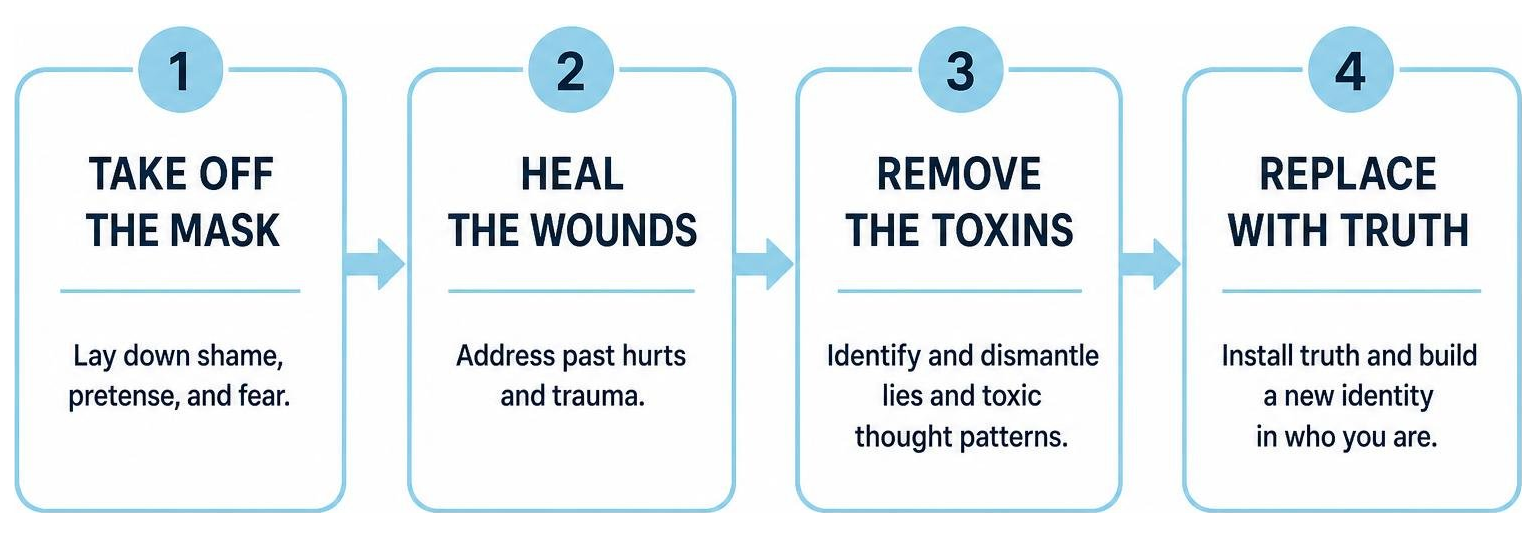
- Take Off the Mask: We begin by building genuine rapport and a foundation of absolute trust. In this safe, non-judgmental space, you can lay down the heavy burden of shame, pretense, and fear.
- Heal the Wounds: Together, we gently explore the emotional, relational, and trauma-related hurts of your past. We believe that addressing these core wounds is essential for sustainable, long-term recovery.
- Remove the Toxins: In this stage, we identify and dismantle unhelpful beliefs, lingering lies, and toxic thought patterns that have kept you trapped in cycles of addiction.
- Replace with Truth: Finally, we install empowering, accurate, and biblically grounded perspectives about who you are, your worth, and your future.
By walking through these stages, our clients do not just learn to manage their symptoms; they experience a profound personal renewal.
The Benefits and Effectiveness of Intensive Outpatient Programs
Is an intensive outpatient program actually effective? The clinical research says a resounding yes.
A landmark meta-analysis demonstrated that for the vast majority of individuals dealing with drug or alcohol use disorders who do not require immediate 24-hour medical detox, IOP outcomes are clinically robust and highly effective.
Some of the most significant advantages of an IOP include:
- Cost-Effectiveness: Because clients live at home, an IOP is highly cost-effective, making high-quality clinical care far more accessible without the added expense of boarding.
- Maintaining Daily Responsibilities: You do not have to put your life, career, or education on hold. You can continue working, attending classes, and caring for your family while receiving professional care.
- Real-World Practice: When you learn a new coping mechanism in group therapy, you can test it out in your daily life that very evening. This immediate application helps solidify your recovery skills.
- Peer Support and Community: You build a local network of peers who are also walking the path of recovery in Western Pennsylvania, creating lasting relationships of mutual accountability.
- Family Involvement: Healing does not happen in a vacuum. IOP allows your loved ones to participate in family counseling and educational groups, helping to restore broken relationships.
As highlighted in the SAMHSA Advisory PDF, these factors combine to make outpatient care a highly successful, flexible, and sustainable option. For those seeking a spiritually grounded approach, our Faith-Based Outpatient Addiction Treatment brings these benefits into a community of shared faith and mutual encouragement.
Frequently Asked Questions About Intensive Outpatient Programs
How many hours a week does an IOP require?
For adults, a standard intensive outpatient program requires a minimum of 9 hours of therapeutic contact per week, typically spread across 3 days (such as 3 hours per day, 3 days per week). Depending on individual clinical needs, programming can scale up to 19 hours per week. For adolescents, the clinical standard is a minimum of 6 hours of weekly treatment.
What is the typical duration of an IOP?
The active phase of an IOP typically lasts between 12 and 16 weeks. According to data from the Treatment Episode Data Set, the median length of stay for adults who successfully complete an IOP is 81 days. After completing the active phase, clients usually transition to a less intensive standard outpatient or continuing care phase to support long-term maintenance.
Can I work or go to school while in an IOP?
Yes, absolutely. One of the primary benefits of an IOP is its structural flexibility. Programs are specifically designed to accommodate working professionals, students, and parents by offering flexible scheduling options, including morning sessions or evening tracks.
Finding the Right IOP Near You in Western Pennsylvania
If you or a loved one is searching for a compassionate, professional, and faith-integrated path to recovery, Grace Recovery Services is here for you. We are proud to serve communities across Western Pennsylvania, including Allegheny County and Westmoreland County.

We offer dedicated outpatient care tailored to the unique needs of our local communities:
- Pittsburgh & Penn Hills Area: Our counseling and outpatient programs in the Penn Hills area provide a warm, welcoming space for those seeking healing in the greater Pittsburgh region. Learn more about How Christian IOP Programs in Penn Hills Can Help You Recover.
- North Huntingdon & Irwin: For those in Westmoreland County, our North Huntingdon office offers comprehensive, trauma-informed outpatient services close to home. Explore how to Get Your Spirit in Gear with North Huntingdon Christian IOP.
- Western PA Local Resources: We are dedicated to providing accessible, high-quality, and spiritually grounded recovery options throughout the region. Check out our guide on Pittsburgh Christian Outpatient Rehab Local Options to Consider.
Conclusion
Recovery is a journey of restoration, renewal, and hope. It is about taking off the mask of active addiction, healing the deep relational and emotional wounds of the past, removing toxic beliefs, and replacing them with the truth of your worth and purpose.
If you are ready to take the next step toward healing without putting your life on hold, we invite you to reach out to us. Our compassionate team of licensed professionals is ready to walk beside you every step of the way.
For more information about our outpatient programs and how we can support your recovery journey, visit our outpatient program page or contact Grace Recovery Services today. Let us help you restore your life, your family, and your spirit.
This article was researched with AI and heavily edited by Stephen Luther for accuracy and relevance.
Stephen Luther is the Executive Director and Founder of Grace Christian Counseling, Grace Recovery Services, WPA Counseling, NuWell Online Counseling and Coaching, and NuWell Health. He holds a Master’s degree in Education from the University of Georgia and a Master’s degree in Marriage and Family Therapy from Duquesne University. He is a licensed professional counselor in Pennsylvania.
Since 1997, Steve has been helping children, adolescents, and adults overcome a wide range of emotional and relational challenges. He specializes in working with hurting families, including those with foster, adopted, or traumatized children. Steve uses Attachment-Based Therapy, Splankna Healing, and Therapeutic Parent Coaching to support healing and restoration.
This guide is for educational and spiritual encouragement and is not a substitute for personalized professional counseling. If you are in crisis, please reach out for immediate help.