
Why a Christian Addiction Aftercare Program Could Be the Missing Piece in Your Recovery
A Christian addiction aftercare program is structured support that continues after you complete a primary rehab or treatment program — combining clinical care with faith-based practices like prayer, scripture, Christian counseling, and accountability within a believing community.
Here’s what you need to know quickly:
- What it is: Ongoing outpatient support after treatment, grounded in biblical principles and evidence-based therapy
- Who it’s for: Anyone in recovery who wants faith integrated into their healing — including clients with co-occurring mental health needs
- What it includes: Christian counseling, relapse prevention, support groups, spiritual disciplines, life skills, and family involvement
- Why it matters: Research shows 40–60% of people in recovery experience relapse — aftercare dramatically reduces that risk
- Where to start (Western PA): Grace Recovery Services offers faith-based aftercare in the Pittsburgh area through our Intensive Outpatient Program (IOP)
Finishing a treatment program is a major milestone. But for many people, the weeks and months after treatment are where the real battle begins.
The transition back to everyday life — work, relationships, stress, old environments — can feel overwhelming without the right support in place. And without a structured plan, that vulnerability window is real.
For people of faith, that transition carries an extra dimension. Recovery isn’t just about staying sober. It’s about who you’re becoming — spiritually, emotionally, and relationally.
That’s where a Christian aftercare program makes a meaningful difference. It doesn’t just hand you coping tools. It walks alongside you with grace, accountability, and a community rooted in something larger than any single struggle.
At Grace Recovery Services in Western Pennsylvania, we see this every day. Healing the whole person — mind, body, and spirit — requires more than a 30-day program. It requires ongoing, compassionate care that meets people where they are, without shame.
What is a Christian Addiction Aftercare Program?
A Christian addiction aftercare program is a specialized, ongoing support system designed for individuals who have completed initial addiction treatment. Unlike standard aftercare, which focuses primarily on clinical check-ins and secular support groups, a faith-based program integrates spiritual growth as the cornerstone of sustained sobriety.
In our Western Pennsylvania programs, we focus on a framework of grace over shame. We believe that addiction often stems from deep relational wounds, trauma, and spiritual isolation. By combining clinical excellence with a Christ-centered foundation, we help clients build a new identity. This approach is rooted in Christian Integrated Addiction Treatment, which treats the psychological and spiritual dimensions of recovery as interconnected.
Academic research, including studies on The Christian Impact on Addiction Recovery, demonstrates that integrating spiritual practices into recovery provides individuals with an unshakeable sense of hope, purpose, and community safety. When clients understand their worth through the lens of God’s grace, the heavy burden of shame begins to lift, paving the way for lasting transformation.
| Feature | Standard Aftercare Programs | Christian Aftercare Programs |
|---|---|---|
| Primary Focus | Behavioral modification & coping mechanisms | Spiritual renewal, identity in Christ, & behavior change |
| Counseling Style | Secular cognitive behavioral therapies | Christian Recovery Services integrating clinical therapy with biblical truth |
| Support Network | Secular peer groups (e.g., traditional 12-Step) | Church communities, faith-based small groups, & mentors |
| View of Recovery | Managing a chronic behavioral condition | Ongoing spiritual discipleship, healing, & transformation |
| Guiding Authority | Clinical frameworks & self-reliance | Holy Spirit, scripture, & evidence-based clinical wisdom |
The Difference Between Standard and Faith-Based Aftercare
While standard aftercare programs provide valuable tools for managing cravings, they often miss the spiritual vacuum that addiction leaves behind. A faith-based aftercare program bridges this gap by introducing daily spiritual disciplines — such as prayer, scripture contemplation, and fellowship — alongside evidence-based therapy.
In standard programs, clients are often taught to rely entirely on their own willpower or a generalized “higher power.” In a Christian program, we explicitly invite the healing power of Jesus Christ into the recovery journey. This doesn’t mean we ignore science. Rather, we use highly effective clinical modalities, like trauma-informed therapy, and view them as tools God has provided for our emotional and mental restoration.
Why Aftercare is Essential for Long-Term Recovery
The first 90 days following primary treatment represent the most vulnerable window for any individual in recovery. The sudden transition from a highly structured environment back into the unstructured reality of everyday life can trigger intense stress.
Statistically, the scope of the addiction crisis remains staggering. In recent years leading up to June 2026, data showed that:
- Over 48.4 million Americans struggled with a substance use disorder.
- Drug-related tragedies claimed more than 80,000 lives annually.
- The economic burden of the opioid crisis alone was estimated by the CDC to exceed $1.5 trillion annually.
These numbers highlight that addiction is a complex, chronic condition requiring long-term management rather than a quick fix. Aftercare acts as a protective bridge across the critical 90-day gap, offering consistent accountability when old temptations resurface. If you are wondering how to navigate this delicate phase, learning How To Stay Sober After Rehab is a vital first step in establishing a stable daily routine.
Relapse Prevention in a Christian Addiction Aftercare Program
In a faith-based context, relapse prevention is approached through both a practical and spiritual lens. We acknowledge that temptation is real, and we teach clients to identify their unique emotional and environmental triggers. However, we also equip them for what scripture describes as spiritual warfare — the battle over one’s thoughts, identity, and peace of mind.
Our approach to Addiction Recovery And Relapse Prevention emphasizes:
- Daily Spiritual Anchors: Starting and ending the day with prayer and scripture to keep the mind centered on grace.
- Active Accountability: Having trusted mentors or sponsors who can be called during moments of vulnerability.
- Healthy Coping Skills: Replacing substance use with prayer, journaling, exercise, and fellowship.
- Shame Reduction: Understanding that a lapse or a difficult day does not erase your identity as a child of God.
Core Components of a Christian Aftercare Plan
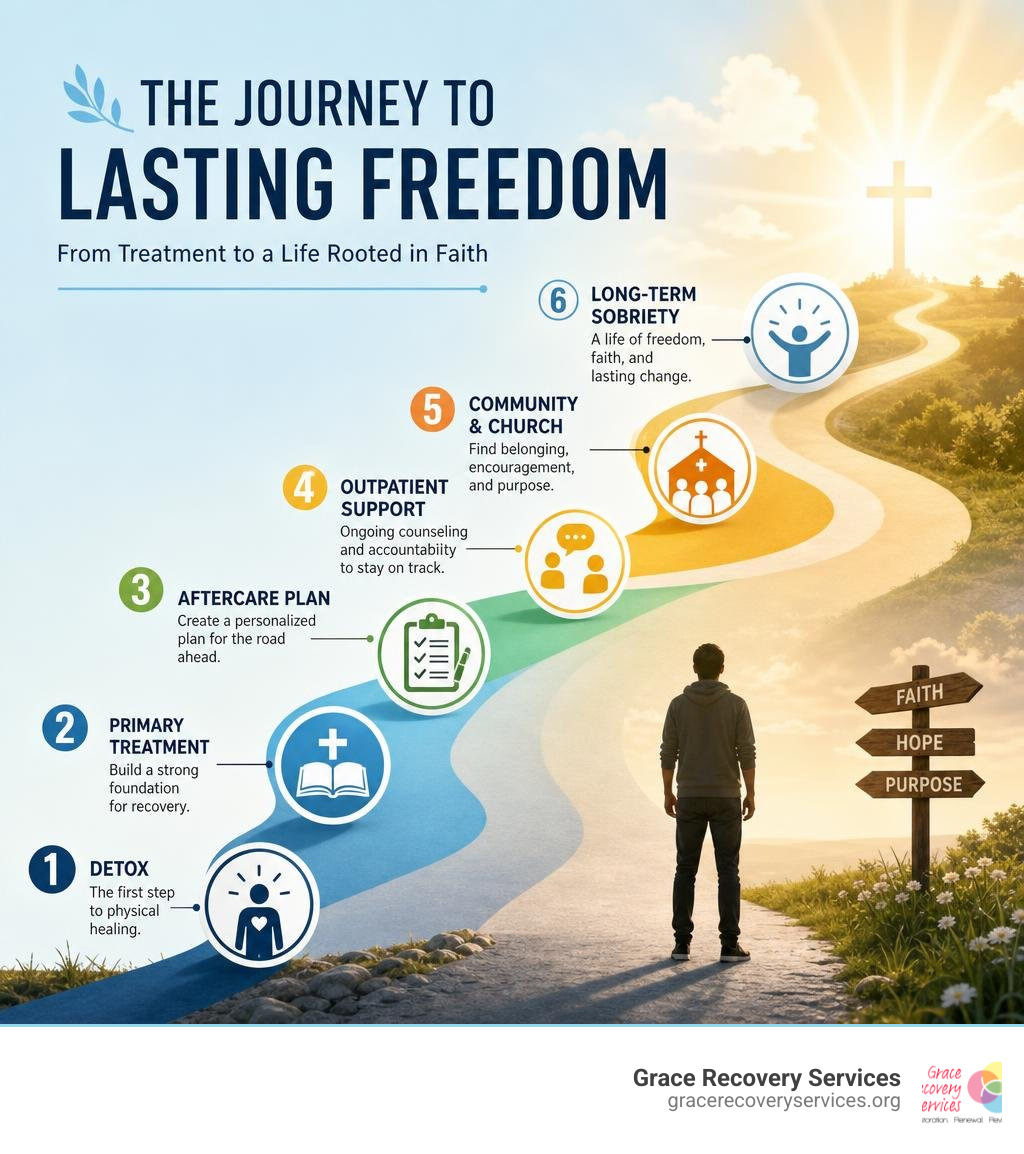
A comprehensive Christian addiction aftercare program is not a one-size-fits-all schedule. It is a personalized plan tailored to each client’s unique psychological, physical, and spiritual needs. For those seeking Faith Based Aftercare In Pittsburgh For Lasting Sobriety, we design plans that integrate seamlessly into outpatient life, allowing clients to work and care for their families while receiving consistent support.
A solid aftercare plan typically includes:
- Ongoing Individual Counseling: One-on-one sessions with a Christian counselor to process ongoing challenges.
- Faith-Based Support Groups: Regular attendance at Christian recovery groups (such as Celebrate Recovery or local church-based circles).
- Spiritual Discipleship: Mentorship from mature believers who provide guidance on walking out biblical principles daily.
- Regular Church Attendance: Reconnecting with a local, grace-filled church body for worship and community.
Integrating Mental Health and Spiritual Healing
Many individuals struggling with substance use also navigate co-occurring mental health challenges, such as anxiety, depression, or post-traumatic stress. True restoration requires addressing these issues simultaneously through Integrated Treatment For Addiction And Mental Health.
We believe that spiritual practices like prayer and scripture contemplation beautifully complement clinical therapies like Cognitive Behavioral Therapy (CBT). For example, when treating anxiety, we help clients challenge negative thought patterns using both psychological tools and the comforting truths of scripture. This trauma-informed, holistic approach ensures that the mind is cared for with clinical precision while the spirit is nurtured with biblical hope.
Practical Life Skills and Vocational Support
Long-term recovery is built on a foundation of stability. A major component of aftercare is helping clients rebuild their practical lives. This includes teaching essential life skills that may have been neglected during active addiction.
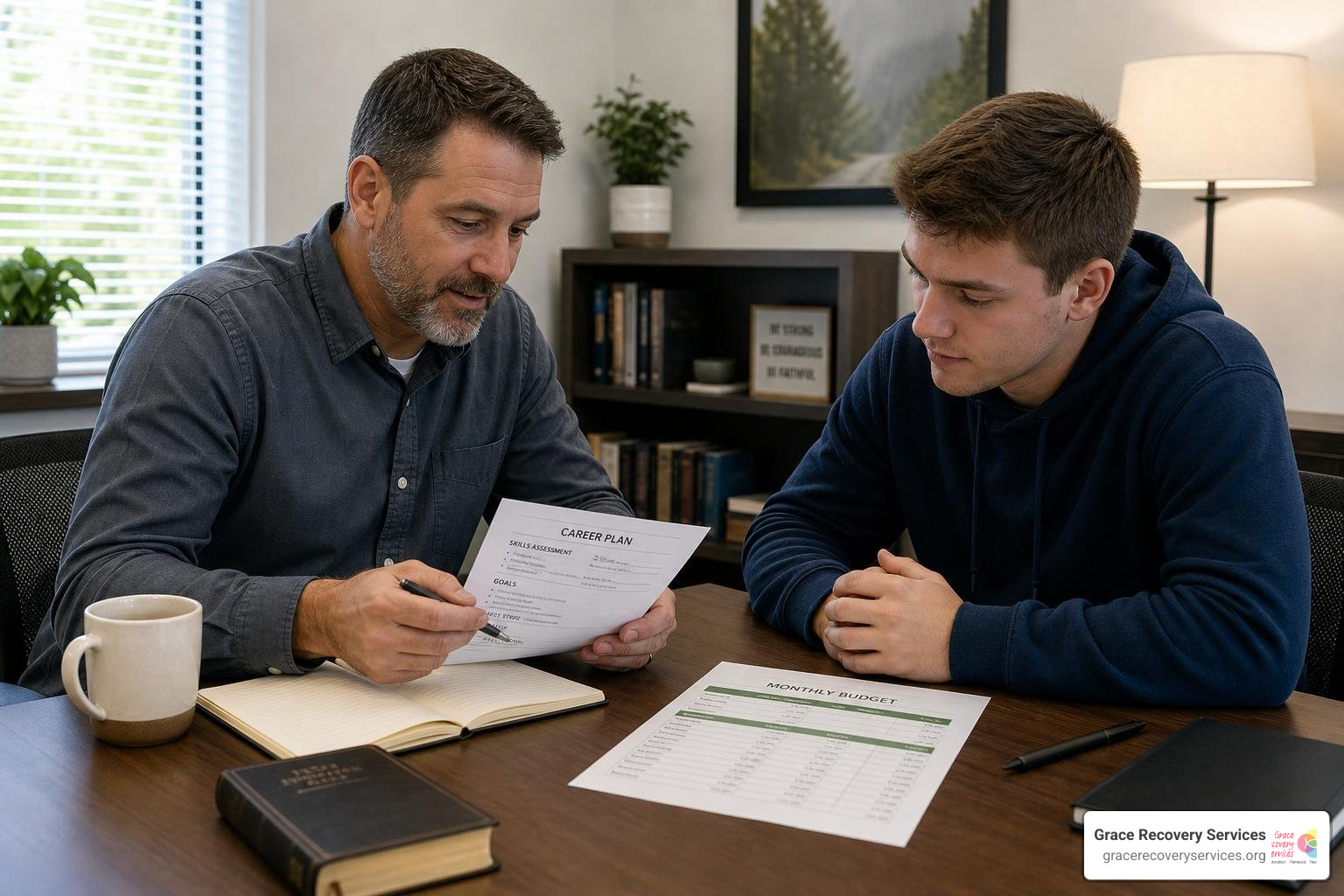
In our aftercare planning, we focus on:
- Employment and Career Guidance: Assisting clients in finding meaningful work and preparing for interviews.
- Financial Stewardship: Teaching basic budgeting, saving, and managing resources in a way that honors God.
- Time Management: Helping clients structure their days to avoid the isolation and boredom that often lead to relapse.
- Healthy Daily Routines: Emphasizing nutrition, consistent sleep patterns, and physical wellness.
The Role of Community, Mentors, and Family
No one is meant to walk the road of recovery alone. Isolation is the breeding ground for addiction, whereas community is the environment where recovery thrives. Local churches, dedicated mentors, and Christian peer groups play an indispensable role in welcoming individuals back into healthy social circles.
Equally important is the restoration of the family unit. Active addiction often leaves behind a wake of broken trust, codependency, and relational wounds. Introducing Family Support In Addiction Recovery helps loved ones understand their own healing journey while learning how to support the client constructively.
Rebuilding Family Dynamics with Grace
Rebuilding family relationships requires time, patience, and an abundance of grace. In our outpatient family counseling sessions, we guide families through the process of:
- Establishing Healthy Boundaries: Learning how to love someone without enabling destructive behaviors.
- Practicing biblical forgiveness: Letting go of past resentment while recognizing that trust must be rebuilt gradually over time.
- Improving Communication: Replacing accusation and defensiveness with honest, compassionate dialogue.
- Shared Spiritual Growth: Encouraging families to pray together and support one another’s spiritual walk.
How to Choose a Christian Addiction Aftercare Program
When searching for the right program in Western Pennsylvania, it is important to look for a provider that balances clinical integrity with deep spiritual convictions.
Consider the following factors when making your decision:
- Outpatient Flexibility: Does the program offer intensive outpatient options (IOP) that fit around your work or school schedule?
- Clinical Credentials: Are the counselors licensed professionals (such as LPCs) who specialize in addiction and trauma-informed care?
- Local Integration: Is the program connected with local churches and support networks in the Pittsburgh, Penn Hills, or North Huntingdon areas?
- Holistic Approach: Does the program address co-occurring mental health issues alongside spiritual growth?
For those exploring local options, reaching out to a team specializing in Faith Based Recovery Pittsburgh can provide clarity. You can also explore trusted directories like Pennsylvania Christian Rehabs to compare local resources and find the program that best aligns with your recovery goals.
Frequently Asked Questions About Christian Aftercare
What if I have co-occurring mental health issues?
It is incredibly common to experience mental health challenges alongside addiction. A high-quality Christian aftercare program utilizes integrated treatment, meaning clinical professionals address both your mental health (such as depression, trauma, or anxiety) and your recovery goals simultaneously. We believe that clinical therapy and spiritual healing go hand in hand.
How long does a Christian aftercare program last?
There is no fixed timeline for recovery. Because addiction is a chronic condition, aftercare is an individualized journey. Some clients benefit from structured outpatient aftercare for several months, while others maintain connection with support groups and mentors as a lifelong practice to protect their sobriety.
Can my family be involved in my aftercare plan?
Absolutely. We highly encourage family involvement. Restoring family relationships is a key part of holistic healing. Through family counseling and educational sessions, your loved ones can learn how to build healthy boundaries, practice forgiveness, and walk alongside you in grace.
Take the Next Step Toward Lasting Renewal
Recovery is a journey of continuous steps, and you do not have to walk it alone. At Grace Recovery Services, we are dedicated to providing compassionate, trauma-informed, and clinically excellent outpatient care for individuals and families in Western Pennsylvania.
With convenient locations in Pittsburgh (Penn Hills area) and North Huntingdon, our team is ready to support your transition into a life of lasting sobriety, emotional healing, and spiritual renewal. Whether you are looking for Christian counseling, family support, or a structured Intensive Outpatient Program, we are here to walk with you every step of the way.
Reach out to the Grace Recovery Team today to schedule a confidential assessment and begin your next chapter of healing.
This article was researched with AI and heavily edited by Stephen Luther for accuracy and relevance.
Stephen Luther is the Executive Director and Founder of Grace Christian Counseling, Grace Recovery Services, WPA Counseling, NuWell Online Counseling and Coaching, and NuWell Health. He holds a Master’s degree in Education from the University of Georgia and a Master’s degree in Marriage and Family Therapy from Duquesne University. He is a licensed professional counselor in Pennsylvania.
Since 1997, Steve has been helping children, adolescents, and adults overcome a wide range of emotional and relational challenges. He specializes in working with hurting families, including those with foster, adopted, or traumatized children. Steve uses Attachment-Based Therapy, Splankna Healing, and Therapeutic Parent Coaching to support healing and restoration.
This guide is for educational and spiritual encouragement and is not a substitute for personalized professional counseling. If you are in crisis, please reach out for immediate help.