
The Bible’s Call to a Clear Mind: Be Sober Minded Scripture at a Glance
Be sober minded scripture is one of the most practical and urgent themes in the entire New Testament. Here are the key passages you need to know:
| Scripture | Core Message |
|---|---|
| 1 Peter 5:8 | Be watchful — the devil prowls like a roaring lion |
| 1 Peter 1:13 | Set your hope fully on grace; prepare your mind for action |
| 1 Thessalonians 5:6-8 | Stay alert and sober, not asleep in the darkness |
| Romans 12:2 | Be transformed by renewing your mind |
| Titus 2:2, 6 | Sober-mindedness is a mark of godly character |
| Philippians 4:8 | Fix your thoughts on what is true, pure, and good |
| 2 Timothy 1:7 | God gives a spirit of power, love, and a sound mind |
| 2 Corinthians 10:5 | Take every thought captive to obey Christ |
In a world that pulls our attention in a hundred directions at once, mental clarity is not just a wellness goal — it is a spiritual necessity. The Bible doesn’t just tell us to avoid alcohol. It calls us to something far deeper: a disciplined, alert, and hope-filled mind that is grounded in faith and resistant to every force that would pull us off course.
Whether you are walking through addiction recovery, supporting a loved one, or simply trying to stay spiritually sharp, these scripture passages offer both a compass and an anchor.
I’m Stephen A. Luther, MSEd, MEd, LPC, Executive Director of Grace Recovery Services, and for over two decades I have worked at the intersection of clinical counseling and biblical principles — helping individuals and families in Western Pennsylvania find healing through trauma-informed, faith-integrated care that takes be sober minded scripture seriously as a foundation for lasting recovery. In the sections ahead, we’ll walk through 25 powerful passages and show you how to apply them where it matters most.
What Does it Mean to Be Sober-Minded?
When we hear the word “sober,” our minds often go straight to the absence of alcohol or drugs. While that is a vital component of recovery, the biblical definition of being sober-minded is much more expansive. It describes a state of mental discipline, self-control, and rational thinking. To be sober-minded is to be “steady in the head.” It means having a mind that isn’t clouded by substances, yes, but also isn’t hijacked by overwhelming anxiety, pride, or worldly distractions.
In 1 Peter 5:8-12 ESV – Bible Gateway, the Apostle Peter links sobriety of mind directly to watchfulness. He warns us that our adversary, the devil, is looking for someone to “devour.” If our minds are “intoxicated” by anger, fear, or various obsessions, we lose our ability to spot the danger. At Grace Recovery Services, we see this every day: mental clarity is the first line of defense in maintaining a life of freedom.
The biblical definition of a sober mind
The New Testament frequently uses the Greek word nepho, which literally means to be free from the influence of intoxicants. However, its metaphorical meaning is even more powerful: it refers to being “calm and collected” or having “good sense.” It is the ability to think reasonably and logically even when life feels chaotic.
biblical sobriety is about having a “right mind.” Think of the man in the Gospels who was possessed by a legion of demons; after meeting Jesus, he was found sitting at His feet, clothed and in his “right mind.” This is the goal of Christian Sobriety: a mind that is no longer controlled by internal or external “legions” of chaos, but is instead governed by the peace of Christ.
Why Be Sober Minded Scripture Matters in 2026
As we navigate the landscape of April 2026, the need for a sober mind has never been more acute. We live in a “hyper-fast” world filled with digital noise, social media frenzy, and constant societal pressure. It is incredibly easy to lose our footing.
Being sober-minded allows us to “slow down” and see life as it truly is—peaceful, joyful, and calm through the Holy Spirit. Without this scriptural grounding, we risk “identity amnesia,” where we forget who we are in Christ and start chasing temporary fixes for eternal longings. The Sobriety Benefits go far beyond physical health; they include the ability to be present for our families, to make wise decisions under pressure, and to maintain a deep, unshakeable hope.
The Power of Be Sober Minded Scripture in Recovery
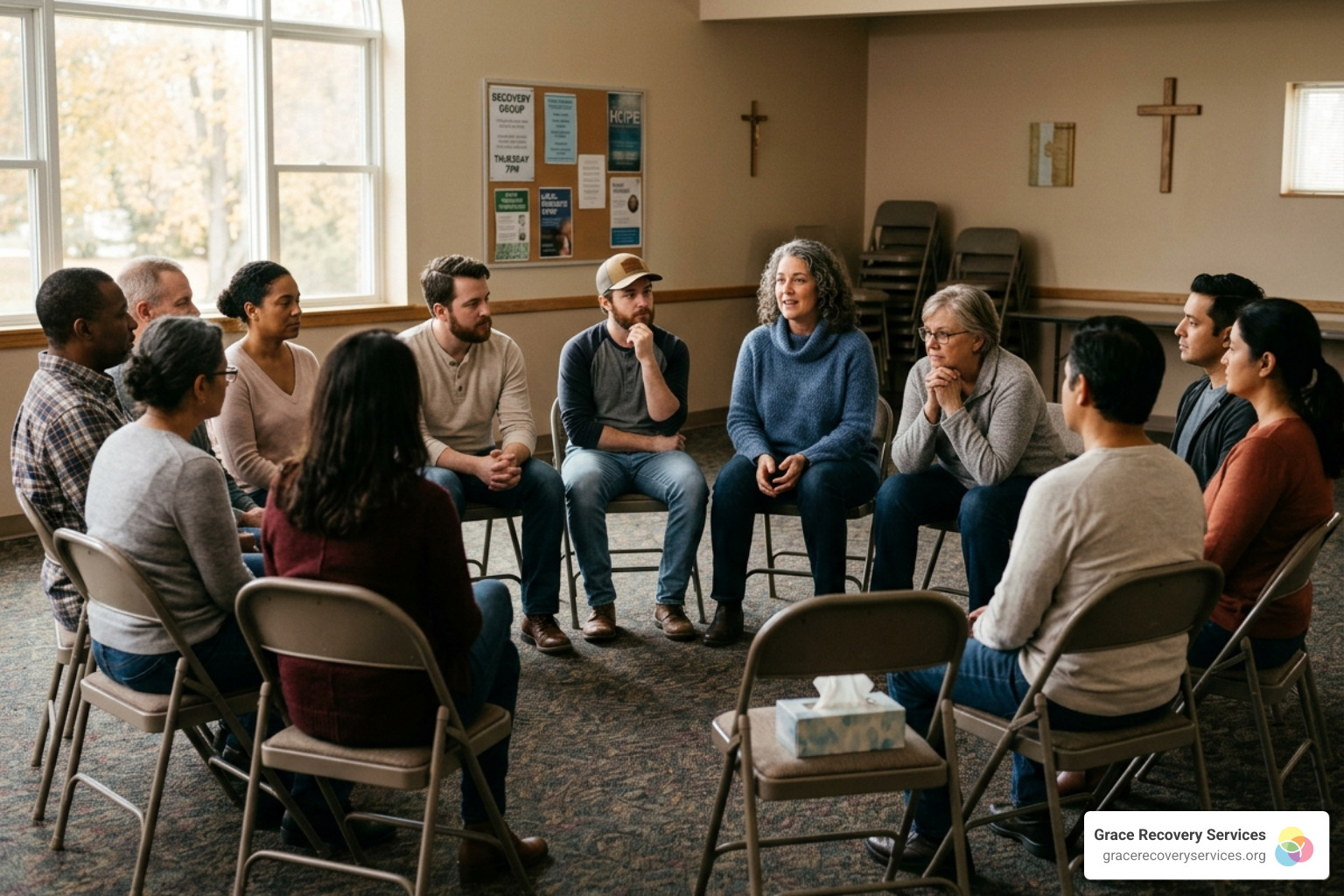
Recovery is rarely just about “stopping” a behavior; it is about “starting” a new way of thinking. At our offices in Pittsburgh and North Huntingdon, we emphasize that recovery is a holistic journey involving the mind, body, and spirit. We believe that understanding Higher Power Higher Purpose biblical principles for addiction is essential because addiction often begins as a way to cope with trauma or a lack of spiritual identity.
Verses for Spiritual Vigilance and Warfare
The Bible frames our struggle for a clear mind as part of a larger spiritual battle. We are told in 1 Peter 5:8-9 ESV – Bible Gateway to be sober-minded and watchful because the devil prowls like a “roaring lion.”
- 1 Peter 5:8: “Be sober-minded; be watchful. Your adversary the devil prowls around like a roaring lion, seeking someone to devour.”
- Ephesians 6:12: Reminds us that our struggle is not against “flesh and blood,” but against spiritual forces. A sober mind helps us recognize that our “enemy” isn’t our spouse or our boss—it’s the spiritual darkness trying to trip us up.
- 1 Corinthians 15:34: “Wake up from your drunken stupor, as is right, and do not go on sinning.” This is a call to moral and spiritual alertness.
- 1 Thessalonians 5:6: “So then let us not sleep, as others do, but let us keep awake and be sober.”
- 2 Corinthians 10:4: Explains that our weapons are not worldly but have “divine power to destroy strongholds.”
Spiritual vigilance means being alert to our triggers. Just as you would be alert if you knew a coyote was in your neighborhood, we must be alert to the thoughts and environments that threaten our peace.
Be Sober Minded Scripture for Renewing Your Thoughts
Transformation happens through the mind. If we want to change our lives, we must change our thoughts. To Renew Your Mind with These Powerful Bible Verses is to replace the lies of addiction and shame with the truth of God’s grace.
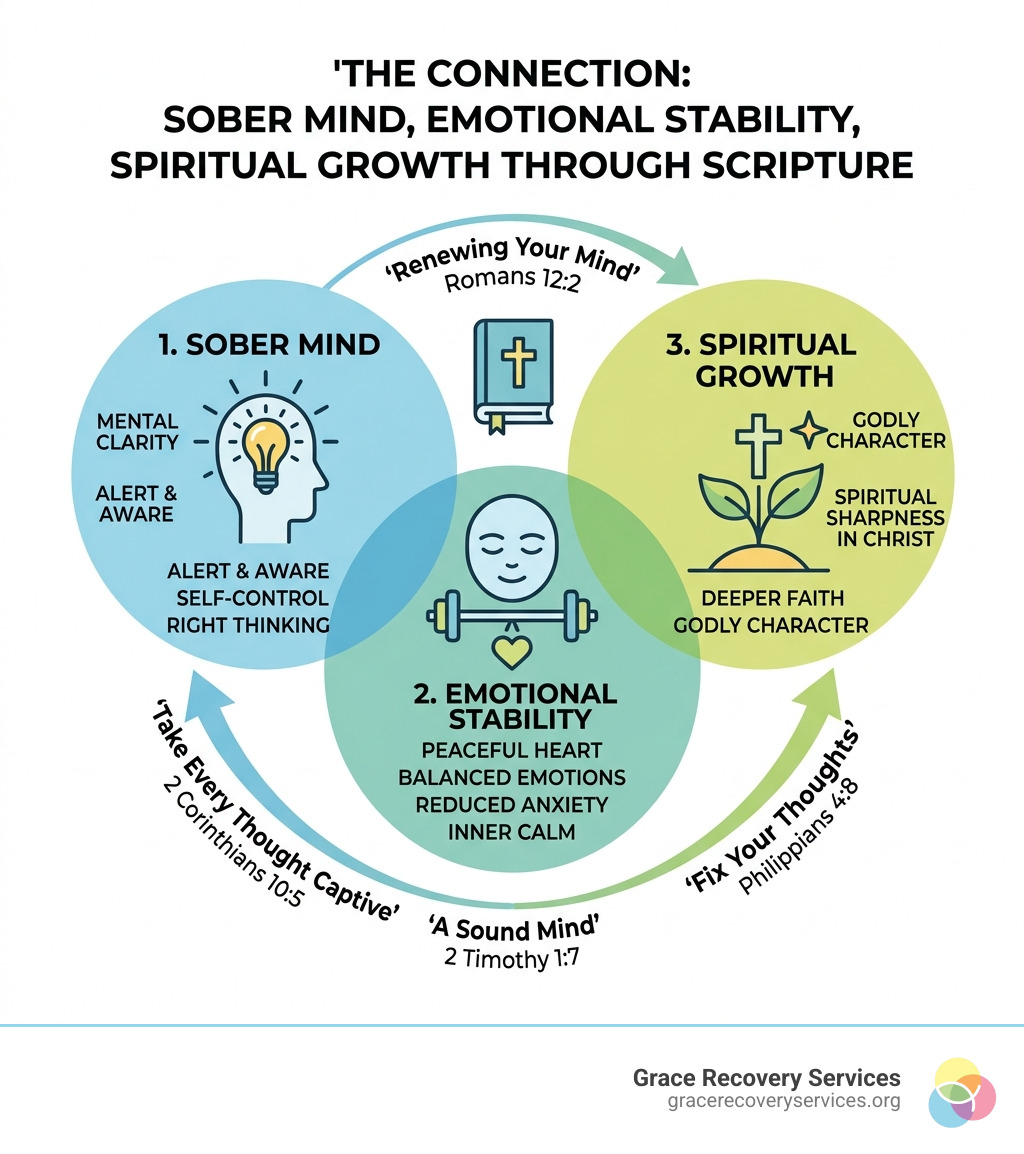
- Romans 12:2: “Do not be conformed to this world, but be transformed by the renewal of your mind.”
- Philippians 4:8: Tells us to think on things that are true, honorable, just, pure, and lovely. This is the ultimate “filter” for a sober mind.
- 2 Corinthians 10:5: “We destroy arguments and every lofty opinion raised against the knowledge of God, and take every thought captive to obey Christ.”
- Colossians 3:2: “Set your minds on things that are above, not on things that are on earth.”
- Isaiah 26:3: “You keep him in perfect peace whose mind is stayed on you, because he trusts in you.”
- Ephesians 4:23: “…and to be renewed in the spirit of your minds.”
- Proverbs 23:7: “For as he thinks in his heart, so is he.”
In our trauma-informed care, we help clients recognize “racing thoughts” or “pessimistic loops” and use these scriptures to anchor themselves back in reality.
Scriptures for Emotional Stability and Self-Control
A sober mind is a stable mind. Many of us struggle with “emotional intoxication”—being so overwhelmed by anger or sadness that we can’t think straight. These Sobriety Scriptures offer a path toward self-regulation.
- 2 Timothy 1:7: “For God gave us a spirit not of fear but of power and love and a sound mind.”
- Titus 2:2: Urges older men to be “sober-minded, dignified, self-controlled, sound in faith, in love, and in steadfastness.”
- Titus 2:6: Similarly urges younger men to be “self-controlled” (or sober-minded).
- Titus 2:11-12: Teaches us that grace trains us to “renounce ungodliness and worldly passions, and to live self-controlled, upright, and godly lives.”
- 1 Peter 4:7: “The end of all things is at hand; therefore be self-controlled and sober-minded for the sake of your prayers.”
- Galatians 5:22-23: Lists self-control as a fruit of the Spirit.
- Proverbs 25:28: “A man without self-control is like a city broken into and left without walls.”
- 1 Peter 1:13: “Therefore, preparing your minds for action, and being sober-minded, set your hope fully on the grace that will be brought to you at the revelation of Jesus Christ.”
These verses remind us that sobriety is a gift of the Holy Spirit, but it’s one we must actively participate in by “girding up the loins of our minds.”
Cultivating a Sober Mind in Daily Life

Living out be sober minded scripture isn’t a one-time event; it’s a daily discipline. In Western Pennsylvania, whether you’re walking through Frick Park or commuting through North Huntingdon, the opportunities to lose your focus are everywhere. Cultivating a sober mind requires practical steps.
First, we must “prepare our minds for action.” This means being proactive rather than reactive. Instead of waiting for a craving or a crisis to hit, we fill our “spiritual storehouse” with the Word of God daily. This makes it easier for the Holy Spirit to bring the right verse to mind when we need it most.
Guarding Against the Enemies of Sobriety
There are several “enemies” that seek to cloud our judgment. These include:
- Anxiety: When we are consumed by “what ifs,” we cannot think logically.
- Pride: Thinking we can handle our recovery alone is a form of “intoxication” that leads to a fall.
- Worldly Pleasures: Even good things—like food, entertainment, or social media—can become intoxicants if used in excess to numb our feelings.
In our work with Faith and Recovery, we emphasize that admitting powerlessness over these influences is the first step toward true strength. As we say in our Bible Verse for Sobriety resources, we are not cleaning up our lives through willpower alone; we are being transformed by God’s power.
The Role of Community and Future Grace
You were never meant to maintain a sober mind in isolation. The “roaring lion” often looks for the “weakest link” or the person who has wandered away from the herd. This is why community is so vital.
- Hebrews 10:24-25: Encourages us to stir one another up to love and good works.
- Proverbs 27:17: “Iron sharpens iron, and one man sharpens another.”
- James 5:16: “Therefore, confess your sins to one another and pray for one another, that you may be healed.”
- 1 Thessalonians 5:11: “Therefore encourage one another and build one another up.”
- 1 Peter 5:9: Reminds us that “the same kinds of suffering are being experienced by your brotherhood throughout the world.”
Knowing that you aren’t alone provides immense Benefits of Sobriety. When your own mind feels foggy, the “sober mind” of a brother or sister in Christ, or the guidance of a godly counselor, can help lead you back to the truth. We also look toward “future grace”—the promise that after we have suffered a little while, the God of all grace will “restore, confirm, strengthen, and establish” us (1 Peter 5:10).
Frequently Asked Questions about biblical sobriety
At Grace Recovery Services, we believe in person-first, non-judgmental support. We know that those seeking The Best Bible Verses for Recovering Addicts and Alcoholics often have deep questions about how faith and mental health intersect.
Does being sober-minded only refer to alcohol?
No. While it certainly includes abstaining from substances that impair judgment, the biblical command extends to all areas of life. You can be “drunk” on anger, “intoxicated” by greed, or “clouded” by fear. Being sober-minded means having a balanced, reasonable, and logical perspective on all of life’s difficulties and pleasures.
How does the Holy Spirit help me stay sober-minded?
The Holy Spirit provides the “divine power” mentioned in scripture. When we feel powerless to control our racing thoughts or our cravings, the Spirit acts as an internal compass and a source of strength. He helps us “master our minds” by reminding us of our identity in Christ and providing the “sound mind” promised in 2 Timothy 1:7.
What is the connection between prayer and a sober mind?
Prayer is the “watchtower” of the sober mind. 1 Peter 4:7 specifically tells us to be sober-minded for the sake of our prayers. When our minds are clear, we can communicate effectively with God. Conversely, prayer helps calm our anxieties, which is one of the primary things that clouds our thinking. It is a protective cycle: prayer leads to sobriety, and sobriety leads to better prayer.
Conclusion: Finding Hope and Healing in Western Pennsylvania
Maintaining a sober mind in the year 2026 is a challenge, but it is one you don’t have to face alone. Whether you are in Pittsburgh, North Huntingdon, or anywhere in Westmoreland County, there is a community here to support you.
At Grace Recovery Services, we combine evidence-based, trauma-informed practices with the timeless wisdom of be sober minded scripture. Our goal is your holistic healing—restoring your mind, body, and spirit so you can live the life God intended for you.
If you or a loved one are struggling with substance use or the mental fog that often accompanies it, we invite you to reach out. From our Intensive Outpatient Programs (IOP) to our specialized Christian counseling, we offer a path toward renewal and revival.
Don’t let the “roaring lion” of addiction or anxiety have the final say. Take the first step toward a clearer, sharper, and more hopeful future today. Explore our Faith-Based Outpatient Addiction Treatment and let us walk this journey with you. There is hope, there is grace, and there is a community waiting to welcome you home.
This article was researched with AI and heavily edited by Stephen Luther for accuracy and relevance.
Stephen Luther is the Executive Director and Founder of Grace Christian Counseling, Grace Recovery Services, WPA Counseling, NuWell Online Counseling and Coaching, and NuWell Health. He holds a Master’s degree in Education from the University of Georgia and a Master’s degree in Marriage and Family Therapy from Duquesne University. He is a licensed professional counselor in Pennsylvania.
Since 1997, Steve has been helping children, adolescents, and adults overcome a wide range of emotional and relational challenges. He specializes in working with hurting families, including those with foster, adopted, or traumatized children. Steve uses Attachment-Based Therapy, Splankna Healing, and Therapeutic Parent Coaching to support healing and restoration.
This guide is for educational and spiritual encouragement and is not a substitute for personalized professional counseling. If you are in crisis, please reach out for immediate help.