Finding Hope and Healing: Why North Huntingdon Addiction Treatment Matters
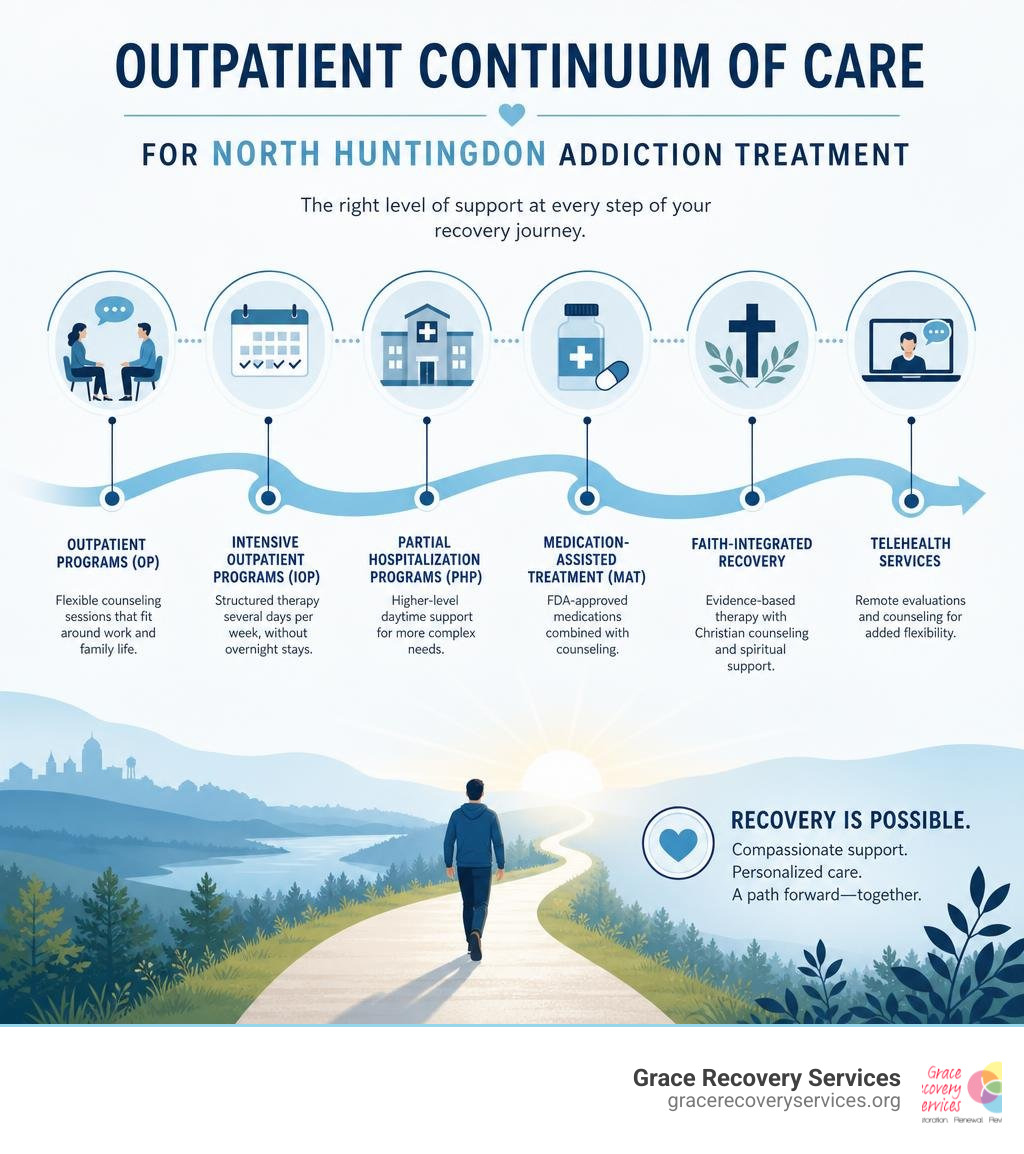
If you or someone you love is searching for North Huntingdon addiction treatment, here are the main local options available right now:
- Outpatient programs (OP) — flexible counseling sessions that fit around work and family life
- Intensive Outpatient Programs (IOP) — structured therapy several days per week, allowing you to return home each day
- Partial Hospitalization Programs (PHP) — higher-level daytime support for more complex needs
- Medication-Assisted Treatment (MAT) — FDA-approved medications like buprenorphine combined with counseling
- Faith-integrated recovery — programs that combine evidence-based therapy with Christian counseling and spiritual support
- Telehealth services — remote evaluations and counseling for added flexibility
Addiction doesn’t arrive all at once. It creeps in quietly — and before long, it starts affecting your health, your relationships, your work, and your sense of peace.
You are not alone. In Westmoreland County, opioid-related overdose deaths rose 18% between 2020 and 2021. Across Pennsylvania, roughly 1 in 5 adults who needed substance use treatment didn’t receive it. That gap is real — and it’s why compassionate, accessible local care matters so much.
The good news? Recovery is possible. With the right support, people rebuild their lives every day. At Grace Recovery Services, we believe that healing touches more than just the physical side of addiction — it restores the whole person: mind, body, and spirit.
This guide will walk you through the top local treatment options near North Huntingdon, PA, so you can find the path that’s right for you.
Understanding Your Options for North Huntingdon Addiction Treatment
When you begin looking for help in Westmoreland County, the sheer number of terms and program types can feel overwhelming. Should you look for a high-intensity program, or is a flexible weekly schedule better? For many individuals in Irwin, North Huntingdon, and the surrounding Western PA communities, outpatient care represents the ideal balance.
Outpatient programs allow you to receive professional, evidence-based therapy while remaining in your own home, sleeping in your own bed, and maintaining your daily commitments to your family, job, or school.
The local care landscape includes several distinct levels of outpatient care:
- Standard Outpatient Programs (OP): Typically consisting of one or two therapy sessions per week, standard outpatient care is excellent for those who have completed a higher level of care or those with mild substance use disorders who possess a strong, stable support system at home. You can learn more about how these structured sessions work by reading our guide on the Outpatient Program.
- Intensive Outpatient Programs (IOP): Operating several days a week for a few hours per session, IOP offers robust clinical support, group therapy, and individual counseling. It is designed for those who need a structured recovery framework but do not require 24/7 medical supervision.
- Partial Hospitalization Programs (PHP): PHP provides a highly concentrated therapeutic environment during the day, often meeting five days a week, before clients return home in the evening.
Grace Recovery Services offers a local, faith-integrated outpatient path for individuals and families in North Huntingdon, Irwin, and nearby Westmoreland County communities who want clinical support without losing the comfort and accountability of home.
Regardless of the program level you choose, the first step is always a comprehensive clinical evaluation. A licensed professional will sit down with you to look at your physical health, your psychological needs, your personal history, and your goals. This assessment ensures that your treatment plan is completely personalized. There is no one-size-fits-all road to recovery; your story is unique, and your treatment plan should reflect that.
Key Features of Effective Outpatient Programs
An effective outpatient program is about far more than just “not using.” It is about discovering why the substance use started in the first place and building a life that you do not feel the need to escape from.

When comparing outpatient options near North Huntingdon and the broader Penn Hills or Pittsburgh areas, look for programs that emphasize the following pillars:
- Holistic Healing: True recovery addresses the mind, body, emotions, and spirit. If a program only focuses on the physical symptoms of addiction, it ignores the emotional and spiritual hunger that often drives substance use.
- Trauma-Informed Care: Many people struggling with addiction have experienced deep relational wounds, childhood trauma, or chronic stress. A trauma-informed approach creates a safe, non-judgmental environment where you can unpack these heavy burdens without shame.
- Addressing Family Dynamics: Addiction is rarely an isolated issue; it impacts parents, spouses, and children. Programs that incorporate family education and counseling help heal relational wounds and build a supportive home environment.
- Relapse Prevention: Learning to identify personal triggers, manage high-stress situations, and establish healthy boundaries is vital for long-term sobriety.
By blending clinical excellence with compassionate support, our team addresses both the psychological and spiritual dimensions of recovery. To understand how we weave these elements together, explore our approach to Integrated Treatment for Addiction and Mental Health.
Faith-Based vs. Secular North Huntingdon Addiction Treatment
As you search for North Huntingdon addiction treatment, you will find both secular (non-religious) and faith-based programs. Both paths utilize excellent, evidence-based therapeutic tools like Cognitive Behavioral Therapy (CBT), but they differ fundamentally in their view of spiritual health.
Secular programs typically focus on clinical psychology, coping mechanisms, and self-reliance or general peer support. While these tools are incredibly valuable, many individuals find that clinical strategies alone do not fully heal the deep-seated emptiness, guilt, or loss of purpose they feel inside.
Faith-based treatment, on the other hand, introduces the transformative power of Christian counseling and biblical hope. In a faith-integrated program, we do not ignore clinical science; rather, we elevate it by anchoring it in spiritual truth.
Instead of operating from a place of shame or feeling like a “broken system” that needs fixing, clients are reminded of their inherent dignity as children of God. The focus shifts from human willpower to divine grace, fostering genuine spiritual renewal and a lasting sense of purpose.
If you want to explore how a faith-centered approach can transform your recovery journey, take a look at our resource on Faith-Based Rehab Pittsburgh. Additionally, for those seeking a Christ-centered community closer to the city, our Christian Addiction Recovery Pittsburgh services offer a welcoming space to heal alongside like-minded peers.
The Counseling Blueprint for Deep Healing
At Grace Recovery Services, we utilize a specialized, four-stage journey known as the Counseling Blueprint. This clinical and spiritual framework is designed to move clients beyond surface-level behavioral changes and guide them toward profound, lasting emotional restoration.
- Take Off the Mask: The first step is all about building genuine rapport and trust. Many of us have spent years pretending everything is fine while suffering in silence. In this stage, we create a safe, grace-filled space where you can drop the act and be completely honest about your struggles.
- Heal the Wounds: Here, we gently explore the emotional and relational hurts that lie beneath the addiction. Whether it is unresolved childhood trauma, a painful divorce, or deep grief, we address these wounds directly so they no longer drive the urge to self-medicate.
- Remove the Toxins: In this phase, we identify the unhelpful beliefs, lingering lies, and toxic thought patterns that keep you trapped in cycles of defeat—such as the belief that you are beyond forgiveness or that you are inherently unlovable.
- Replace with Truth: Finally, we install empowering, accurate, and biblical perspectives about yourself, others, and the world. By replacing old lies with the truth of who God says you are, you gain the spiritual and psychological foundation needed to walk in freedom.
Navigating the Cost and Insurance for Local Rehab
One of the most common barriers to seeking North Huntingdon addiction treatment is the fear of cost. Many people assume that high-quality, clinical care is financially out of reach. Fortunately, there are many avenues available to make recovery affordable and accessible.

Most outpatient centers in Western Pennsylvania work with a variety of payment methods, including:
- Commercial Health Insurance: Private insurance plans often cover a significant portion of outpatient substance use treatment, including individual therapy, group counseling, and intensive outpatient programs.
- Medicaid and Medicare: State and federal programs provide critical coverage for essential behavioral health services, ensuring that low-income individuals and seniors can access life-saving care.
- Self-Pay and Financing: For those without insurance, many facilities offer sliding-scale fees based on income or flexible payment plans to ease the financial burden.
Understanding your coverage is the first step toward peace of mind, allowing you to focus entirely on your healing journey without unnecessary financial stress.
Insurance Coverage for North Huntingdon Addiction Treatment
Navigating insurance policies can feel like trying to read a foreign language, especially when you are already dealing with the stress of addiction.
When you contact an outpatient program, the admissions team will typically perform a free insurance verification. They will contact your insurance provider directly to determine your in-network benefits, identify any potential out-of-pocket costs (such as deductibles or copays), and handle any necessary pre-authorization paperwork.
Securing coverage is a vital step, but planning for what comes after treatment is just as important. Long-term sobriety requires ongoing vigilance and a solid relapse prevention plan. To learn more about maintaining your recovery once your formal program concludes, read our guide on How to Stay Sober After Rehab, and explore our strategies for Addiction Recovery and Relapse Prevention.
Frequently Asked Questions About Local Recovery Options
We know you have questions. Here are clear, straightforward answers to some of the most common inquiries about seeking treatment in the North Huntingdon and Western PA areas.
What is the difference between standard outpatient and intensive outpatient programs (IOP)?
The primary differences lie in the time commitment, structure, and level of clinical support. A standard outpatient program is highly flexible, usually requiring only 1 to 3 hours of therapy per week. It is best suited for individuals with mild symptoms or those transitioning out of higher levels of care.
An Intensive Outpatient Program (IOP) is far more structured, typically meeting for 9 to 15 hours per week spread across 3 to 5 days. IOP provides a higher concentration of group therapy, individual counseling, and psychiatric support, making it ideal for those who need robust clinical intervention but still want to live at home.
How does faith-integrated therapy support long-term sobriety?
Faith-integrated therapy provides a deep, unchanging spiritual foundation that goes beyond human willpower. While secular coping mechanisms are highly beneficial, faith-integrated care introduces biblical principles, the healing power of prayer, and a supportive Christian community.
This approach directly targets the spiritual voids—like shame, guilt, and purposelessness—that often trigger relapse. By helping you build a personal relationship with God, faith-integrated therapy fosters a resilient identity rooted in grace and divine purpose. You can discover more about these specialized services by reading about our Christian Intensive Outpatient Treatment and exploring our resources on Faith-Based Recovery Pittsburgh.
How do I choose the right outpatient program for my needs?
To find the program that best fits your life, consider the following factors:
- Clinical Quality: Look for licensed, accredited facilities with credentialed clinical staff (such as Licensed Professional Counselors).
- Therapeutic Approach: Ask if they offer specialized care, such as trauma-informed therapy, dual-diagnosis treatment, or faith-integrated counseling like our Christian Rehab Pittsburgh services.
- Scheduling Flexibility: Ensure the program hours align with your work or family obligations.
- Location and Accessibility: Choosing a local program near North Huntingdon, Irwin, or Penn Hills makes it much easier to stay consistent with your appointments.
By focusing on these key elements, you can find a supportive environment that aligns with your personal values and recovery goals, setting the stage for lasting transformation.
Conclusion
Taking the first step toward recovery requires immense courage, but you do not have to walk this path alone. There is a supportive community waiting to welcome you, lift you up, and help you rebuild.
At Grace Recovery Services, we are proud to offer compassionate, trauma-informed, and faith-integrated outpatient programs in Western Pennsylvania. With offices in North Huntingdon and the Pittsburgh (Penn Hills) area, our dedicated team is here to walk alongside you through every stage of your healing journey—helping you take off the mask, heal your deepest wounds, and step into the vibrant, purposeful life you were created to live.
If you are ready to take that step, we invite you to learn more and Get Your Spirit in Gear with North Huntingdon Christian IOP. Reach out to us today for a compassionate, confidential assessment, and let us start this journey of renewal together.
This article was researched with AI and heavily edited by Stephen Luther for accuracy and relevance.
Stephen Luther is the Executive Director and Founder of Grace Christian Counseling, Grace Recovery Services, WPA Counseling, NuWell Online Counseling and Coaching, and NuWell Health. He holds a Master’s degree in Education from the University of Georgia and a Master’s degree in Marriage and Family Therapy from Duquesne University. He is a licensed professional counselor in Pennsylvania.
Since 1997, Steve has been helping children, adolescents, and adults overcome a wide range of emotional and relational challenges. He specializes in working with hurting families, including those with foster, adopted, or traumatized children. Steve uses Attachment-Based Therapy, Splankna Healing, and Therapeutic Parent Coaching to support healing and restoration.
This guide is for educational and spiritual encouragement and is not a substitute for personalized professional counseling. If you are in crisis, please reach out for immediate help.