
Why biblical principles for trauma healing Offer Hope That Goes Deeper Than Coping
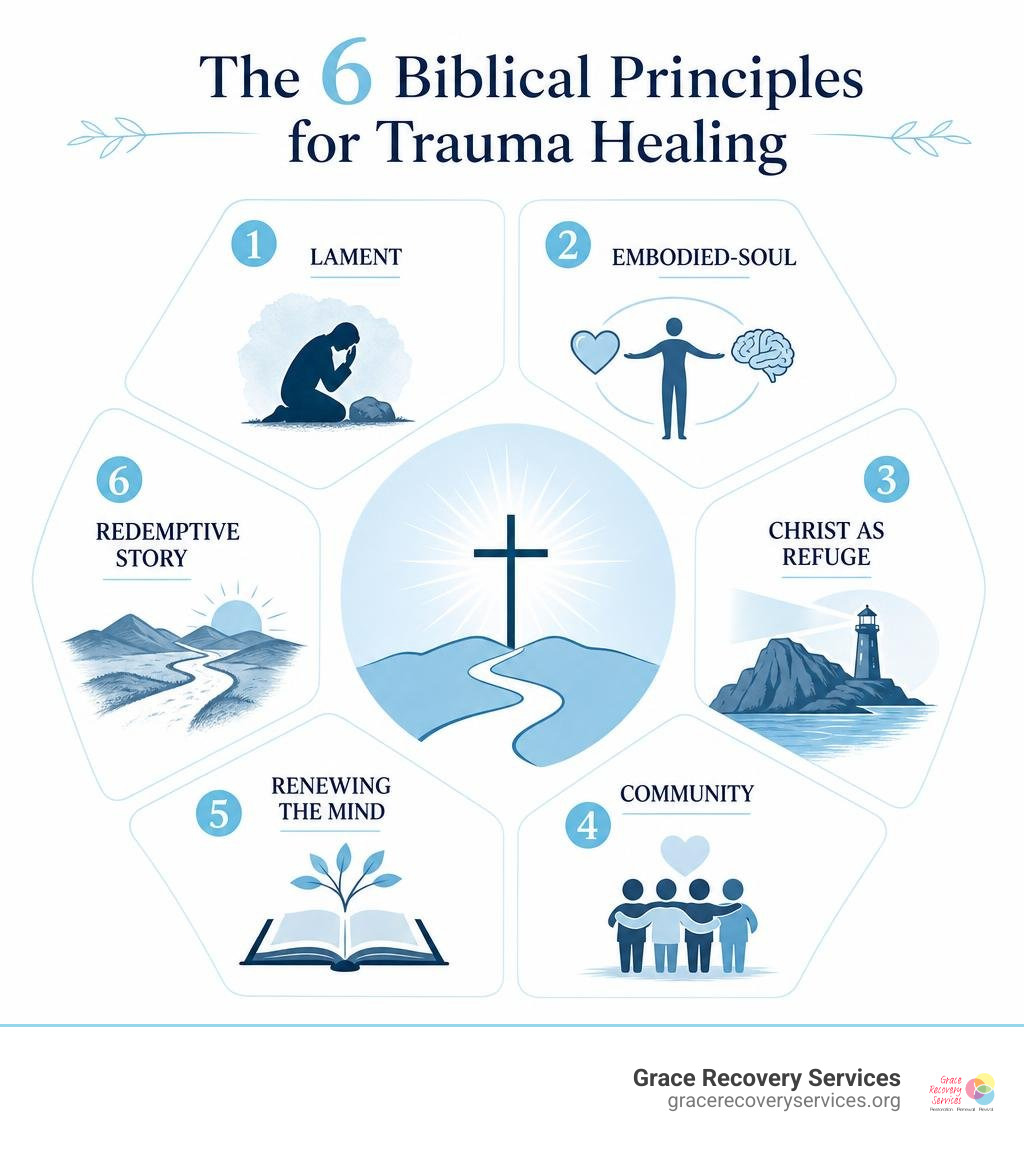
biblical principles for trauma healing point to a path of restoration that addresses the whole person — body, mind, and spirit — not just surface-level symptoms. If you’re looking for a quick overview, here is what the Bible’s core approach to trauma healing looks like:
- Acknowledge the wound — Honest lament before God is not weakness; it is the biblical starting point (Psalm 34:18).
- Embrace the embodied-soul — Scripture teaches that trauma affects both your body and your spirit together, not separately.
- Find refuge in Christ — Jesus is called a “man of sorrows” (Isaiah 53:3); he understands suffering from the inside.
- Lean into community — Healing rarely happens in isolation; the church and trusted caregivers are God’s design for walking wounded people home.
- Renew the mind with truth — Replacing trauma-driven lies with scriptural truth is both a spiritual discipline and a practical act of recovery.
- Trust a redemptive story — The consistent message of Scripture is that God is at work in suffering, not absent from it.
Trauma is isolating by nature. It wraps its survivors in a private world of vivid memories and paralyzing feelings that even the people closest to them cannot fully enter. As one observer put it simply: “Nobody we know can really identify with all our trauma. I feel so alone.”
That feeling is real — and it is nearly universal.
But the Bible does not leave us there. From the raw grief of the Psalms to the compassion Jesus showed to broken and marginalized people throughout the Gospels, Scripture offers something no self-help framework can fully provide: the assurance that you are seen, known, and not alone.
At Grace Recovery Services in Western Pennsylvania, we have seen this truth play out in real lives. Many of the clients we walk alongside carry both addiction and deep, unprocessed trauma. The two are rarely separate. That is why our approach — grounded in Christian counseling, trauma-informed care, and our four-stage Counseling Blueprint — is built on the biblical conviction that lasting healing must reach the whole person.
This guide unpacks the key biblical principles that shape that healing process, step by step.
Understanding the Embodied-Soul: How Trauma Impacts Body and Spirit
When we experience a terrifying, life-threatening, or trust-violating event, the impact is never purely mental. Trauma does not just live in our thoughts; it prints itself onto our physical bodies. In modern mental health circles, we often hear that “the body keeps the score.” Interestingly, this is not a new discovery. Thousands of years before modern neurobiology, Scripture laid out a beautifully complex theology of the embodied-soul.
God did not design us as ghosts driving mechanical bodies. We are a “duplexity” — two distinct realities of physical body and spiritual soul folded together in an inseparable, bidirectional unity. What affects the spirit instantly echoes in the body, and what happens to the body deeply impacts the soul.

When we understand this, we realize that trauma recovery cannot be a purely cognitive exercise. To find true, lasting freedom, we must embrace The Whole-Person Approach to Faith-Based Trauma Recovery. If we try to treat the spiritual heart without caring for the somatic memory stored in the physical nervous system, we miss the fullness of God’s design.
According to Scientific research on the embodied-soul and trauma, biblical soul care must avoid the trap of “spiritualistic reductionism” (treating all somatic pain as a lack of faith) as well as “materialistic reductionism” (treating all trauma as a simple chemical imbalance in the brain). Instead, we must care for the whole person.
The Bidirectional Connection of Body and Soul
Because we are designed as an embodied-soul, our physical symptoms and spiritual distress feed into one another. When past trauma is triggered, your heart rate spikes, your breathing becomes shallow, and your muscles tissue tense up. This is not a sin; it is a God-designed safety mechanism that has been over-sensitized by suffering.
If you are constantly living in a state of physical hyper-arousal or deep exhaustion, it becomes incredibly difficult to focus on prayer, read Scripture, or feel connected to God. This physical weariness can lead to spiritual despondency, making you feel abandoned by your Creator. Recognizing this bidirectional flow is why we believe Why Your Trauma Needs a Holistic Approach to Healing is so vital. True recovery addresses somatic regulation alongside spiritual renewal.
biblical Examples of Somatic Suffering
The pages of the Bible are filled with real people experiencing physical, somatic expressions of deep emotional trauma and grief:
- Hannah: In her agonizing grief over infertility and systemic provocation, her body reacted intensely. She wept bitterly, her lips trembled without sound, and she was physically unable to eat (1 Samuel 1).
- Elijah: After facing intense threat and trauma under Jezebel’s reign, Elijah experienced profound physical exhaustion and depression. He slumped under a broom tree and wished for death. God did not begin by giving Elijah a theological lecture; He sent an angel to minister to his physical body first with food, water, and deep sleep.
- Job: Job’s trauma was a catastrophic blend of sudden loss, grief, and severe physical suffering. His skin broke out in painful sores, his bones burned, and he spent nights tossing in physical and emotional agony.
- Tamar: After surviving devastating abuse, Tamar lived in her brother’s house “desolate” (2 Samuel 13:20) — a Hebrew word that paints a picture of emotional and physical paralysis, a classic somatic response to severe trauma.
The Counseling Blueprint: A Step-by-Step Path to Restoration
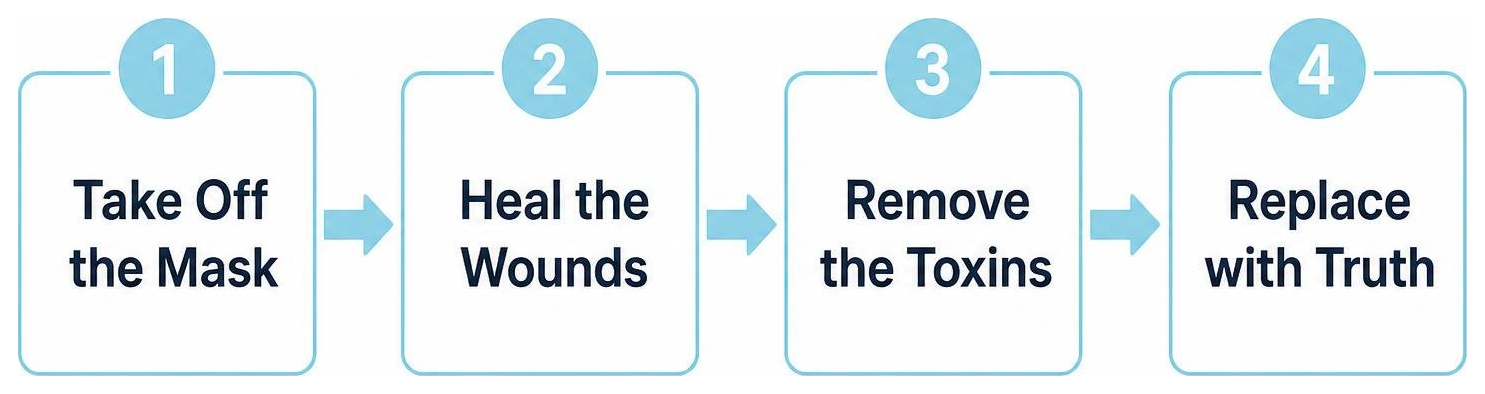
At Grace Recovery Services, we serve communities across Western Pennsylvania — from the Penn Hills area of Pittsburgh to North Huntingdon, Westmoreland County, and Irwin. In our outpatient Christian counseling programs, we utilize a unique, structured framework called the Counseling Blueprint to guide clients through their healing journey.
This blueprint bridges clinical excellence with deep faith integration, providing a roadmap for those seeking to rebuild their lives from the dual burdens of trauma and substance use disorders.
Stage 1 & 2: Taking Off the Mask and Healing the Wounds
The first stage of the Counseling Blueprint is Take Off the Mask. Trauma often forces us to build thick walls. We learn to hide our pain behind masks of perfectionism, anger, or substance use just to survive. In a safe, non-judgmental environment, we help clients slowly lower these defenses. We build genuine rapport, ensuring they know they are safe, seen, and respected.
Once the mask is lowered, we can move into Heal the Wounds. This stage is about gently exploring the deep emotional and relational hurts of the past. Rather than rushing past the pain, we take the time to look at the broken pieces. We acknowledge the reality of what happened, validating the grief and fear that have been carried for years.
Stage 3 & 4: Removing Toxins and Replacing with Truth
With the wounds open and identified, we begin the process of Remove the Toxins. Trauma leaves behind toxic spiritual and cognitive residues — lingering lies about yourself, others, and God. Common toxic beliefs include: “It was my fault,” “I am permanently damaged,” or “God is punishing me.” We work to untangle these lies, exposing how they fuel shame and destructive behaviors like addiction.
Finally, we transition to Replace with Truth. We install empowering, biblically accurate perspectives. We remind clients of their true identity in Christ: that they are fearfully and wonderfully made, deeply loved, and fully redeemed. This is not superficial positive thinking; it is the active renewal of the mind through the living Word of God.
Activating biblical principles for trauma healing in Daily Life
Healing is not confined to the counseling room. It is a daily, active walk of integrating spiritual disciplines and somatic regulation into your normal routine. When we practice these disciplines, we find that God Is Close to the Brokenhearted and These Verses Prove It.
How Lament and biblical principles for trauma healing Restore the Soul
One of the most powerful, yet neglected, biblical principles for trauma healing is the practice of lament. In our culture — and sometimes even in our churches — there is a subtle pressure to practice “toxic positivity.” We feel we must quickly bypass our pain and jump straight to thanksgiving.
But the Bible dedicates an entire book to Lamentations, and over a third of the Psalms are prayers of lament.
Lament is the language of a broken heart speaking to a listening God. It is raw, honest, and sometimes even angry. When King David cried out in Psalm 13, “How long, O Lord? Will you forget me forever?” he was practicing lament.
God does not command us to suppress our pain. He invites us to bring our raw grief, confusion, and outrage directly to Him. In the Book of Job, God ultimately defended Job’s honest, angry questioning while correcting his friends who tried to offer neat, sterile theological platitudes. Honest lament is a crucial step in releasing the pressure valve of trauma.
Singing Scripture: Applying biblical principles for trauma healing Somatically
Did you know that singing is both a spiritual discipline and a highly effective somatic self-soothing tool?
When a trauma survivor experiences a panic attack or deep anxiety, their sympathetic nervous system is stuck in a “fight-or-flight” response. The physical act of singing forces us to take deep, regulated diaphragmatic breaths. The physical vibration of our vocal cords stimulates the vagus nerve, which sends a biological signal to the brain that it is safe to calm down.
When we combine this physiological benefit with the spiritual power of God’s Word, we have a beautiful tool for recovery. Singing scripture-based songs or comforting Psalms aloud acts as a dual somatic and spiritual self-soothing mechanism. It interrupts anxious rumination, grounds us in the present moment, and helps us find our voice when trauma has made us feel mute. For more on how these physical and spiritual realities intersect, you can explore More insights on walking faithfully with trauma sufferers.
The Ministry of Presence: How Communities and Caregivers Support Sufferers
No one should have to walk the road of trauma recovery alone. While professional clinical care is essential, God has designed the local church and Christian community to be a healing sanctuary. Caregivers, friends, and ministry leaders are called to practice what we call the ministry of presence.

The ministry of presence means slowing down, listening deeply, and simply being there without rushing to “fix” the person. It requires deep empathy — the imaginative entrance into another’s pain — while maintaining healthy boundaries to avoid “enmeshment” (losing your own emotional stability in another’s crisis). It means sitting in the dust with someone, just as Job’s friends did during their first seven days, before they began to speak and offer unhelpful advice.
Creating Safe Spaces in Churches and Small Groups
To help trauma survivors heal, our local churches in Western Pennsylvania must become safe, trauma-informed environments. This means actively reducing the stigma surrounding both mental health struggles and addiction.
When a church leader or small group understands that a survivor’s sudden withdrawal, hyper-vigilance, or even outbursts of anger are often protective, fear-based survival mechanisms rather than willful defiance, the entire dynamic changes. Instead of meeting them with judgment or premature spiritual correction, we meet them with the gentle, steady presence of Christ.
For pastors and ministry leaders looking to build this kind of culture, Guidance on pastoring the traumatized offers a helpful pastoral framework.
Walking Faithfully with Sufferers Amid the Rubble
In the Old Testament, the books of Ezra and Nehemiah describe the long, grueling process of rebuilding Jerusalem after a devastating exile. The city was in ruins, the walls were broken down, and the people were deeply discouraged.
Rebuilding did not happen overnight. It was a non-linear journey filled with progress, external threats, internal grief, and setbacks.
This is a beautiful picture of trauma recovery. Healing from deep wounds is rarely a straight line. It weaves grief with worship, and steps of progress with moments of fear or resistance. Walking faithfully with a trauma survivor means committing to the long haul. It means helping them rebuild their lives brick by brick, celebrating small victories, and offering grace and patience when they stumble amid the rubble.
Comparing Secular Trauma Theories and Scripture-Based Recovery
While we deeply appreciate and utilize evidence-based clinical tools (such as cognitive behavioral therapies and somatic grounding techniques), we recognize that secular trauma theories have limitations. It is helpful to compare where secular frameworks and biblical recovery align, and where they diverge.
| Dimension | Secular Trauma Narratives | biblical Trauma Recovery |
|---|---|---|
| Primary Lens | Materialistic / physiological (trauma is primarily a brain-wiring issue). | Embodied-soul (trauma impacts both physical biology and spiritual heart). |
| Identity | You are defined by your trauma; you are a “survivor” or “victim” as a core identity. | You are defined by your relationship to Creator and Redeemer; you are a child of God. |
| Source of Healing | Finding inner emotional resources, self-actualization, or clinical techniques alone. | The redemptive power of Jesus Christ, the Holy Spirit, Scripture, and community. |
| View of Suffering | An tragic, random interruption to a meaningful life. | A painful reality of a fallen world that God can sovereignly redeem for growth and beauty. |
| Moral Agency | Can sometimes reduce human responsibility to purely physiological responses. | Validates physiological impacts while upholding personal agency and spiritual autonomy. |
Frequently Asked Questions about biblical Trauma Recovery
How does the Bible define trauma?
While the modern word “trauma” does not appear in ancient biblical translations, the Bible addresses its reality extensively under the broader categories of suffering, tribulation, and brokenheartedness. Scripture acknowledges that we experience deep heart-wounds from three main sources: the sins of others committed against us (abuse, injustice), living in a broken and fallen world (natural disasters, physical illness, accidents), and the painful consequences of our own choices. In every category of suffering, the Bible reveals a God who is not distant, but who enters into our pain with deep compassion and redemptive power.
Can physical exercises or breathing techniques be part of Christian healing?
Absolutely. Because God designed us as embodied-souls, taking care of our physical bodies is a form of biblical stewardship. Techniques like deep breathing, physical stretching, and progressive muscle relaxation are gifts of God’s common grace. They utilize the natural, biological pathways God built into our nervous systems to signal safety and calm. When a Christian practices deep breathing while meditating on a comforting scripture (like Psalm 23 or Isaiah 40), they are beautifully integrating physical self-soothing with spiritual truth.
How do we balance the lingering effects of trauma with spiritual growth?
We must embrace the biblical reality of “groaning until glory” (Romans 8:18-27). Living on this side of heaven means we may carry lingering physical or emotional scars from past trauma, even as we grow deeply in Christ.
Spiritual growth (progressive sanctification) is not about the immediate, magical disappearance of all emotional pain. Rather, it is about learning to walk faithfully with our scars, allowing our weaknesses to draw us closer to the grace of God. We can experience genuine spiritual transformation and still have moments where our bodies react to past triggers. There is no shame in this; God’s grace is sufficient for our weakest days.
Conclusion
Trauma and addiction can make you feel as though your life is permanently shattered — like a city left in ruins. But the promise of the gospel is that our God is a Master Builder. He specializes in taking what has been broken and rebuilding it into something of beauty, strength, and purpose.
At Grace Recovery Services, we are committed to walking this journey with you. Our outpatient center, with convenient offices in Pittsburgh (Penn Hills area) and North Huntingdon, provides a safe, compassionate, and trauma-informed space for individuals across Western Pennsylvania. Through our specialized Christian counseling, Intensive Outpatient Programs (IOP), and our structured Counseling Blueprint, we offer a holistic approach that honors both clinical excellence and the healing power of Jesus Christ.
You do not have to carry the weight of your past alone. Reach out to us today to learn more about our Faith-Based Trauma Recovery programs and take your first step toward lasting healing for your mind, body, and spirit.
This article was researched with AI and heavily edited by Stephen Luther for accuracy and relevance.
Stephen Luther is the Executive Director and Founder of Grace Christian Counseling, Grace Recovery Services, WPA Counseling, NuWell Online Counseling and Coaching, and NuWell Health. He holds a Master’s degree in Education from the University of Georgia and a Master’s degree in Marriage and Family Therapy from Duquesne University. He is a licensed professional counselor in Pennsylvania.
Since 1997, Steve has been helping children, adolescents, and adults overcome a wide range of emotional and relational challenges. He specializes in working with hurting families, including those with foster, adopted, or traumatized children. Steve uses Attachment-Based Therapy, Splankna Healing, and Therapeutic Parent Coaching to support healing and restoration.
This guide is for educational and spiritual encouragement and is not a substitute for personalized professional counseling. If you are in crisis, please reach out for immediate help.