
Bible Verses for Sobriety to Carry Into Each Day
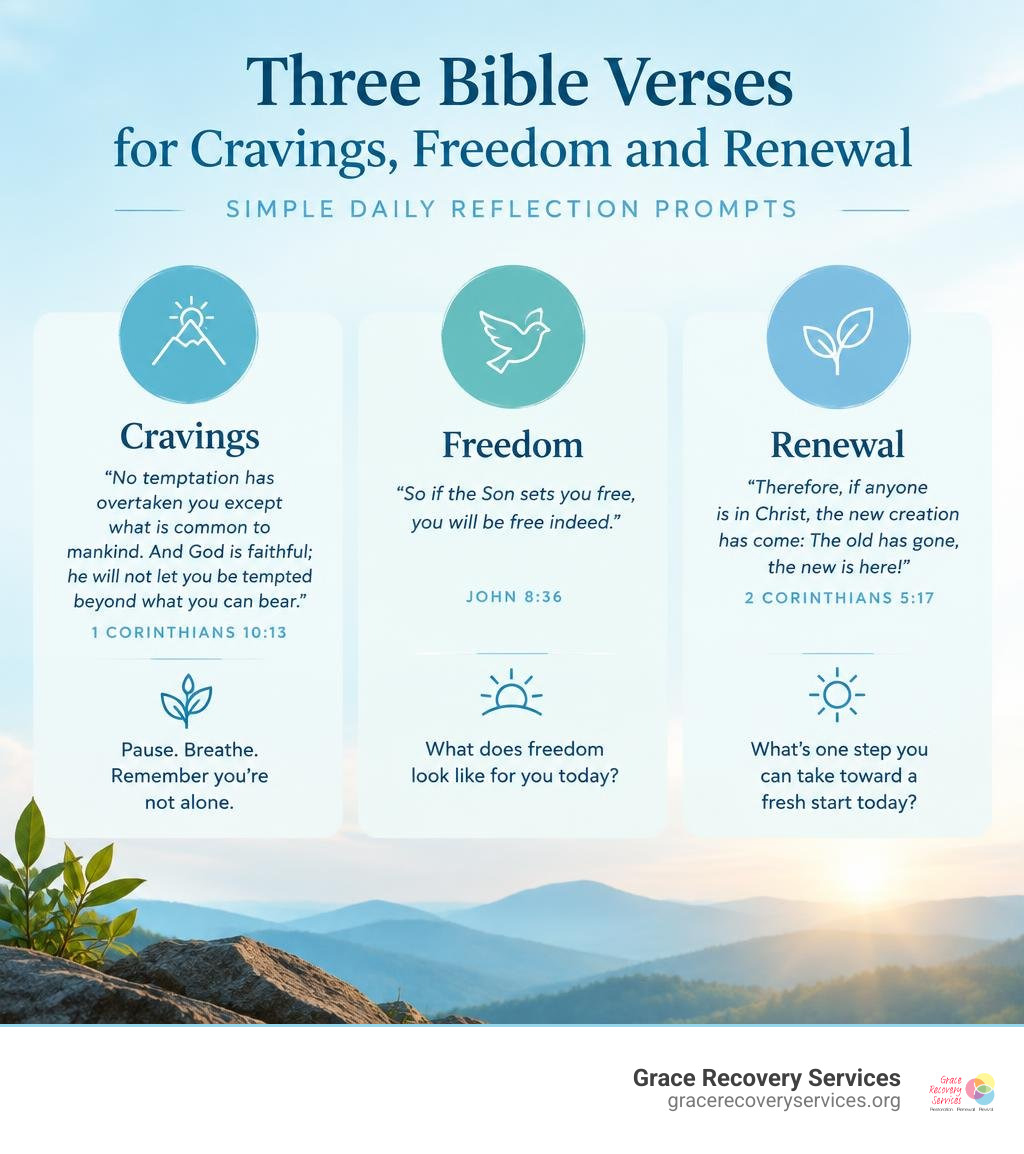
Start with three passages: 1 Corinthians 10:13 for help during temptation, John 8:36 for hope in freedom, and 2 Corinthians 5:17 for a fresh start. Pick one to keep on your phone. When a craving comes, read it, take a slow breath, and reach out to someone in your support circle.
At Grace Recovery Services, we see Scripture as a source of hope alongside practical recovery care, not a replacement for it. In our biblical sobriety program in Pittsburgh, a short verse can help you pause, name what you need, and choose your next step. We share comforting biblical verses for recovery and explore passages for cravings, relapse, and daily strength in our Christian addiction support group, plus simple ways to put them into practice.
A biblical Perspective on Addiction: Sin, Sickness, and Spiritual Bondage
When we look at substance use through a biblical lens, we see a picture that reaches far deeper than simple moral failure. Scripture approaches compulsive struggles with deep compassion, recognizing the reality of spiritual bondage, brokenness, and the human tendency to seek relief in things that ultimately harm us.
In the New Testament, the Apostle Paul captures the internal conflict that so many of our clients describe: “I do not understand what I do. For what I want to do I do not do, but what I hate I do” (Romans 7:15). This passage highlights the profound feeling of being trapped by compulsive patterns. When we look at what the Bible says about addiction in 1 Corinthians 6:12, Paul notes that while all things may be permissible, we must not be mastered or dominated by anything. Addiction functions as a form of spiritual and physical enslavement that steals our peace, clouds our judgment, and damages our relationships.
At our centers in Pittsburgh (Penn Hills) and North Huntingdon, we view recovery through our four-stage Counseling Blueprint:
- Take Off the Mask: Building genuine trust and dropping the defense mechanisms that hide our pain.
- Heal the Wounds: Exploring the unresolved emotional hurts and trauma underneath the substance use.
- Remove the Toxins: Uncovering the lies, guilt, and distorted beliefs that fuel addictive cycles.
- Replace with Truth: Rooting daily life in God’s grace, renewing the mind, and learning healthy coping skills.
Ancient wisdom warns us about how easily substances can distort reality. For example, Proverbs 20:1 warns against intoxication, reminding us that wine can be a mocker and strong drink a brawler, leading anyone who is led astray by them away from wisdom. Exploring the relationship between scripture and sobriety allows us to see that God does not look down on those who struggle with disdain. Instead, God offers an open door to restoration, renewal, and revival.
What Scripture Teaches About Alcohol and Strong Drink
The Bible presents a nuanced perspective on alcohol. In ancient times, wine was a common part of daily life and celebrations, and scriptures like 1 Timothy 5:23 even touch on its historic medicinal use. However, Scripture offers clear warnings against intoxication, loss of self-control, and dependence.
In Proverbs 31:6 context on strong drink is framed around numbing the misery of those who are perishing, illustrating how people have long turned to substances to self-medicate deep emotional distress. The subsequent passage in Proverbs 31:7 similarly describes drinking to forget poverty and misery—a coping mechanism that offers fleeting numbness rather than true spiritual and emotional healing.
For someone in outpatient recovery, the biblical call is toward sober-mindedness and vigilance. In an article exploring faith and sobriety, researchers and theologians alike note that personal vulnerability, genetic factors, and mental health make complete abstinence the safest path for healing. Embracing sober-minded Bible verses helps anchor our minds in clarity so we can show up fully for our families and our communities across Western Pennsylvania.
The Best Bible Verses for Sobriety and Overcoming Addiction
Finding the best Bible verses for sobriety provides concrete anchors when cravings feel intense or emotional exhaustion sets in. Grounding our thoughts in God’s promises helps us replace catastrophic thinking with enduring truth.
Best Bible Verses for Sobriety During Cravings and Temptation
During moments of sudden craving, your brain searches for quick relief. Having memorized verses serves as mental first aid, interrupting the neurological trigger-response loop:
- 1 Corinthians 10:13: “No temptation has overtaken you except what is common to mankind. And God is faithful; he will not let you be tempted beyond what you can bear. But when you are tempted, he will also provide a way out so that you can endure it.”
- James 4:7: “Submit yourselves, then, to God. Resist the devil, and he will flee from you.”
- Philippians 4:13: “I can do all this through him who gives me strength.”
- 2 Timothy 1:7: “For the Spirit God gave us does not make us timid, but gives us power, love and self-discipline.”
When cravings strike, these words remind us that impulses are temporary. You do not have to battle them with sheer willpower alone; you can lean on God’s strength and use practical coping tools. Reviewing encouraging Bible verses for strength can supply additional daily encouragement when triggers arise during outpatient treatment.
Best Bible Verses for Sobriety, Hope, and Renewal After Relapse
If you experience a setback, the enemy often attempts to trap you in shame, telling you that your progress is ruined. But God’s grace meets us directly in our vulnerability:
- 2 Corinthians 5:17: “Therefore, if anyone is in Christ, the new creation has come: The old has gone, the new is here!”
- Psalm 30:1-3: “I will exalt you, Lord, for you lifted me out of the depths… Lord my God, I called to you for help, and you healed me.”
- Romans 8:1: “Therefore, there is now no condemnation for those who are in Christ Jesus.”
- Revelation 21:4: “‘He will wipe every tear from their eyes. There will be no more death’ or mourning or crying or pain, for the old order of things has passed away.”
A setback does not erase the growth, insight, or emotional healing you have gained. God’s mercy is new every morning. Reflecting on Bible verses for recovery reinforces that your identity is rooted in Christ’s love, not in a temporary stumble.
Practical Ways to Apply Scripture in Daily Recovery

Reading Scripture is valuable, but lasting transformation occurs when we weave these truths into our daily routines. A 2006 study published in Alcoholism Treatment Quarterly found that spirituality, life meaning, and religious practices combatted stress and enhanced overall quality of life among people in recovery.
Here are four simple, actionable practices to integrate God’s Word into your outpatient recovery schedule:
- Breath Prayers: Choose a short phrase of Scripture to repeat slowly during moments of tension or physical craving. Inhale deeply while thinking, “The Lord is my shepherd,” and exhale slowly while praying, “I have everything I need.” This calms your central nervous system while focusing your mind on truth.
- Lock-Screen Reminders: Place a meaningful passage—such as John 8:36 or Isaiah 41:10—on your phone’s lock screen. Because we look at our phones dozens of times a day, this provides continuous micro-moments of spiritual alignment.
- Reflective Recovery Journaling: Spend five minutes each morning asking three simple questions: What is God saying to me in this verse? What emotional weight do I need to surrender today? Who can I reach out to for mutual encouragement?
- Evening Gratitude and Surrender: Before sleeping, review where you saw God’s grace throughout the day. Surrender any lingering anxieties, resentments, or triggers so you can rest with a peaceful mind.
Practicing these steps consistently provides structure. You can discover more daily exercises in our collection of encouraging Bible verses for sobriety.
Moving from Reading to Actionable Behavioral Change
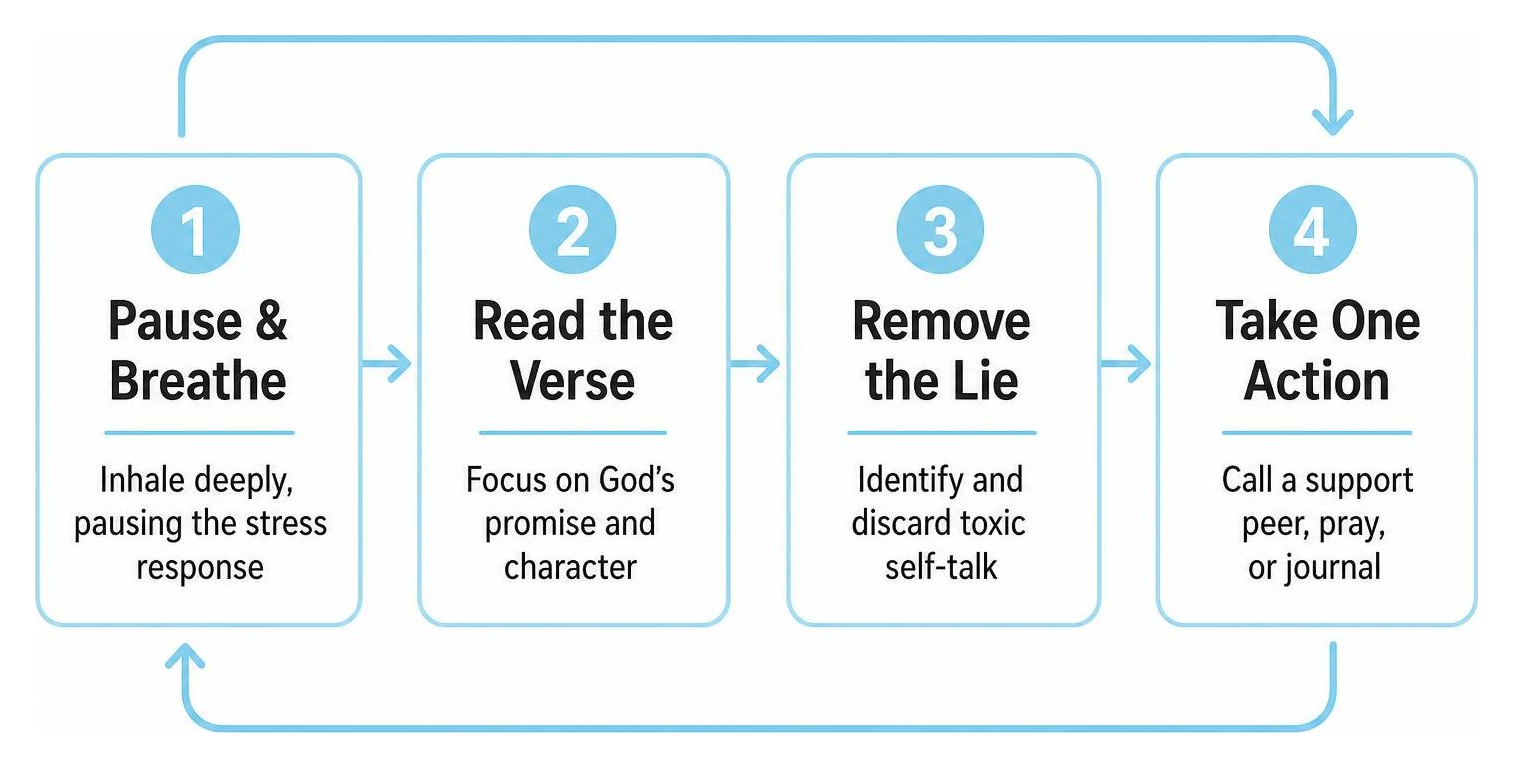
Scripture invites us into active, living faith. Knowledge alone does not stop a craving; behavioral follow-through does. When you notice a trigger, use that moment as an automatic prompt to initiate your recovery plan:
- Interrupt the Cue: Acknowledge the craving without judgment. Name it: “I am feeling lonely, tired, or overwhelmed.”
- State the Truth: Speak a memorized verse out loud to replace toxic thoughts with God’s Word.
- Engage Accountability: Text or call a trusted friend, sponsor, or fellow group member from your outpatient program.
- Change Your Environment: Take a walk, step outside into fresh air, or engage in a creative task to help your brain reset.
Research published in Alcoholism: Clinical and Experimental Research (2011) indicated that spiritual practices significantly support recovery by reducing distress and fostering supportive peer connections. By connecting Scripture to daily actions, you turn spiritual contemplation into real-world resilience.
Integrating Faith-Based Support with Outpatient Clinical Care
At Grace Recovery Services, we firmly believe that faith and clinical science work together hand in hand. Professional outpatient therapy, licensed counseling, and evidence-based treatments address the psychological, neurobiological, and relational aspects of substance use disorders, while Christian spirituality heals the soul and restores purpose.
Our outpatient continuum in Westmoreland County and Allegheny County includes Partial Hospitalization Programs (PHP), Intensive Outpatient Programs (IOP), and standard outpatient counseling. In these clinical spaces, we incorporate modalities like Cognitive Behavioral Therapy (CBT) and trauma-informed therapies alongside Christian counseling principles.
| Recovery Domain | Clinical Intervention | Scriptural Integration | Holistic Benefit |
|---|---|---|---|
| Mind & Thoughts | Cognitive Behavioral Therapy (CBT) & identifying distortions | Romans 12:2 (Renewing the mind) | Replaces automatic negative thoughts with biblical truth |
| Emotional Trauma | Trauma-informed counseling & EMDR processing | Psalm 147:3 (Healing the brokenhearted) | Safe processing of relational wounds without turning to substances |
| Physical Cravings | Relapse prevention & nervous system regulation | 1 Corinthians 6:19-20 (Honoring the body as a temple) | Restores physical health, sleep hygiene, and bodily stewardship |
| Relational Health | Family systems therapy & communication skills | Ephesians 4:31-32 (Forgiveness and grace) | Heals family dynamics and establishes healthy boundaries |
| Spiritual Purpose | Values clarification & goal setting | Jeremiah 29:11 (Hope and a future) | Cultivates enduring identity, direction, and long-term meaning |
We never view seeking medical or psychological support as a lack of faith. God frequently uses licensed therapists, medical professionals, and evidence-based clinical structures as instruments of His healing. When clinical treatment is paired with a Christ-centered foundation, clients experience comprehensive restoration across mind, body, and spirit.
Frequently Asked Questions About Scripture and Sobriety
Can reading Bible verses replace professional addiction therapy?
While Bible verses offer profound emotional comfort, spiritual strength, and moral guidance, reading scripture is not a substitute for professional clinical treatment. Moderate to severe substance use disorders involve complex physical, psychological, and neurological factors that require professional care.
Evidence-based therapies, licensed Christian counseling, and medical oversight work together with spiritual practices to treat the root causes of addiction, including co-occurring mental health conditions and past trauma.
How can someone new to faith benefit from recovery scriptures?
You do not need years of religious background or deep theological training to find comfort in Scripture. The Bible speaks directly to universal human experiences: weariness, the desire for a clean slate, and the search for authentic love.
Starting with modern, easy-to-read translations (such as the NIV or NLT) and focusing on short verses about comfort and grace makes Scripture accessible. Simple breath prayers and recovery devotionals offer a gentle, low-pressure way to explore spiritual connection at your own pace.
What role does Christian community play in sustaining long-term sobriety?
Isolation is one of the most significant risk factors for relapse. The Bible highlights the essential need for authentic, vulnerable relationships. James 5:16 encourages us: “Therefore confess your sins to each other and pray for each other so that you may be healed.”
In faith-based outpatient groups, 12-Step fellowships, and church communities, clients find peers who understand their struggles without judgment. This safe community provides encouragement, breaks the cycle of shame, and ensures you never have to walk the road of recovery alone.
Conclusion: Walking in Daily Freedom and Spiritual Strength
Sobriety is not merely about saying “no” to a substance; it is about saying “yes” to a vibrant, purposeful life rooted in truth and grace. As you navigate the daily rhythms of outpatient recovery, let the Word of God serve as your anchor, your comfort, and your guide. God’s heart toward you is one of redemption, healing, and unconditional love.
If you or a loved one in Western Pennsylvania—including Pittsburgh, Penn Hills, North Huntingdon, Irwin, and surrounding communities—are seeking compassionate, faith-forward outpatient treatment, we are here to walk with you. Reach out to Grace Recovery Services today to speak with our clinical team, schedule a confidential assessment, and explore our resources on Bible verses for sobriety and outpatient programs designed to help you thrive in lifelong recovery.
This article was researched with AI and heavily edited by Stephen Luther for accuracy and relevance.
Stephen Luther is the Executive Director and Founder of Grace Christian Counseling, Grace Recovery Services, WPA Counseling, NuWell Online Counseling and Coaching, and NuWell Health. He holds a Master’s degree in Education from the University of Georgia and a Master’s degree in Marriage and Family Therapy from Duquesne University. He is a licensed professional counselor in Pennsylvania.
Since 1997, Steve has been helping children, adolescents, and adults overcome a wide range of emotional and relational challenges. He specializes in working with hurting families, including those with foster, adopted, or traumatized children. Steve uses Attachment-Based Therapy, Splankna Healing, and Therapeutic Parent Coaching to support healing and restoration.
This guide is for educational and spiritual encouragement and is not a substitute for personalized professional counseling. If you are in crisis, please reach out for immediate help.