
What Is a Bible Study Rehab Program — and Can It Help You?
A Bible study rehab program combines structured scripture engagement with addiction recovery support, helping people heal not just physically, but emotionally and spiritually as well.
Here’s what you need to know at a glance:
- What it is: A recovery program that uses Bible study, prayer, and Christian principles as core tools alongside clinical treatment
- Who it’s for: Anyone struggling with substance use who wants faith integrated into their healing — no matter where they are spiritually
- How it works: Daily scripture study, Christian counseling, group fellowship, and devotional practices replace the emptiness addiction leaves behind
- What makes it different: It addresses the root causes of addiction — including trauma, shame, and spiritual disconnection — not just the symptoms
- Where to find it: Faith-based outpatient programs, like those offered at Grace Recovery Services in Western Pennsylvania, bring this approach into a clinically sound, trauma-informed setting
Addiction takes more than sobriety to overcome. For many people, it leaves behind a deep sense of emptiness, shame, and lost purpose. That’s exactly where scripture-based recovery steps in.
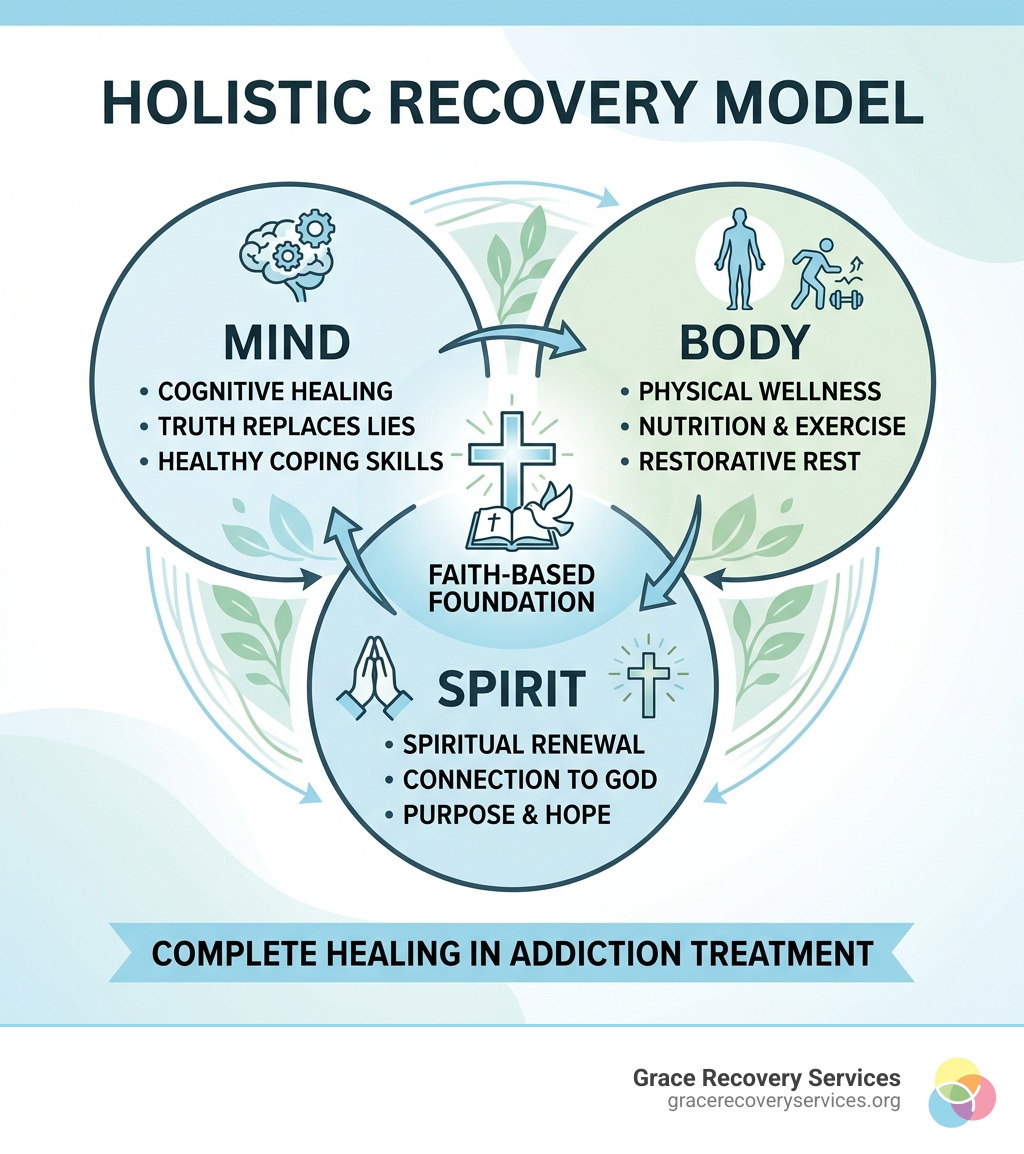
Faith-based programs have recognized for decades that healing the whole person — mind, body, and spirit — leads to more lasting change. Bible study isn’t just a devotional add-on. In these programs, it becomes a daily anchor. It builds identity. It replaces lies addiction tells with truth. And it connects people to a community that genuinely cares.
At Grace Recovery Services, we’ve seen this firsthand. Clients who arrive feeling hopeless often discover — through scripture, counseling, and community — that grace is not out of reach. Recovery is possible. And purpose can be rebuilt.
I’m Stephen A. Luther, MSEd, MEd, LPC, a licensed professional counselor and the founder of Grace Recovery Services in Western Pennsylvania, where I’ve spent decades integrating trauma-informed clinical care with biblical principles in Bible study rehab program settings. My work at the intersection of faith and evidence-based treatment has shown me, time and again, that addressing spiritual wounds alongside clinical ones is one of the most powerful pathways to lasting sobriety.
Understanding the Bible Study Rehab Program Approach
When we talk about a Bible study rehab program, we are describing a model of care that views addiction as more than just a chemical dependency. While secular programs focus primarily on behavior modification and clinical stabilization, a Christian-based approach recognizes that addiction often stems from a “disease of the soul.” It seeks to fill the spiritual void that many individuals try to numb with substances.
In Western Pennsylvania, we find that many clients are looking for a Faith and Recovery connection that feels authentic to their upbringing or their desire for a higher purpose. The core difference lies in the source of truth. In a secular setting, the “higher power” can be anything the individual chooses. In a Christian Integrated Addiction Treatment model, we identify that higher power as Jesus Christ, providing a concrete foundation of grace, forgiveness, and unconditional love.
This approach doesn’t ignore science. In fact, at Grace Recovery Services, we combine these spiritual truths with evidence-based clinical practices like Cognitive Behavioral Therapy (CBT) and Dialectical Behavior Therapy (DBT). By integrating the two, we provide a holistic healing experience that addresses the neurobiology of addiction while simultaneously nurturing the spirit.
Core Principles of Scripture-Based Recovery
The mission behind a Bible study rehab program is restoration. We aren’t just looking for “sobriety”—which is simply the absence of a substance—we are looking for a renewed life. This transformation is built on several core biblical principles:
- Redemption: No matter how far someone has fallen, they are never beyond the reach of God’s grace.
- Forgiveness: Learning to accept God’s forgiveness and, crucially, learning to forgive oneself.
- Identity in Christ: Addiction tells you that you are a “junkie” or a “failure.” Scripture tells you that you are a child of God, chosen and loved.
Understanding How Faith Helps with Addiction involves shifting one’s perspective from self-reliance to God-reliance. When a client finds a specific Bible Verse for Sobriety, it becomes a “sword” they can use to fight off cravings and negative thoughts.
Spiritual Growth in a Bible Study Rehab Program
Discipleship is a key component of our work in Pittsburgh and North Huntingdon. We don’t just want to “fix” a problem; we want to help clients grow into the people they were created to be. By applying Higher Power Higher Purpose Biblical Principles for Addiction, clients begin to see their recovery as a journey toward a greater calling.
We encourage clients to Renew Your Mind with These Powerful Bible Verses, replacing the cognitive distortions of addiction with the life-giving promises of God. This spiritual growth provides a new “center” for life, replacing the substance that used to occupy that space.
Addressing Trauma Through Biblical Truth
Many individuals struggling with substance use in Pennsylvania have experienced significant trauma. At Grace Recovery Services, we emphasize trauma-informed care because we know that “hurt people hurt themselves.”
Biblical truth offers a unique avenue for Faith-Based Trauma Recovery. We look at the stories of biblical figures who faced immense suffering and found Spiritual Healing through God’s presence. By addressing relational wounds and emotional pain through the lens of the Gospel, we help clients find peace that surpasses understanding—even in the wake of past trauma.
Typical Curriculum and Activities in Faith-Based Treatment
What does a day in a Bible study rehab program actually look like? While every program varies, the focus remains on immersion in the Word and community. Our Christian Recovery Services include a blend of clinical and spiritual activities designed to provide a structured, supportive environment.
A Faith-Based Outpatient Addiction Treatment schedule often includes:
- Daily Devotions: Starting the day with prayer and a short scripture reading.
- Christian Counseling: One-on-one sessions with counselors who understand both clinical psychology and biblical theology.
- Group Bible Study: Exploring specific books of the Bible or topical studies focused on recovery.
- Worship and Prayer: Using music and collective prayer to connect with God emotionally.
| Activity | Focus | Benefit |
|---|---|---|
| Individual Scripture Study | Personal Reflection | Builds a private, personal relationship with God. |
| Group Fellowship | Accountability | Reduces isolation and builds healthy social bonds. |
| Biblical Counseling | Deep Healing | Addresses specific heart issues and trauma. |
| Work Ethics Training | Practical Living | Prepares clients for reintegration and employment. |
Daily Engagement in a Bible Study Rehab Program
Immersion is vital. Some intensive programs involve up to 5.5 hours of daily Bible study, covering everything from the Old Testament to practical Christian living. This isn’t just academic; it’s about “washing” the mind with truth. By focusing on The Best Bible Verses for Recovering Addicts and Alcoholics, clients build a “toolkit” of promises they can rely on during difficult moments.
The Role of Community and Mentorship
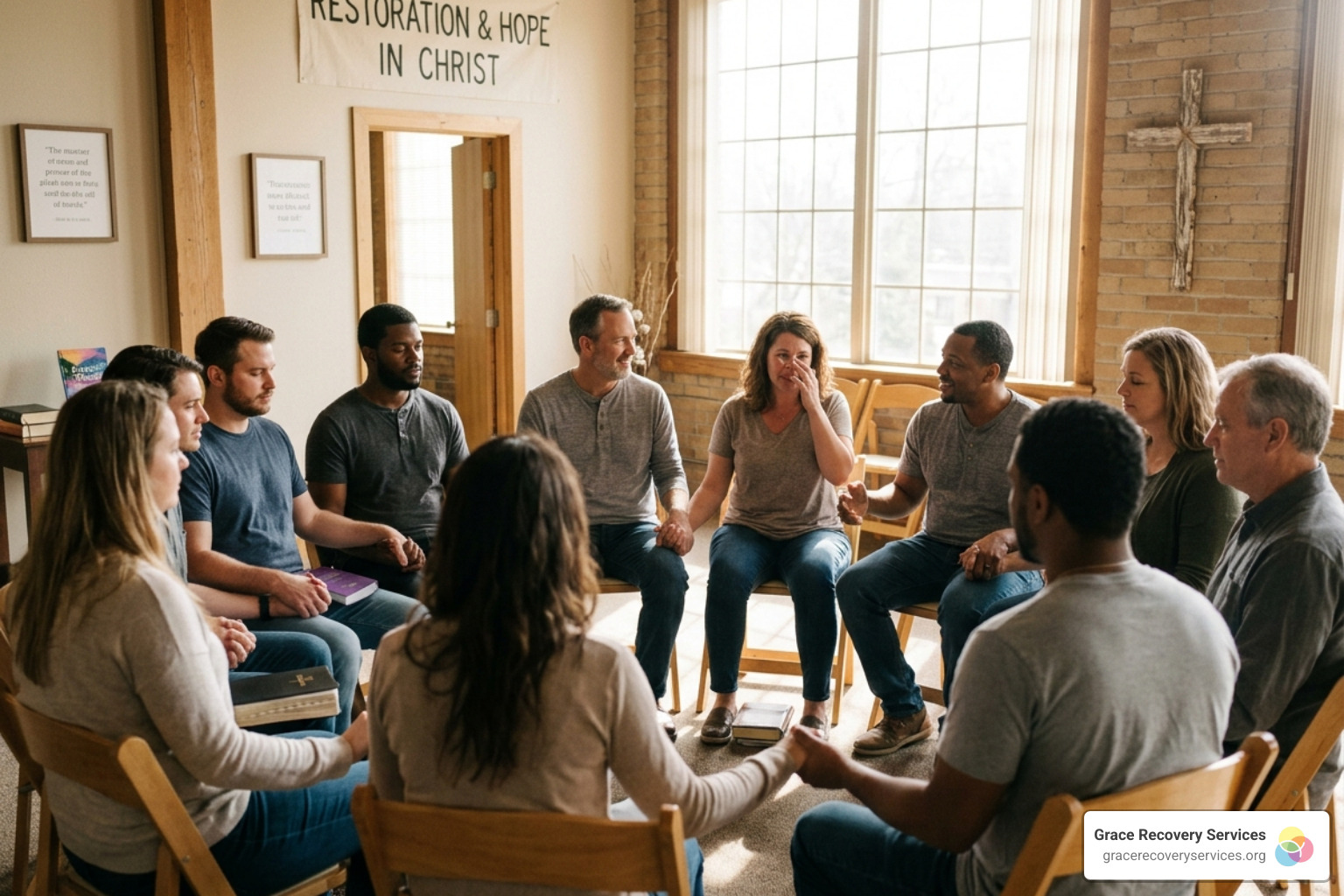
In Western PA, we know that “iron sharpens iron.” Addiction thrives in isolation, but recovery flourishes in community. A Bible study rehab program emphasizes healthy fellowship, often through a “spiritual bootcamp” or “discipleship” model.

Peer support and mentorship are foundational. When a client sees someone further along in their journey who has achieved Christian Sobriety, it provides tangible hope. Our Christian Addiction Counseling often involves connecting clients with mentors from local churches in Westmoreland County or Allegheny County, ensuring they have a support system that extends beyond our office walls.
Long-Term Success and Relapse Prevention
The goal of any rehab program is lasting change. Statistics show that individuals with a strong faith foundation often have higher rates of sustained sobriety. This is because faith provides a “why” that is bigger than the “how” of staying clean.
We offer Faith-Based IOP (Intensive Outpatient Programs) and Christian Intensive Outpatient Treatment to provide a bridge between intensive care and everyday life. These programs focus on:
- Spiritual Tools: Continued prayer and scripture study to resist cravings.
- Aftercare Support: Connection to local faith-based support groups like Celebrate Recovery.
- Sustained Sobriety: Moving from “not using” to “living abundantly.”
By continuing scripture study post-treatment, clients maintain their commitment to sobriety and keep their focus on God’s plan for their future.
Frequently Asked Questions about Scripture-Based Rehab
Who is eligible for scripture-based treatment?
Most programs, including ours in Pittsburgh and North Huntingdon, are open to anyone who is willing to participate in the curriculum. You do not need to be a “perfect Christian” or even a member of a church to start. We meet you exactly where you are.
How long does a typical program last?
The duration varies based on the level of care. Some residential models last 65 days, while others can extend up to 18 months in various phases. At Grace Recovery Services, our outpatient programs (PHP and IOP) are tailored to the individual’s needs, often lasting several months to ensure a solid foundation is built.
Is insurance accepted for faith-based outpatient care?
Yes, many faith-based outpatient programs, including Grace Recovery Services, accept insurance. Because we provide clinically managed, evidence-based treatment alongside our spiritual components, many providers recognize and cover these services.
Conclusion: Finding Hope in Western Pennsylvania
If you or a loved one is struggling with addiction in the Pittsburgh area, know that you don’t have to walk this path alone. A Bible study rehab program offers a unique opportunity to find healing for your body, mind, and spirit simultaneously.
At Grace Recovery Services, we are committed to providing the highest quality Christian Rehab Pittsburgh has to offer. Whether you are in Irwin, Penn Hills, or anywhere else in Western PA Christian Addiction Counseling, our doors are open. We believe that no one is beyond redemption and that every person deserves a future filled with hope.
Take the first step toward a new life.
Start your journey to recovery today
This article was researched with AI and heavily edited by Stephen Luther for accuracy and relevance.
Stephen Luther is the Executive Director and Founder of Grace Christian Counseling, Grace Recovery Services, WPA Counseling, NuWell Online Counseling and Coaching, and NuWell Health. He holds a Master’s degree in Education from the University of Georgia and a Master’s degree in Marriage and Family Therapy from Duquesne University. He is a licensed professional counselor in Pennsylvania.
Since 1997, Steve has been helping children, adolescents, and adults overcome a wide range of emotional and relational challenges. He specializes in working with hurting families, including those with foster, adopted, or traumatized children. Steve uses Attachment-Based Therapy, Splankna Healing, and Therapeutic Parent Coaching to support healing and restoration.
This guide is for educational and spiritual encouragement and is not a substitute for personalized professional counseling. If you are in crisis, please reach out for immediate help.