
When Wounds Run Deep: What Holistic Trauma Christian Treatment Can Do for You
Holistic trauma Christian treatment is an approach to healing that combines evidence-based clinical therapy with Christian faith practices — addressing the mind, body, and spirit together, not just the symptoms.
Here is a quick overview of what it involves:
- Clinical therapy — methods like EMDR, CBT, and somatic work to process traumatic memories
- Faith integration — prayer, biblical reflection, and Scripture to provide hope and spiritual grounding
- Whole-person care — addressing emotional wounds, physical stress responses, and spiritual disconnection
- Community support — fellowship and pastoral care that reinforce long-term healing
- Dual diagnosis treatment — addressing co-occurring conditions like addiction alongside trauma
Trauma does not stay in one place. It moves through your emotions, your body, and your sense of who you are before God. For many people in Western Pennsylvania and beyond, standard therapy alone leaves something missing — a deeper layer of healing that connects their pain to purpose, and their struggle to a God who restores.
Research backs this up. Studies involving nearly 80,000 participants found that strong spiritual ties correlate with lower anxiety, reduced depression, and greater life satisfaction. Faith communities can improve recovery rates by as much as 45% compared to professional treatment alone. And integrating faith into trauma therapy has been linked to a 23% greater reduction in depression and anxiety symptoms compared to purely secular programs.
That is not a small difference. It is the difference between surviving and truly healing.
At Grace Recovery Services, we have seen this — clients who have tried other approaches finally finding traction when clinical care meets biblical truth. This guide walks you through exactly how holistic Christian trauma treatment works, who it helps, and what the journey looks like.
I’m Stephen A. Luther, MSEd, MEd, LPC, Executive Director and Founder of Grace Recovery Services in Western Pennsylvania, with decades of experience combining trauma-informed clinical care with Christian counseling principles to help individuals and families find lasting recovery through holistic trauma Christian treatment. The approach I outline here reflects the same whole-person, grace-centered model we use every day with clients across the Pittsburgh region.
Defining Holistic Trauma Christian Treatment
When we talk about holistic trauma Christian treatment, we are describing a model that refuses to separate your psychological health from your spiritual life. It is the intentional blending of professional counseling techniques with the timeless truths of the Bible. While secular therapy often focuses exclusively on the “mind” or “behavior,” a holistic approach recognizes that you are a complex being made in the image of God.
This means we don’t just look at a diagnosis; we look at the person. We understand that trauma is an injury to the soul that requires a faith-integrated trauma therapy approach. By combining clinical excellence with spiritual guidance, we create a space where you can process what happened to you without having to leave your faith at the door. You can learn more about how we structure this journey by exploring our faith-based trauma recovery resources.
The Intersection of Clinical Excellence and Biblical Truth
In our work at Grace Recovery Services, we believe that all truth is God’s truth. This means that neurobiology and Scripture are not in competition; they are partners in your restoration. Clinical excellence involves using research-backed methods like Eye Movement Desensitization and Reprocessing (EMDR) or Cognitive Behavioral Therapy (CBT) to help the brain re-organize traumatic memories.
Biblical truth provides the framework for why we heal. It tells us that we are loved, that our pain has a witness, and that redemption is possible. This trauma-informed Christian counseling creates a therapeutic alliance built on grace. We aren’t just looking for “symptom management”; we are looking for a renewed life where the “peace that passes all understanding” becomes a daily reality rather than a distant concept.
Who Can Benefit from Faith-Integrated Care?
One of the most common questions we hear in our North Huntingdon and Penn Hills offices is, “Is this for me?” The answer is almost always yes. Holistic trauma Christian treatment is designed for anyone who has experienced:
- Childhood abuse or neglect: Healing the foundational wounds of the past.
- Relational betrayal: Restoring the ability to trust after a deep hurt.
- Combat or first-responder trauma: Addressing the unique “moral injuries” that come with high-stress service.
- Traumatic grief: Navigating the sudden loss of a loved one with the hope of the Gospel.
- Generational trauma: Breaking patterns of pain that have traveled through family lines for decades.
Our environment is one of non-judgmental support. While our foundation is Christian, we welcome anyone in Western Pennsylvania who is seeking values-based care. You do not need to have your “spiritual life together” to start; you only need a desire to find a path forward.
The Impact of Trauma on Mind, Body, and Spirit
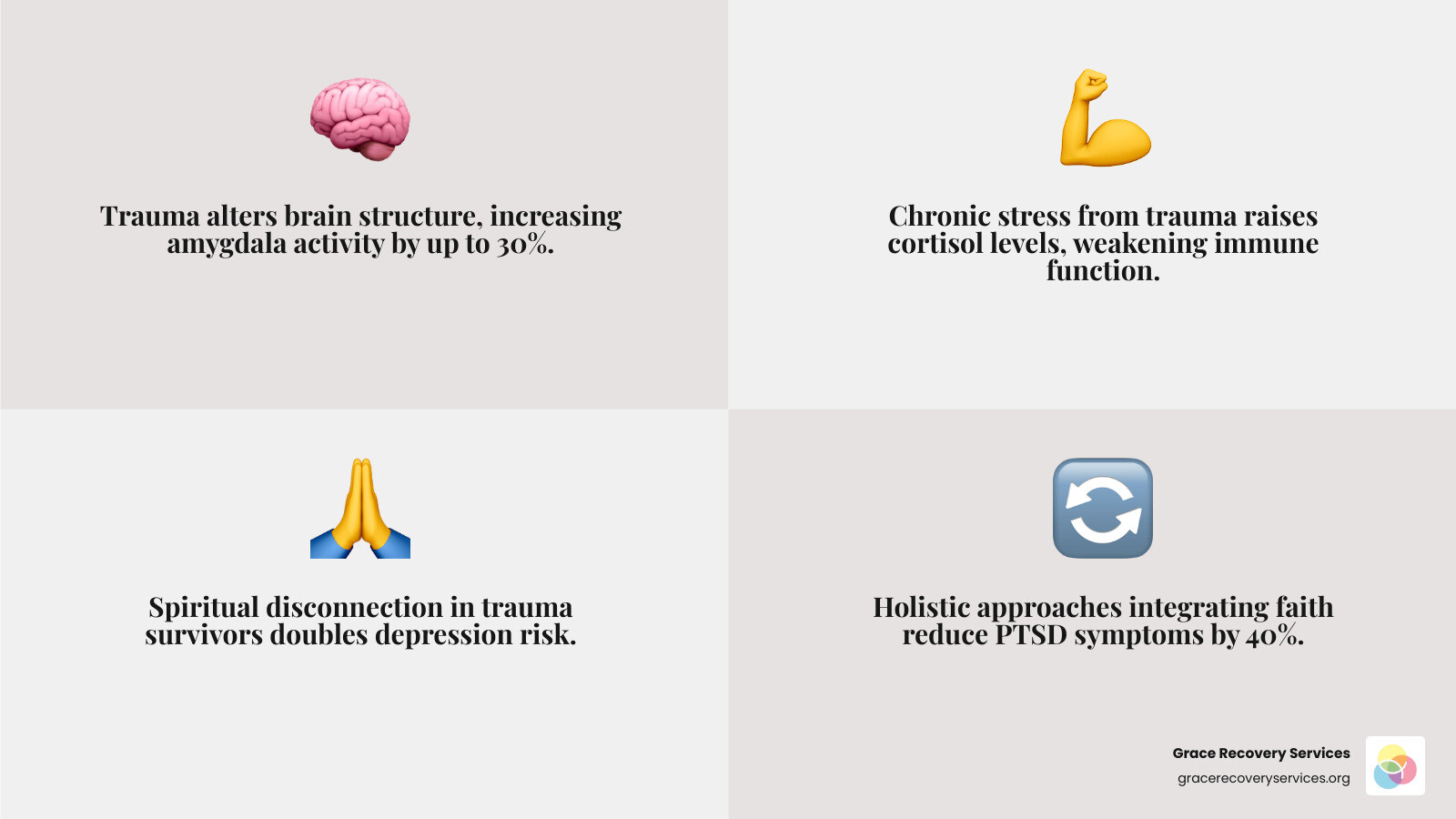
Trauma is not just a memory; it is a physiological state. When you experience a traumatic event, your nervous system can become “stuck” in a state of hyper-vigilance or emotional numbness. This is why you might feel anxious even when you are safe, or why you might feel disconnected from God even when you are praying.
We utilize trauma-informed care to help clients understand that their reactions are not “crazy”—they are survival mechanisms. Trauma impacts the Default Mode Network (DMN) in the brain, which affects how we view ourselves, and the Central Executive Network (CEN), which impacts our ability to solve problems and regulate emotions.
Addressing Physical Manifestations in Holistic Trauma Christian Treatment
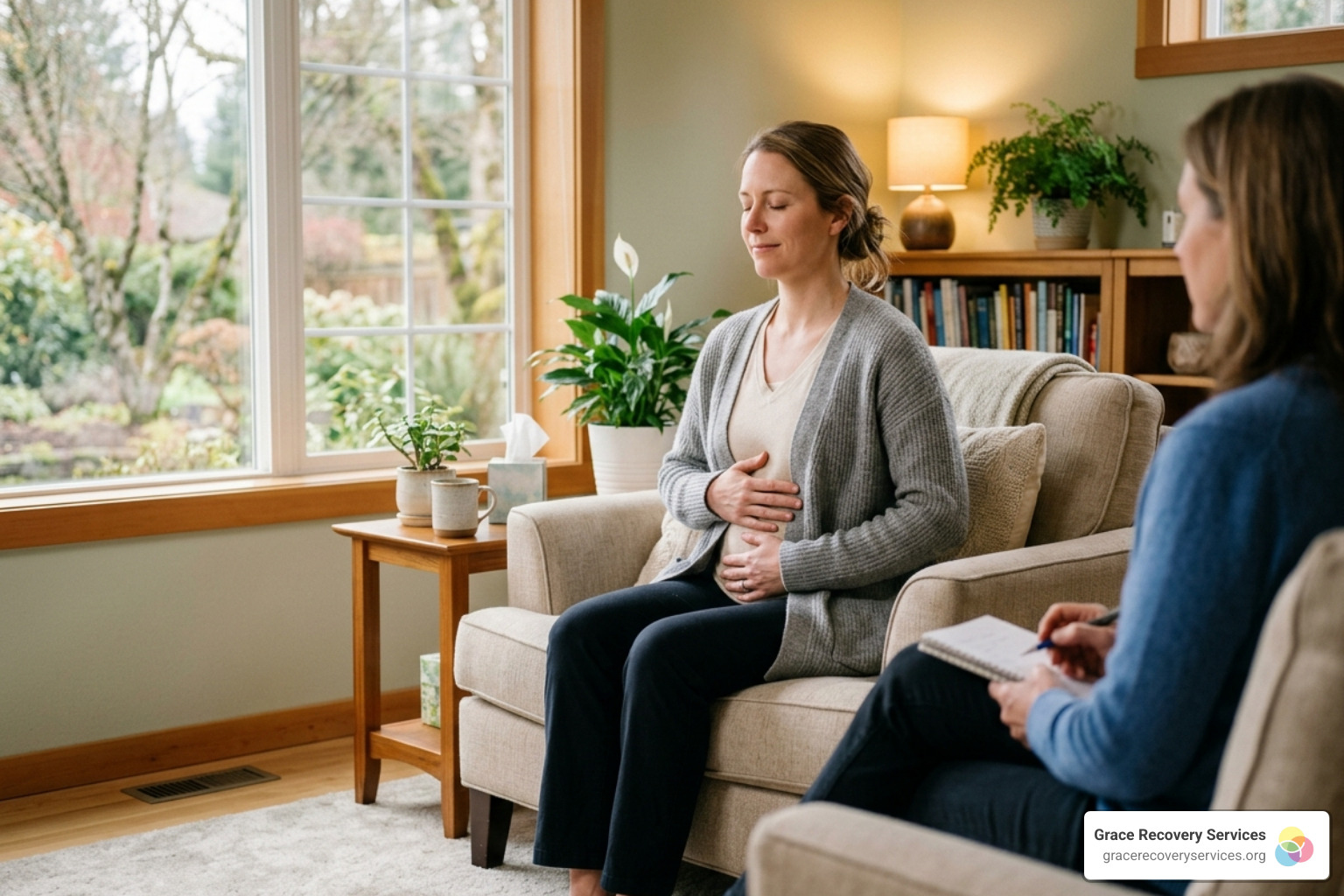
Have you ever noticed that when you think about a painful memory, your chest tightens or your stomach knots up? That is because trauma lives in the cells of the body. In holistic trauma Christian treatment, we use somatic (body-based) approaches to help regulate the autonomic nervous system.
Unprocessed trauma keeps cortisol levels high, leading to chronic stress, sleep disturbances, and even a weakened immune system. By incorporating techniques like those used in specialized Christian therapy in Pennsylvania, we help clients learn to “listen” to their bodies. We teach mindful breathing and grounding techniques that allow the body to finally feel the safety that the mind is trying to accept.
Restoring the Spirit Through Divine Connection
Trauma often whispers lies about our identity. It tells us we are “damaged goods,” “forgotten,” or “unworthy.” These spiritual wounds are where the most profound healing happens. Through biblical and clinical care, we work to rebuild your identity in Christ.
Prayer isn’t just a ritual here; it’s a way to invite the Holy Spirit into the broken parts of your story. When we address the spirit, we are looking to replace shame with grace and isolation with divine connection. We believe that God is “close to the brokenhearted,” and our sessions aim to make that closeness tangible.
Evidence-Based Modalities Integrated with Faith
To provide the best holistic trauma Christian treatment, we utilize a “toolbox” of effective clinical methods. We don’t just talk about the past; we use specific interventions to help you move through it. This is part of our commitment to integrated treatment for addiction and mental health.
- EMDR (Eye Movement Desensitization and Reprocessing): Helps the brain reprocess “stuck” traumatic memories so they no longer trigger a fight-or-flight response.
- CBT (Cognitive Behavioral Therapy): Identifies and challenges the negative thought patterns that trauma leaves behind.
- Brainspotting: A technique that uses the visual field to access unprocessed trauma in the subcortical brain.
- Narrative Therapy: Helping you rewrite your story, moving from the role of “victim” to “survivor” and “overcomer” through the lens of God’s sovereignty.
The Role of Scripture and Prayer in Holistic Trauma Christian Treatment

Scripture is more than just a book of rules; it is a cognitive tool for renewal. In our sessions, we might use “biblical affirmations” to counter the intrusive thoughts of PTSD. When the brain says, “I am in danger,” we might reflect on Psalm 147:3: “He heals the brokenhearted and binds up their wounds.” When fear feels overwhelming, we turn to Isaiah 41:10 for the reminder that God is holding us.
These spiritual disciplines act as anchors. By integrating meditative reflection on Scripture with clinical grounding, we help clients build a “spiritual immune system” that can withstand the triggers of daily life.
Stages of the Healing Journey
Healing is a process, not an event. In our Pittsburgh area offices, we generally guide clients through three key stages:
- Safety and Stability: Before we dive into deep memories, we must ensure you feel safe. This involves learning coping skills, stabilizing your environment, and building trust with your counselor.
- Processing Traumatic Memories: This is the “heavy lifting” where we use modalities like EMDR to address the specific events that caused the trauma.
- Integration and Long-Term Wellness: This is where you begin to live out your new identity. We focus on healthy relationships, community support, and maintaining the spiritual and emotional gains you’ve made.
Healing the Cycle of Trauma and Addiction
There is a “vicious cycle” between trauma and substance use. Many people begin using drugs or alcohol as a way to “self-medicate” the pain of trauma. They aren’t looking to become addicted; they are looking for a way to stop the flashbacks or the crushing anxiety.
Because of this, we emphasize co-occurring treatment. If you treat the addiction without treating the trauma, the risk of relapse remains high. Conversely, if you treat the trauma but ignore the addiction, the substance use will hinder your emotional progress. Our Christian integrated addiction treatment addresses both simultaneously, offering a path to true freedom.
Breaking Generational Patterns of Pain
Trauma is often a family affair. Relational wounds and “church hurt” can create patterns that repeat through generations. Part of our work in Penn Hills Christian counseling involves looking at these family dynamics.
We believe in the power of forgiveness — not as a way to excuse harm, but as a way to release the burden of the past so it doesn’t dictate your future. By healing yourself, you are actually changing the legacy you leave for your children and your community in Western Pennsylvania.
Building Resilience for Lasting Sobriety
Resilience is the ability to “bounce back” after a trial. In holistic trauma Christian treatment, resilience is built on the rock of faith. While secular programs provide great tools, we find that spiritual strength provides the “why” that keeps people going during the hardest days of recovery.
| Feature | Secular Recovery | Faith-Integrated Recovery (Grace) |
|---|---|---|
| Primary Focus | Behavioral change and clinical tools | Whole-person restoration (Mind, Body, Spirit) |
| Source of Strength | Self-reliance or general “Higher Power” | The personal, redemptive power of Jesus Christ |
| Community | Peer support groups | Fellowship, church connection, and peer support |
| Outcome Goal | Sobriety and symptom reduction | Transformation, purpose, and lasting peace |
How Faith Can Shape Your Response to Trauma
Faith does not erase what happened, and it is not a substitute for clinical care. For many people, though, it changes how they carry it. Prayer, Scripture, worship, and a trusted community can offer steadiness when trauma symptoms make life feel unpredictable, and meaning when suffering feels senseless.
Research on religious coping points in two directions. Positive religious coping, such as seeking comfort in God, leaning on a faith community, or holding onto hope, is generally associated with better mental health. Negative religious coping, such as feeling punished or abandoned by God, is associated with more distress. That is why faith-integrated care pays attention to how a person’s beliefs are affecting them, not just whether they hold them.
In practice, that can mean using the lament Psalms to name grief honestly, pairing prayer with grounding skills, or rebuilding a sense of worth on what Scripture says about God’s care. It also means never using faith to rush forgiveness, minimize harm, or pressure someone toward contact that is not safe. At Grace Recovery Services, spiritual practices are always optional and guided by the client.
Frequently Asked Questions about Faith-Based Healing
Is holistic Christian trauma treatment only for those who are deeply religious?
Not at all. We meet you exactly where you are. Whether you have a lifelong faith, are questioning everything, or simply want a treatment approach that respects your values, you are welcome here. We believe God’s grace is available to everyone, regardless of where they are on their spiritual journey.
How does this approach differ from traditional secular therapy?
Traditional therapy is excellent at addressing the “what” and the “how” of behavior and thought. Holistic Christian treatment adds the “Who.” We include the spiritual dimension of your life, acknowledging that your relationship with God (or your struggle with it) is a vital part of your mental health. We use the same clinical tools as secular therapists but place them within a framework of eternal hope and biblical truth.
What can I expect during a typical faith-integrated counseling session?
You can expect a professional, clinical environment that feels warm and safe. A session might begin with a brief prayer or a check-in on your week. We will use evidence-based techniques to work through your goals, but we may also reference Scripture that relates to your struggle or spend time discussing how your trauma has impacted your view of God. It is a collaborative process tailored entirely to your needs.
What if religion was part of my trauma?
That matters, and it will be taken seriously. Church hurt, spiritual abuse, or harmful messages about God can make faith-based care feel risky. You will not be pressured to pray, read Scripture, or return to a church. Your counselor can help you work through what happened at your own pace, and you decide whether and how faith is part of treatment. For more, read about trauma-sensitive faith integration.
How is this different from talking to a pastor?
A pastor can offer spiritual care, prayer, and community, and that support can be valuable. Faith-integrated treatment at Grace Recovery Services is provided by clinical professionals who assess trauma symptoms, substance use, and mental health, use evidence-based therapies, and refer to other services when needed. Many people benefit from both kinds of support.
Conclusion: Finding Restoration in Western Pennsylvania
Trauma can feel like a life sentence, but it doesn’t have to be. Whether you are in Pittsburgh, North Huntingdon, or anywhere in Allegheny and Westmoreland Counties, there is a community here ready to walk with you. At Grace Recovery Services, we specialize in taking the broken pieces of a life impacted by trauma and addiction and helping God put them back together into something beautiful.
Our outpatient programs, including Intensive Outpatient (IOP) and Partial Hospitalization (PHP), are designed to provide high-level clinical care while allowing you to remain connected to your family and your community. You don’t have to do this alone.
If you are ready to move beyond just “getting by” and start truly living, we invite you to reach out. Your story isn’t over, and your trauma doesn’t get the final word. Grace does.
Start your journey to healing today by contacting our team for a compassionate, confidential assessment. Let us help you find the restoration, renewal, and revival you’ve been searching for.
This article was researched with AI and heavily edited by Stephen Luther for accuracy and relevance.
Stephen Luther is the Executive Director and Founder of Grace Christian Counseling, Grace Recovery Services, WPA Counseling, NuWell Online Counseling and Coaching, and NuWell Health. He holds a Master’s degree in Education from the University of Georgia and a Master’s degree in Marriage and Family Therapy from Duquesne University. He is a licensed professional counselor in Pennsylvania.
Since 1997, Steve has been helping children, adolescents, and adults overcome a wide range of emotional and relational challenges. He specializes in working with hurting families, including those with foster, adopted, or traumatized children. Steve uses Attachment-Based Therapy, Splankna Healing, and Therapeutic Parent Coaching to support healing and restoration.
This guide is for educational and spiritual encouragement and is not a substitute for personalized professional counseling. If you are in crisis, please reach out for immediate help.