
Allegheny County Addiction Support: Where to Start When You Need Help Now
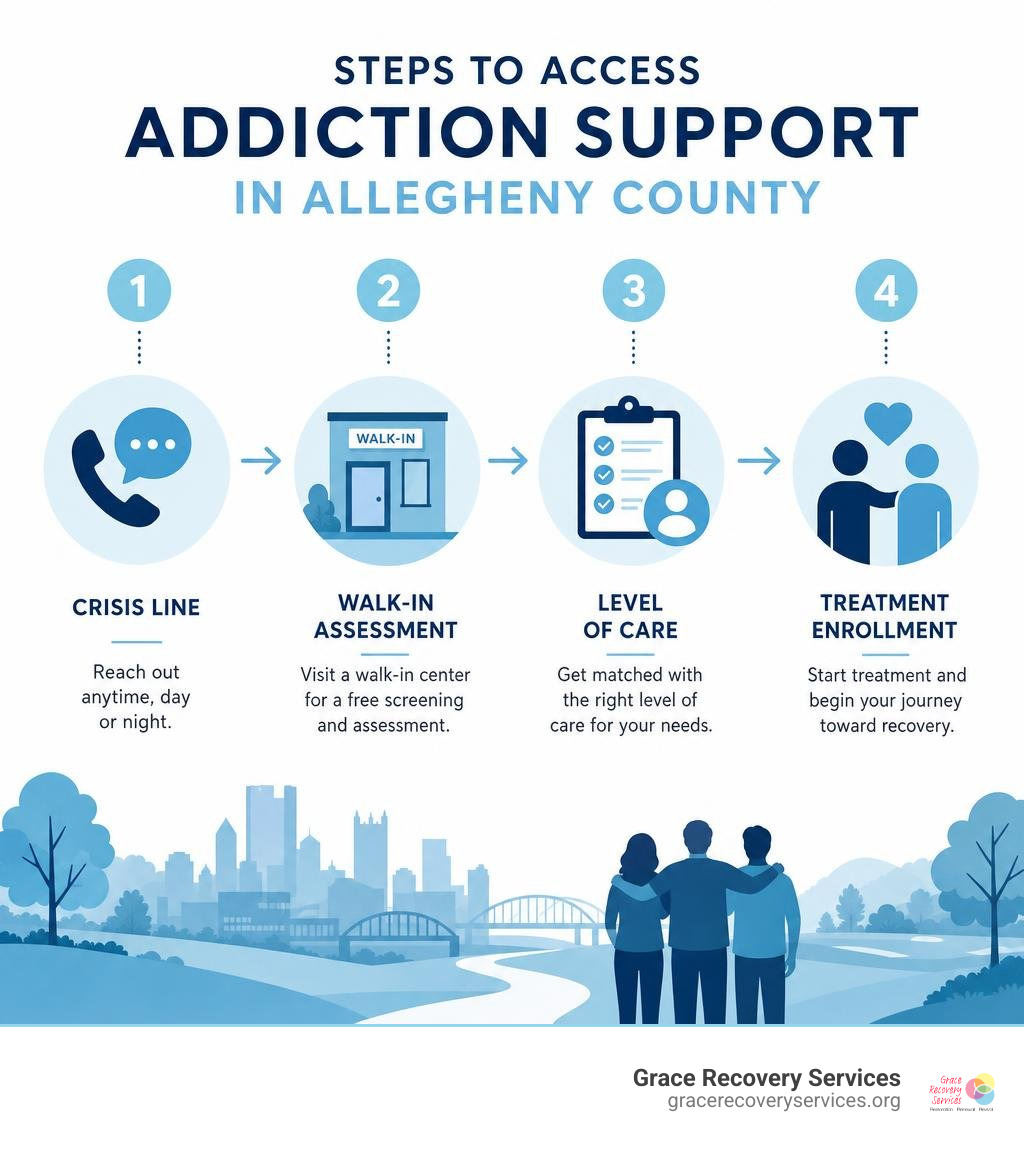
Allegheny County addiction support is available right now — 24 hours a day, 7 days a week — whether you are in crisis, looking for treatment, or trying to help someone you love.
Here is a quick overview of where to start:
| What You Need | Where to Turn | Available |
|---|---|---|
| Immediate crisis support | resolve Crisis Services: 1-888-796-8226 | 24/7 |
| Walk-in screening & assessment | Pathway to Care and Recovery, 326 Third Ave, Pittsburgh | 24/7, free, age 14+ |
| After-hours telemedicine | MATTERS program: 716-302-4122 | Weekdays 5pm–11pm, Weekends 11am–11pm |
| Uninsured treatment funding | Community Care Behavioral Health: 1-800-553-7499 | 24/7 |
| Overdose reversal medication | Any Pennsylvania pharmacy (no prescription needed) | Walk-in |
| Ongoing outpatient treatment | Contact Grace Recovery Services | By appointment |
Getting help in Allegheny County does not have to be complicated. But when you are in the middle of a crisis — or watching someone you love struggle — even a simple phone call can feel impossible.
You are not alone in that feeling. And you are not alone in this county.
Allegheny County has a coordinated network of crisis lines, walk-in centers, clinical assessment programs, and treatment providers. The system is designed so that anyone — insured or not — can find a way in.
At Grace Recovery Services, we walk alongside people at every stage of that journey. Our faith-based, trauma-informed approach to outpatient recovery is built on one core belief: that healing is possible for everyone, no matter how long the struggle has lasted.
This guide will show you exactly how the local system works — and how to find the right next step for yourself or someone you care about.
Immediate Crisis and 24/7 Allegheny County Addiction Support
When you or someone you love is facing an acute crisis, you do not have time to wait for an appointment. In Allegheny County, several immediate, round-the-clock resources are available to help stabilize the situation and connect you to ongoing care.
resolve Crisis Services
For immediate mental health or substance-use crisis support, resolve Crisis Services is available 24/7 to all Allegheny County clients, regardless of age or insurance status. They provide:
- 24/7 Telephone Support: Call 1-888-7YOUCAN (1-888-796-8226) to speak with a professional behavioral health counselor.
- Mobile Crisis Teams: Teams can travel directly to your location in Allegheny County to provide in-person de-escalation and support.
- Walk-In Center: You can visit their physical location at 333 North Braddock Avenue in Pittsburgh for immediate face-to-face assistance.
Pathway to Care and Recovery
Located at 326 Third Avenue in downtown Pittsburgh, Pathway to Care and Recovery offers walk-in services at no cost to Allegheny County families and individuals aged 14 and older. Whether you are dealing with alcohol, drugs, or other substances, they provide walk-in screenings, immediate peer support, and direct referrals to treatment. Their hotline is also staffed 24/7 at 1-800-662-HELP.
After-Hours Telemedicine and Bridge Clinics
If you need immediate medical support or a “bridge” prescription for medication-assisted treatment (MAT) outside of standard business hours, specialized telemedicine programs can help:
- The MATTERS Program: Call 716-302-4122 (available weekdays from 5:00 PM to 11:00 PM and weekends from 11:00 AM to 11:00 PM) to connect with a clinician.
- UPMC Medical Toxicology Bridge Clinic: Call 412-432-1042 (available weekdays from 9:00 AM to 7:00 PM) for rapid access to medical addiction support.
Overdose Prevention and Naloxone Access
Naloxone (commonly known by the brand name Narcan) is a life-saving medication that can reverse an opioid overdose. In Pennsylvania, any client can legally purchase Naloxone at any local pharmacy without a personal prescription, thanks to a statewide standing order. Naloxone is completely harmless if administered to someone who does not have opioids in their system. You can also obtain Naloxone and other harm-reduction resources by contacting Prevention Point Pittsburgh.
For a comprehensive directory of immediate local resources, you can always visit Substance Use : Allegheny Connect.

Navigating the Single County Authority and Treatment Funding
Understanding how addiction treatment is funded is one of the most common hurdles for families seeking help. In Pennsylvania, public funding and treatment coordination are managed at the county level through entities known as Single County Authorities (SCAs).
In Allegheny County, the designated SCA is the Bureau of Drug and Alcohol Services, which operates under the county’s Department of Human Services (DHS) Office of Behavioral Health. The SCA acts as the primary administrative hub, managing state and federal funding to ensure that local clients can access critical services regardless of their financial situation.
If you are trying to determine how to pay for treatment, the process typically depends on your insurance status:
- Medicaid (Medical Assistance): If you receive Medicaid in Allegheny County, your behavioral health benefits are managed by Community Care Behavioral Health (CCBH). You can contact CCBH 24/7 at 1-800-553-7499 to verify your benefits, get referrals, and authorize funding for treatment.
- Uninsured or Underinsured Clients: Allegheny County funds are specifically designated to support clients who do not have health insurance or whose insurance does not fully cover the cost of addiction treatment. If you are uninsured, CCBH also assists in coordinating and authorizing county-funded services to ensure you are not left without care.
- Private Insurance: If you have commercial health insurance, your first step should be calling the behavioral health number on the back of your insurance card to verify your network providers and coverage limits.
To learn more about how local providers coordinate with county administrators, you can review the guidelines on Working with the Office of Behavioral Health – Allegheny County, PA.
Understanding the PCPC Assessment and Levels of Care
To ensure that every individual receives the safest and most effective level of care, Pennsylvania requires a standardized clinical assessment before entering treatment.
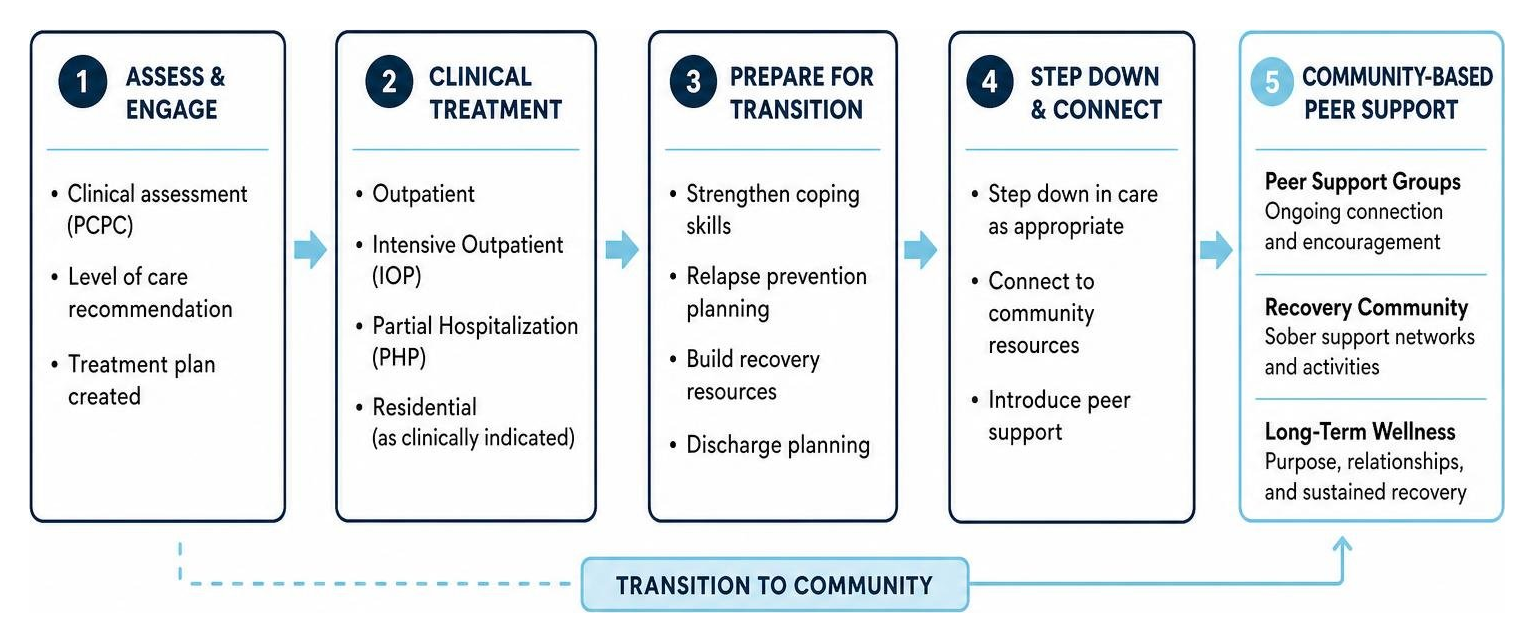
The required clinical tool is the Pennsylvania Client Placement Criteria for Adults (PCPC). This assessment must be conducted by a certified PCPC assessor, who evaluates several dimensions of your life — including acute intoxication potential, biomedical conditions, emotional or behavioral complications, treatment acceptance, relapse potential, and your recovery environment.
Certified Assessment Centers
Allegheny County utilizes Certified Assessment Centers to streamline this process. These centers are contractually required to see clients within 48 hours or less to complete a Level of Care Assessment (LOCA). The assessor identifies clinical needs, highlights non-treatment barriers (such as transportation or childcare), and makes direct referrals to licensed treatment providers.
The Levels of Care
Based on the PCPC assessment, individuals are referred to one of several licensed levels of care. Because we believe in clinical transparency, it is helpful to understand how these levels compare:
| Level of Care | Typical Weekly Commitment | Best Suited For |
|---|---|---|
| Outpatient Program | Maximum of 5 hours per week | Individuals with stable environments who need ongoing therapy while maintaining work or family commitments. |
| Intensive Outpatient (IOP) | Minimum of 5 to 12+ hours per week (scheduled over multiple days) | Those requiring structured, multi-day therapy to address deeper behavioral patterns and build coping skills. |
| Partial Hospitalization (PHP) | Minimum of 10 to 20 hours per week | Individuals who need intensive daily clinical support but return home in the evenings. |
At Grace Recovery Services, we focus exclusively on outpatient-based solutions. We provide a comprehensive Outpatient Program, a highly structured Intensive Outpatient program, and specialized Co-Occurring Treatment for individuals navigating both substance use and mental health challenges.
By integrating Evidence-Based Addiction Treatment with a compassionate, Faith-Based Outpatient Addiction Treatment model, we help clients build sustainable recovery habits right where they live, work, and worship. We also provide Integrated Treatment for Addiction and Mental Health and comprehensive Mental Health and Addiction Services to address the whole person.
The Intersection of Criminal Justice and Recovery Support
For many individuals, the journey to recovery overlaps with the criminal justice system. Navigating probation conditions, court mandates, and legal requirements can feel overwhelming, but a coordinated system exists in Allegheny County to help bridge these worlds.
Confidentiality and 42 CFR Part II
Federal regulations under 42 CFR Part II protect drug and alcohol treatment records with extreme strictness. Because of these protections, court personnel, defense counsel, and probation officers cannot access your treatment records or verify your attendance without a signed, written release of information form. We work closely with our clients to manage these releases safely, ensuring they remain compliant with legal requirements while maintaining their clinical dignity.
Local Legal and Support Systems
- The Jail Collaborative System: This system coordinates care and transition services for individuals transitioning out of the county jail, helping them secure treatment and community support.
- Intensive Case Management (ICM): Voluntary case management is available to help individuals navigate the recovery system for up to one year. ICM consists of structured follow-ups (four contacts, with at least two being face-to-face, during the first and second months) and continues to offer transition support after treatment.
As individuals transition to long-term recovery, having a strong community is vital. We encourage families to explore Family Support in Addiction Recovery and learn How to Support Someone in Recovery to build a healthy, lasting home environment that promotes Addiction Recovery and Relapse Prevention and guides individuals on How to Stay Sober After Rehab.
Navigating Court-Ordered Allegheny County Addiction Support
If you or a loved one has been ordered by a judge to complete addiction treatment, it is important to know that Pennsylvania judges cannot legally order a defendant to a specific type of treatment facility or modality. Under state guidelines, the treatment placement must strictly align with a clinical PCPC assessment conducted by a certified professional. Ordering someone to a level of care that does not match their clinical needs can actually cause therapeutic harm.
If you are navigating court mandates, completing an assessment at a Certified Assessment Center is the first step. For a detailed list of phone numbers and contact pathways for court-related behavioral health services, you can consult the official Allegheny County OBH Where to Call Booklet.
Frequently Asked Questions
How do I access county-funded Allegheny County addiction support if I am uninsured?
If you do not have health insurance, you can still access treatment. Your first step is to call Community Care Behavioral Health (CCBH) at 1-800-553-7499. CCBH coordinates public funding provided by the Allegheny County Single County Authority (SCA) to cover clinical assessments and treatment services for eligible uninsured or underinsured county clients. You can also visit a Certified Assessment Center or Pathway to Care and Recovery for a free assessment and direct referral.
What is the difference between Intensive Outpatient (IOP) and general outpatient treatment?
The primary differences lie in the time commitment and the level of clinical structure. General outpatient treatment involves individual or group therapy for a maximum of 5 hours per week, making it ideal for ongoing maintenance and support. Intensive Outpatient (IOP) requires a larger commitment — typically between 5 to 12+ hours per week scheduled over multiple days. IOP offers a higher level of clinical support and deeper therapeutic work while still providing the flexibility to live at home, work, and care for your family.
Can I complete court-ordered addiction treatment through an outpatient program?
Yes. If your court-mandated PCPC assessment determines that outpatient or intensive outpatient (IOP) is the clinically appropriate level of care for you, you can fulfill your legal obligations through an outpatient program. To do so, you will need to sign a consent release form (complying with 42 CFR Part II) so your counselor can provide regular progress and compliance reports to your probation officer or the court.
Finding Hope and Healing: Grace Recovery Services
At Grace Recovery Services, we believe that true recovery is about more than just stopping the use of a substance — it is about the complete restoration and renewal of your life. We offer a highly compassionate, non-judgmental space where Western Pennsylvania clients can heal without shame.

Our clinical approach is built on our unique Counseling Blueprint, a four-stage journey designed to heal the mind, body, and spirit:
- Take Off the Mask: We focus on building genuine, safe rapport and trust, allowing you to be completely honest about your struggles without fear of judgment.
- Heal the Wounds: We gently explore the underlying emotional, relational, and trauma-related hurts that often drive addictive behaviors.
- Remove the Toxins: Together, we identify and dismantle unhelpful beliefs, shame-based thoughts, and lingering lies that keep you stuck in cycles of defeat.
- Replace with Truth: We help you install empowering, accurate, and spiritually grounded perspectives about your worth, your future, and your relationship with God.
By combining professional, trauma-informed clinical therapy with Faith-Based Recovery Pittsburgh principles and Christian Addiction Recovery Pittsburgh counseling, we provide a holistic path to lasting sobriety.
If you are looking for local care in Western Pennsylvania, we serve individuals and families from our offices in the Pittsburgh area (Penn Hills) and North Huntingdon (Westmoreland County/Irwin area). To learn more about our outpatient programs or to compare local care options, check out our guide on Addiction Recovery Pittsburgh: The Best Centers Compared.
You do not have to carry this weight alone. We invite you to explore our full list of Services or reach out to us directly through our Contact page to take your first step toward grace, healing, and renewal.
This article was researched with AI and heavily edited by Stephen Luther for accuracy and relevance.
Stephen Luther is the Executive Director and Founder of Grace Christian Counseling, Grace Recovery Services, WPA Counseling, NuWell Online Counseling and Coaching, and NuWell Health. He holds a Master’s degree in Education from the University of Georgia and a Master’s degree in Marriage and Family Therapy from Duquesne University. He is a licensed professional counselor in Pennsylvania.
Since 1997, Steve has been helping children, adolescents, and adults overcome a wide range of emotional and relational challenges. He specializes in working with hurting families, including those with foster, adopted, or traumatized children. Steve uses Attachment-Based Therapy, Splankna Healing, and Therapeutic Parent Coaching to support healing and restoration.
This guide is for educational and spiritual encouragement and is not a substitute for personalized professional counseling. If you are in crisis, please reach out for immediate help.