
When Faith Meets Recovery: What a Christian Addiction Recovery Program Really Offers
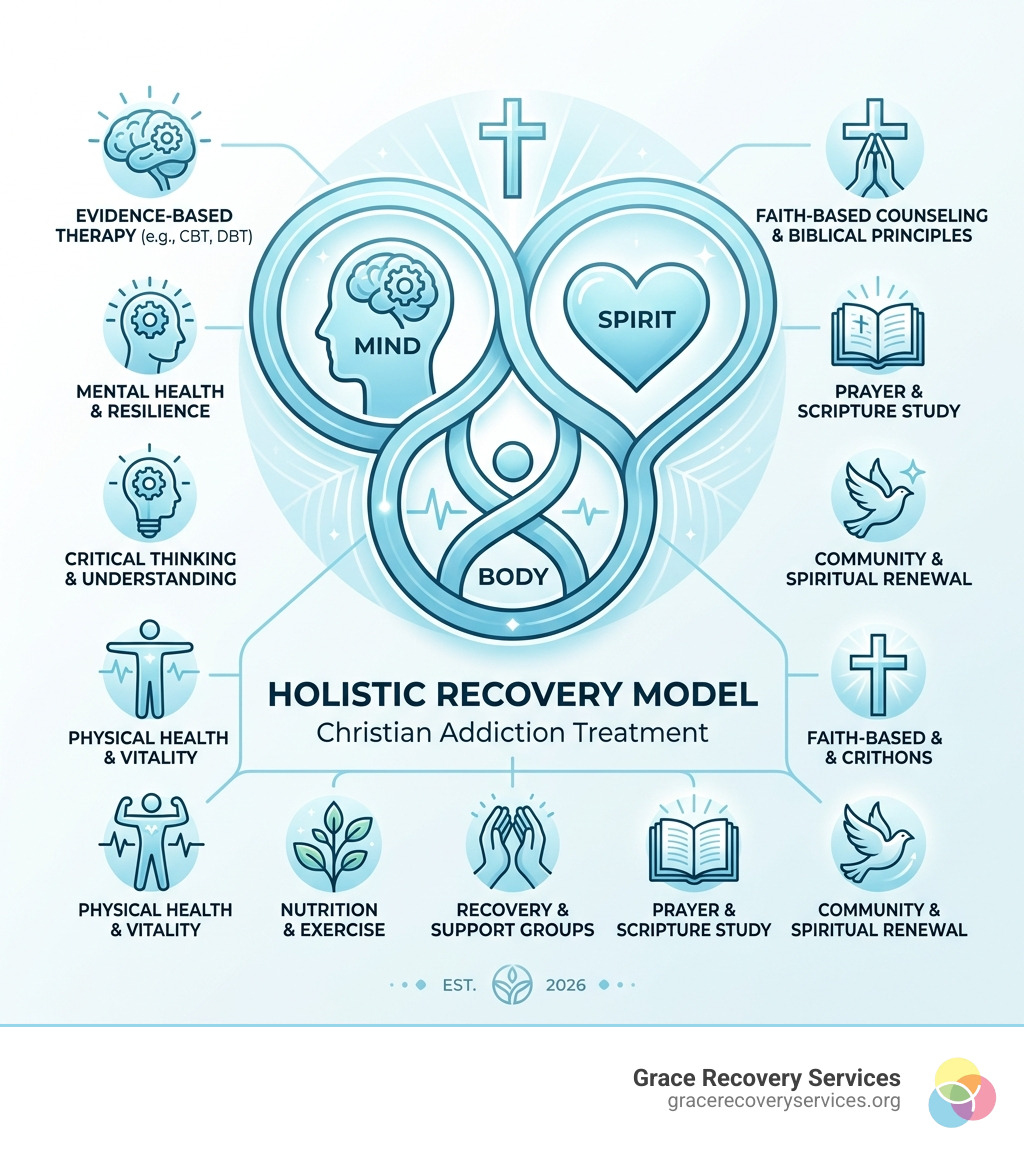
A Christian addiction recovery program combines clinical addiction treatment with biblical principles of grace, hope, and restoration — giving people a path to healing that addresses the mind, body, and spirit.
Here is a quick overview of what these programs typically offer:
| Element | What It Means for You |
|---|---|
| Faith integration | Prayer, Bible study, and spiritual counseling alongside clinical care |
| Evidence-based therapy | CBT, DBT, and Motivational Interviewing grounded in Christian values |
| Community support | A non-judgmental, grace-filled recovery community |
| Whole-person healing | Addresses trauma, mental health, relationships, and spiritual wounds |
| Flexible formats | Outpatient, IOP, and PHP options to fit real life |
| Open to all | No specific denomination or prior faith required |
Addiction touches every part of a person — their relationships, their sense of self, their hope for the future. For many people in Western Pennsylvania and beyond, faith is not a side note in recovery. It is the foundation.
In 2024, an estimated 48.4 million Americans struggled with addiction. Many had tried treatment before. What they often found missing was a space where they could heal spiritually as well as clinically — a place where grace replaced shame, and community replaced isolation.
That is exactly what a Christian addiction recovery program is designed to provide.
At Grace Recovery Services, we see this every day. People come to us carrying not just the weight of substance use, but the deeper wounds underneath it — trauma, broken relationships, lost identity. When clinical care and faith work together, something powerful happens.
I’m Stephen A. Luther, MSEd, MEd, LPC, Executive Director and Founder of Grace Recovery Services in Western Pennsylvania, and I have spent decades helping individuals and families heal through trauma-informed, faith-integrated addiction treatment. My work at the intersection of clinical best practices and biblical principles of restoration is the heart of what we offer through our Christian addiction recovery program here in the Pittsburgh region. In the sections ahead, I’ll walk you through everything you need to know — from how these programs work to what makes faith-based recovery uniquely effective for lasting change.
What is a Christian Addiction Recovery Program?
At its core, a Christian addiction recovery program is a specialized form of substance use disorder treatment that views the individual through the lens of God’s love and purpose. While secular programs often focus primarily on the physical and psychological mechanics of addiction, we believe that true healing requires a spiritual foundation.
In our Christian Recovery Services, we don’t just treat symptoms; we walk with people as they rediscover who they were created to be. This involves a unique blend of high-level clinical integration and compassionate, faith-centered care. We believe that addiction often stems from deep-seated wounds or a search for connection that only a relationship with the Creator can truly satisfy. By integrating these truths into the recovery process, we provide a more comprehensive safety net for those navigating the “grind” of early sobriety.
Defining the Christian addiction recovery program
What exactly defines this approach? It starts with biblical principles like grace, forgiveness, and redemption. In a world that often meets addiction with stigma and judgment, a faith-based program offers a non-judgmental sanctuary. We understand that “all have sinned and fall short,” which levels the playing field and removes the “us vs. them” mentality often found in clinical settings.
Understanding how faith helps with addiction is key. It provides an external source of strength when internal willpower fails. By grounding our treatment in the idea that every client is a person of worth, we help dismantle the shame that so often fuels the cycle of relapse.
The Benefits of a Faith-Based Christian addiction recovery program
Choosing a faith-based path offers several distinct advantages that can make the difference between temporary abstinence and lifelong transformation.
- A Shared Value System: When your treatment aligns with your deeply held beliefs, there is less friction in the therapeutic process. You aren’t just learning “coping skills”; you are learning how to live out your faith in the face of temptation.
- Forgiveness and Identity: Many clients struggle with intense guilt over their past. A Christian addiction recovery program emphasizes that your identity is found in Christ, not in your mistakes. This shift from “I am an addict” to “I am a child of God in recovery” is revolutionary.
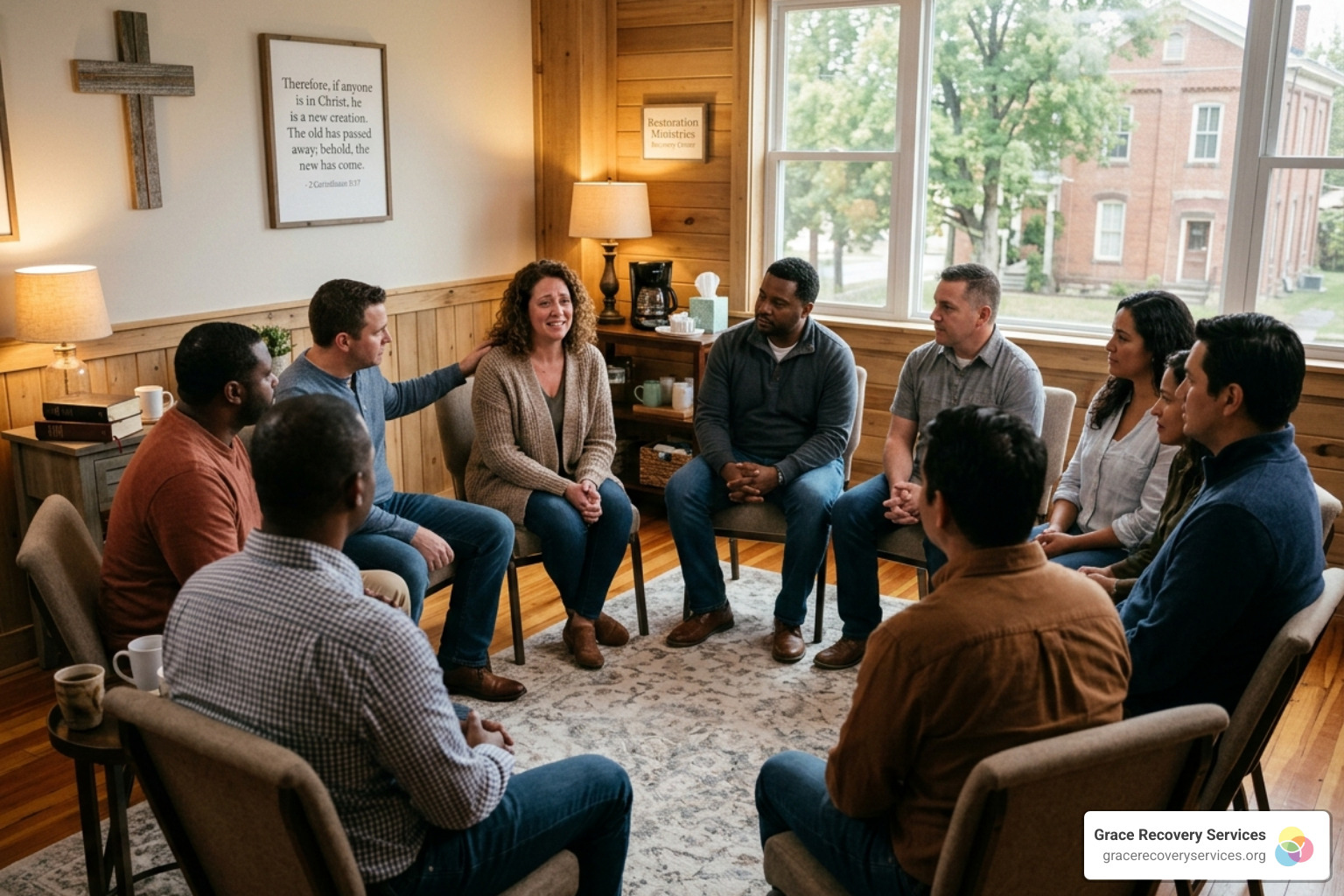
- Unshakeable Community: Addiction thrives in isolation. Our programs in the Pittsburgh and North Huntingdon areas foster a community where clients support one another through prayer and shared biblical study.
The need for this approach is staggering. With over 48.4 million Americans affected by substance use challenges, and tens of thousands of overdose deaths each year, the traditional “one-size-fits-all” model often falls short. A more holistic path can meet emotional, physical, and spiritual needs together, offering real hope. For readers who want to learn more about available support and treatment options, Christian Recovery Services is a helpful place to start.
Core Therapies and Spiritual Practices
In our Western Pennsylvania offices, we utilize a variety of tools to help clients rebuild their lives. These aren’t just “religious activities”; they are spiritual disciplines that have been shown to improve mental health and resilience.
- Christian Counseling: This isn’t just a “chat with a pastor.” Our Western PA Christian Addiction Counseling is led by licensed professionals who understand the complexities of the brain and the nuances of scripture.
- Prayer and Meditation: We teach clients how to use prayer as a grounding technique and meditation as a way to quiet the “noise” of cravings.
- Bible Study: Using resources like the Life Recovery Bible, we help clients see their own stories reflected in the lives of biblical figures who overcame their own “hurts, hang-ups, and habits.”
- Pastoral Support: Having access to spiritual leaders provides an extra layer of accountability and wisdom that secular programs simply cannot offer.
Evidence-Based Care in a Christian addiction recovery program
It is a common misconception that faith-based programs ignore science. At Grace Recovery Services, we believe that all truth is God’s truth. This means we lean heavily into evidence-based practices that are proven to work.
Our approach is trauma-informed, meaning we recognize that most addiction is a response to past pain. We integrate clinical modalities like Cognitive Behavioral Therapy (CBT) and Dialectical Behavior Therapy (DBT), but we do so through a biblical lens. For example, when we use CBT to challenge negative thought patterns, we compare those thoughts to what the Bible says about our value and future. This creates a synergy between psychological health and spiritual growth. You can learn more about this integration by exploring Higher Power Higher Purpose Biblical Principles for Addiction.
Navigating the Path: Outpatient and Intensive Options
One of the biggest barriers to seeking help is the fear that treatment will require leaving behind family, work, and daily responsibilities for months at a time. While residential care is necessary for some, many people find incredible success through outpatient models that offer flexibility without sacrificing depth.
We offer several levels of care in the Pittsburgh area:
- Partial Hospitalization Program (PHP): This is our most intensive outpatient level, providing several hours of clinical and spiritual support most days of the week while allowing the client to return home in the evening.
- Intensive Outpatient Program (IOP): Our Christian Intensive Outpatient Treatment is designed for those who need a structured program but also need to maintain their work or school schedules. It focuses on relapse prevention, social support, and spiritual growth.
- Standard Outpatient Care: This involves weekly or bi-weekly sessions with a Christian counselor to maintain momentum in long-term recovery.
For residents in Westmoreland County, there are numerous Drug and Alcohol Resources & Treatment Facilities that can help bridge the gap between initial detox and long-term outpatient success.

The Role of Spiritual Transformation in Long-Term Sobriety
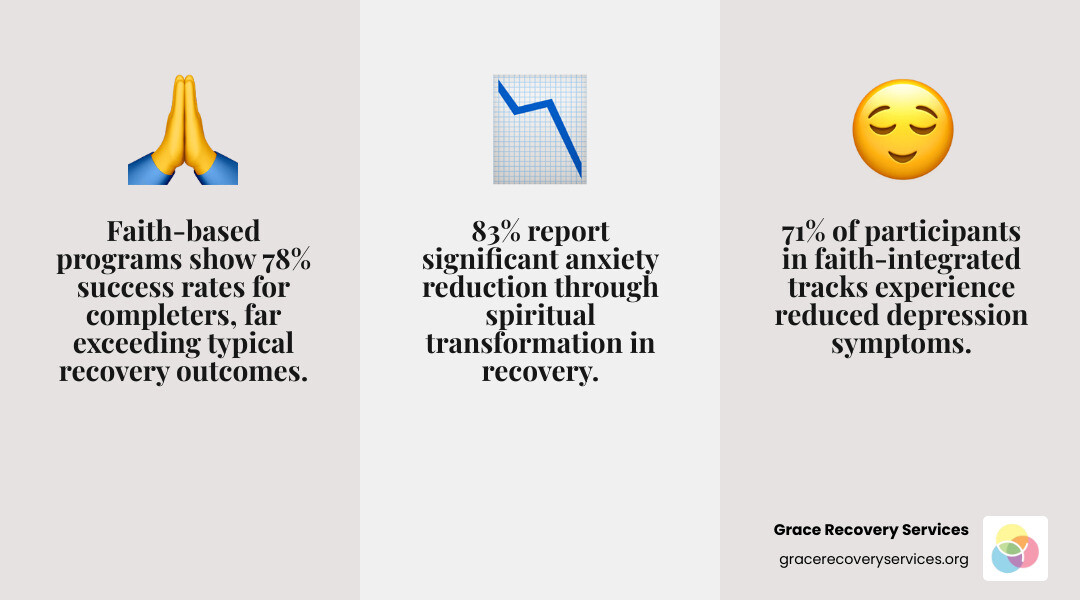
Why does faith seem to make such a difference in the long run? Research into programs like Adult & Teen Challenge has shown success rates as high as 78% for those who complete their programs. Furthermore, data from faith-based tracks often shows that 71% of participants experience reduced symptoms of depression, and 83% see a reduction in anxiety.
The secret isn’t just in “trying harder.” It’s in heart renewal. Secular recovery often focuses on behavioral modification—changing what you do. A Christian addiction recovery program focuses on changing who you are. When a person experiences a genuine spiritual transformation, their desires begin to shift. They find a new “Higher Purpose” that is more satisfying than the temporary relief of a substance.
This transformation provides:
- A sense of purpose: Knowing you are here for a reason helps combat the “what’s the point?” feelings that lead to relapse.
- A buffer against triggers: A relationship with God acts as a spiritual shield, providing peace that “surpasses understanding” during stressful moments.
- Long-term completion: Statistics show that faith-based programs often have a higher completion rate (75%) compared to the national average (47%), largely because of the deep sense of belonging and hope they instill.
Frequently Asked Questions about Faith-Based Recovery
Is faith required to participate in a Christian program?
Absolutely not. One of the most important aspects of our Christian addiction recovery program is inclusivity. While our curriculum and counseling are based on Christian principles, we welcome individuals from all backgrounds—or no background at all. We believe that grace is a gift offered to everyone. No one is ever forced to believe a certain way, and we respect each client’s individual journey and pace.
Does insurance cover Christian addiction treatment?
In many cases, yes! Most major insurance providers recognize the clinical value of the therapies we provide. Because we use evidence-based methods like CBT and DBT within our faith-integrated framework, many plans cover our PHP and IOP services. We always recommend a verification of benefits to see exactly what your plan covers. Our goal is to make these life-saving services as accessible as possible to the Western Pennsylvania community.
How do Christian 12-step programs like Celebrate Recovery work?
Many people are familiar with Alcoholics Anonymous, but Christian 12-step programs like Celebrate Recovery (CR) offer a slightly different approach. While AA refers to a “Higher Power” of your understanding, CR explicitly identifies Jesus Christ as the Higher Power.
These programs address not just substance use, but any “hurt, hang-up, or habit”—including codependency, anger, and anxiety. In fact, about two-thirds of CR participants attend for issues other than drugs or alcohol. It is a grace-filled, accountability-heavy community that provides a safe place to share struggles without fear of condemnation.
Conclusion
Recovery is rarely a straight line. It is often a “grind”—a daily commitment to showing up, doing the work, and choosing health over habit. But you don’t have to grind through it alone.
At Grace Recovery Services, we are committed to providing the residents of Pittsburgh, Penn Hills, North Huntingdon, and the surrounding Westmoreland County area with a place where clinical expertise meets the transformative power of faith. Whether you are looking for Christian addiction recovery Pittsburgh or specialized trauma-informed care in Irwin, our team is here to help you find your footing.
If you or a loved one is struggling, remember: there is no pit so deep that God’s grace is not deeper still. You are not defined by your addiction; you are defined by your potential for restoration.
For more info about our services or to start your journey toward renewal, reach out to us today. Let’s find grace in the grind together.
This article was researched with AI and heavily edited by Stephen Luther for accuracy and relevance.
Stephen Luther is the Executive Director and Founder of Grace Christian Counseling, Grace Recovery Services, WPA Counseling, NuWell Online Counseling and Coaching, and NuWell Health. He holds a Master’s degree in Education from the University of Georgia and a Master’s degree in Marriage and Family Therapy from Duquesne University. He is a licensed professional counselor in Pennsylvania.
Since 1997, Steve has been helping children, adolescents, and adults overcome a wide range of emotional and relational challenges. He specializes in working with hurting families, including those with foster, adopted, or traumatized children. Steve uses Attachment-Based Therapy, Splankna Healing, and Therapeutic Parent Coaching to support healing and restoration.
This guide is for educational and spiritual encouragement and is not a substitute for personalized professional counseling. If you are in crisis, please reach out for immediate help.