
Understanding a Partial Hospitalization Program
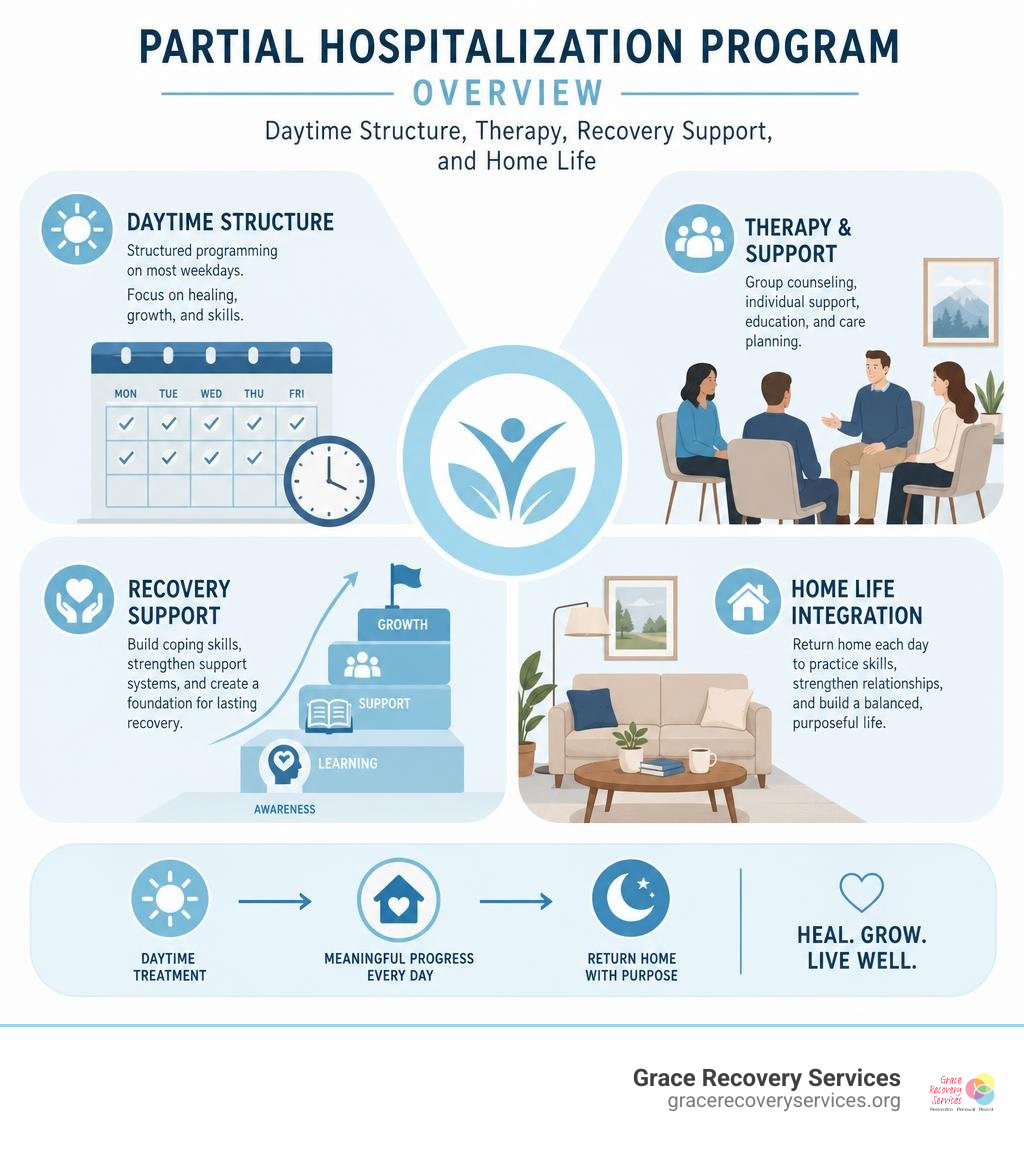
A partial hospitalization program is a structured outpatient level of care for clients who need more support than standard weekly counseling while continuing to live at home. It commonly includes several hours of therapy and recovery-focused services on most weekdays, often totaling at least 20 hours each week.
For a person experiencing substance use disorder, PHP can offer a steady, supportive routine during a difficult season of recovery. At Grace Recovery Services in the Pittsburgh area, faith-integrated care can help clients build practical skills, strengthen support systems, and move forward with hope.
| Quick answer | What it means |
|---|---|
| What is PHP? | Intensive daytime treatment while continuing to live at home. |
| Who may benefit? | Clients who need frequent structure, therapy, and recovery support. |
| What happens in PHP? | Group counseling, individual support, recovery education, and care planning. |
| How long does it last? | Often a short-term program, shaped by each client’s needs and progress. |
PHP is not the same as routine outpatient counseling, but it is also not meant for every situation. The right level of care depends on a thoughtful assessment, a client’s safety needs, substance use history, mental health concerns, and support outside of program hours.
This guide explains what PHP involves, how schedules and eligibility work, and what to consider when planning for treatment and insurance.
Discover more about partial hospitalization program:
What Is a Partial Hospitalization Program?
A partial hospitalization program (PHP) is a comprehensive, highly structured outpatient care option designed to support individuals who require substantial daily therapeutic engagement while maintaining their home lives. Often referred to as day treatment, PHP acts as an intensive bridge along the recovery continuum. It allows clients to receive medical oversight, psychological therapy, and peer encouragement throughout the day and return to their own beds, families, and personal environments each evening.
Historically developed to preserve essential family and community ties while offering intensive clinical aid, PHP provides a rigorous therapeutic regimen during daytime hours while clients continue living at home. National guidelines and industry benchmarks specify that a partial hospitalization program must deliver a minimum of 20 hours of structured clinical care per week, typically delivered across 4 to 8 hours each weekday. Research outcomes consistently demonstrate that participants in structured day programs experience significant symptom reduction, improved emotional regulation, and enhanced overall quality of life.
At Grace Recovery Services, we approach outpatient day treatment through a holistic lens that honors the interconnectedness of mind, body, and spirit. For a person experiencing substance use disorder or co-occurring emotional health challenges in Western Pennsylvania, PHP offers a steady harbor—a clinical structure where clients learn to navigate life’s headwinds while anchored in faith, grace, and clinical evidence.

Partial Hospitalization Program vs. Intensive Outpatient Care
Understanding where a partial hospitalization program fits within outpatient behavioral health care helps families make confident, informed decisions. While both PHP and an Intensive Outpatient Program (IOP) allow clients to live at home throughout care, they differ primarily in clinical intensity, total weekly hours, and daily scheduling.
PHP represents the most intensive level of outpatient treatment available. It is tailored for clients who require frequent medical check-ins, medication management, and daily group therapy to maintain emotional and physical stability. In contrast, an outpatient program like IOP typically meets three to four days per week for about three hours per session (usually 9 to 15 hours per week), allowing clients greater flexibility to hold part-time jobs or attend school.
To explore these differences in depth, review our Detailed Guide to Outpatient Programs or compare options in our resource on outpatient treatment options.
| Treatment Level | Weekly Time Commitment | Daily Hours | Best Suited For | Home & Living Setup |
|---|---|---|---|---|
| Traditional Outpatient | 1 – 3 hours / week | 1 hour per session | Mild symptoms, ongoing maintenance | Lives at home full time |
| Intensive Outpatient (IOP) | 9 – 15 hours / week | 3 hours / day (3-5 days) | Moderate symptoms, transitioning care | Lives at home full time |
| Partial Hospitalization (PHP) | 20 – 30+ hours / week | 4 – 8 hours / day (5 days) | Acute symptoms, high relapse risk | Lives at home full time |
Core Therapies Offered in PHP Care
A robust partial hospitalization program integrates multiple evidence-based and compassionate therapeutic modalities tailored to meet the multidimensional needs of each client. Because recovery involves more than managing symptoms, effective PHP care addresses psychological, emotional, relational, and spiritual well-being.
Core modalities in PHP care commonly include:
- Cognitive Behavioral Therapy (CBT): Helps clients identify unhelpful thought patterns, challenge negative beliefs, and develop healthier behavioral responses to daily stress.
- Dialectical Behavior Therapy (DBT): Focuses on core skills including mindfulness, distress tolerance, emotion regulation, and interpersonal effectiveness.
- Acceptance and Commitment Therapy (ACT): Encourages clients to accept difficult thoughts and feelings without judgment while committing to actions aligned with their deeply held values.
- Structured Group Therapy: Serves as the backbone of day treatment, fostering peer connection, mutual accountability, and shared wisdom in a safe environment.
- Psychiatric & Medication Management: Includes regular evaluations with medical professionals to adjust, monitor, or manage non-addictive psychiatric medications.
- Trauma-Informed Support: Recognizes the deep impact of past trauma on substance use and mental health, ensuring all interactions promote emotional safety, trust, and empowerment.
- Faith-Integrated & Holistic Care: Incorporates spiritual reflection, prayer, Christian counseling, and mind-body wellness practices for clients who desire a faith-based recovery journey.
At Grace Recovery Services, these modalities are thoughtfully woven into our proprietary framework—the Counseling Blueprint. This compassionate four-stage journey guides clients through meaningful, lasting transformation:
- Take Off the Mask: Creating a safe, non-judgmental space where clients can drop pretense, speak candidly about their struggles, and embrace authentic self-awareness.
- Heal the Wounds: Utilizing trauma-informed therapy and faith-centered compassion to explore and dress underlying emotional pain, past grief, or hidden trauma.
- Remove the Toxins: Unpacking negative coping mechanisms, substance dependence, toxic thought loops, and destructive relational dynamics.
- Replace with Truth: Grounding recovery in enduring spiritual truth, healthy personal identity, practical coping strategies, and restored hope for the future.
For healthcare benchmarks regarding therapeutic tracks, you can examine clinical models such as the Adult Partial Hospital General Track at Brown University Health and clinical standards at McLean Hospital.
Conditions Treated and Admission Eligibility
A partial hospitalization program is equipped to treat a wide spectrum of behavioral health conditions and co-occurring disorders. It is particularly effective for individuals navigating complex clinical challenges that require daily professional guidance, structure, and peer support.
Common conditions addressed in PHP settings include:
- Substance Use Disorders: Alcohol addiction, prescription medication dependence, illicit drug misuse, and recurring relapse challenges.
- Depression and Mood Disorders: Major depressive disorder, persistent sadness, severe grief, and bipolar spectrum conditions.
- Anxiety and Panic Disorders: Generalized anxiety, severe panic attacks, social phobias, and obsessive-compulsive tendencies.
- Trauma and PTSD: Post-traumatic stress arising from childhood adversity, loss, abuse, or acute life crises.
- Co-Occurring Disorders (Dual Diagnosis): Simultaneous presentation of substance use disorder alongside underlying mental health conditions like depression or anxiety.

Assessment and Admission Criteria
Determining whether someone is appropriate for a partial hospitalization program involves a thorough clinical assessment. Specialized intake teams evaluate clinical, medical, and environmental factors using recognized guidelines such as the American Society of Addiction Medicine (ASAM) criteria.
To qualify for PHP care, a client generally meets the following eligibility criteria:
- Symptom Severity: The client experiences significant distress or functional impairment in work, family, or social life that routine weekly therapy cannot adequately resolve.
- Safety Outside Treatment: The client is safe to return home each evening, does not pose an immediate danger to themselves or others, and does not require 24-hour medical supervision.
- Supportive Living Environment: The client has a stable, safe home environment, ideally supported by caring family members, friends, or a faith community.
- Ability to Engage in Groups: The client possesses sufficient cognitive awareness and emotional readiness to participate meaningfully in daily group therapy sessions.
- Voluntary Commitment: The client agrees to attend scheduled daytime hours consistently Monday through Friday.
If an assessment reveals acute medical detox requirements, active psychosis, or immediate self-harm risks, clinicians will recommend stabilization in an appropriate medical facility prior to transitioning into an outpatient day program. For regional community resources on youth and general PHP care, consult resources like the Intermediate Unit One Partial Hospitalization Program and psychiatric treatment literature from PPIMHS.
Program Duration, Daily Hours, and Schedules
One of the most frequent questions individuals ask when exploring a partial hospitalization program is how time commitments are structured. Because PHP is designed for short-term crisis stabilization and skill building, it provides an intensive burst of care meant to launch clients toward long-term recovery.
Standard PHP duration and scheduling guidelines across major clinical centers demonstrate the following averages:
- Daily Commitment: 4 to 8 hours per day, typically operating 5 days per week (Monday through Friday).
- Weekly Commitment: 20 to 30 hours of structured clinical programming per week.
- Length of Stay: Typically averages 2 to 3 weeks (10 to 15 consecutive weekdays), though individualized treatment plans may extend or shorten this timeline based on client progress.
As clients stabilize and internalize vital recovery tools, treatment teams design step-down transitions into less intensive care, such as a faith-based outpatient program or weekly counseling, ensuring continuity of care every step of the way.
For additional insight into structured program criteria, read our guide on making the grade with IOP program requirements.
Typical Daily Schedule in a Partial Hospitalization Program
While specific schedules vary across facilities, a day in a partial hospitalization program follows a predictable, goal-oriented rhythm. This predictable structure restores stability and builds healthy daily habits.
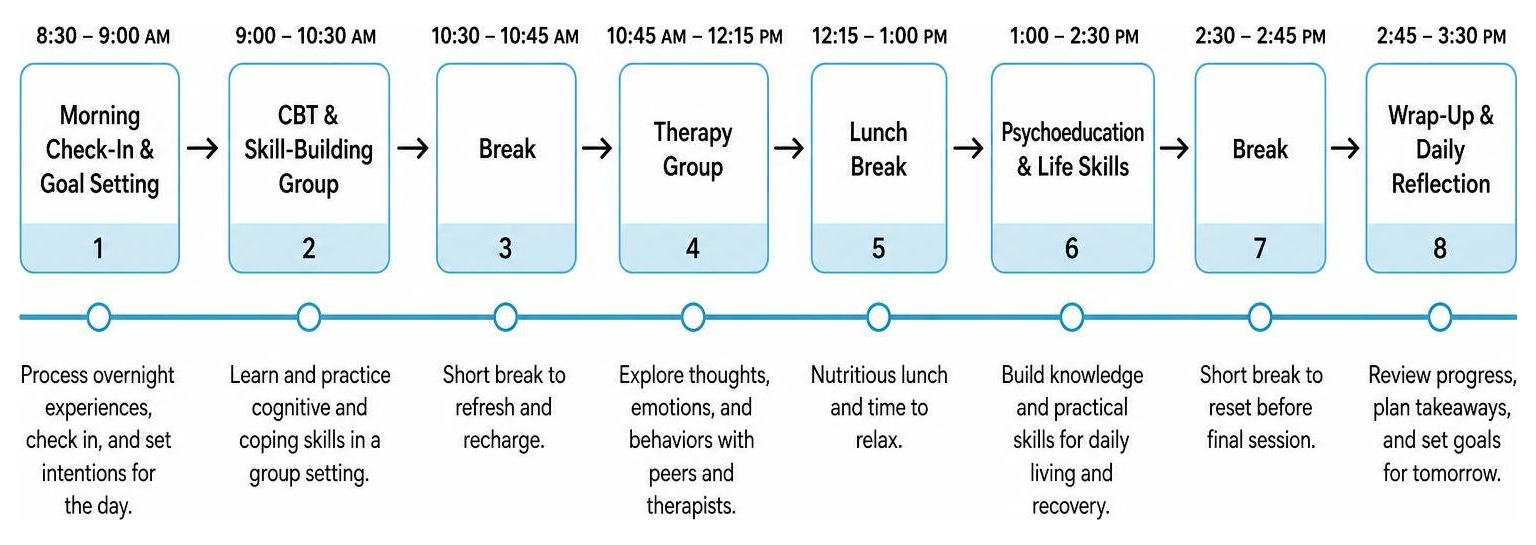
A typical weekday schedule in a daytime PHP often looks like this:
- 8:30 AM – 9:00 AM: Morning Check-In & Goal Setting Clients gather with primary counselors to process overnight experiences, check emotional temperature, and establish a intentional goal for the day ahead.
- 9:00 AM – 10:30 AM: CBT & Skill-Building Group A clinician-led group session focusing on practical skills, such as identifying triggers, cognitive reframing, and emotion regulation strategies.
- 10:30 AM – 10:45 AM: Morning Refreshment Break A short pause to stretch, grab coffee or water, and connect casually with peers.
- 10:45 AM – 12:00 PM: DBT & Distress Tolerance Workshop Interactive group exercises teaching mindfulness techniques, grounding exercises, and crisis navigation tools.
- 12:00 PM – 1:00 PM: Lunch Break & Fellowship A nutritious meal break allowing clients time to nourish their bodies and engage in social conversation in a relaxed setting.
- 1:00 PM – 2:00 PM: Psychoeducation & Relapse Prevention Educational workshops covering the neuroscience of addiction, disease progression, family dynamics, and spiritual wellness principles.
- 2:00 PM – 3:00 PM: Process Group & Daily Reflection An open group session where clients share challenges, celebrate milestones, receive peer feedback, and reflect on applying the day’s lessons at home.
For examples of hospital-based day programming schedules, you can view details from University of Michigan Health, Gundersen Health System, and Hennepin Healthcare.

Costs, Insurance Coverage, and Financial Planning
Navigating the financial aspects of care is an important step when preparing for a partial hospitalization program. Because PHP operates as a medically recognized outpatient level of care, standard healthcare plans frequently offer coverage for qualified clients.
Understanding out-of-pocket expenses requires familiarizing yourself with standard health insurance terms:
- Deductible: The annual amount you must pay out-of-pocket for covered healthcare services before your insurance plan begins to pay benefits.
- Copayment (Copay): A fixed dollar amount you pay for a specific healthcare service (e.g., each day of outpatient treatment).
- Coinsurance: The percentage of covered healthcare costs you pay after meeting your annual deductible.
- Prior Authorization: Approval required from your insurance company prior to entering treatment to confirm that the program meets medical necessity criteria.
Navigating Insurance and Cost Transparency
Most major commercial insurance providers, as well as Medicare Part B and select Medicaid plans, include behavioral health and addiction treatment benefits that cover PHP services. Under federal parity laws, health insurance plans must offer behavioral health benefits comparable to standard medical and surgical benefits.
- Medicare Part B Coverage: Medicare Part B covers outpatient partial hospitalization services provided through hospital outpatient departments or community mental health centers when certified by a doctor as medically necessary. Covered services include individual and group psychotherapy, occupational therapy, and patient education. Non-covered items typically include meals, transportation, and purely social support groups.
- Commercial & Private Insurance: Many commercial plans cover daytime PHP care, though exact coverage levels depend on your specific policy, network status, deductible, and coinsurance responsibilities.
- Financial Counseling: Specialized intake departments assist families by verifying insurance benefits directly, obtaining prior authorizations, and explaining benefit structures clearly before treatment begins.
At Grace Recovery Services, we firmly believe that financial uncertainty should never stand between a person experiencing substance use disorder and life-changing care. We work closely with clients across North Huntingdon, Penn Hills, Irwin, and the broader Pittsburgh area to provide complete cost transparency and navigate benefit options. Please reach out directly to our team for a personalized benefit verification and financial assessment.
For institutional frameworks regarding insurance verification and virtual care limitations, review guidelines provided by Berkshire Health Systems.
Frequently Asked Questions about Partial Hospitalization
How many hours per week does a partial hospitalization program require?
A standard partial hospitalization program requires a minimum of 20 hours of structured therapeutic programming per week. Most programs operate between 4 and 8 hours daily across 5 consecutive weekdays (Monday through Friday), totaling between 20 and 30+ clinical hours weekly. This intensive schedule ensures clients receive robust support while continuing to reside safely at home.
Does Medicare or private insurance cover PHP treatment costs?
Yes, Medicare Part B and the majority of private commercial insurance plans provide coverage for partial hospitalization services when treatment is determined to be medically necessary by a qualified health professional. Coverage details—such as deductibles, coinsurance, copays, and required pre-authorizations—vary by policy. Facilities typically conduct a complimentary benefit verification prior to admission to clarify specific out-of-pocket expectations.
What happens after completing a partial hospitalization program?
Completing a partial hospitalization program is an empowering milestone, but recovery is an ongoing journey. As clients finish day treatment, clinicians collaborate with them to implement a thoughtful aftercare transition plan. Most clients step down into an Intensive Outpatient Program (IOP) or traditional outpatient counseling, maintain connection with peer support groups, and continue applying the coping skills built during day treatment.
Building a Pathway to Lasting Healing
Recovery is a journey of restoration—a process of rebuilding strength, reclaiming purpose, and discovering true peace. If you or someone you love is navigating substance use challenges or co-occurring emotional distress, you do not have to walk this path alone.
At Grace Recovery Services, we offer compassionate, faith-integrated outpatient recovery options across Western Pennsylvania, including our offices in Penn Hills (Pittsburgh area) and North Huntingdon. Anchored in Christian values and evidence-based clinical practices, our care centers on treating the whole person—mind, body, and spirit. Through individual counseling, group therapy, family support, and specialized trauma-informed care, we walk alongside our clients with deep empathy, clinical excellence, and unwavering hope.
Whether you are exploring options for yourself, searching for local options like Christian outpatient treatment in PA, or looking for Pittsburgh Christian outpatient rehab options, our dedicated team is here to answer your questions and guide you toward the right care level.
Take the first step toward healing today. Explore our comprehensive Services page or visit Recovery Starts Here to connect with our compassionate team for a confidential assessment.
This article was researched with AI and heavily edited by Stephen Luther for accuracy and relevance.
Stephen Luther is the Executive Director and Founder of Grace Christian Counseling, Grace Recovery Services, WPA Counseling, NuWell Online Counseling and Coaching, and NuWell Health. He holds a Master’s degree in Education from the University of Georgia and a Master’s degree in Marriage and Family Therapy from Duquesne University. He is a licensed professional counselor in Pennsylvania.
Since 1997, Steve has been helping children, adolescents, and adults overcome a wide range of emotional and relational challenges. He specializes in working with hurting families, including those with foster, adopted, or traumatized children. Steve uses Attachment-Based Therapy, Splankna Healing, and Therapeutic Parent Coaching to support healing and restoration.
This guide is for educational and spiritual encouragement and is not a substitute for personalized professional counseling. If you are in crisis, please reach out for immediate help.