Understanding Christian Recovery Programs and Their Theological Foundations
At their heart, christian recovery programs view substance use disorder not merely as a physical or behavioral challenge, but as a journey that impacts the whole person: mind, body, and spirit. Spiritual recovery is grounded in foundational biblical principles, offering a compassionate lens through which clients can explore identity, healing, and redemption.
Rather than relying solely on human willpower, faith-based healing emphasizes divine grace and personal transformation. Scripture-based teachings remind us that no one is beyond repair and that true healing begins when we step out of isolation and into a community of grace. Through quiet reflection, prayer, worship, and honest self-assessment, individuals in recovery learn to let go of shame and accept their inherent worth.
At Grace Recovery Services, we recognize that spiritual growth happens best in a safe, nurturing environment. Our team walks alongside each person to help them integrate biblical truths with practical recovery tools, fostering long-term restoration without shame or judgment. For those seeking structured outpatient support tailored to these principles, exploring dedicated Christian Recovery Services can provide a clear pathway toward renewed strength.
How Christian Recovery Programs Differ from Secular Treatment
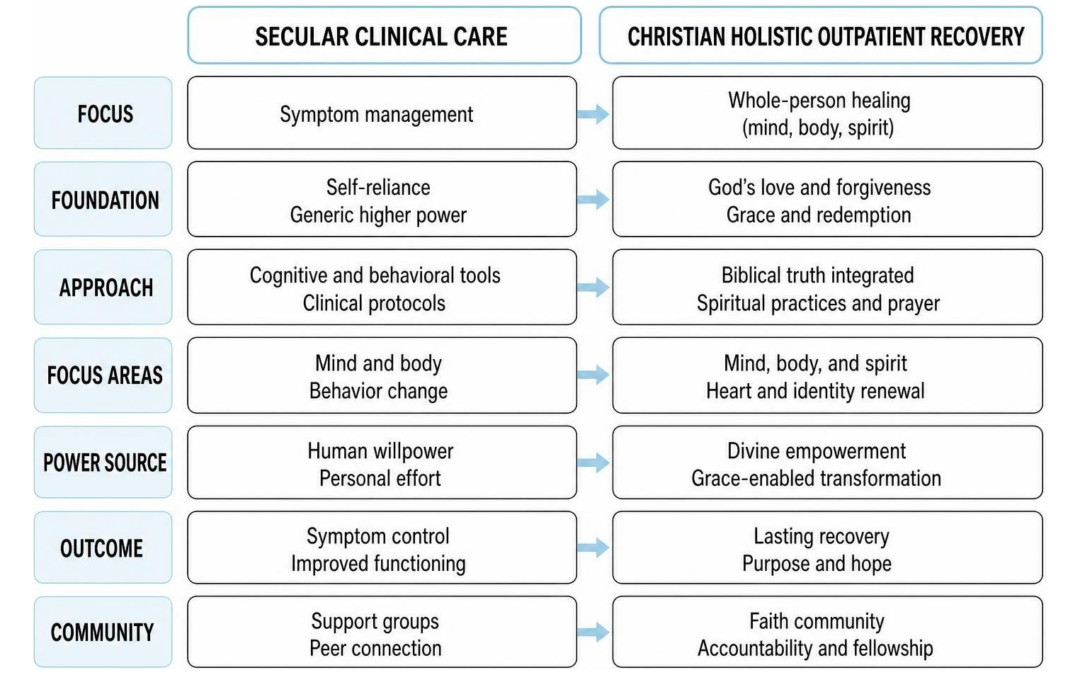
While secular clinical care focuses primarily on symptom management, cognitive retraining, and biological management, christian recovery programs expand this foundation by addressing the spiritual root causes of addiction. Secular care often relies on self-reliance or generic definitions of a higher power, whereas faith-centered care anchors hope in God’s unconditional love and forgiveness.
This difference shapes the entire experience of care:
- Grace and Redemption: Clients are encouraged to see themselves through the lens of grace rather than guilt, understanding that mistakes do not define their future.
- Divine Empowerment: Recovery is viewed as a collaborative effort between clinical work, personal willingness, and spiritual empowerment.
- Holistic Integration: Treatment integrates emotional healing, physical wellness, and spiritual development simultaneously, ensuring no part of the individual is left behind.
Types of Christian Recovery Programs
Faith-based support comes in many different forms, allowing individuals to find the level of structure and community that best fits their daily lives. Because our focus is entirely on outpatient care, we emphasize programs that allow clients to receive high-level clinical and spiritual guidance while remaining at home with their families and employment.

Common formats for faith-integrated support include:
- Outpatient Programs and IOP: Structured, clinically led outpatient options—such as Intensive Outpatient Programs (IOP)—offer individual therapy, group counseling, and psychiatric support tailored around faith principles.
- Church-Based Recovery Groups: Local congregations often host peer support ministries like Celebrate Recovery, which utilize a 12-step faith-based framework to address hurts, habits, and hang-ups.
- Peer Support Communities: Led by individuals with lived experience, these non-clinical groups provide practical accountability, fellowship, and shared prayer.
To learn more about various formats and organizations supporting faith-filled healing, explore our guide on the Top 10 Faith-Based Recovery Programs.
Clinical Evidence and Effectiveness of Christian Recovery Programs
Integrating faith into treatment is not just spiritually uplifting; research highlights its deep practical value for many people. Spiritual commitment provides a strong sense of purpose, internal stability, and community connection, all of which are critical for relapse prevention.
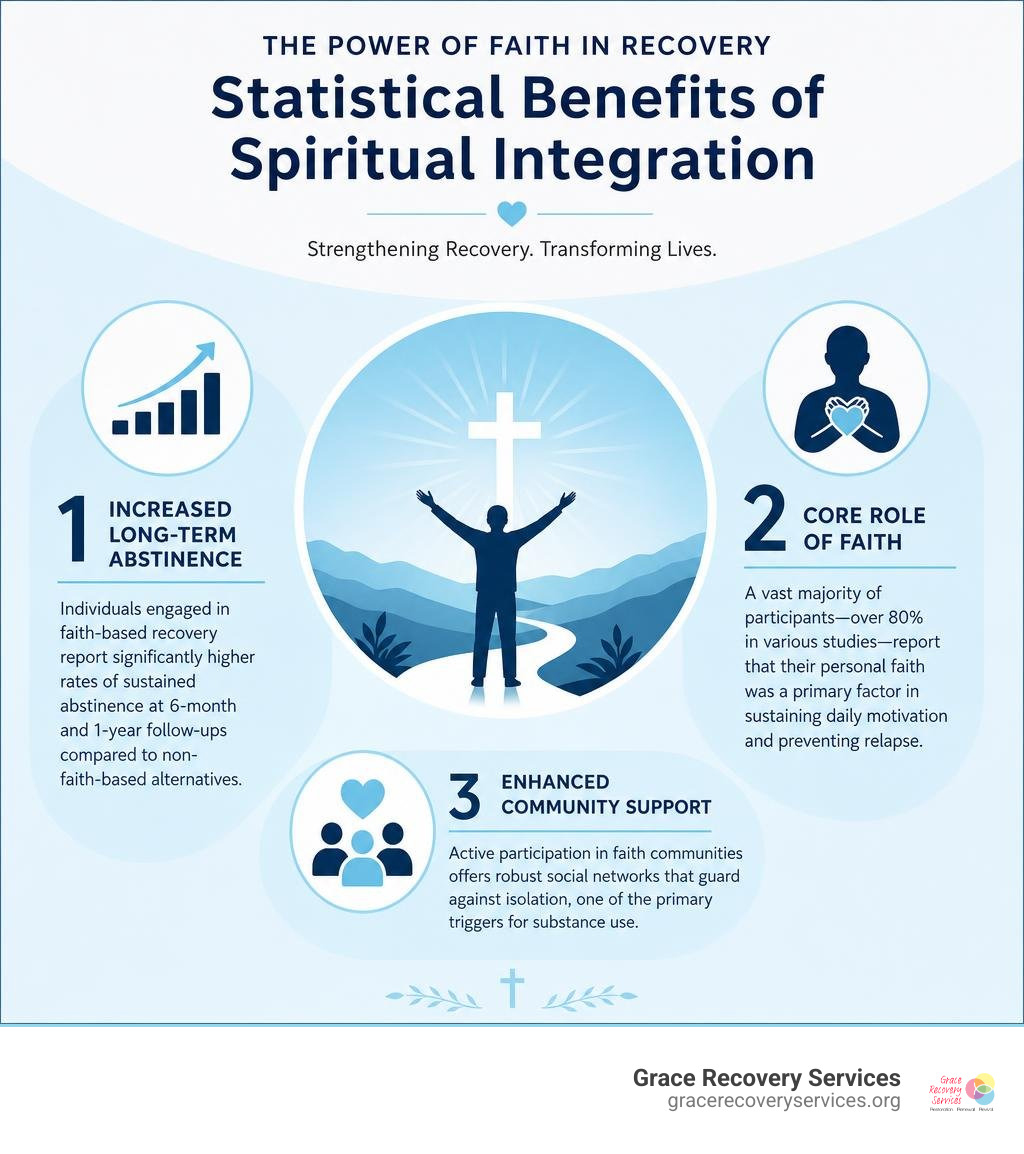
Studies and survey data supported by federal research organizations such as the Substance Abuse and Mental Health Services Administration focusing on spiritual components in recovery show encouraging patterns:
- Increased Long-Term Abstinence: Research indicates that individuals engaged in faith-based recovery models report significantly higher rates of sustained abstinence at 6-month and 1-year follow-ups compared to non-faith-based alternatives.
- Core Role of Faith: A vast majority of participants—over 80% in various studies—report that their personal faith was a primary factor in sustaining daily motivation and preventing relapse.
- Enhanced Community Support: Active participation in faith communities offers robust social networks that guard against isolation, one of the primary triggers for substance use.
Addressing Mental Health, Trauma, and Relapse Prevention
Effective addiction care must address co-occurring mental health challenges and underlying emotional pain. For many people experiencing substance use disorder, substance use began as a coping mechanism for unaddressed trauma, anxiety, or depression.
At Grace Recovery Services, we utilize a specialized framework called the Counseling Blueprint. This clinical and spiritual framework guides clients through four distinct stages of healing:
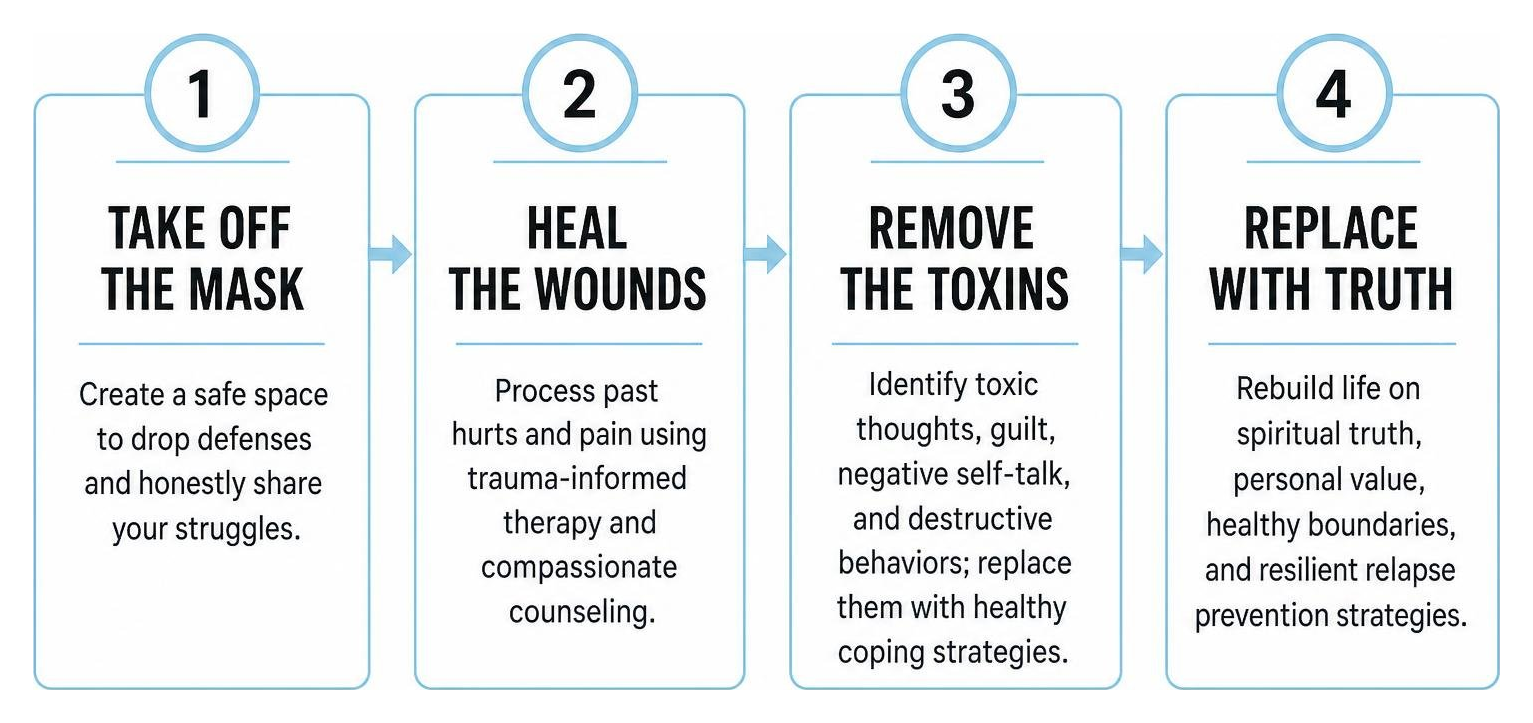
- Take Off the Mask: Creating a safe space where clients can stop pretending everything is fine, drop defensive barriers, and honestly share their struggles.
- Heal the Wounds: Using trauma-informed therapy, cognitive behavioral techniques, and compassionate counseling to process past emotional hurts and psychological pain.
- Remove the Toxins: Identifying toxic thought patterns, unhelpful guilt, negative self-talk, and destructive behaviors, replacing them with healthy coping strategies.
- Replace with Truth: Rebuilding life on the foundation of spiritual truth, personal value, healthy boundaries, and resilient relapse prevention strategies.
By combining evidence-based clinical practices with personalized Christian counseling, clients receive comprehensive dual-diagnosis care. For individuals seeking outpatient clinical support tailored to the local region, our Christian Addiction Recovery Pittsburgh program provides a warm, clinically credible path forward.
Inclusivity, Community, and Overcoming Challenges in Faith-Based Care
A common concern among people seeking recovery is whether a faith-based program will accept them if they belong to a different denomination, have doubts, or haven’t stepped inside a church in years. Genuine christian recovery programs prioritize non-judgmental fellowship above strict theological doctrine.
Key aspects of inclusive, balanced faith-based care include:
- Denominational Openness: Programs are open to individuals from all Christian denominations—as well as those who are exploring faith for the first time—focusing on universal principles of love, grace, and restoration.
- Clinical and Faith Balance: Legitimate programs respect medical science, incorporating evidence-based therapies alongside spiritual discussions rather than treating clinical care and faith as opposing forces.
- Safe, Respectful Space: Clients are never forced to conform or perform; instead, faith is offered as a supportive, optional foundation for their personal journey.
Hearing stories of life transformation helps demystify the process. When individuals realize they can bring their whole selves—including their questions, struggles, and skepticism—into counseling, real growth becomes possible.
How to Choose the Right Recovery Support
Selecting the right program is a significant step toward lasting wellness. Because recovery care varies widely, it is important to evaluate clinical standards, program structure, and spiritual philosophy.

When researching christian recovery programs, consider the following factors:
- Licensure and Professional Credentials: Ensure counselors and therapists hold state licensure and clinical credentials alongside their faith training.
- Outpatient Flexibility: Look for structured outpatient or intensive outpatient programs that fit your work and family commitments while offering meaningful clinical depth.
- Trauma-Informed Approach: Verify that the care model actively addresses trauma and co-occurring mental health conditions rather than taking a one-size-fits-all approach.
- Spiritual Alignment: Confirm that the program promotes grace, personal dignity, and healthy spiritual growth rather than legalism or guilt.
For families in Western Pennsylvania exploring local support options, our guides on 5 Top Pittsburgh Christian Recovery Centers and Top Christian Recovery Programs Near Irwin, PA offer detailed regional perspectives.
Selecting the Right Christian Recovery Programs for Your Needs
Every client’s journey is unique. Rather than relying on rigid, generalized programs, look for care providers who build personalized treatment plans around your specific strengths, mental health history, and recovery goals. Family education and structured aftercare plans are also vital components that help maintain stability after formal counseling ends.
Frequently Asked Questions About Faith-Based Recovery
Who can participate in faith-based recovery options if they belong to a different denomination?
Anyone can participate. Faith-based recovery options welcome individuals from all denominational backgrounds, traditions, or those who are simply curious about how faith might support their healing. The focus remains on shared human experience, grace, and recovery.
How do spiritual recovery options handle co-occurring mental health disorders?
Reputable faith-centered outpatient centers use a dual-diagnosis model. Licensed counselors treat mental health conditions—such as depression, anxiety, or PTSD—with evidence-based clinical therapies like Cognitive Behavioral Therapy (CBT), while offering Christian counseling to address spiritual and emotional needs simultaneously.
Are faith-centered options suitable for individuals struggling with severe addiction?
Yes, provided the clinical setting matches the person’s needs. Outpatient and Intensive Outpatient Programs (IOP) provide high-level clinical structure, regular therapy, and medical coordination while enabling clients to build healthy routines in their daily environments.
Conclusion

Recovery is a journey of healing, hope, and new beginnings. By pairing evidence-based mental health care with spiritual renewal, christian recovery programs empower individuals to break free from substance use disorder, heal emotional wounds, and rediscover their true purpose.
At Grace Recovery Services, our outpatient centers in Penn Hills (Pittsburgh area) and North Huntingdon serve individuals and families throughout Western Pennsylvania and Westmoreland County. We are dedicated to providing compassionate, trauma-informed clinical care rooted in unconditional grace.
If you or someone you love is ready to take the next step toward lasting recovery, we invite you to learn more about our comprehensive Grace Recovery Services or contact us today to schedule a confidential assessment.
This article was researched with AI and heavily edited by Stephen Luther for accuracy and relevance.
Stephen Luther is the Executive Director and Founder of Grace Christian Counseling, Grace Recovery Services, WPA Counseling, NuWell Online Counseling and Coaching, and NuWell Health. He holds a Master’s degree in Education from the University of Georgia and a Master’s degree in Marriage and Family Therapy from Duquesne University. He is a licensed professional counselor in Pennsylvania.
Since 1997, Steve has been helping children, adolescents, and adults overcome a wide range of emotional and relational challenges. He specializes in working with hurting families, including those with foster, adopted, or traumatized children. Steve uses Attachment-Based Therapy, Splankna Healing, and Therapeutic Parent Coaching to support healing and restoration.
This guide is for educational and spiritual encouragement and is not a substitute for personalized professional counseling. If you are in crisis, please reach out for immediate help.