Finding Hope: What to Know Before Choosing a Pittsburgh Christian Recovery Center
If you or someone you love is searching for a Pittsburgh Christian recovery center, here is a quick overview of what to look for and where to start:
Top things to know about Christian recovery in Pittsburgh:
- Faith integration is often optional — most programs welcome people of all backgrounds, not just practicing Christians.
- Outpatient options are widely available — including Intensive Outpatient Programs (IOP) and Partial Hospitalization Programs (PHP) that let you stay connected to home and family.
- Evidence-based therapies are the clinical foundation — CBT, DBT, trauma-informed care, and motivational interviewing are commonly paired with spiritual practices.
- Dual diagnosis treatment matters — many people seeking recovery also carry anxiety, depression, or unresolved trauma that needs to be treated at the same time.
- Insurance often covers treatment — plans like UPMC, Highmark, Blue Cross Blue Shield, Aetna, and Cigna are accepted at many Western PA facilities.
- Grace Recovery Services serves the greater Pittsburgh area from Irwin, PA in Westmoreland County, offering faith-integrated outpatient care with no referral required.
Addiction touches every part of a person — body, mind, and spirit. For many people in Western Pennsylvania, a clinical program alone doesn’t feel like enough. They want a place where their faith matters, where healing goes deeper than just stopping a substance.
That need is real. According to the Salvation Army’s Western Pennsylvania Division, more than 151,000 individuals received substance abuse help and services in 2024 alone. And nationally, over 46 million people aged 12 or older were living with a substance use disorder in 2023.
The numbers are sobering. But so is this: recovery is possible, and for many people, faith is a powerful part of what makes it last.
Research consistently shows that faith-based programs have a 75% completion rate, compared to a 47% national average for traditional programs. Clients in faith-integrated tracks also report meaningful reductions in depression and anxiety — not just fewer substances, but a genuinely better quality of life.
At Grace Recovery Services, we see this every day. People arrive carrying shame, exhaustion, and disconnection — from their families, from themselves, and often from God. And they leave with something they didn’t expect: hope that actually holds.
This guide walks you through the top Christian recovery options in Pittsburgh and Western PA, what makes a program truly effective, and how to find the right fit for where you are right now.
Pittsburgh Christian recovery center helpful reading:
5 Top Pillars of a Premier Pittsburgh Christian Recovery Center
When searching for a premier Pittsburgh Christian recovery center, it helps to understand what sets faith-integrated programs apart from strictly secular treatment. Many traditional recovery models focus heavily on behavioral modification—essentially teaching you how to stop using a substance. While behavioral changes are vital, true and lasting recovery requires healing at a much deeper level.
A high-quality Christian recovery program does not ignore science; rather, it elevates clinical science by placing it within a framework of spiritual restoration. For those seeking help in Western Pennsylvania, finding a center that balances professional clinical standards with authentic spiritual care is essential.
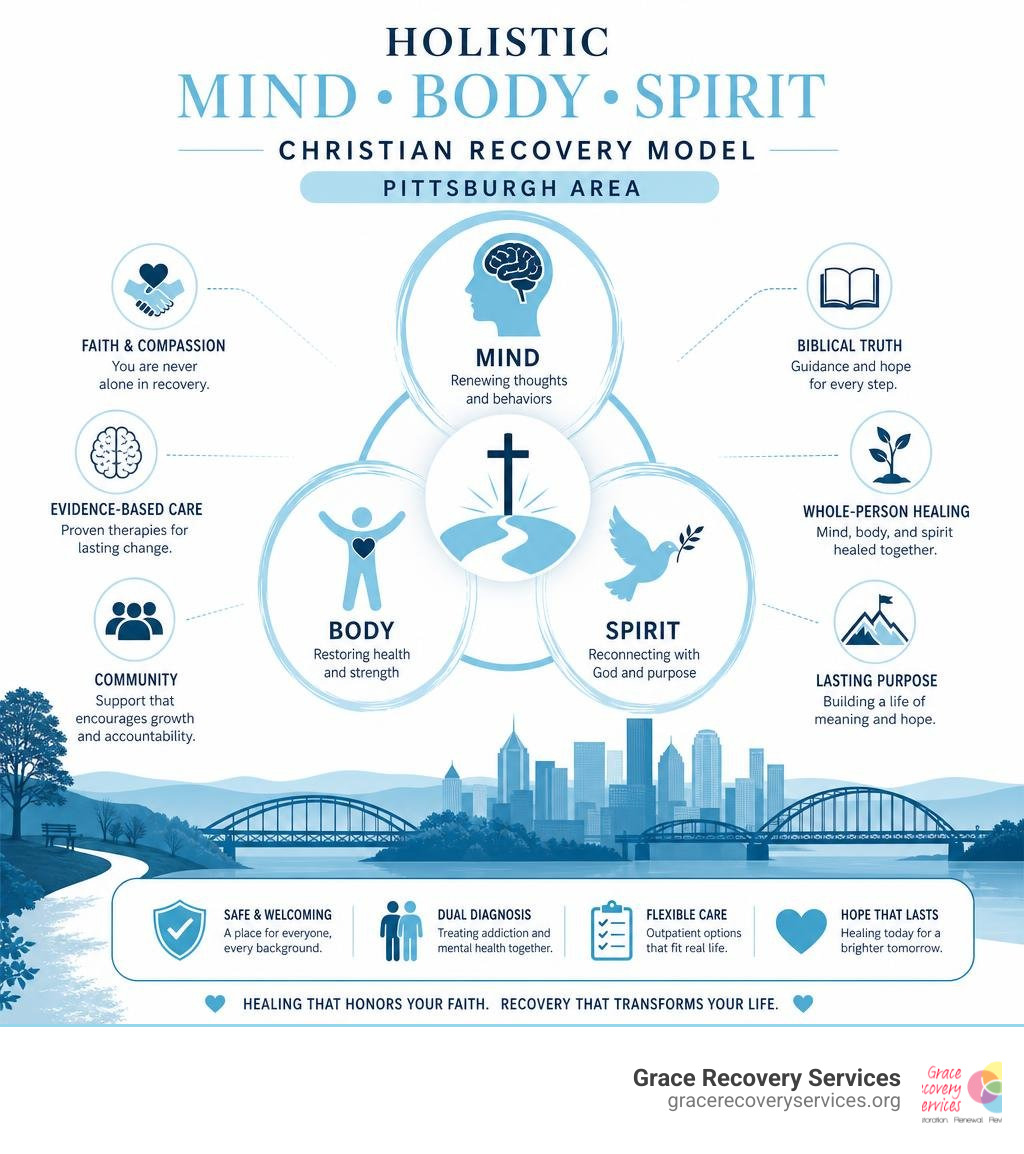
The top programs in the region are built on five core pillars:
- Clinical Excellence: Licensed, credentialed clinicians who understand the neurobiology of addiction and utilize evidence-based practices.
- Spiritual Growth: Opportunities to explore your relationship with God, engage with scripture, and experience the healing power of grace.
- Trauma-Informed Care: An understanding that addiction is often an attempt to cope with deep emotional pain, abuse, or neglect.
- Holistic Healing: Treatment that simultaneously addresses the physical, emotional, mental, and spiritual needs of the client.
- Community Support: A safe, non-judgmental environment where clients can build healthy, faith-filled relationships that extend beyond formal treatment.
To compare faith-based care options, look for programs that clearly explain their clinical services, spiritual support, levels of care, and approach to long-term recovery.
How a Pittsburgh Christian Recovery Center Integrates Science and Scripture
At Grace Recovery Services, we firmly believe that science and faith are complementary, not competing. God has gifted us with clinical insights, therapeutic tools, and medical advancements to help heal the human mind. When we combine these tools with the timeless truths of scripture, we create a powerful environment for transformation.
In a premier program, this integration is seamless. For example, Cognitive Behavioral Therapy (CBT) teaches clients to identify negative, destructive thought patterns and replace them with healthier, more realistic thoughts. In a Christian setting, we take this a step further: we compare those negative thoughts to the truth of scripture. If a client is struggling with the thought “I am completely worthless and beyond saving,” we use clinical tools to challenge that cognitive distortion, while simultaneously reflecting on biblical truths that remind them they are fearfully and wonderfully made, deeply loved, and fully forgiven.
Other ways science and scripture work together in recovery include:
- Prayer and Mindfulness: Combining clinical grounding techniques for anxiety with quiet, contemplative prayer and meditation on scripture.
- The 12 Steps and the Bible: Recognizing that the foundational principles of the 12 Steps—such as surrender, confession, restitution, and prayer—are deeply rooted in biblical teachings.
- Dialectical Behavior Therapy (DBT): Utilizing DBT skills like distress tolerance and emotional regulation, supported by biblical promises of peace, patience, and self-control.
To learn more about how this dual approach creates a stronger foundation for lasting sobriety, read our guide on Faith Integrated Recovery in Pittsburgh.
Addressing Co-Occurring Mental Health and Trauma
It is incredibly rare for addiction to exist in a vacuum. More often than not, substance use is a coping mechanism for underlying, untreated pain. Many individuals struggling with drug or alcohol use also face co-occurring mental health challenges, such as:
- Generalized Anxiety Disorder (GAD)
- Major Depressive Disorder (MDD)
- Post-Traumatic Stress Disorder (PTSD)
- Unresolved childhood trauma or relational wounds
If a program only treats the physical dependence on a substance without addressing the underlying trauma and mental health conditions, the risk of relapse remains exceptionally high. That is why premier programs emphasize dual diagnosis care.
When a client enters treatment, they deserve a comprehensive assessment that looks at the whole picture. Our clinical team works to treat the addiction and the co-occurring mental health conditions simultaneously. We utilize evidence-based trauma therapies like Seeking Safety—a model specifically designed to help individuals build coping skills for PTSD and substance abuse concurrently—alongside compassionate Christian counseling.
For families seeking resources in specific suburban areas of Allegheny County, it can help to look for licensed, trauma-informed clinical support that fits your location, schedule, and recovery needs.
Outpatient Levels of Care in Western Pennsylvania
Recovery is not a one-size-fits-all process, and it does not always require you to leave your life behind. While some individuals may require initial medical stabilization or detox, many find that outpatient programs offer the ideal balance of clinical support and real-world flexibility.
Outpatient treatment allows you to receive high-quality, professional care while continuing to live at home, care for your family, and maintain your employment or educational commitments. It also provides an immediate opportunity to apply the coping skills and spiritual practices you learn in therapy to your daily, real-world environment.

If you are looking for a flexible program that respects your daily responsibilities, exploring Christian Intensive Outpatient Treatment is an excellent starting point.
Intensive Outpatient Programs (IOP)
An Intensive Outpatient Program (IOP) is a highly structured level of care designed for individuals who need robust clinical and spiritual support but do not require 24/7 supervision.
In a typical Christian IOP, clients attend scheduled sessions multiple days per week, usually totaling 9 to 15 hours of clinical contact. These programs are designed to be intensive yet flexible, often offering morning or evening sessions to accommodate work and family schedules.
During IOP, clients participate in:
- Group Therapy: Small, counselor-led groups where clients share their experiences, process emotions, and build supportive relationships with peers who share their faith and recovery goals.
- Individual Therapy: One-on-one sessions with a licensed professional counselor to dig deeper into personal trauma, core beliefs, and individualized recovery goals.
- Spiritual Workshops: Sessions focused on biblical principles, prayer, forgiveness, and rebuilding a healthy identity in Christ.
To find out if this structured level of care aligns with your current needs, learn more about our Intensive Outpatient options.
Standard Outpatient and Aftercare Support
As clients progress through their recovery journey and build a stable foundation, they typically step down to standard Outpatient Program (OP) services. This level of care is less time-intensive, usually consisting of one to two sessions per week.
The focus of standard outpatient care shifts toward long-term maintenance, relapse prevention, and aftercare support. Clients continue to meet with their therapist to process life’s daily challenges, manage stress, and ensure they remain actively connected to their spiritual and recovery communities.
Aftercare planning is a vital component of this phase. We work closely with clients to help them transition into long-term support networks, which may include:
- Local church communities and small groups
- Faith-based support groups like Celebrate Recovery
- Alumni networks and peer recovery coaching
To understand how standard outpatient therapy can support your transition into long-term, sustainable sobriety, read about our Outpatient Program.
Choosing the Right Pittsburgh Christian Recovery Center for Your Journey
Taking the first step toward recovery is a courageous decision. Because everyone’s journey is unique, it is vital to choose a center that aligns with your clinical needs, your personal values, and your logistical circumstances.

When researching a Pittsburgh Christian recovery center, you should look for a program that treats you as an individual, rather than just a number. Personalized care means that your treatment plan is tailored to your specific history, mental health needs, family dynamics, and spiritual goals.
To begin exploring your options in Western PA, you can learn more about finding a compassionate, faith-centered partner by visiting our guide on Christian Rehab Pittsburgh.
What to Look For in a Pittsburgh Christian Recovery Center
As you evaluate different programs in Allegheny County and Westmoreland County, keep the following checklist in mind to ensure you receive the highest quality of care:
- Licensed and Credentialed Staff: Ensure the center employs Licensed Professional Counselors (LPCs), certified addiction specialists, and clinical directors with advanced degrees.
- Evidence-Based Clinical Foundation: Confirm that the program utilizes proven therapeutic modalities like CBT, DBT, and trauma-focused therapies, rather than relying solely on spiritual activities.
- Optional and Inclusive Faith Integration: The best programs offer deep spiritual support but never force beliefs on clients. Faith-based elements should be optional, welcoming, and grace-filled.
- Flexible Outpatient Options: Look for programs that offer multiple levels of care (such as IOP and OP) so you can transition smoothly as you heal.
- Focus on Dual Diagnosis: Choose a facility equipped to treat anxiety, depression, and trauma alongside substance use disorders.
For a deeper look at what to expect from a high-quality, faith-aligned program in the region, check out our resource on Faith-Based Rehab Pittsburgh.
Insurance and Payment Options in Western PA
We understand that navigating the financial side of addiction treatment can feel overwhelming. However, financial concerns should never stand in the way of receiving life-saving care.
Because many faith-based recovery programs in Western Pennsylvania utilize evidence-based clinical therapies, most major health insurance providers recognize the clinical value of these services and offer coverage. In many cases, insurance can cover a significant portion—or even 100%—of outpatient treatment costs.
Common insurance plans accepted by professional outpatient centers in the Pittsburgh area include:
- UPMC Health Plan
- Highmark Blue Cross Blue Shield
- Aetna
- Cigna
- UnitedHealthcare
For those without insurance or with limited coverage, many centers offer sliding scale fees or flexible payment plans to ensure care remains accessible. If you have questions about your specific plan or want to verify your benefits confidentially, please reach out to Contact Grace Recovery Services.
Frequently Asked Questions About Christian Recovery
It is completely normal to have questions when exploring faith-based recovery. Below, we have answered some of the most common questions we hear from individuals and families in Western Pennsylvania. For personalized guidance, you can always learn more about Western PA Christian Addiction Counseling.
Do I have to be a Christian to attend a faith-based recovery program?
Absolutely not. At Grace Recovery Services, our faith-based integration is entirely optional. We serve individuals from all backgrounds, belief systems, and walks of life.
Our clinical program is fully robust and highly effective entirely on its own. We believe that true grace is unconditional. We provide a warm, welcoming, and non-judgmental environment where you are respected and supported, regardless of where you stand spiritually.
What does a typical day look like in an outpatient Christian program?
Because our programs are outpatient-based, clients do not live at our facilities. Instead, a typical day in an Intensive Outpatient Program (IOP) is structured around several hours of clinical and spiritual sessions, designed to fit into your weekly routine.
A day in the program might look like:
- Morning or Evening Check-In: A brief time of gathering, setting intentions, and an optional prayer or scripture reflection.
- Group Therapy Session: A counselor-led group focusing on clinical topics like coping skills, emotional regulation, or trauma resolution.
- Individual Counseling: A private session with your primary therapist to work on your personalized treatment goals.
- Spiritual Growth Workshop: An interactive group focused on practical, faith-based topics like practicing forgiveness, overcoming guilt and shame, or rebuilding healthy relationships.
How do Christian recovery programs support long-term relapse prevention?
Long-term sobriety is built on a foundation of deep, internal transformation and a strong support network. Christian recovery programs support this by helping clients shift their core identity. Instead of viewing themselves through the lens of addiction and past mistakes, clients are encouraged to see themselves as children of God, worthy of love, purpose, and a bright future.
Additionally, we help clients connect with vibrant local recovery communities, such as Celebrate Recovery or faith-aligned 12-step groups, and provide ongoing aftercare planning to ensure they never have to walk the path of recovery alone.
Conclusion
Addiction can make you feel isolated, exhausted, and empty. But your story does not have to end here. Healing, restoration, and a renewed sense of purpose are entirely within reach.
At Grace Recovery Services, we are dedicated to walking alongside you with deep compassion, clinical excellence, and unwavering hope. Serving Western Pennsylvania from our offices in Irwin (Westmoreland County) and Penn Hills/Pittsburgh, we offer a safe harbor where science meets spirit, and where you can experience true whole-person healing.
If you or a loved one is ready to take the first step toward a healthier, faith-filled life, we invite you to reach out to our compassionate team today.
Let us help you find grace in the journey. Begin Your Healing Journey with us today.
This article was researched with AI and heavily edited by Stephen Luther for accuracy and relevance.
Stephen Luther is the Executive Director and Founder of Grace Christian Counseling, Grace Recovery Services, WPA Counseling, NuWell Online Counseling and Coaching, and NuWell Health. He holds a Master’s degree in Education from the University of Georgia and a Master’s degree in Marriage and Family Therapy from Duquesne University. He is a licensed professional counselor in Pennsylvania.
Since 1997, Steve has been helping children, adolescents, and adults overcome a wide range of emotional and relational challenges. He specializes in working with hurting families, including those with foster, adopted, or traumatized children. Steve uses Attachment-Based Therapy, Splankna Healing, and Therapeutic Parent Coaching to support healing and restoration.
This guide is for educational and spiritual encouragement and is not a substitute for personalized professional counseling. If you are in crisis, please reach out for immediate help.