Understanding the Difference: Christian Rehab vs. Secular Treatment
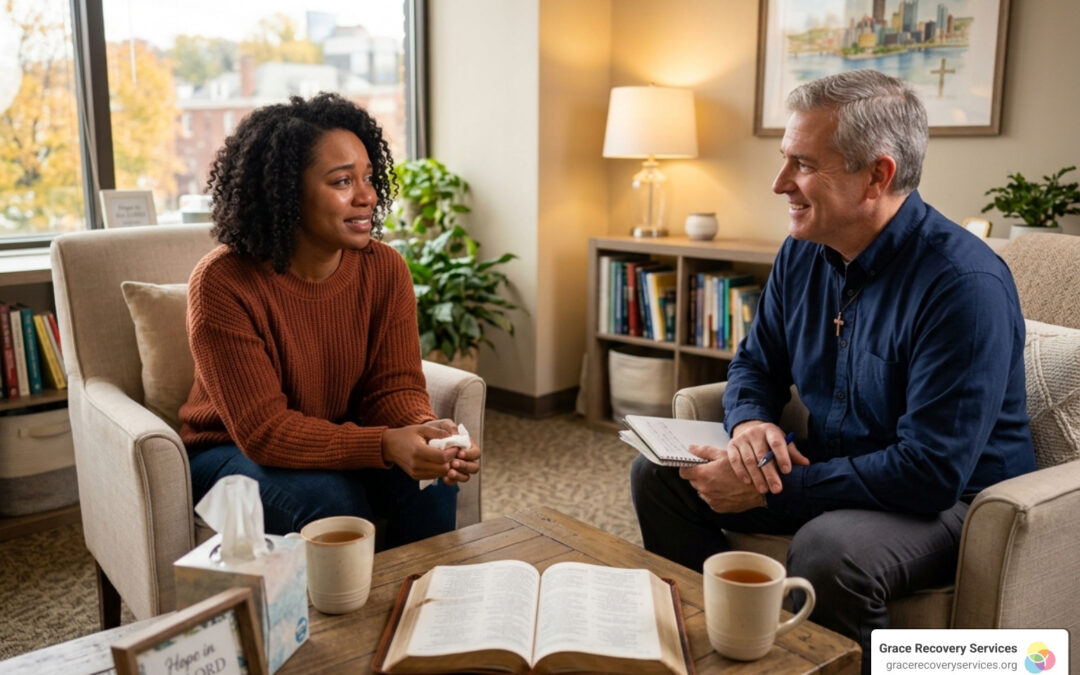
When searching for a Christian rehab near Pittsburgh, it is helpful to understand what sets faith-integrated care apart from traditional secular models. While both approaches aim for long-term sobriety, the “why” behind the recovery often differs. Secular treatment typically focuses on the clinical “how” of recovery—managing brain chemistry, identifying behavioral triggers, and developing coping mechanisms. These are vital tools. However, Christian-integrated treatment builds upon this clinical foundation by adding a spiritual roof and walls. It addresses the spiritual crisis that often accompanies addiction, such as feelings of worthlessness or being “beyond saving.”
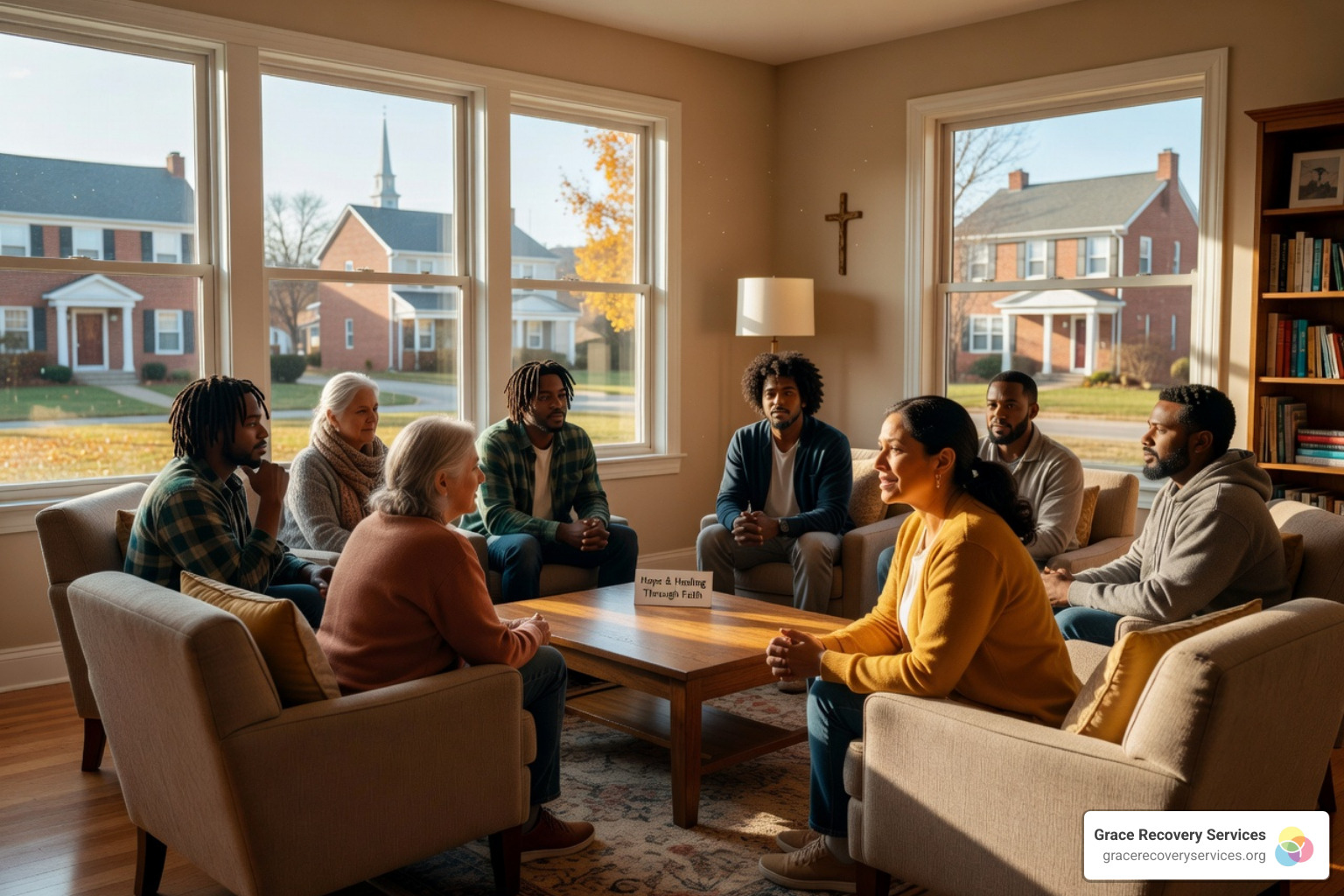
At Grace Recovery Services, we emphasize grace over shame. In a secular setting, a lapse might be viewed purely as a clinical setback. In our Christian Integrated Addiction Treatment, we view every person through the lens of redemption. We believe that addiction is not just a physical struggle but a battle for the soul that requires spiritual renewal. By integrating biblical principles of hope and forgiveness, we help clients move from the identity of a “victim” to that of a “survivor” who is deeply loved by their Creator.
True healing must be holistic. It isn’t enough to simply remove the substance; we must fill the void left behind with something sustainable and life-giving. Our approach in Western PA focuses on the restoration of the whole person—mind, body, and spirit. When you walk through our doors in Penn Hills or North Huntingdon, you aren’t entering a cold, clinical facility. You are entering a space of grace where your story is honored and your future is brightened by the hope of the Gospel. We believe that every client has a unique, God-given purpose that addiction has temporarily obscured, and our mission is to help you rediscover it.
Essential Levels of Care for Christian Rehab near Pittsburgh
The journey of recovery is not one-size-fits-all. In April 2026, the landscape of 2026’s Top Rehab Centers near North Huntingdon, PA shows a diverse range of care levels designed to meet people exactly where they are. For many in Western Pennsylvania, staying connected to work, school, and family is a priority. This is where outpatient models excel. Our programs allow you to apply the skills you learn in real-time.
- Partial Hospitalization (PHP): This is a highly structured level of care, often involving 5 to 8 hours of treatment per day, 4 to 5 days per week. It is ideal for those who need intensive support but can return home in the evenings.
- Intensive Outpatient Program (IOP): Our Intensive Outpatient tracks typically require about 9 to 20 hours of treatment per week. This level of care is perfect for those balancing recovery with daily responsibilities.
- Standard Outpatient (OP): This involves a few hours of therapy per week, focusing on maintenance, relapse prevention, and ongoing spiritual growth.
Choosing an outpatient model in the Pittsburgh area means you don’t have to press “pause” on your life’s purpose. For many of our clients, the ability to return home to their families in Westmoreland County or Allegheny County each evening is a vital part of the healing process. It allows for the immediate application of recovery tools in the very environment where triggers may exist, providing a “real-time” laboratory for growth under the guidance of our clinical team. These flexible levels of care ensure that recovery fits into your life, rather than forcing your life to stop for recovery. Whether you are in North Huntingdon or Penn Hills, these options provide a safety net of accountability while you navigate the challenges of the real world.
Integrating Evidence-Based Therapy with Biblical Principles
A common misconception is that faith-based recovery relies solely on prayer. In reality, the most effective Christian rehab near Pittsburgh utilizes a “dual-engine” approach: combining the best of modern science with the timeless truths of scripture. Our Western PA Christian Addiction Counseling is led by Licensed Professional Counselors (LPCs) who understand the nuances of the human mind. We use evidence-based tools like Cognitive Behavioral Therapy (CBT) and Dialectical Behavior Therapy (DBT), but we view them through a biblical lens.
| Clinical Tool | Spiritual Application | Recovery Outcome |
|---|---|---|
| Cognitive Behavioral Therapy (CBT) | Renewing the mind (Romans 12:2) | Identifying lies and replacing them with God’s truth. |
| Trauma-Informed Care | Finding safety in the “God of all comfort” | Healing the nervous system while restoring a sense of spiritual safety. |
| Group Therapy | Fellowship and bearing one another’s burdens | Breaking isolation and building a community of believers. |
| Relapse Prevention | Discernment and spiritual armor | Recognizing temptation and relying on God’s strength during triggers. |
Our team, led by Stephen A. Luther, MSEd, MEd, LPC, brings decades of clinical experience to the table. We understand that the brain’s neurobiology is complex, but we also know that the Creator of the brain has provided a path for its renewal. By pairing clinical tools with spiritual practices like prayer and scripture study, we address the “whole person.” We don’t just want you to stop using substances; we want you to experience a “revival” of your purpose and joy. This integration ensures that you are not just white-knuckling your way through sobriety, but are instead being transformed from the inside out by the power of grace and sound clinical practice.
Navigating Your Recovery Journey in Western Pennsylvania
Recovery doesn’t happen in a vacuum. It happens in community. In the Penn Hills and North Huntingdon areas, the local church and recovery communities play a massive role in long-term success. Our Christian Recovery Services emphasize the importance of fellowship. Addiction thrives in isolation and secrecy. When you step into a supportive group therapy circle in Allegheny County, you realize you aren’t alone. You meet others who understand the specific cultural and spiritual nuances of living in Western PA.
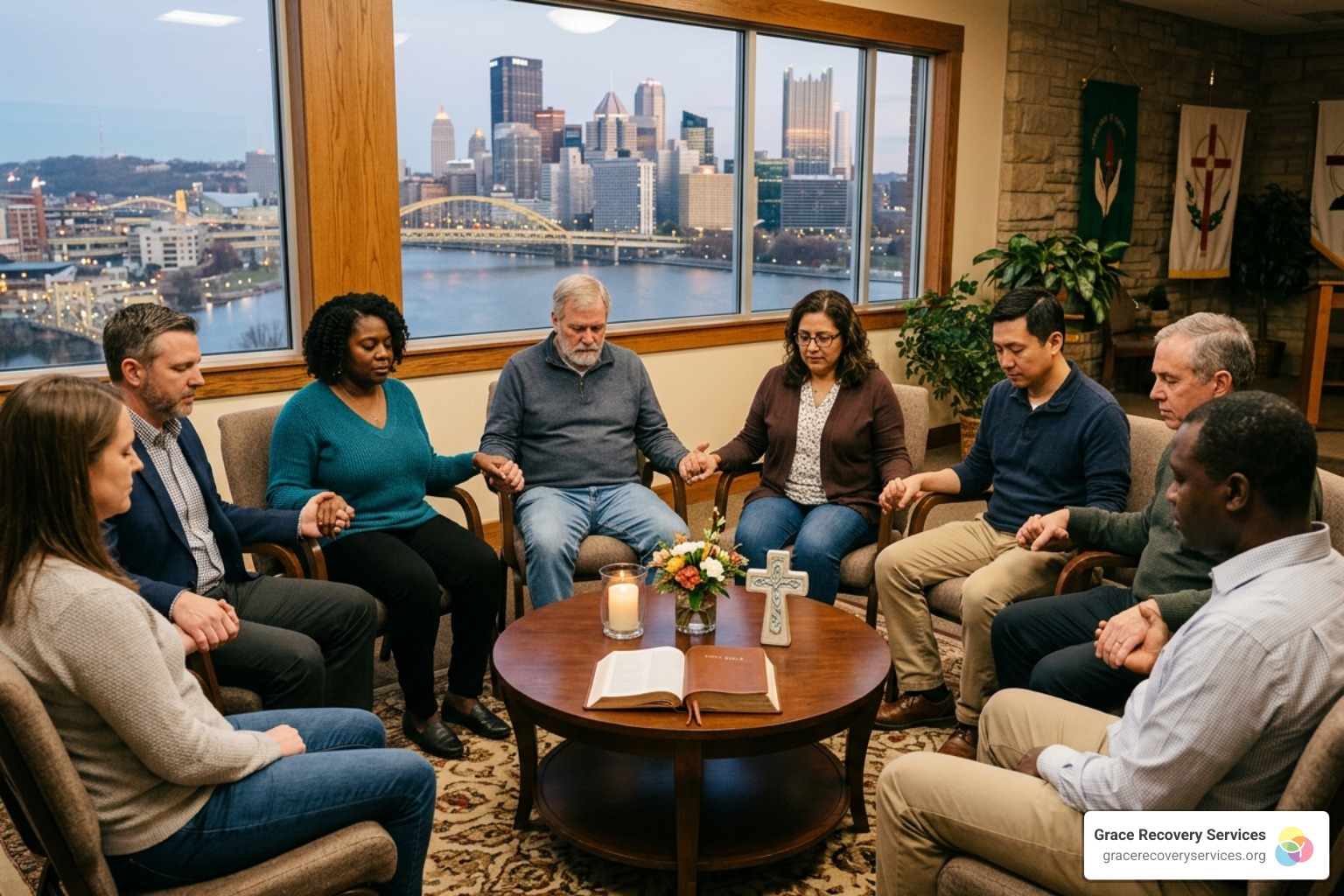
In the Penn Hills and North Huntingdon areas, we are blessed with a rich tapestry of faith communities. We encourage our clients to plug into local churches that understand the journey of recovery. This “wrap-around” support ensures that when formal treatment hours end, the fellowship continues. Whether it’s a small group in Irwin or a worship service in downtown Pittsburgh, these connections are the lifelines that sustain long-term sobriety. It’s about more than just “not drinking”—it’s about learning how to live a life of integrity, service, and faith alongside others who share your values.
Evaluating a Christian Rehab near Pittsburgh for Trauma Support
Many people struggling with addiction are also carrying the weight of past trauma. If these “root causes” aren’t addressed, the risk of relapse remains high. When looking for a Christian rehab near Pittsburgh, it is vital to ask if they offer trauma-informed care. At Grace Recovery Services, we understand that trauma can cause a “spiritual crisis,” making it hard to trust God or others. We offer specialized support, including Christian Addiction Recovery Pittsburgh techniques like EMDR (Eye Movement Desensitization and Reprocessing) integrated with spiritual guidance. We help clients process painful memories in a safe space, reframing their story from one of shame to one of triumph through Christ. This trauma-informed approach is essential for those who have felt “stuck” in their recovery journey due to unresolved emotional wounds.
Accessibility and Insurance for Christian Rehab near Pittsburgh
We believe that everyone deserves access to high-quality, faith-based care regardless of their financial situation. Most major insurance providers in Western Pennsylvania now recognize the clinical value of integrated addiction treatment. If you are looking for Christian Rehab Treatment Centers in Pittsburgh, PA, you will find that many centers, including ours, are in-network with Highmark Blue Cross Blue Shield, UPMC Health Plan, Geisinger, and Aetna or Cigna (PPO/POS plans). In many cases, insurance can cover a significant portion—sometimes up to 100%—of treatment costs. For those without insurance, many faith-based organizations offer sliding scale fees or payment assistance to ensure that no one is turned away from the help they need.
Frequently Asked Questions about Faith-Based Recovery
Choosing a recovery path is a big decision, and it’s natural to have questions. We strive to provide a non-judgmental environment where you can seek clarity.
Can I participate if I am unsure about my faith?
Absolutely. You do not have to be a “perfect Christian” or even be sure of what you believe to find help here. Our Faith-Based Rehab Pittsburgh programs are open to anyone seeking healing. We provide a safe space for questioning and exploration. Faith is an invitation, not a mandate. We find that the universal principles of grace, forgiveness, and community are beneficial to everyone, regardless of where they are on their spiritual journey. Our counselors are trained to meet you where you are without judgment.
How does outpatient treatment fit into a busy schedule?
We know that life doesn’t stop just because you are in recovery. Our Outpatient Program is designed with flexibility in mind. We offer evening sessions and telehealth options for those who work full-time or have childcare responsibilities in Westmoreland County. Our goal is to provide the structure you need without removing you from the very life you are trying to rebuild. This allows you to maintain your employment and family connections while receiving high-level clinical care.
Is family support part of the healing process?
Addiction is a family disease, and recovery is a family journey. Our Services often include family therapy sessions designed to repair relational wounds and rebuild trust. We help families learn how to support their loved ones without enabling, fostering a healthy home environment where everyone can heal together. We teach families how to speak the language of grace, which is often the catalyst for a loved one’s breakthrough and long-term stability.
Conclusion: Your Path to Renewal and Revival
The road to recovery can feel long, but you don’t have to walk it alone. Whether you are in the heart of Pittsburgh or the surrounding suburbs of Westmoreland County, there is a community of faith ready to welcome you. At Grace Recovery Services, led by Stephen A. Luther, MSEd, MEd, LPC, we combine clinical expertise with a heart for ministry. We believe that through the right combination of evidence-based therapy and spiritual renewal, anyone can find freedom from addiction.
Your journey doesn’t have to be defined by your past mistakes. In the eyes of God, you are a new creation. Grace Recovery Services is here to help you walk into that new identity with confidence and support. From our offices in North Huntingdon and Penn Hills, we serve the greater Western Pennsylvania region with a commitment to excellence and a heart for the broken. If you or a loved one are ready to move past the shame and into a life of purpose, we invite you to reach out. Take that first, brave step toward a life of restoration and hope.
Take the first step with Western PA Christian Addiction Counseling
This article was researched with AI and heavily edited by Stephen Luther for accuracy and relevance.
Stephen Luther is the Executive Director and Founder of Grace Christian Counseling, Grace Recovery Services, WPA Counseling, NuWell Online Counseling and Coaching, and NuWell Health. He holds a Master’s degree in Education from the University of Georgia and a Master’s degree in Marriage and Family Therapy from Duquesne University. He is a licensed professional counselor in Pennsylvania.
Since 1997, Steve has been helping children, adolescents, and adults overcome a wide range of emotional and relational challenges. He specializes in working with hurting families, including those with foster, adopted, or traumatized children. Steve uses Attachment-Based Therapy, Splankna Healing, and Therapeutic Parent Coaching to support healing and restoration.
This guide is for educational and spiritual encouragement and is not a substitute for personalized professional counseling. If you are in crisis, please reach out for immediate help.