
Understanding Faith Integrated Recovery in Pittsburgh
When we talk about faith integrated recovery Pittsburgh, we are describing a bridge between two powerful worlds. On one side, we have clinical excellence—the “science” of recovery. This includes proven methods like Cognitive Behavioral Therapy (CBT) and Dialectical Behavior Therapy (DBT). On the other side, we have the “spirit”—the spiritual foundation that provides meaning, hope, and a sense of belonging.
Many people find that traditional programs focus heavily on the physical and mental aspects of addiction but leave the spirit untouched. However, holistic healing requires addressing the spiritual void that often fuels substance use. By integrating faith, we don’t just treat symptoms; we help you build a new life. This approach is deeply rooted in How Faith Helps with Addiction, offering a sense of purpose that clinical tools alone sometimes miss.
We utilize evidence-based practices because they work, but we infuse them with the warmth of Christian values. This means you aren’t just a “client” in a system; you are a person with a divine purpose. Programs like Faith-Based Rehab in Pittsburgh highlight how this synergy creates a more resilient path to long-term sobriety.
The Difference Between Traditional and Faith-Based Care
Traditional addiction treatment often views recovery through a purely medical or psychological lens. While this is vital, it can sometimes feel cold or incomplete to those who value their faith. The primary difference in our approach is the recognition of a “spiritual void.” Addiction often acts as a misplaced attempt to fill a deep-seated need for connection and peace.
In a faith-integrated setting, we use biblical principles to address the root causes of addiction, such as shame and isolation. While traditional programs might focus on “abstinence,” we focus on “restoration.” We believe that through Christian Recovery Services, individuals can find the strength to move past their history and into a future defined by grace rather than guilt.
Why Faith Integrated Recovery Pittsburgh is Effective for Local Families
Pittsburgh is a city built on community and shared values. From the North Hills to North Huntingdon, families here are often the backbone of an individual’s recovery. The current opioid crisis has hit Western Pennsylvania hard, leaving many families feeling broken.
Faith-integrated recovery is particularly effective here because it prioritizes relational healing. We don’t just work with the individual; we support the family unit. By Redeeming Life, One Family At A Time, we help restore trust and communication between loved ones. This local support system, combined with a shared spiritual language, provides an anchor that helps Pittsburghers stay grounded even when the storms of life hit.
The Synergy of Clinical Science and Christian Principles
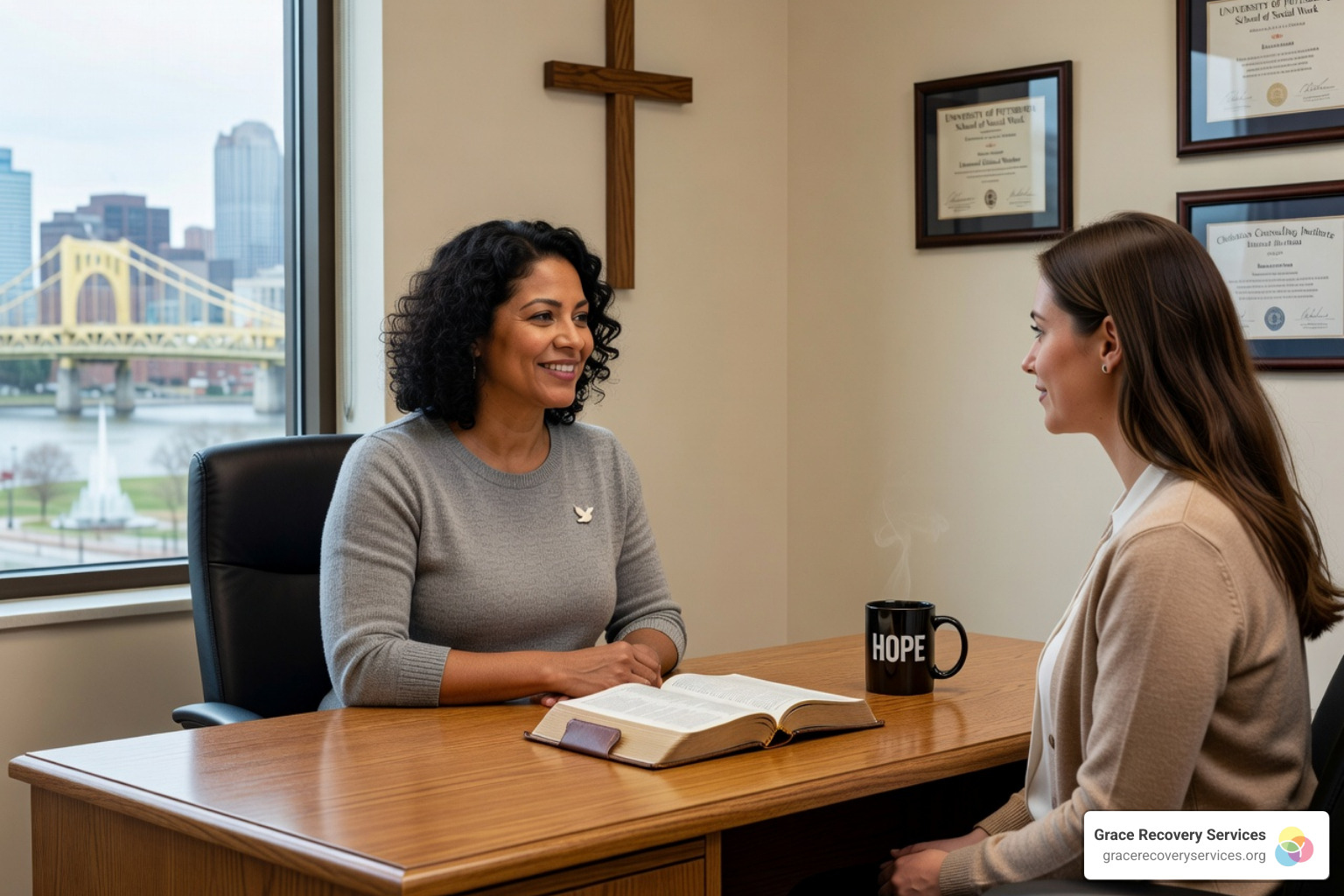
One of the most common myths is that you have to choose between science and faith. We believe the opposite: they are two sides of the same coin. In our offices in Penn Hills and North Huntingdon, we use clinical tools like Eye Movement Desensitization and Reprocessing (EMDR) to help process trauma, while simultaneously leaning on the scriptural truths of redemption.
This synergy is what makes Faith-Based Trauma Recovery so potent. Science explains how the brain responds to trauma; faith provides the grace to forgive oneself and others. By using Christian Integrated Addiction Treatment, we create a comprehensive care plan that leaves no stone unturned.
Integrating CBT with Faith Integrated Recovery Pittsburgh
Cognitive Behavioral Therapy (CBT) is the “gold standard” for changing negative thought patterns. In our practice, we take CBT a step further by aligning cognitive restructuring with scriptural truth. If CBT teaches us to challenge the lie that “I am a failure,” faith provides the truth that “I am fearfully and wonderfully made.”
This process of mind renewal is a central theme in our work. We help clients shift their identity from “addict” to “child of God.” Scientific research on the benefits of spirituality in addiction recovery suggests that this shift in identity is one of the strongest predictors of long-term success.
Trauma-Informed Care and Spiritual Resilience
Trauma is often the silent driver of addiction. Many of our clients have experienced significant pain—loss, abuse, or the trauma of incarceration. Our approach is deeply trauma-informed, meaning we prioritize safety, empowerment, and emotional healing above all else.
Spiritual resilience is the ability to bounce back from these hardships through faith. We teach our clients that their past does not define them. Through Western PA Christian Addiction Counseling, we walk with you as you process these wounds, replacing the “spirit of heaviness” with the “garment of praise.”
Outpatient Levels of Care in Western Pennsylvania

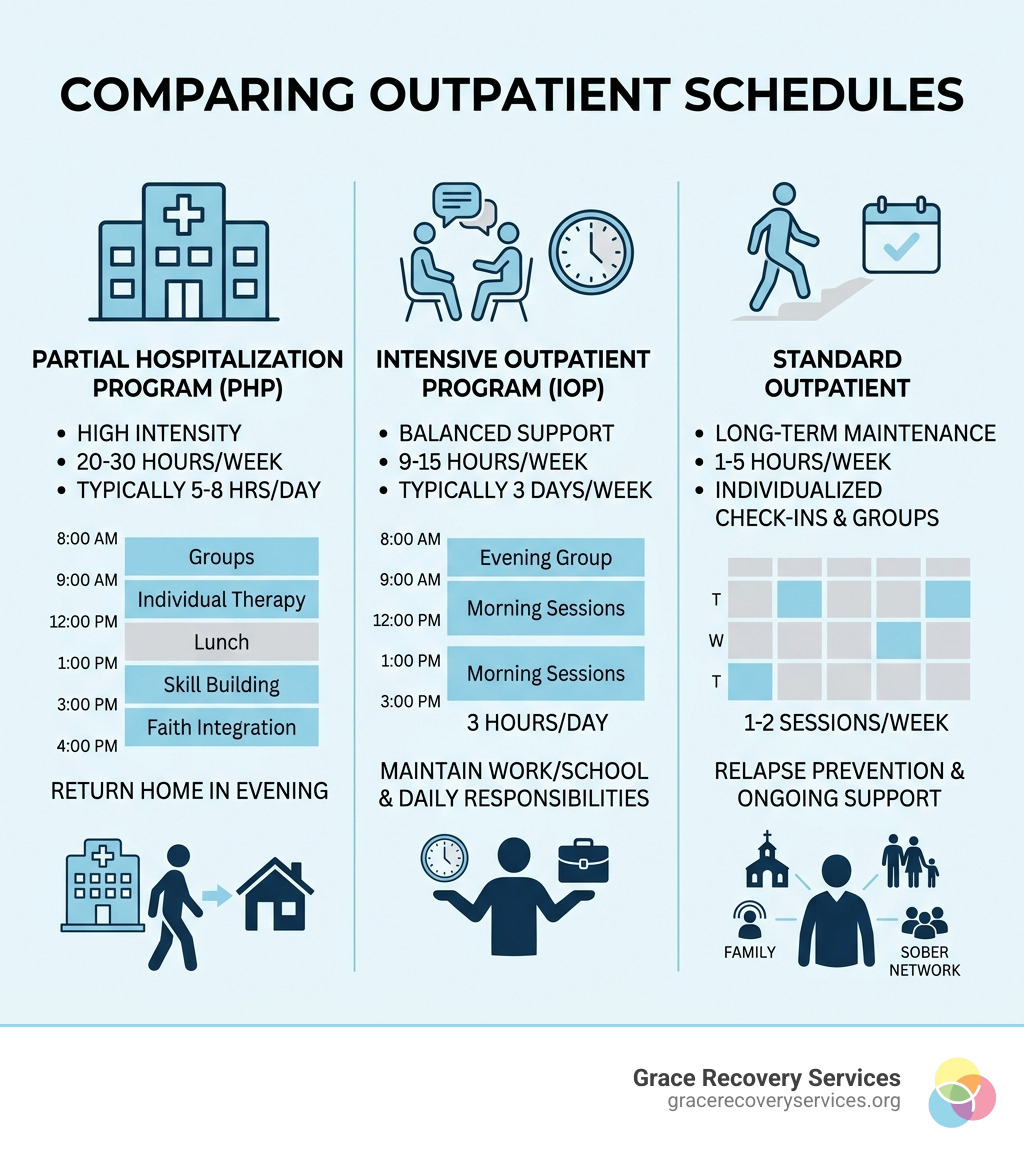
At Grace Recovery Services, we focus exclusively on outpatient care. This allows you to stay connected to your family, your job, and your church while receiving high-level clinical support. We offer several levels of care to meet you where you are:
- Partial Hospitalization Program (PHP): A highly structured program typically running 5-8 hours a day, several days a week. It offers high-intensity clinical support with the flexibility of returning home in the evening.
- Intensive Outpatient Program (IOP): This usually requires about 9 hours of therapy per week. It is perfect for those transitioning from higher levels of care or those who need significant support while maintaining daily responsibilities.
- Standard Outpatient: This involves fewer hours per week and focuses on long-term maintenance and relapse prevention.
These programs are designed for real-world application. You learn a coping skill in the morning and can practice it with your family that evening. For more details, explore our Faith-Based Outpatient Addiction Treatment and Christian Intensive Outpatient Treatment options.
Navigating the Path of Faith Integrated Recovery Pittsburgh
Starting the journey can feel overwhelming, but it begins with a simple assessment. We sit down with you to understand your history, your medical needs, and your spiritual goals. From there, we build a personalized treatment plan.
Throughout your time with us, you will have access to peer support—people who understand exactly what you are going through. As you progress, we focus on aftercare, ensuring you have a solid “sober network” in the Pittsburgh area. If you are looking for Christian Rehab Pittsburgh, we are here to help you navigate every step.
Insurance, Accessibility, and Eligibility in Allegheny County
We believe that high-quality, faith-based care should be accessible to everyone in our community. That is why we work hard to remain in-network with major insurance providers.
| Program Level | Typical Hours | Best For |
|---|---|---|
| PHP | 20-30 hours/week | High-intensity needs; transition from higher levels of care |
| IOP | 9-15 hours/week | Balancing work/school with recovery |
| Outpatient | 1-5 hours/week | Long-term maintenance and check-ins |
We are proud to be in-network with providers like Highmark, UPMC, and Blue Cross Blue Shield. For those experiencing financial hardship, we often have information on grant funding or other forms of assistance to ensure you get the care you need. If you’re searching for Faith-Based Rehab Pittsburgh, our team can help you verify your benefits quickly and confidentially.
Who Can Benefit from Faith-Based Programs?
Our doors are open to adults (18+) from all walks of life. We have extensive experience working with:
- Veterans: Addressing the unique intersections of service, trauma, and faith.
- Dual Diagnosis: Supporting those who struggle with both substance use and mental health conditions like depression or anxiety.
- Trauma Survivors: Using a “well model” approach that focuses on your strengths rather than just your symptoms.
Our mission, as shared on our about us page, is to help people find hope, healing, and lasting recovery through compassionate, clinically grounded care.
Frequently Asked Questions about Faith-Based Rehab
Do I have to be a practicing Christian to attend?
Absolutely not. Faith is an invitation, not a mandate. We welcome everyone, regardless of where they are on their spiritual journey. If you are questioning your faith or have had difficult experiences with religion in the past, our counselors offer a safe, non-judgmental space to explore those feelings.
How does this differ from a church support group?
While church groups are wonderful for community and fellowship, they are not clinical programs. Grace Recovery Services provides licensed therapists (LPCs, LCSWs) who utilize evidence-based protocols. We offer the same high standards of care you would find at a medical facility, just with a spiritual foundation.
Is insurance coverage available for these programs?
Yes. Under the Affordable Care Act, mental health and substance abuse treatment are considered essential health benefits. Most major PPO and POS plans cover our services. We recommend a free benefit verification to see exactly what your plan covers.
Conclusion
Recovery is more than just stopping the use of a substance; it is about starting a new life. At Grace Recovery Services, we are honored to witness the restoration, purpose, and dignity that return when a person finds their path.
Whether you are in Penn Hills, North Huntingdon, or anywhere in the Greater Pittsburgh area, know that there is a place for you here. We combine the best of modern science with the timeless power of the spirit to help you find lasting freedom.
If you are ready to take that first brave step toward Christian Addiction Recovery Pittsburgh, we are ready to walk with you.
Start your journey to healing today by reaching out for a confidential conversation. Your revival starts now.
This article was researched with AI and heavily edited by Stephen Luther for accuracy and relevance.
Stephen Luther is the Executive Director and Founder of Grace Christian Counseling, Grace Recovery Services, WPA Counseling, NuWell Online Counseling and Coaching, and NuWell Health. He holds a Master’s degree in Education from the University of Georgia and a Master’s degree in Marriage and Family Therapy from Duquesne University. He is a licensed professional counselor in Pennsylvania.
Since 1997, Steve has been helping children, adolescents, and adults overcome a wide range of emotional and relational challenges. He specializes in working with hurting families, including those with foster, adopted, or traumatized children. Steve uses Attachment-Based Therapy, Splankna Healing, and Therapeutic Parent Coaching to support healing and restoration.
This guide is for educational and spiritual encouragement and is not a substitute for personalized professional counseling. If you are in crisis, please reach out for immediate help.
This article was researched with AI and heavily edited by Stephen Luther for accuracy and relevance.
Stephen Luther is the Executive Director and Founder of Grace Christian Counseling, Grace Recovery Services, WPA Counseling, NuWell Online Counseling and Coaching, and NuWell Health. He holds a Master’s degree in Education from the University of Georgia and a Master’s degree in Marriage and Family Therapy from Duquesne University. He is a licensed professional counselor in Pennsylvania.
Since 1997, Steve has been helping children, adolescents, and adults overcome a wide range of emotional and relational challenges. He specializes in working with hurting families, including those with foster, adopted, or traumatized children. Steve uses Attachment-Based Therapy, Splankna Healing, and Therapeutic Parent Coaching to support healing and restoration.
This guide is for educational and spiritual encouragement and is not a substitute for personalized professional counseling. If you are in crisis, please reach out for immediate help.