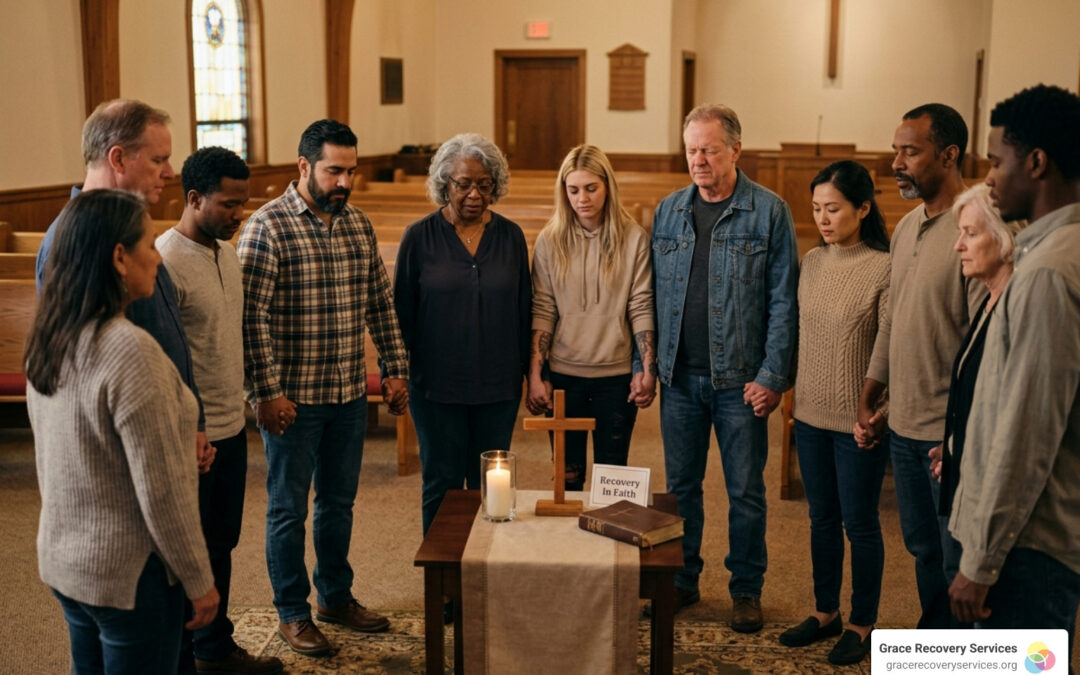
Why Faith-Based Recovery Gives Hope to Millions Struggling with Addiction
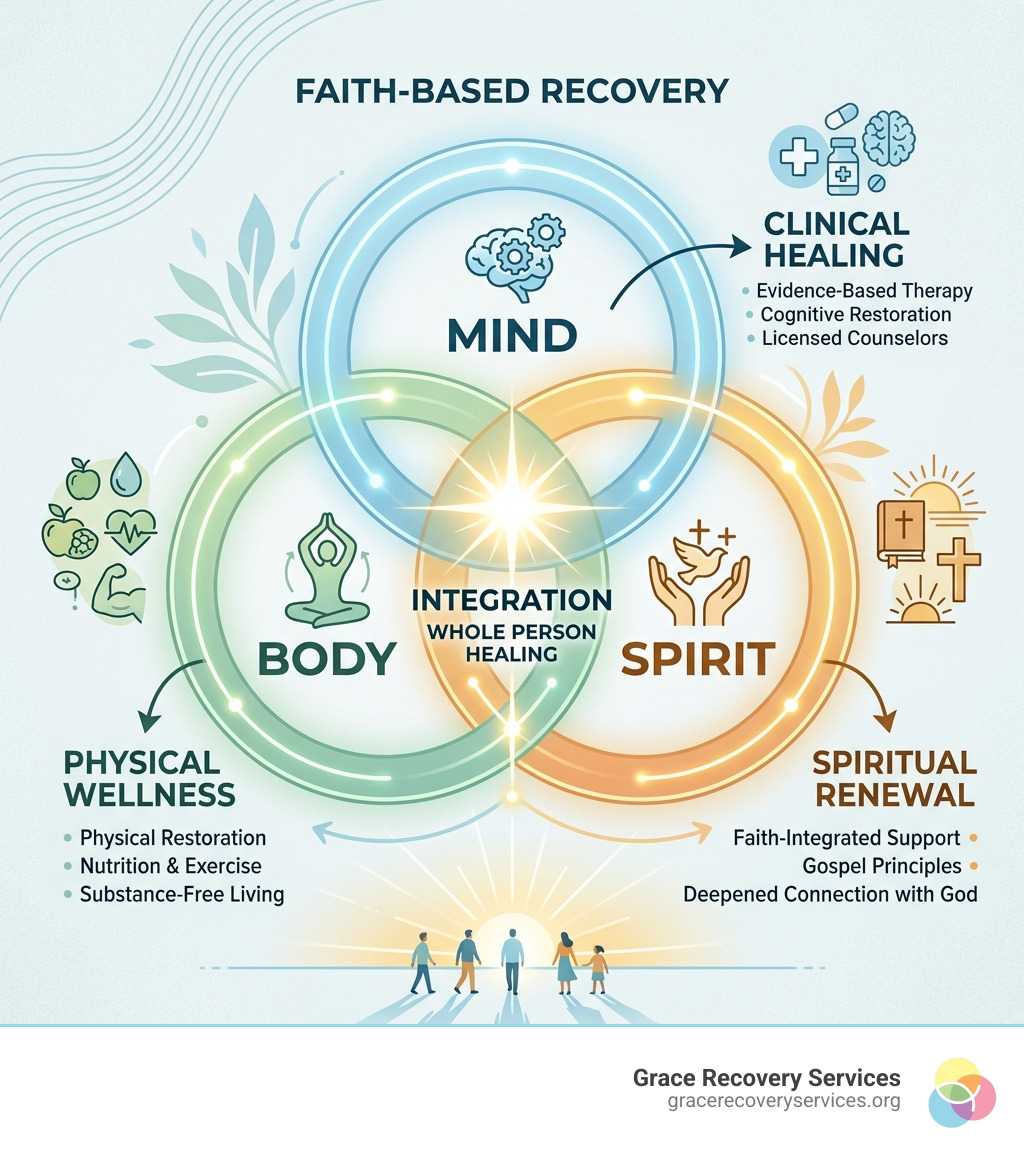
Faith-based recovery is an approach to addiction treatment that combines clinical care with spiritual principles — most often rooted in Christian faith — to heal the whole person: mind, body, and spirit.
If you’re looking for faith-integrated programs, here are the most recognized models and approaches:
- Christ-Centered 12-Step Programs – Biblical lens on surrender, amends, and community accountability
- Celebrate Recovery – Church-based program for hurts, hang-ups, and habits (35,000+ churches worldwide)
- Christian Intensive Outpatient Programs (IOP) – Flexible clinical care woven with spiritual guidance
- Partial Hospitalization Programs (PHP) with Spiritual Focus – Structured daily care balancing medical and faith-based needs
- Biblical Counseling with Licensed Therapists – Root-cause healing through a gospel-centered worldview
- Trauma-Informed Spiritual Care – Grace-based healing for relational wounds and past trauma
- Gospel-Centered Recovery Curriculum – Heart-level change, not just behavior modification
- Accountability and Fellowship Groups – Sober community rooted in shared faith
- Family Restoration Programs – Rebuilding trust and reconciliation through biblical principles
- Local Community Integration – Connecting clients to churches, aftercare, and peer support near home
At any given moment, roughly 20 million Americans are living with a substance use disorder. That number is staggering — and heartbreaking. Yet one of the most powerful tools for healing is one that often gets overlooked: faith.
Research consistently supports what many people in recovery already know in their bones. More than 84% of scientific studies show that faith is a positive factor in addiction prevention or recovery. People with strong spiritual beliefs are significantly less likely to misuse substances — and when they do struggle, faith communities often serve as the first point of contact and the most enduring source of support.
But faith-based recovery isn’t just about attending church or reading the Bible. At its best, it is a fully integrated approach — one that pairs evidence-based clinical treatment with spiritual transformation, addressing not just the symptoms of addiction but the deeper wounds underneath.
For individuals and families in Western Pennsylvania, including the Pittsburgh area, finding a program that honors both your clinical needs and your faith can make all the difference in the world.
This guide walks you through the top 10 pillars and programs shaping faith-based recovery today — so you can find the path that fits your journey.
The Science and Efficacy of Faith-Based Recovery
While faith is deeply personal, it can also support recovery in practical, measurable ways. Research on spirituality and addiction suggests that faith, purpose, prayer, and supportive community can reduce isolation, strengthen motivation, and lower relapse risk. At Grace Recovery Services, we explain more about how faith helps with addiction through a compassionate, clinically informed approach.
The neurobiology of recovery also reveals fascinating insights. Scientific studies using MRI scans have shown that powerful religious experiences activate the nucleus accumbens — the same part of the brain responsible for reward and dopamine regulation that is often hijacked by substance use. By engaging in spiritual practices, individuals can find a healthy, life-giving way to experience joy and peace, effectively “replacing” the chemical high with a spiritual one.
The economic impact is equally stunning. Faith-based volunteer support groups contribute up to $316.6 billion in savings to the U.S. economy annually. In churches alone, it is estimated that over 20,000 lives are saved every year through these initiatives. At Grace Recovery Services, we understand how faith helps with addiction by providing a protective factor; those with strong religious beliefs are up to eight times less likely to use illegal drugs.
| Feature | Secular Clinical Approach | Faith-Integrated Clinical Approach |
|---|---|---|
| Primary Goal | Symptom Management & Abstinence | Holistic Restoration & Spiritual Renewal |
| View of Addiction | Biological/Behavioral Disorder | Disease often rooted in “Worship Disorder” |
| Community | Peer Support Groups | The “Body of Christ” / Church Family |
| Motivation | Self-Empowerment | Surrender to God’s Grace |
| Long-term Tool | Coping Mechanisms | Prayer, Scripture & Spiritual Growth |
Core Elements of a Faith-Integrated Approach

A truly effective faith based recovery program doesn’t choose between science and scripture; it embraces both. We believe in higher power higher purpose biblical principles for addiction, which provide a roadmap for navigating the complexities of the human heart.
The core elements of our approach include:
- Biblical Principles of Hope: Using scriptures to help with addiction and reclaim your life to remind clients that they are loved, valued, and capable of change.
- The Power of Prayer: Integrating prayer into clinical settings as a tool for emotional regulation and connection with the Creator.
- Clinical Excellence: Ensuring that every client receives evidence-based care from Licensed Professional Counselors (LPCs).
- Trauma-Informed Care: Recognizing that many addictions stem from deep-seated wounds. Our faith-based trauma recovery focuses on healing these relational and emotional scars through the lens of grace.
Top 10 Pillars and Models for Spiritual Healing

When exploring Christian recovery services, it helps to understand the specific pillars that make these programs unique. Below are the ten most impactful models used to support clients in Western Pennsylvania.
1. Christ-Centered 12-Step Integration
The 12-step model, originally developed in 1935, has always had spiritual roots. However, a Christ-centered approach explicitly identifies Jesus Christ as the “Higher Power.” This helps clients move through surrender and amends without the weight of self-loathing. By finding a Bible verse for sobriety, clients anchor their daily progress in eternal truths, learning that their identity is not defined by their past mistakes but by God’s grace.
2. Biblical Counseling and Clinical Therapy
In our Western PA Christian addiction counseling sessions, we address what some theologians call a “worship disorder.” This doesn’t mean you aren’t “religious enough”; it means that addiction often involves looking for life and peace in things that were never meant to provide them.
Our our Penn Hills location focuses on emotional healing. We don’t just look at the behavior; we look at the heart. By renewing the mind through a biblical worldview, clients can address the root causes of their struggles rather than just managing symptoms.
3. Faith-Based Intensive Outpatient Programs (IOP)
We know that life doesn’t stop just because you need help. Faith-based outpatient addiction treatment allows clients to receive high-level clinical care while remaining present for their families and jobs.
Our Christian intensive outpatient treatment provides several hours of therapy per week, blending group support with individual counseling. This model is ideal for those in North Huntingdon or Pittsburgh who need a structured environment but don’t require 24/7 supervision.
4. Trauma-Informed Spiritual Care
Trauma and addiction are often two sides of the same coin. A grace-based approach to trauma means providing a safe, non-judgmental space where clients can explore their “why.” We prioritize psychological safety, ensuring that spiritual discussions never feel shaming or condemning. Instead, we use the peace of Christ to help heal relational wounds and past hurts that may have fueled substance use for years.
5. Gospel-Centered Recovery Curriculum
True freedom is about more than just “stopping a bad habit.” It’s about becoming a new person. Our curriculum focuses on heart-level change rather than mere behavior modification. We often talk about “messy sanctification” — the idea that healing is a process, and it’s okay to be a work in progress. By understanding what the Bible says about substance abuse, clients learn to replace lies with truth and isolation with community.
6. Partial Hospitalization Programs (PHP) with Spiritual Focus
For those needing more intensive support, Christian integrated addiction treatment through a PHP model offers full-day clinical care. This structure balances medical necessity with spiritual growth, providing a comprehensive safety net for those in the early, most vulnerable stages of recovery. It’s about building a foundation that is physically, mentally, and spiritually strong.
7. Accountability and Fellowship Groups
The “Body of Christ” plays a massive role in long-term success. Recovery is not meant to be a solo journey. We help clients build a sober social network right here in Western PA. By sharing the best Bible verses for recovering addicts and alcoholics, peers encourage one another, providing the “wrap-around” care that clinical sessions alone cannot provide.
8. Family Restoration and Biblical Reconciliation
Addiction rarely affects just one person; it ripples through the entire family. We focus on healing the family unit by addressing co-dependency and rebuilding trust through grace. Reconciliation is a biblical mandate, and we provide the tools for loved ones to heal alongside the client, creating a healthy environment for long-term sobriety.
9. Spiritual Discipline and Mindfulness
We teach prayer and meditation not just as religious duties, but as tools for emotional regulation. Techniques like “being still” are incredibly effective for managing anxiety and cravings. By developing a daily walk with God and utilizing 25 be sober minded scripture passages to keep you sharp, clients learn to stay grounded and sharp in their recovery.
10. Local Community Integration in Western PA
Recovery happens in the context of community. Whether you are looking for Christian rehab Pittsburgh or faith-based rehab Pittsburgh, our goal is to connect you to local churches and aftercare programs.
Clients in Westmoreland County can get your spirit in gear with North Huntingdon Christian IOP, ensuring they have a local support system long after they complete our program. We are proud to be a part of Christian addiction recovery Pittsburgh, helping neighbors find hope right in their own backyard.
Frequently Asked Questions about Faith-Based Recovery
Is faith-based recovery only for Christians?
Not at all. While our programs are rooted in Christian principles, we welcome individuals from all backgrounds, including those who are skeptical or still exploring their spiritual connection. We provide a non-judgmental environment where everyone is treated with dignity. Our goal is faith forward freedom from opioids and alcohol for anyone ready to take the first step.
How does faith-based treatment differ from secular programs?
Secular programs often focus on symptom management and biological factors. While we include those evidence-based tools, we also address the “spiritual void.” We believe that true healing requires looking at identity and purpose. By integrating scripture alongside clinical science, we offer a more holistic path to restoration.
Does insurance cover faith-based outpatient recovery?
Yes, most major commercial insurance providers cover outpatient services like IOP and PHP. We are committed to financial stewardship and making accessible care a priority for families in Western Pennsylvania. We encourage you to reach out so we can help you navigate your specific coverage.
Conclusion
At Grace Recovery Services, we believe that true freedom is found through a blend of clinical excellence and the transformative power of faith. Whether you are in Pittsburgh, North Huntingdon, or the surrounding Allegheny County area, our trauma-informed team—led by Stephen A. Luther—is here to walk with you. There is hope, there is healing, and there is a place for you here. Start your journey today.
This article was researched with AI and heavily edited by Stephen Luther for accuracy and relevance.
Stephen Luther is the Executive Director and Founder of Grace Christian Counseling, Grace Recovery Services, WPA Counseling, NuWell Online Counseling and Coaching, and NuWell Health. He holds a Master’s degree in Education from the University of Georgia and a Master’s degree in Marriage and Family Therapy from Duquesne University. He is a licensed professional counselor in Pennsylvania.
Since 1997, Steve has been helping children, adolescents, and adults overcome a wide range of emotional and relational challenges. He specializes in working with hurting families, including those with foster, adopted, or traumatized children. Steve uses Attachment-Based Therapy, Splankna Healing, and Therapeutic Parent Coaching to support healing and restoration.
This guide is for educational and spiritual encouragement and is not a substitute for personalized professional counseling. If you are in crisis, please reach out for immediate help.