
When You’re Struggling, the Bible Has Something to Say About It
Scriptures to help with addiction are not just comforting words on a page — they are living promises that millions of people in recovery have leaned on when everything else felt like it was falling apart.
Here are some of the most powerful scriptures for addiction recovery:
- 1 Corinthians 10:13 — God will not let you be tempted beyond what you can bear, and He will always provide a way out.
- Philippians 4:13 — You can do all things through Christ who gives you strength.
- John 8:36 — If the Son sets you free, you are free indeed.
- Isaiah 41:10 — God is with you; do not be afraid or discouraged.
- 2 Corinthians 5:17 — In Christ, you are a new creation. The old is gone.
- James 5:16 — Confess your struggles to one another and pray — healing follows.
- Psalm 34:18 — God is close to the brokenhearted and saves those who are crushed in spirit.
Addiction is one of the heaviest burdens a person can carry. It affects not just the body, but the mind, the spirit, and every relationship that matters to you. If you or someone you love is in that place right now, you are not alone — and there is hope.
In our clinical work at Grace Recovery Services, we frequently see clients who feel overwhelmed by shame and hopelessness when they first come to us. Many have tried to quit on their own multiple times, only to fall back into the same cycle. When they begin pairing these powerful scriptures with practical, trauma-informed tools in a safe, faith-centered environment, we regularly witness a profound shift — the heavy weight of guilt begins to lift, cravings become more manageable, and many start to believe again that true freedom is possible.
The Bible does not use the word “addiction” the way we do today. But it speaks directly to bondage, temptation, shame, weakness, and the deep longing to be free. That is exactly where so many people find themselves.
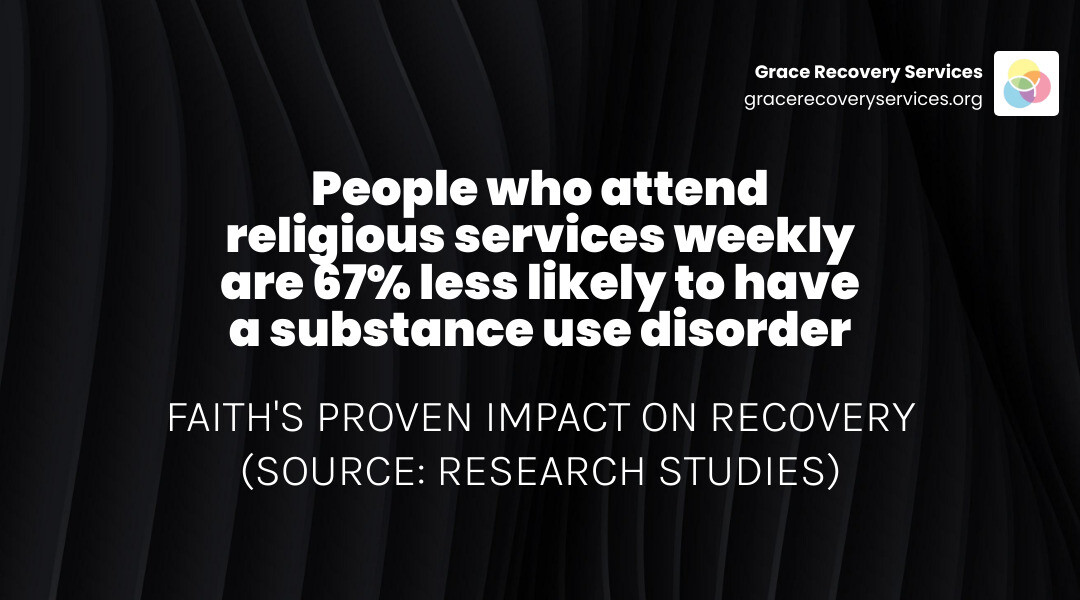
Research backs this up, too. People who attend religious services weekly are 67% less likely to have a substance use disorder compared to those who do not. Faith is not a footnote in recovery — for many, it is the foundation.
I’m Stephen A. Luther, MSEd, MEd, LPC, Executive Director and Founder of Grace Recovery Services in Western Pennsylvania, and I have spent over two decades helping individuals heal from addiction through trauma-informed, biblically grounded care. In this guide, I’ll walk you through the most meaningful scriptures to help with addiction and show you how to weave them into a practical, faith-centered recovery plan.
The biblical Perspective: Understanding Addiction as a Spiritual Battle
When we talk about substance use disorders today in April 2026, we often focus on the brain chemistry and the physical cravings. Those are real and vital to address, but at Grace Recovery Services, we also recognize the spiritual dimension. In the biblical view, addiction can be seen as a form of spiritual bondage — a “quicksand” that starts manageable but quickly pulls us under.
The Apostle Paul, one of the most influential figures in the New Testament, described a struggle that every person in recovery knows by heart. In Romans 7:15, he writes, “I do not understand what I do. For what I want to do I do not do, but what I hate I do.” This is the quintessential definition of the internal conflict of addiction. You want to stay sober, you want to be present for your family in Pittsburgh or North Huntingdon, yet you find yourself compelled toward the very thing you hate.
Understanding addiction as a spiritual battle (Ephesians 6:12) helps remove some of the paralyzing shame. It reminds us that we are “target number one” in a war for our peace and purpose. However, the Bible also makes it clear that while the battle is real, the victory is already secured through grace. This isn’t about having enough “willpower”—it’s about surrendering to a power greater than ourselves.
At Grace Recovery Services, we integrate these timeless biblical truths with evidence-based clinical practices because we understand that addiction affects the whole person — body, mind, and spirit. Scriptures like 1 Corinthians 10:13 and Romans 12:2 work powerfully alongside tools such as cognitive behavioral techniques, trigger identification, and nervous system regulation. This combined approach helps clients not only resist temptation in the moment but also renew their minds and rebuild their lives on a foundation that lasts.
If you are just beginning to look at your struggle through this lens, we recommend starting a structured path like the 7 Days of Healing From Addiction plan. It helps frame recovery not as a punishment, but as a journey toward restoration. You can also explore more about how faith and recovery intersect on our blog.
Essential Scriptures to Help With Addiction and Find Strength
When the cravings hit or the weight of the past feels too heavy to lift, we need “anchor verses.” These are scriptures to help with addiction that you can memorize and repeat like a mantra.
1 Corinthians 10:13: The Way of Escape
“No temptation has overtaken you except what is common to mankind. And God is faithful; he will not let you be tempted beyond what you can bear. But when you are tempted, he will also provide a way out so that you can endure it.”
This verse is a cornerstone for many of our clients in Western Pennsylvania. It tells us two things: first, you aren’t “uniquely broken”—your struggle is common to humanity. Second, there is always an exit ramp. In the heat of a trigger, we often feel trapped. This scripture promises that God has provided a door; our job in recovery is to look for it and walk through it.
Philippians 4:13: Divine Strength
“I can do all things through Christ who strengthens me.”
This is perhaps the most quoted verse in recovery, but it’s often misunderstood. It doesn’t mean we become superheroes. It means that when our own strength is exhausted—which happens often in early sobriety—we can tap into a divine reservoir of endurance.
For those who feel their resistance crumbling, reading something like Psalm 151 (a Psalm of Addicts) can be deeply moving. It provides a voice for the raw, honest plea for help that many of us feel but can’t quite put into words. We’ve also curated a list of the best Bible verses for recovering addicts and alcoholics to help you build your spiritual toolkit.
Finding Comfort in Scriptures to Help With Addiction
Recovery is exhausting. It’s not just about stopping a behavior; it’s about healing the wounds that led to the behavior in the first place.
- Psalm 34:18: “The Lord is close to the brokenhearted and saves those who are crushed in spirit.” Many people turn to substances because they feel “crushed.” If you are feeling the weight of trauma or loss in Allegheny or Westmoreland County, know that God isn’t looking down on you with judgment. He is drawing closer to you because of your pain.
- Matthew 11:28: “Come to me, all you who are weary and burdened, and I will give you rest.” Addiction is a full-time job that pays in exhaustion. Jesus offers a different kind of rest—a spiritual peace that doesn’t require a bottle or a pill to achieve.
At Grace Recovery Services, we believe that spiritual healing is a vital component of a trauma-informed care plan. It’s about finding a safe place for your soul to rest while you do the hard work of clinical recovery.
Developing Self-Control Through Scriptures to Help With Addiction
Self-control is often the first thing addiction steals. The Bible frames self-control not as a personality trait, but as a “fruit of the Spirit”—something that grows in us as we grow closer to God.
- 2 Timothy 1:7: “For the Spirit God gave us does not make us timid, but gives us power, love and self-discipline.” In the Penn Hills area, we often see clients who feel they have lost their “sound mind” to substances. This verse reminds us that our true identity is one of power and discipline, not fear and chaos.
- 1 Corinthians 6:12: “‘I have the right to do anything,’ you say—but not everything is beneficial. ‘I have the right to do anything’—but I will not be mastered by anything.” This is a powerful Bible verse for sobriety. It acknowledges our freedom but warns against becoming a “slave” to substances. True freedom isn’t the ability to do whatever we want; it’s the power to not do the things that destroy us.
Practical Ways to Apply Bible Verses in Your Daily Recovery
Knowing scriptures to help with addiction is one thing; applying them when you’re stressed at work or lonely at home is another. We encourage our clients to move these truths from their heads to their hearts through practical action.

- The “Mirror Method”: Write your anchor verse on a sticky note and put it on your bathroom mirror. It’s the first thing you see in the morning and the last thing you see at night.
- Scripture Memorization: Choose one verse a week. Repeat it while you’re driving through the Parkway East or walking in a local park. When a trigger happens, your brain will have a “script” to follow instead of the old habit.
- Prayerful Meditation: Don’t just read the verse—talk to God about it. “Lord, you said you’d provide a way out (1 Cor 10:13). I’m feeling triggered right now. Please show me where the door is.”
- Daily Affirmations: Replace the “I’m a failure” loop in your head with “I am a new creation” (2 Corinthians 5:17).
When you renew your mind with these powerful Bible verses, you are actually participating in a process called neuroplasticity—literally rewiring your brain to choose life over death.
The Role of Community and Professional Support in Faith-Based Healing
One of the most dangerous lies addiction tells is, “You can do this alone.” In reality, recovery is a team sport. James 5:16 tells us to “confess your sins to each other and pray for each other so that you may be healed.”
At Grace Recovery Services, we provide that community through our intensive outpatient programs (IOP) and Christian counseling. We combine the spiritual necessity of confession and accountability with evidence-based clinical tools.
| Aspect | Isolation (Addiction’s Goal) | Community (Recovery’s Strength) |
|---|---|---|
| Visibility | Hiding in shame and secrecy | Walking in the light with others |
| Support | Trying to use “willpower” alone | Leaning on sponsors and counselors |
| Perspective | Distorted by cravings and fear | Grounded in truth and shared experience |
| Accountability | No one to answer to | Meaningful check-ins and goals |
Confession isn’t about being shamed; it’s about bringing the struggle into the light where the “mold” of addiction can’t grow. Whether it’s through a local Celebrate Recovery group or our professional outpatient services in Irwin or Pittsburgh, faith helps with addiction by connecting us to God and to each other.
Renewing Your Mind: Transformation and New Beginnings in 2026
As we move through 2026, we are seeing more people than ever looking for a “reset.” The Bible offers the ultimate new beginning.
2 Corinthians 5:17 says, “Therefore, if anyone is in Christ, the new creation has come: The old has gone, the new is here!” This is a promise of restoration. It doesn’t mean your past didn’t happen, but it means your past no longer defines your future.
Romans 12:2 instructs us, “Do not conform to the pattern of this world, but be transformed by the renewing of your mind.” This is exactly what we do in our trauma-informed care. We help you identify the “patterns” of trauma and substance use and replace them with the “higher purpose” found in biblical principles.

Every sunrise over Pittsburgh is a reminder that God’s mercies are new every morning. You are not stuck. You are not a finished product. You are a work in progress, and there is a higher power and a higher purpose waiting for you.
Frequently Asked Questions about Faith and Recovery
Is professional help necessary alongside biblical principles?
Absolutely. While the Bible provides the spiritual foundation, addiction often involves deep-seated trauma, physical dependency, and psychological patterns that require professional intervention. At Grace Recovery Services, we believe God uses doctors, therapists, and counselors as instruments of His healing. Our approach is holistic—addressing the spirit through scriptures to help with addiction and the mind/body through clinical excellence. You can learn more about this integration on our addiction and spirituality page.
How does the Bible help with resisting triggers and temptation?
The Bible encourages “alertness.” 1 Peter 5:8 warns us to “be alert and of sober mind,” because our spiritual enemy is looking for an opportunity. By putting on “spiritual armor” (Ephesians 6), we learn to recognize a trigger before it becomes an action. Using sobriety scriptures as a defense strategy allows you to pause and choose a healthy coping mechanism instead of reacting impulsively.
What does the Bible say about relapse and starting over?
Relapse is often part of the journey, but it is never the end of the story. Proverbs 24:16 says, “For though the righteous fall seven times, they rise again.” God’s mercy is not a one-time offer; it is a constant invitation. If you’ve stumbled, the Bible encourages you to get back up, confess, and keep moving forward. Plans like Overcoming Addiction emphasize that perseverance is more important than perfection.
Conclusion: Take the First Step Toward Restoration
If you’ve been searching for scriptures to help with addiction, it’s a sign that your heart is ready for change. You don’t have to live in the shadows of shame or the cycle of “one more time.”
At Grace Recovery Services, we are here to walk with you. We offer a compassionate, non-judgmental environment in Western Pennsylvania where you can find the clinical support you need and the spiritual foundation you crave. Whether you are in Pittsburgh, North Huntingdon, or anywhere in the surrounding Allegheny and Westmoreland counties, our trauma-informed, faith-based outpatient care is designed to help you reclaim your life.
Your story doesn’t end in bondage. It ends in freedom.
Start your journey with Christian Addiction Recovery in Pittsburgh today. Reach out to us for a confidential assessment and let us help you find the path to restoration.
This article was researched with AI and heavily edited by Stephen Luther for accuracy and relevance.
Stephen Luther is the Executive Director and Founder of Grace Christian Counseling, Grace Recovery Services, WPA Counseling, NuWell Online Counseling and Coaching, and NuWell Health. He holds a Master’s degree in Education from the University of Georgia and a Master’s degree in Marriage and Family Therapy from Duquesne University. He is a licensed professional counselor in Pennsylvania.
Since 1997, Steve has been helping children, adolescents, and adults overcome a wide range of emotional and relational challenges. He specializes in working with hurting families, including those with foster, adopted, or traumatized children. Steve uses Attachment-Based Therapy, Splankna Healing, and Therapeutic Parent Coaching to support healing and restoration.
This guide is for educational and spiritual encouragement and is not a substitute for personalized professional counseling. If you are in crisis, please reach out for immediate help.