Understanding Holistic Recovery Pittsburgh Options for Lasting Sobriety
When someone steps toward healing from substance use disorder, addressing physical dependence is often only the first layer. Holistic recovery Pittsburgh care looks at the entire tapestry of a person’s life, addressing the underlying root causes of addiction rather than just suppressing symptoms. While traditional addiction treatment often focuses primarily on clinical stabilization and behavioral modification, holistic care broadens the lens to nourish physical health, emotional well-being, interpersonal relationships, and spiritual restoration.
At Grace Recovery Services, this whole-person perspective is woven into outpatient care rather than treated as an optional add-on. Clients are supported through counseling conversations, practical recovery planning, faith-centered encouragement, and everyday wellness skills that can be practiced at home, at work, and within local community life. This matters because lasting sobriety is not only about avoiding substances. It is also about learning how to manage stress, repair relationships, recognize triggers, strengthen identity, and build a hopeful rhythm of life that feels sustainable.
In Allegheny County, the impact of substance use has been deeply felt, with 1,427 overdose deaths recorded in 2022 alone. This stark reality underlines why comprehensive, multi-dimensional support is so vital across Western Pennsylvania. Traditional care provides crucial clinical safety, but long-term recovery flourishes when clients are equipped with practical tools to rebuild their everyday lives.
Through integrated outpatient care, clients can engage in holistic drug rehabilitation while remaining active in their families, careers, and local communities. When exploring options, reviewing how different programs structure their care helps families choose a path aligned with their unique values and personal goals, as explored in our guide on addiction recovery pittsburgh the best centers compared.
At Grace Recovery Services, our outpatient care incorporates a structured approach called the Counseling Blueprint, which guides clients through four practical stages:
- Take Off the Mask: Admitting where we are, setting aside denial, and stepping into authentic self-honesty.
- Heal the Wounds: Processing underlying emotional pain, trauma, and unresolved conflicts in a safe environment.
- Remove the Toxins: Identifying and clearing negative patterns, unhealthy relationships, and triggers.
- Replace with Truth: Establishing healthy habits, spiritual grounding, and positive self-worth to sustain lifelong sobriety.
These stages give clients a simple framework for understanding the recovery process without reducing their story to a diagnosis or a checklist. For example, a person may begin by acknowledging patterns that have been difficult to face, then gradually work through grief, fear, shame, or family pain with compassionate support. Over time, the focus shifts toward clearing away what keeps them stuck and replacing those patterns with truthful beliefs, healthy routines, and renewed purpose.
Core Modalities Used in Holistic Recovery Pittsburgh Programs
Holistic outpatient care incorporates a variety of supportive practices tailored to the individual. In Pittsburgh and nearby communities like Penn Hills and North Huntingdon, these modalities work side-by-side with clinical therapy:
- Nutritional Counseling: Restoring neurochemical balance and physical vitality through wholesome, nourishing food choices.
- Mindfulness & Prayer: Cultivating calm, reducing anxiety, and developing emotional regulation skills.
- Movement & Body Wellness: Incorporating gentle physical activity, stretching, and daily movement to rebuild physical energy and relieve tension.
- Spiritual Growth: Exploring core values, faith foundations, and personal purpose to build internal strength.
- Peer Guidance: Connecting with compassionate mentors and fellow travelers on the recovery path who offer practical encouragement.
Integrating these practices helps clients create a resilient foundation for long-term health. Discover more about local practitioners in our overview of the best holistic healers in pittsburgh.
Traditional Care vs. Whole-Person Healing
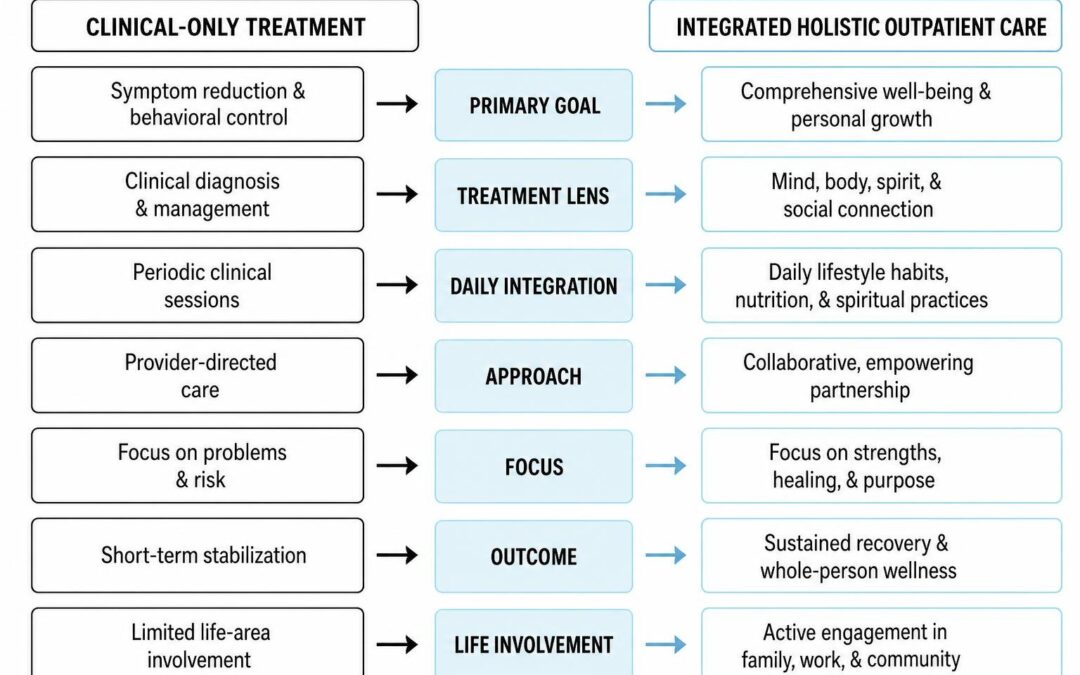
Understanding how whole-person healing enhances conventional clinical methods helps clients see why an integrative approach is so effective.
| Focus Area | Traditional Clinical Model | Integrated Whole-Person Model |
|---|---|---|
| Primary Goal | Symptom reduction & behavioral control | Comprehensive well-being & personal growth |
| Treatment Lens | Clinical diagnosis & management | Mind, body, spirit, and social connection |
| Daily Integration | Periodic clinical sessions | Daily lifestyle habits, nutrition, & spiritual practices |
| Long-Term Focus | Relapse prevention tools | Sustainable life balance, purpose, & community connection |
Science and Research Supporting Holistic Addiction Treatment
Complementary wellness practices are increasingly supported by clinical research. Studies published in medical journals show that approximately 70% of individuals in recovery report utilizing complementary health approaches—such as mindfulness, movement practices, nutritional adjustments, or stress-management techniques—to reinforce their ongoing sobriety. For deeper insight into evidence-based integrative practices, view Scientific research on complementary health approaches.
Research highlights that integrating physical wellness, mental health support, and robust social connections into recovery plans can reduce relapse rates significantly compared to clinical care alone. These approaches support neurobiological restoration, helping the brain rebuild neurotransmitter pathways damaged by chronic substance use while significantly lessening anxiety and depression. Clients seeking deeper insights can read more in the definitive guide to holistic mind body spirit wellness.
Addressing Co-Occurring Mental Health Issues and Trauma
Substance use disorder rarely exists in isolation. Co-occurring mental health conditions—such as anxiety, depression, or post-traumatic stress—frequently accompany addiction. A holistic approach recognizes that unaddressed trauma often drives substance use as a form of self-medication or coping.
By adopting a trauma-informed lens, our therapists gently walk with clients through the “Heal the Wounds” stage of our blueprint. Rather than re-traumatizing individuals, holistic outpatient care offers safe emotional regulation techniques, gentle counseling, and spiritual reassurance. To understand how trauma impacts recovery, explore why your trauma needs a holistic approach to healing.
Integrating Mind, Body, Spirit, and Medical Care
A truly effective outpatient recovery plan does not ask clients to choose between modern clinical science and holistic or spiritual growth. Instead, it weaves them into a unified experience centered on whole-person restoration.

Clients participating in our outpatient programs in Penn Hills or North Huntingdon receive structured behavioral therapy and relapse-prevention training, alongside spiritual encouragement, body-wellness strategies, and stress-reduction techniques tailored to their goals.
Accessing Outpatient Holistic Recovery Pittsburgh Care
One of the greatest benefits of outpatient holistic care is flexibility. Clients can receive high-quality care while continuing to live at home, care for family members, or maintain work commitments across Western Pennsylvania.
Outpatient care allows individuals to practice their new coping strategies immediately in their real-world environments. When a client learns a stress-reduction technique or processes an emotional boundary in counseling, they can apply it that very evening at home, building practical resilience step by step. Learn more about local resources through our faith-based recovery pittsburgh page.
Navigating Costs, Insurance, and Community Accessibility
Navigating care options should feel simple, transparent, and encouraging. Outpatient holistic and clinical services in Pennsylvania are frequently accessible through commercial health insurance plans and behavioral health benefits, following core principles outlined in the SAMHSA guidelines on integrated recovery support.
Because coverage details vary across different policies, we encourage individuals to contact Grace Recovery Services directly for a personalized assessment. Our team helps clarify plan benefits, explore local support services in Allegheny County and Westmoreland County, and map out an accessible path forward. Across Pittsburgh, Penn Hills, and Irwin, community resources also offer peer groups, wellness workshops, and support networks to ensure help is available to all who seek it.
The Role of Community, Family, and Faith-Based Support
Recovery flourishes in connection. Isolation often feeds substance use disorder, whereas genuine community fosters healing, accountability, and hope.

Family participation plays a vital role in long-term wellness. Through family counseling and educational support, loved ones learn how to establish healthy boundaries, restore broken trust, and offer constructive encouragement. For those who draw strength from faith, integrating Christian principles provides an enduring source of hope. Reconnecting with God’s love helps clients understand their inherent worth, transition out of shame, and rest in grace.
To explore faith-integrated healing further, read our guides on the whole person approach to faith-based trauma recovery and the holistic christian addiction help faith-based recovery guide.
Frequently Asked Questions About Holistic Addiction Healing
How does holistic recovery complement clinical addiction therapy?
Holistic care works alongside clinical counseling by addressing the physical, emotional, and spiritual dimensions of well-being that clinical sessions may not fully cover. While behavioral therapy builds cognitive coping skills, holistic practices focus on stress reduction, physical restoration, emotional regulation, and personal purpose, creating a balanced recovery strategy.
What financial and insurance options cover holistic outpatient services in Pittsburgh?
Many commercial insurance plans cover outpatient behavioral health counseling and structured outpatient programs. Coverage varies depending on your individual provider and plan structure. Contact Grace Recovery Services for a personalized review of your benefit options.
Why is faith integration important for holistic recovery?
For many individuals, faith offers a deep foundation of hope, identity, and forgiveness. Integrating Christian counseling helps clients step away from guilt and shame, grounding their healing in spiritual truth and unconditional love. You can learn more by reading about faith integrated recovery in pittsburgh where science meets spirit and our focused services for christian addiction recovery pittsburgh.
Conclusion
Recovery is a journey of restoring balance to the mind, body, and spirit. At Grace Recovery Services, our outpatient centers in the Penn Hills area of Pittsburgh and North Huntingdon are dedicated to walking alongside clients and their families across Western Pennsylvania. Through compassionate counseling, evidence-based practices, and faith-centered care, lasting transformation is entirely possible.
If you or someone you love is ready to explore whole-person outpatient healing, we invite you to reach out to our team today for a confidential, personalized assessment. Take your next step toward hope, strength, and renewed purpose, or explore practical encouragement through these comforting scriptures to help with addiction and reclaim your life.
This article was researched with AI and heavily edited by Stephen Luther for accuracy and relevance.
Stephen Luther is the Executive Director and Founder of Grace Christian Counseling, Grace Recovery Services, WPA Counseling, NuWell Online Counseling and Coaching, and NuWell Health. He holds a Master’s degree in Education from the University of Georgia and a Master’s degree in Marriage and Family Therapy from Duquesne University. He is a licensed professional counselor in Pennsylvania.
Since 1997, Steve has been helping children, adolescents, and adults overcome a wide range of emotional and relational challenges. He specializes in working with hurting families, including those with foster, adopted, or traumatized children. Steve uses Attachment-Based Therapy, Splankna Healing, and Therapeutic Parent Coaching to support healing and restoration.
This guide is for educational and spiritual encouragement and is not a substitute for personalized professional counseling. If you are in crisis, please reach out for immediate help.