
Why Holistic Mind Body Spirit Wellness Changes Everything About Healing
Holistic mind body spirit wellness is a whole-person approach to health that treats your physical, mental, emotional, and spiritual well-being as one deeply connected system — not separate problems to fix one at a time.
Quick answer for those searching for holistic mind-body-spirit wellness:
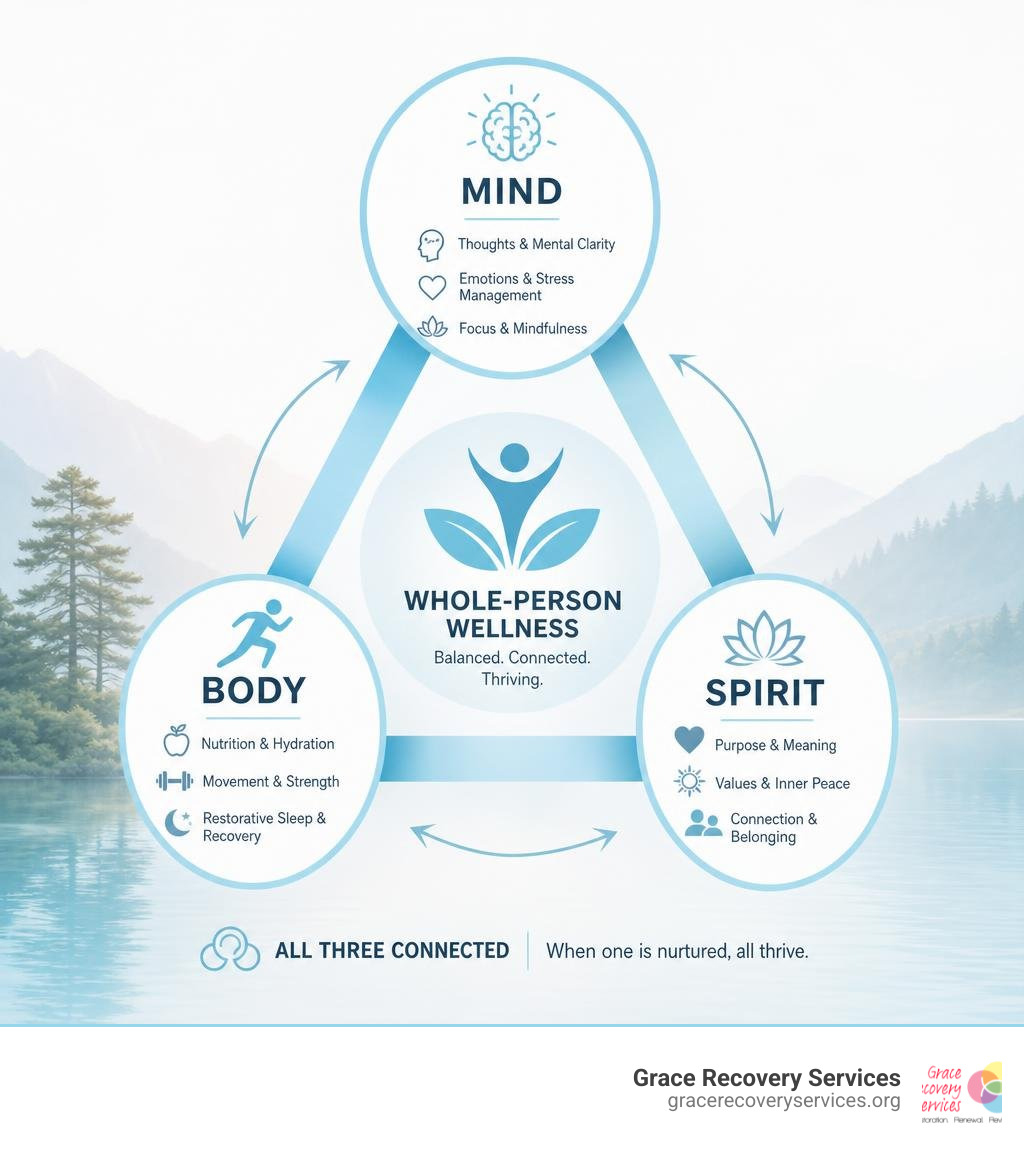
- Mind — Your thoughts, emotions, stress levels, and mental health
- Body — Your physical health, nutrition, movement, sleep, and nervous system
- Spirit — Your sense of purpose, faith, values, and connection to something greater than yourself
- The key insight — These three dimensions constantly influence each other. Healing one always affects the others.
Most of us learned to treat health in pieces. A headache means take a pill. Anxiety means manage your symptoms. Fatigue means sleep more. But this fragmented approach often misses the bigger picture.
The research is clear: when one area is out of balance, everything else feels it. Chronic stress triggers real physical symptoms. Poor sleep darkens mood and clouds thinking. A lost sense of purpose can quietly drain the will to take care of yourself at all.
At Grace Recovery Services, we see this whole-person reality every day in the lives of people walking through our doors in Western Pennsylvania. Someone struggling with substance use isn’t just dealing with a physical dependence — they’re carrying unresolved trauma, spiritual emptiness, relational wounds, and emotional pain that all need care and attention.
True healing asks us to look at all of it, together, with compassion.
Over 30% of U.S. adults now use some form of complementary or integrative health practice — from meditation to acupuncture to mindfulness — because people are recognizing that whole-person care works in ways that symptom-only treatment simply cannot.
This guide will walk you through what holistic wellness really means, what the science says, and how you can begin integrating these practices into your life — including how a faith-centered approach can be one of the most powerful anchors in lasting recovery.
Explore more about Holistic mind body spirit:
What is Holistic Mind Body Spirit Wellness?
To understand holistic mind body spirit wellness, it helps to look at how we define “health.” In conventional Western medicine, health is often defined simply as the absence of disease. If your bloodwork looks normal and your scans are clear, you are marked as healthy.
Holistic wellness, however, views health as a dynamic state of active alignment and vitality. It is a 360-degree perspective recognizing that we are multidimensional beings. When we ignore our emotional wounds or spiritual hunger, our physical bodies eventually pay the price.
This philosophy is not a modern trend. It has roots in ancient healing systems like Traditional Chinese Medicine and Ayurveda, which have emphasized harmony within the individual and with the environment for thousands of years. Today, modern integrative health models build upon these foundations by combining the best of clinical science with time-tested holistic modalities.
Rather than just chasing symptoms, a holistic approach seeks out the root causes of imbalance. For example, if you visit a doctor for chronic stomach pain, conventional medicine might focus solely on prescribing acid reducers. A holistic practitioner will certainly look at your diet, but they will also ask about your stress levels, your sleep habits, your emotional landscape, and whether you feel disconnected or unfulfilled in your daily life.
By prioritizing prevention, lifestyle adjustments, and patient empowerment, holistic wellness teaches you to become an active participant in your own healing journey. It acts as a supportive companion to conventional medicine, creating a comprehensive safety net for long-term health.
| Aspect | Conventional Medicine | Holistic Wellness Approach |
|---|---|---|
| Primary Focus | Managing and treating isolated symptoms or diseases | Restoring balance to the whole person (mind, body, spirit) |
| Treatment Methods | Pharmaceuticals, surgery, and acute clinical interventions | Nutrition, lifestyle changes, somatic therapies, spiritual practices, and counseling |
| Role of the Individual | Passive recipient of clinical treatment | Active partner and decision-maker in the healing process |
| Goal | Elimination of physical disease or symptom reduction | Optimal vitality, self-awareness, prevention, and deep peace |
Over 30% of American adults actively incorporate complementary health approaches into their lives because they realize that true healing is an inside-out process. When we provide our minds and bodies with the right environment, resources, and spiritual grounding, we unlock our natural, God-given capacity to repair and thrive. You can explore these fundamental connections further by reading about Understanding the foundations of holistic health.
The Science Behind the Mind-Body-Spirit Connection
While the concept of a holistic mind body spirit connection can sound abstract, it is actually backed by robust, fascinating science. Our thoughts, emotions, physical biology, and spiritual beliefs do not live in separate compartments; they are constantly communicating through a complex web of neural pathways, hormones, and chemical messengers.

One of the most direct physical pathways of this connection is the autonomic nervous system. When you experience chronic stress, worry, or unaddressed trauma, your brain triggers the sympathetic nervous system—often called the “fight-or-flight” response. This floods your body with stress chemistry, including cortisol and adrenaline.
Over time, elevated cortisol levels do more than just make you feel anxious; they actively suppress your immune signaling, increase systemic inflammation, raise your blood pressure, and disrupt your digestive system. This explains why chronic emotional stress so frequently manifests as physical ailments like tension headaches, chronic fatigue, or autoimmune flare-ups.
Conversely, when we engage in practices that quiet the mind—such as deep breathing, prayer, or quiet reflection—we activate the parasympathetic nervous system, or the “rest-and-digest” response. This shift immediately alters our biology: heart rate slows, blood pressure decreases, muscle tension melts away, and the body finally redirects its energy toward cellular repair, digestion, and immune defense.
Another incredible scientific link is the gut-brain axis. Often called our “second brain,” the gut contains hundreds of millions of neurons and produces about 95% of the body’s serotonin, a key neurotransmitter responsible for regulating mood and emotions. The communication between your gut and your brain is a two-way street. A troubled gut can send distress signals to the brain, triggering anxiety or depression, while a stressed brain can easily disrupt gut motility and microbiome balance.
This biochemical loop highlights why nutrition and physical gut health are vital components of mental health treatment.
In the field of trauma-informed care, we also understand that the body remembers what the conscious mind tries to forget. Unresolved emotional pain, grief, and trauma are often stored physically in our muscles, fascia, and nervous system mapping.
At Grace Recovery Services, we recognize that true healing from substance use disorders and co-occurring trauma requires addressing these physiological imprints. Through evidence-based somatic approaches, we help clients gently release this stored survival energy so their nervous systems can return to a state of safety.
To dive deeper into how these biological systems interact with our inner lives, consider exploring The Core Principles of Holistic Health. For those navigating the path of recovery, understanding these connections is a vital step, as detailed in our guide on The Whole Person Approach to Faith-Based Trauma Recovery.
Core Pillars of a Balanced Holistic Lifestyle
Living a holistic lifestyle isn’t about achieving a state of flawless perfection; it is about cultivating awareness, intention, and gentle balance in your daily habits. Think of your health as a beautiful, sturdy structure supported by distinct, essential pillars. If one pillar is neglected, the entire structure begins to lean.
By treating our daily habits as conscious signals of safety and care to our minds and bodies, we build a resilient framework that can withstand life’s inevitable storms.
Nurturing the Body through Physical Wellness
Our physical bodies are the earthly temples we inhabit, and they require consistent, loving maintenance to function as they were designed. Nourishing your body is one of the most direct ways to support your mental and spiritual clarity.

Physical wellness begins with intentional nutrition. Food is not merely fuel; it is information that tells your cells how to behave. Transitioning toward a diet rich in whole, nutrient-dense, and living foods helps reduce internal inflammation and supports healthy brain chemistry. Proper hydration is equally vital, as even mild dehydration can impair cognitive function, drain your energy, and negatively impact your mood.
In addition to what we put into our bodies, we must consider how we move them. The U.S. Department of Health and Human Services recommends aiming for at least 150 minutes of moderate-intensity exercise or physical activity each week. Regular movement releases endorphins—our body’s natural mood lifters—improves cardiovascular health, and assists in lymphatic drainage.
Interestingly, a survey revealed that 78% of American exercisers cite mental and emotional well-being as their primary motivation for staying active, proving that physical movement is deeply tied to emotional peace.
Finally, we cannot overlook the healing power of rest. Adults generally require 7 to 9 hours of quality sleep each night. During deep sleep, your brain flushes out metabolic waste, muscles repair themselves, and your nervous system resets. Prioritizing a consistent sleep schedule and a calming bedtime routine is a non-negotiable step in any holistic recovery plan.
Cultivating Peace with a Holistic Mind Body Spirit Approach
Nurturing your mind involves developing a compassionate relationship with your thoughts, emotions, and mental patterns. In a world, finding mental clarity requires active, daily practice.
Mindfulness and meditation are excellent tools for emotional regulation. By taking time to sit quietly and observe your thoughts without judgment, you create a healthy space between yourself and your reactions. This practice helps break repetitive, negative cognitive loops and builds emotional resilience.
Other powerful strategies for mental peace include:
- Journaling: Writing down your thoughts, fears, and victories acts as an emotional release valve and helps you identify triggers or negative self-talk.
- Deep Breathwork: Conscious breathing patterns—such as inhaling for four counts, holding for four, and exhaling for six—instantly signal your nervous system to shift out of stress mode.
- Somatic Practices: Simple exercises like progressive muscle relaxation, grounding feet on the earth, or gentle stretching help release physical tension linked to emotional distress.
- Cognitive Restructuring: Learning to gently challenge and replace unhelpful thoughts with balanced, realistic perspectives.
To discover practical ways to integrate these mental and emotional strategies into a unified plan, you can read more about How to Balance Mind, Body, and Spirit Naturally.
Strengthening the Soul and Spirit in Recovery
The spiritual dimension of wellness is what gives our lives deep meaning, direction, and a sense of belonging. At Grace Recovery Services, we believe that spiritual health is the ultimate anchor for lasting recovery. When we are spiritually disconnected, we often experience a profound inner emptiness—a “soul sickness”—that many try to temporarily numb with substances or harmful behaviors.
Spiritual wellness is not about rigid rules; it is about cultivating a living, breathing connection with God, discovering your unique purpose, and aligning your actions with your deepest values. People with strong faith or spiritual beliefs frequently report feeling a deep sense of wholeness, joy, and focus, even when navigating difficult seasons. Many individuals recovering from mental health challenges and addiction credit their faith as the primary force that carried them through their darkest hours.
We can nurture our spirits through daily prayer, reading scripture, and spending quiet time in nature, where we can marvel at the beauty of creation. Additionally, engaging in altruistic behaviors—such as volunteering, serving our neighbors in Pittsburgh or North Huntingdon, and practicing generosity—is scientifically associated with a greater sense of life purpose.
When we shift our focus toward helping others, we experience a beautiful revival of our own spirits. To explore how spiritual growth and clinical science work hand-in-hand during recovery, we invite you to read The Soul Searcher’s Guide to Faith-Based Recovery.
Integrating Holistic Mind Body Spirit Practices Daily
The secret to a vibrant, holistic life lies in your daily routine. Small, consistent actions build a powerful momentum over time.
A balanced day might begin with a morning routine of deep breathing, scripture reading, and a glass of water before looking at any screens. Throughout the day, you can take short “micro-breaks” to stretch, walk outdoors, or practice brief moments of gratitude. In the evening, a mindful wind-down routine—such as dimming the lights, journaling, and praying—signals to your body that it is safe to rest.
Integrating these practices also means learning to listen to your body’s quiet whispers before they turn into screams. Identifying imbalances early can prevent burnout and relapse.
Warning signs of holistic imbalance include:
- Physical: Chronic muscle tension, unexplained fatigue, digestive issues, or changes in sleep patterns.
- Mental: Persistent brain fog, irritability, racing thoughts, or feeling constantly overwhelmed.
- Spiritual: A sense of apathy, feeling disconnected from God, loss of purpose, or feelings of isolation.
When you notice these signs, treat them as gentle invitations to slow down, adjust your habits, and seek supportive care.
Frequently Asked Questions about Holistic Wellness
What is the difference between holistic health and conventional medicine?
Conventional medicine typically focuses on identifying specific diseases and managing symptoms, often using targeted pharmaceutical or surgical interventions. It is highly effective for acute care and emergencies.
Holistic health, on the other hand, views the individual as an integrated system. It seeks to identify the root causes of imbalances, emphasizes prevention, and empowers the individual to make sustainable lifestyle changes. Rather than replacing conventional medicine, holistic care works best as a complementary partner, ensuring that physical, emotional, and spiritual needs are met simultaneously.
How does spirituality impact physical and mental healing?
Spirituality provides a profound foundation for hope, resilience, and comfort during difficult times. Believing in a loving God and a higher purpose helps reduce the anxiety of trying to control every outcome.
Physiologically, spiritual practices like prayer and meditation promote relaxation, lower stress hormones, and reduce systemic inflammation. Cultivating a strong spiritual life also fosters a deep sense of self-worth and connection, helping individuals build healthier coping mechanisms and a supportive community in recovery.
How can I find a qualified holistic practitioner in Western Pennsylvania?
When seeking holistic support, look for licensed professionals who hold respected credentials in their fields and prioritize a trauma-informed, whole-person approach. In Western Pennsylvania, there are wonderful, dedicated resources available for those seeking integrated care.
For instance, if you are looking to address stored emotional trauma, finding specialized therapists is a great step; you can search for credentialed EMDR Therapists in Penn Hills, PA to find practitioners who understand the deep connection between mind and body. Always ask potential providers about their experience, their philosophy of care, and how they integrate spiritual or faith-based preferences into their treatment plans.
Conclusion
Embarking on a journey toward holistic mind body spirit wellness is an act of courage, hope, and self-compassion. It is a commitment to stop managing your life in pieces and to begin honoring the beautifully complex, whole person God created you to be.
At Grace Recovery Services, we understand that real, lasting restoration requires more than just addressing physical habits. Our outpatient programs—including our Intensive Outpatient Program (IOP) and Christian counseling services in Pittsburgh (Penn Hills) and North Huntingdon—are designed to wrap you in a compassionate, trauma-informed environment where science and spirit meet.
Whether you are seeking recovery from substance use, healing from past trauma, or simply a renewed sense of purpose, you do not have to walk this path alone. There is grace for your journey, and a vibrant, balanced life is entirely possible.
We invite you to take a gentle next step toward wholeness today. To learn more about our faith-integrated approach and our outpatient services in Westmoreland County and Allegheny County, explore our guide on Faith-Integrated Recovery in Pittsburgh: Where Science Meets Spirit or visit our Grace Recovery Services Outpatient Programs page. Reach out to our compassionate team today, and let us support you on your path to lasting renewal.
This article was researched with AI and heavily edited by Stephen Luther for accuracy and relevance.
Stephen Luther is the Executive Director and Founder of Grace Christian Counseling, Grace Recovery Services, WPA Counseling, NuWell Online Counseling and Coaching, and NuWell Health. He holds a Master’s degree in Education from the University of Georgia and a Master’s degree in Marriage and Family Therapy from Duquesne University. He is a licensed professional counselor in Pennsylvania.
Since 1997, Steve has been helping children, adolescents, and adults overcome a wide range of emotional and relational challenges. He specializes in working with hurting families, including those with foster, adopted, or traumatized children. Steve uses Attachment-Based Therapy, Splankna Healing, and Therapeutic Parent Coaching to support healing and restoration.
This guide is for educational and spiritual encouragement and is not a substitute for personalized professional counseling. If you are in crisis, please reach out for immediate help.