
Why Starting Each Day with Sober Scriptures Matters
Sober scriptures for daily strength are one of the most practical tools a person in recovery can reach for first thing in the morning. Whether you’re in the early days of sobriety or years into your journey, God’s Word offers something no willpower alone can provide — a steady anchor when everything inside feels unsteady.
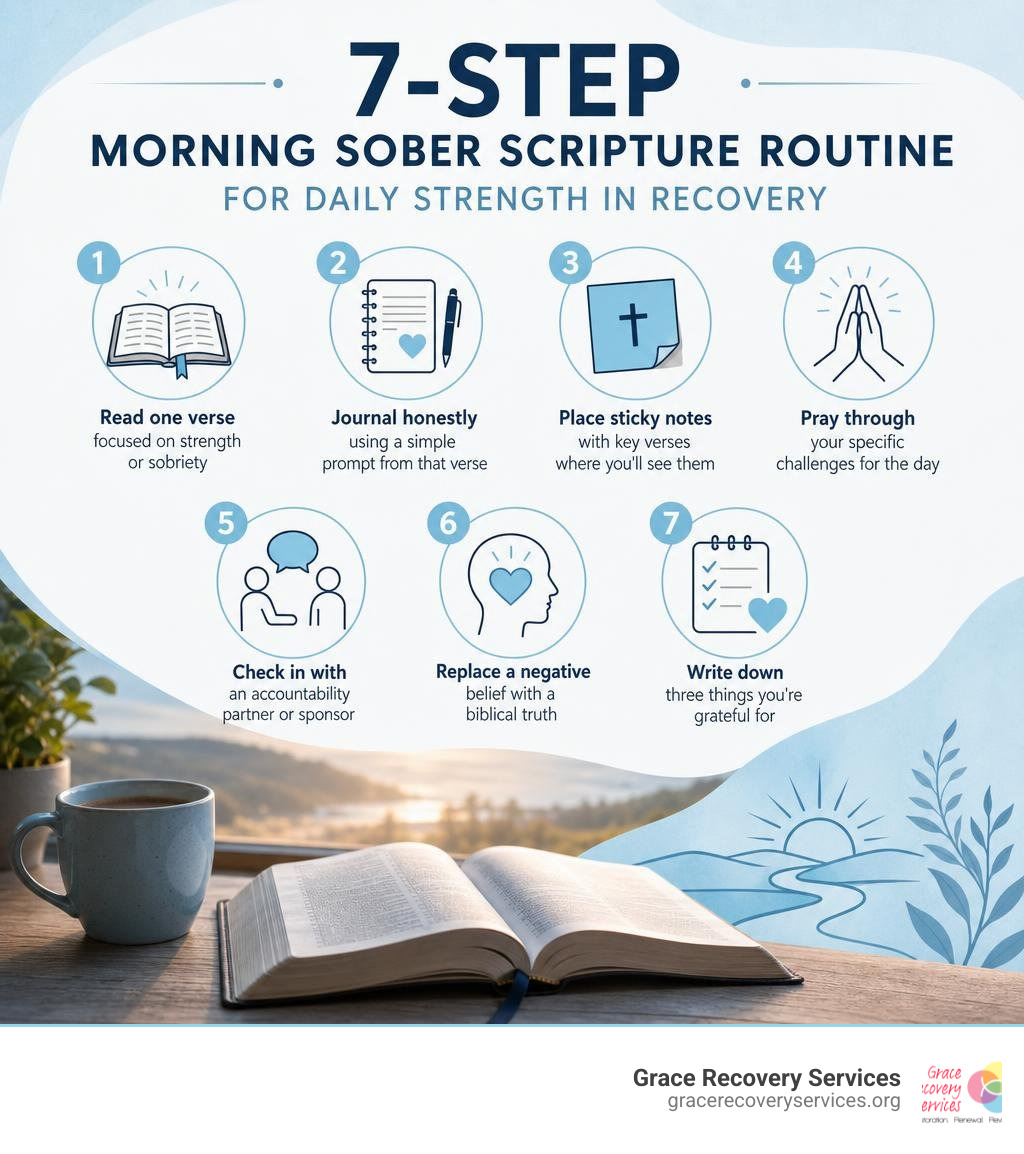
Here are 7 quick ways to start your day with sober scripture strength:
- Read one verse focused on strength or sobriety
- Journal honestly using a simple prompt from that verse
- Place sticky notes with key verses where you’ll see them
- Pray through your specific challenges for the day
- Check in with an accountability partner or sponsor
- Replace a negative belief with a biblical truth
- Write down three things you’re grateful for
Recovery is hard. The research is clear: over 20 million people in the U.S. are living with substance use disorders, and far too many face it alone. But those who weave spiritual practice into their daily routine — including regular scripture reading — are more likely to stay the course and maintain long-term sobriety.
At Grace Recovery Services in Western Pennsylvania, we see this reality every day. Faith isn’t a replacement for evidence-based treatment. It’s a partner to it. And the Bible, used daily, can help shift your mind from fear and shame toward hope and resilience.
As Romans 5:3-5 reminds us, “suffering produces perseverance; perseverance, character; and character, hope.” That progression — from struggle to hope — is exactly what recovery looks like lived out one morning at a time.
Know your sober scriptures daily strength terms:
Why Sober Scriptures Daily Strength Matters in Recovery

In the quiet hours of the morning, before the noise of the world takes over, your mind is highly receptive. For someone navigating the journey of recovery, this is a critical window. Relying solely on raw willpower to resist cravings or manage stress often leads to exhaustion. True, lasting change requires a deeper transformation of the heart and mind.
Integrating sober scriptures daily strength into your morning routine serves as a powerful shield against spiritual and psychological warfare. Addiction thrives in isolation, shame, and chaos. By starting your morning with God’s promises, you cultivate mental clarity and build emotional resilience.
From a clinical and trauma-informed perspective, addiction often stems from deep-seated wounds and negative self-talk. Scripture acts as a gentle, non-judgmental mirror that helps you dismantle the lies of shame and replace them with divine truth. When you read that you are fearfully and wonderfully made, or that God has a plan to give you a future and a hope, you are actively rewiring your thought patterns.
Understanding the 10 Undeniable Reasons Why Sober Bible Verses Work helps us see that scripture is not a collection of magic spells; rather, it provides living promises that ground us in reality. In our outpatient programs in Pittsburgh and North Huntingdon, we emphasize that spiritual practices significantly aid recovery. In fact, research shows that individuals who include spiritual practices in their treatment are far more likely to complete their programs and maintain long-term sobriety.
When you surrender your struggles to a Higher Power, you tap into a strength that transcends your physical limitations. As explored in Finding Strength in Sobriety: God’s Power, Prayer, and the Holy Spirit, true healing occurs when we allow the Holy Spirit to guide our daily lives, transforming our vulnerabilities into sources of spiritual power.
7 Quick Ways to Integrate Scripture into Your Morning Routine
Developing daily habits doesn’t have to be overwhelming. You don’t need to spend hours studying theology to experience the life-changing power of God’s Word. Consistency is far more valuable than intensity. By dedicating just ten to fifteen minutes each morning to quiet reflection, you can establish a spiritual baseline that protects your sobriety throughout the day.
At Grace Recovery Services, we encourage our clients to build a structured yet simple morning check-in. This routine helps you anticipate triggers, manage anxiety, and remain spiritually alert.
If you are looking for a starting point, exploring Sober Strength: Bible Verses – 7 Encouraging Picks can give you a solid foundation of scriptures specifically suited for the unique trials of recovery. Let’s look at seven practical, actionable ways to bring these truths into your morning.
1. Start with a Sober Scriptures Daily Strength Verse
The very first thing you do when you wake up sets the tone for the rest of your day. Before you reach for your phone to check social media or read the news, open your Bible or a recovery devotional. Focus on a single, powerful verse that speaks directly to your need for strength, peace, and self-control.
Two of the most foundational verses for recovery include:
- Philippians 4:13: “I can do all things through Christ who strengthens me.” This is a vital reminder that you do not have to carry the weight of recovery on your own shoulders. Your strength comes from above.
- Isaiah 41:10: “So do not fear, for I am with you; do not be dismayed, for I am your God. I will strengthen you and help you; I will uphold you with my righteous right hand.” This scripture directly combats the profound loneliness that often accompanies early sobriety.
By grounding your mind in these truths, you create a spiritual buffer against the day’s stressors. For a curated list of passages to help you start, check out Bible Verses That Provide Strength in Recovery to build your daily reading list.
2. Practice the “Take Off the Mask” Journaling Method
At Grace Recovery Services, our core approach to clinical care is our Counseling Blueprint. This is a four-stage healing journey designed to address the root causes of substance use disorders and trauma. The very first stage of this blueprint is Take Off the Mask.
Taking off the mask means practicing radical emotional honesty with yourself and with God. Addiction forces people to hide behind a facade of “I’m fine,” concealing their pain, fear, and cravings from those who love them. In your morning journal, write down exactly how you feel. Are you anxious? Are you angry? Are you experiencing a physical craving?
Writing these feelings down without judgment strips them of their power. Combine this emotional honesty with scriptures that remind you of God’s deep compassion for your struggles. God Is Close to the Brokenhearted and These Verses Prove It. When you admit your vulnerability, you aren’t showing weakness; you are opening the door for God’s grace to heal your wounds.
3. Use Sticky Notes for Visual Reminders
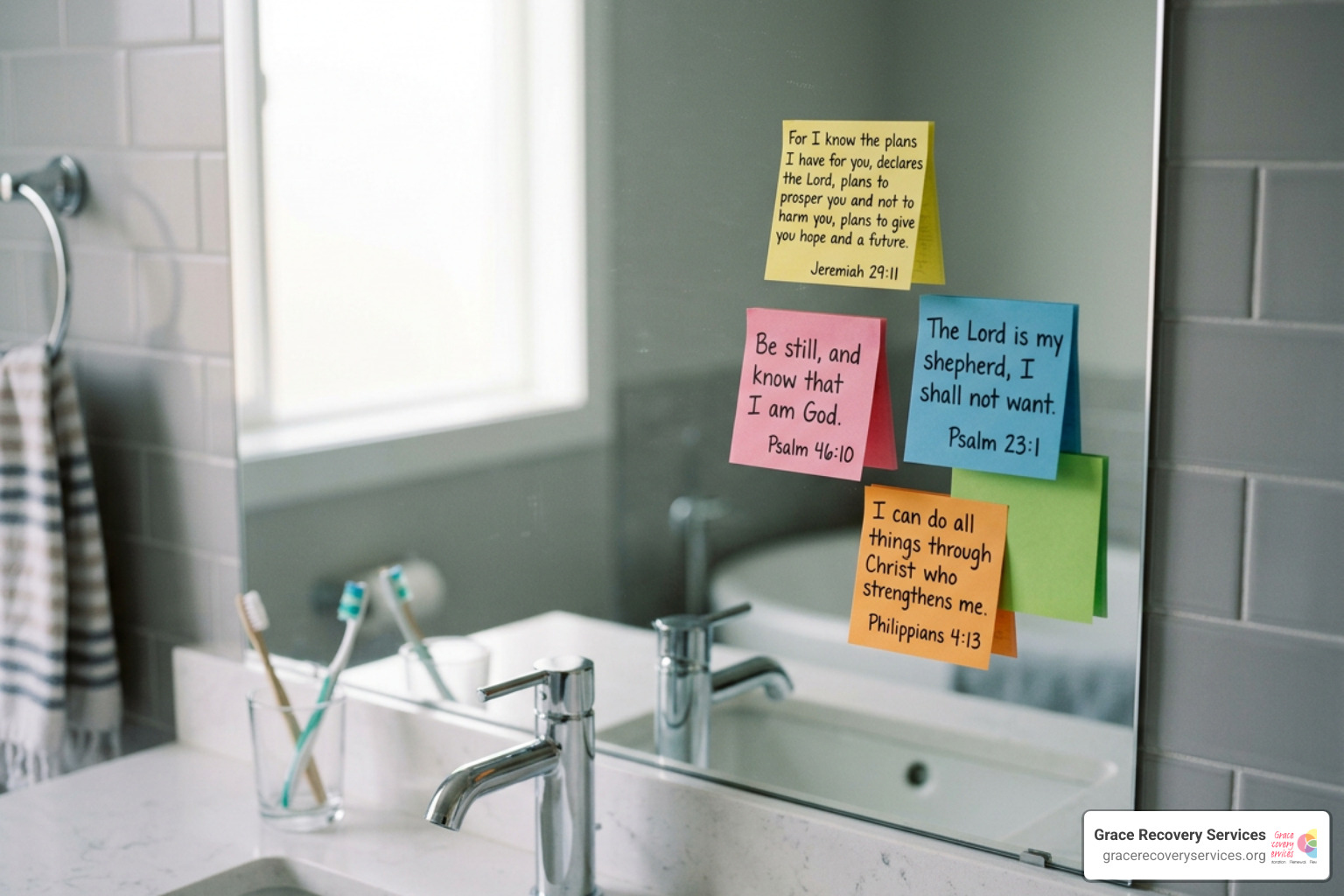
Relapse prevention is all about creating positive, visual cues in your environment that redirect your thoughts when temptation strikes. Cravings can be incredibly intense, but they are also temporary. If you have scripture verses placed strategically around your home, they can serve as immediate spiritual speed bumps.
Write down key verses on sticky notes and place them in high-visibility areas, such as:
- Your bathroom mirror
- The refrigerator door
- Your car dashboard
- The edge of your computer monitor
A wonderful verse to keep in your line of sight is 1 Corinthians 10:13, which promises that God will not let you be tempted beyond what you can bear and will always provide a way of escape. For more daily guidance, look at these 10 Sober-Minded Bible Verses to Guide You Today to keep your mind sharp and focused on your goals.
4. Pray Through Your Daily Challenges
Prayer is not about reciting empty formulas; it is an active, conversational surrender. Once you have read your daily scripture, turn it into a personal prayer. Speak to God with the same honesty you used in your journal.
As James 5:16 points out, “The prayer of a righteous person is powerful and effective.” When you pray, you shift the battle of recovery from your own limited human hands into God’s sovereign hands. If you are facing a difficult meeting, a stressful family dynamic, or a known trigger today, ask God specifically for the grace to navigate that moment with a sober mind.
For inspiration on how to maintain this discipline even during spiritually dry seasons, you can read reflections from other believers walking this path, such as those found in DR – May 1, 2026 – The Wandering Enigma. Consistent, daily prayer builds a lasting spiritual connection that sustains you when times get tough.
5. Connect with an Accountability Partner
While your personal relationship with God is the foundation of your spiritual growth, faith was never meant to be lived out in isolation. Community is one of the most vital components of long-term sobriety.
1 Corinthians 15:33 warns us that “bad company corrupts good character.” In recovery, this means we must intentionally step away from old relationships that triggered our substance use and actively build a supportive, faith-filled community.
Make it a habit to text your daily sober scripture or a brief reflection to an accountability partner, sponsor, or a friend from your recovery group. This simple act keeps you connected, breaks the cycle of isolation, and provides mutual encouragement. For a deeper look into faith-based support structures, check out our Celebrate Recovery Bible Verses Complete Guide to see how scripture and community work hand-and-hand.
6. Replace Toxic Beliefs with biblical Truth
The second and third stages of our Counseling Blueprint are Heal the Wounds and Remove the Toxins. Over the course of an active addiction, your mind becomes filled with toxic beliefs—lies like “I am a failure,” “I will always be an addict,” or “I am beyond forgiveness.”
To maintain sobriety, you must identify these unhelpful beliefs and move to the final stage of our blueprint: Replace with Truth. When a negative thought arises in the morning, immediately counter it with a biblical promise.
- If the lie says: “You are too broken to heal.”
- Replace it with the truth of 2 Corinthians 5:17: “Therefore, if anyone is in Christ, the new creation has come: The old has gone, the new is here!”
To help you with this cognitive reframing process, we have compiled resources to help you Renew Your Mind with These Powerful Bible Verses, giving you the specific tools needed to dismantle toxic thinking patterns.
7. End Your Morning with a Gratitude List
A sober mind is a grateful mind. Active addiction often makes us hyper-focused on what we lack, leading to resentment, self-pity, and anxiety—all of which are major triggers for relapse. Ending your morning routine by writing down three specific things you are grateful for shifts your perspective from scarcity to abundance.
Your gratitude list doesn’t have to be grand. You can be grateful for a warm cup of coffee, a safe place to sleep, or another day of clean living. This practice builds positive assets in your mental health bank.
As discussed in the community reflections on Daily Reflections & Daily Readings #2 – Motivation – Talking Sober, unconditional gratitude is a spiritual discipline. When we choose to focus on the good things God has provided, we ground ourselves in the present moment, making it much easier to walk out our recovery one day at a time.
How Scripture Supports Long-Term Sobriety and Healing
Sustaining long-term sobriety requires a holistic approach that heals the mind, body, and spirit. While detox and clinical therapies address the physical and psychological aspects of substance use disorders, spiritual practices address the deep spiritual void that addiction often leaves behind.
In Western Pennsylvania—from the neighborhood of Penn Hills in Pittsburgh to the quiet streets of North Huntingdon and Westmoreland County—we help clients rebuild their lives on a foundation of faith. Our trauma-informed, outpatient care is designed to honor each client’s unique story while providing them with the clinical and spiritual tools necessary for lasting restoration.
Scripture is a vital part of this healing process. It provides a roadmap for rebuilding broken relationships, learning self-control, and discovering your divine purpose. When you read the Bible regularly, you begin to see your recovery not as a punishment, but as a sacred journey of transformation.
In The Soul Searcher’s Guide to Faith-Based Recovery, we explore how aligning your personal recovery goals with biblical principles fosters profound spiritual growth. Additionally, as shown in the daily meditations of DR – July 12, 2025 – The Wandering Enigma, practicing humility and submitting our lives to God’s care daily is what ultimately keeps us sober, safe, and spiritually alive.
Frequently Asked Questions About Faith-Based Recovery
How Can I Personalize Sober Scriptures Daily Strength for My Triggers?
Personalizing scripture study means finding specific verses that address your unique triggers, whether those are anxiety, loneliness, anger, or physical cravings. When you identify a trigger, search for scriptures that speak directly to that emotion.
For example, if your trigger is social anxiety, focus on verses about God’s peace and presence. If your trigger is resentment, study passages about forgiveness and grace. You can learn more about how to tailor your study by reading Bible Verses for Addicts: 7 Simple Steps to Encouragement, which offers a step-by-step guide to making the Bible a highly personalized tool for your recovery.
Do faith-based recovery programs incorporate scripture into clinical treatment?
Yes, reputable faith-based recovery programs seamlessly integrate biblical principles with evidence-based clinical therapies. At Grace Recovery Services, our Christian counseling, intensive outpatient programs (IOP), and partial hospitalization programs (PHP) utilize clinical modalities like Cognitive Behavioral Therapy (CBT) alongside spiritual care.
This integrated approach ensures that you receive top-tier professional mental health treatment while also growing in your faith. To explore this integration further, read Higher Power, Higher Purpose: biblical principles for addiction to see how clinical excellence and faith work together for your healing.
What are the best Bible verses for overcoming anxiety and temptation in early recovery?
Early recovery is often marked by intense emotional swings, anxiety, and strong temptations. Having a few go-to scriptures memorized can help you find immediate peace when your mind begins to race.
Some of the most encouraging passages include:
- Philippians 4:6-7: “Do not be anxious about anything, but in every situation, by prayer and petition, with thanksgiving, present your requests to God. And the peace of God, which transcends all understanding, will guard your hearts and your minds in Christ Jesus.”
- 1 Corinthians 10:13: Reassuring you of God’s faithfulness during moments of temptation.
For a comprehensive list of verses to keep in your recovery toolkit, take a look at our guide on Bible Verses Overcoming Addiction: 10 Encouraging Scriptures.
Conclusion
The journey of recovery is not one you have to walk alone or in your own strength. By starting each morning with sober scriptures daily strength, you invite God’s grace, power, and peace into your day, building a foundation that can withstand any storm.
At Grace Recovery Services, we are deeply committed to walking alongside you on this path of restoration, renewal, and revival. Our outpatient-only services in Pittsburgh (Penn Hills area) and North Huntingdon, PA, are designed to provide compassionate, non-judgmental, trauma-informed care. Through our unique Counseling Blueprint, we help you take off the mask, heal your emotional wounds, remove toxic beliefs, and replace them with the life-giving truth of God’s Word.
If you or a loved one in Western Pennsylvania is struggling with a substance use disorder or co-occurring trauma, please know that hope and healing are within reach. Learn more about our faith-based recovery services and take the first step toward a renewed, sober life today.
This article was researched with AI and heavily edited by Stephen Luther for accuracy and relevance.
Stephen Luther is the Executive Director and Founder of Grace Christian Counseling, Grace Recovery Services, WPA Counseling, NuWell Online Counseling and Coaching, and NuWell Health. He holds a Master’s degree in Education from the University of Georgia and a Master’s degree in Marriage and Family Therapy from Duquesne University. He is a licensed professional counselor in Pennsylvania.
Since 1997, Steve has been helping children, adolescents, and adults overcome a wide range of emotional and relational challenges. He specializes in working with hurting families, including those with foster, adopted, or traumatized children. Steve uses Attachment-Based Therapy, Splankna Healing, and Therapeutic Parent Coaching to support healing and restoration.
This guide is for educational and spiritual encouragement and is not a substitute for personalized professional counseling. If you are in crisis, please reach out for immediate help.