
Why Finding the Right Western PA Trauma Rehab Can Change Everything
Western PA trauma rehab encompasses a wide range of programs designed to help people heal from both the physical and emotional wounds that trauma leaves behind. Understanding the impact of these experiences is the first step toward recovery, as noted by SAMHSA. If you or someone you love is searching for the right fit, here is a quick overview of the outpatient options available:
Quick Answer: Western PA Outpatient Trauma Rehab Options at a Glance
| Type of Care | What It Is | Best For |
|---|---|---|
| Intensive Outpatient (IOP) | Therapy 3-5 days/week, 3 hrs/day | Trauma, PTSD, co-occurring addiction |
| Outpatient Program (OP) | 1-2 days/week ongoing support | Maintaining stability and long-term recovery |
Trauma is not a single experience. It can be physical — a serious accident, a surgical crisis, or a spinal cord injury. Or it can be emotional — childhood wounds, loss, violence, or years of chronic stress that quietly reshape how a person thinks, feels, and connects with others.
In Western Pennsylvania, both types of trauma are well served by a growing network of specialized programs. Major health systems provide world-class care for physical injuries. And a growing number of behavioral health providers — including faith-based centers like Grace Recovery Services — offer trauma-informed outpatient care that addresses the invisible wounds: PTSD, anxiety, depression, and the substance use that often follows unresolved trauma.
Healing is possible. But the path looks different for each person.
This guide is here to help you understand your options — so you can find the care that truly fits where you are right now.
Understanding the Landscape of Western PA Trauma Rehab
When we talk about Western PA trauma rehab, we are looking at a landscape that is as varied as the rolling hills of the Laurel Highlands. For many in our community, trauma doesn’t arrive alone; it often brings along uninvited guests like substance use or chronic anxiety. Research shows that addiction and emotional wounds frequently go hand-in-hand. When someone experiences a traumatic event, the brain’s natural response is to seek safety—and sometimes, that “safety” is found temporarily in a substance.
Moving beyond the initial crisis requires more than just a “pull yourself up by your bootstraps” mentality. It requires specialized behavioral health services that recognize how trauma changes the brain. In the Pittsburgh and North Huntingdon areas, we have seen a shift toward Trauma-Informed Care. This approach doesn’t ask, “What is wrong with you?” but rather, “What happened to you?” By creating a safe environment where clients feel heard and respected, we can begin the work of restoration.
Distinguishing Psychological Recovery from Physical Healing
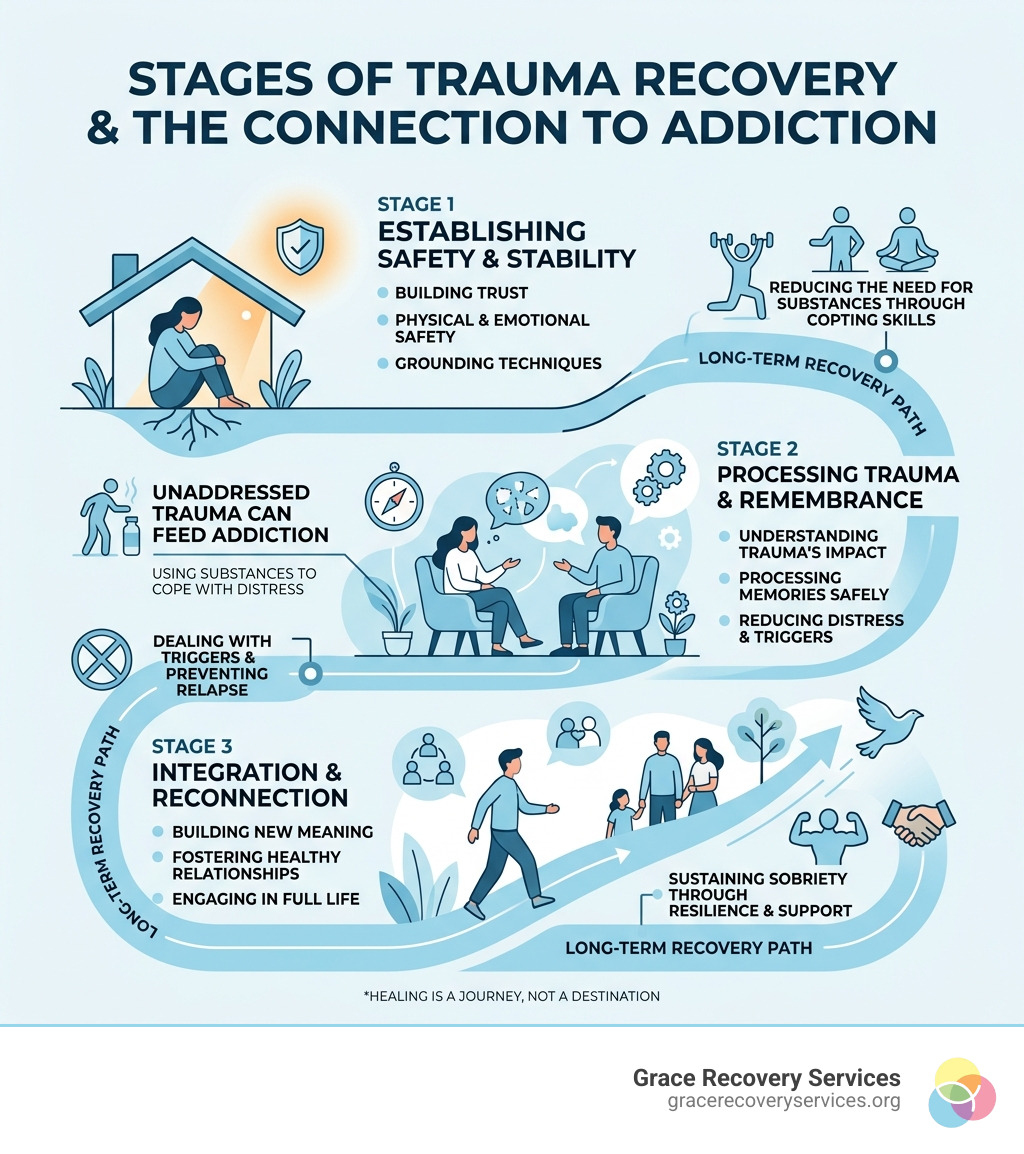
It is important to understand that recovery often happens in stages. If you’ve been in a major car accident, your first stop is likely for emergency medical care. Professionals are incredible at fixing broken bones, managing spinal injuries, and ensuring you are physically safe.
However, once the physical wounds begin to close, the “invisible wounds” often start to surface. This is where psychological recovery begins. While physical recovery focuses on mobility, a trauma-informed outpatient center focuses on emotional regulation and healing the nervous system. Understanding the nuances of PTSD vs. Anxiety Disorders is vital here. While anxiety can feel like a general sense of dread, PTSD is often characterized by intrusive memories and a constant state of “high alert.” Both require specialized care, but the approach to healing the heart is very different from the approach to healing a fracture.
Levels of Outpatient Care in the Pittsburgh Region
Not everyone needs to leave home to find healing. In fact, many people find that staying connected to their community and family while receiving treatment is the most effective path. Western Pennsylvania offers several flexible levels of outpatient support:
- Intensive Outpatient (IOP): This involves three hours of therapy, three to five days a week. It’s perfect for balancing recovery with work or family commitments in the Penn Hills or Irwin areas.
- Outpatient Program (OP): This is lower-intensity support, often meeting once or twice a week, focused on maintaining long-term stability.
These programs are supported by a rich network of community-based support groups across Westmoreland and Allegheny Counties, ensuring that no one has to walk the path of recovery alone.
Evidence-Based and Innovative Therapies
In Western PA trauma rehab, we don’t just rely on “talk therapy.” We use a toolkit of evidence-based practices that have been proven to help the brain re-process traumatic memories.
Cognitive Behavioral Therapy (CBT) is a cornerstone of our work, helping clients identify and change the negative thought patterns that trauma often creates. We also look to therapies like Eye Movement Desensitization and Reprocessing (EMDR), which helps the brain “file away” traumatic memories so they no longer feel like they are happening in the present moment. Dialectical Behavior Therapy (DBT) is another powerful tool, especially for those struggling with intense emotions or self-harming behaviors. At Grace Recovery Services, we blend these clinical standards with a heart of compassion, ensuring our clients receive the best of modern science and spiritual care.
Modern Approaches to Trauma Recovery
Trauma doesn’t just live in our thoughts; it lives in our bodies. Have you ever felt your heart race or your stomach tie in knots when you’re stressed? That’s your body remembering trauma. Modern recovery includes grounding techniques—simple exercises to bring you back to the “here and now”—and somatic experiencing, which focuses on releasing the physical tension stored in the nervous system.
Mindfulness-based stress reduction is also a key component. By learning to observe our thoughts without judgment, we can lower our overall stress levels and improve our ability to handle life’s challenges.

Specialized Support for Unique Populations
We recognize that trauma looks different for everyone. A veteran returning to civilian life in Pittsburgh faces unique hurdles compared to a first responder who experiences secondary trauma daily on the job. Women often require gender-specific spaces where they feel safe to share experiences of domestic or emotional trauma.
Furthermore, many of our neighbors in Western PA struggle with Co-Occurring Treatment needs. This means they are dealing with both a mental health challenge (like PTSD) and a substance use disorder simultaneously. You cannot treat one without the other; they are two sides of the same coin. By addressing both at once, we provide a much higher chance for lasting revival.
A Holistic Approach to Healing Mind, Body, and Spirit
We believe that a person is more than just a diagnosis. True healing requires a holistic approach—treating the whole person. This starts with the environment. Our offices in Penn Hills and North Huntingdon are designed to be “sanctuaries”—peaceful spaces where the “noise” of the world fades away.

Nutrition and movement also play a massive role in how we feel. When we nourish our bodies with good food and gentle movement, like yoga or walking through our beautiful local parks, we give our brains the fuel they need to heal. Experiential therapy—which might include anything from therapeutic drumming to art—allows clients to express things that words simply cannot capture.
Integrating Faith in Western PA Trauma Rehab
For many in Western Pennsylvania, faith is the foundation of their lives. We believe that spiritual restoration is a vital piece of the recovery puzzle. Our Christian counseling isn’t about judgment; it’s about the promise of redemption found in biblical principles.
We walk with our clients as they explore Faith-Based Trauma Recovery. This involves looking at trauma through the lens of hope and understanding that we are “fearfully and wonderfully made.” By integrating spiritual truths with clinical excellence, we help clients find a deeper sense of purpose and a stronger foundation for their sobriety.
The Role of Family and Community in Recovery
Trauma doesn’t just affect the individual; it ripples through families and friendships. Often, there are relational wounds that need tending. We encourage family therapy sessions to help loved ones understand the nature of trauma and addiction. This isn’t about pointing fingers; it’s about building a local support network that can sustain a person long after they leave our program.
Our Western PA Christian Addiction Counseling emphasizes the importance of community. Whether it’s through a local church in Irwin or a support group in Pittsburgh, staying connected to others is one of the best defenses against relapse.
Navigating the Path to Long-Term Wellness
Taking the first step toward Western PA trauma rehab can feel overwhelming, but we strive to make the admission process as gentle as possible. It usually begins with a simple phone call or a confidential assessment. We help with insurance verification for outpatient services, so you can focus on your health rather than the paperwork.
During your first assessment, we sit down with you to understand your history, your struggles, and your goals. We don’t believe in a one-size-fits-all approach. Based on that conversation, we’ll recommend the level of care that fits your life.
Comparing Outpatient Care Levels
| Feature | Outpatient (OP) | Intensive Outpatient (IOP) |
|---|---|---|
| Hours per Week | 2–5 hours | 9–15 hours |
| Days per Week | 1–2 days | 3–5 days |
| Focus | Maintenance & Support | Active Skill Building & Processing |
| Best For | Long-term stability | Early recovery & complex trauma |
Aftercare and Alumni Support
Recovery doesn’t end when the program does. In fact, that’s often when the real work begins. We emphasize relapse prevention strategies that are practical for life in Western PA—learning how to handle triggers at a family BBQ or managing stress during a busy work week.
Our Mental Health and Addiction Services include aftercare planning and connections to peer support groups in Pittsburgh. We want our clients to become “alumni” who eventually reach back to help the next person starting their journey.
Transitioning from Clinical Care to Community Healing
There is often a gap between physical recovery from a traumatic injury and finding long-term emotional stability. Our goal is to bridge that gap. By providing accessible, local care in Allegheny and Westmoreland Counties, we ensure that you don’t have to travel far to find a professional who understands both the clinical and spiritual sides of recovery. Moving from crisis to stability is a journey, and we are honored to walk that path with our neighbors.
Frequently Asked Questions about Trauma Recovery
Who qualifies for outpatient trauma rehab services in Western PA?
Typically, anyone aged 18 or older who is medically stable but struggling with the emotional aftermath of trauma or a co-occurring substance use disorder qualifies. If you can participate in three hours of therapy a few days a week and have a safe place to live, outpatient care is often a great fit.
Does insurance typically cover trauma-informed therapy and IOP?
Yes, most major health insurance plans in Pennsylvania provide coverage for behavioral health services, including IOP. We recommend contacting us for a hassle-free insurance verification to see exactly what your plan covers.
How does faith-based counseling integrate with clinical trauma treatment?
We use “integrated treatment,” which means we don’t choose between science and faith. We use evidence-based tools like CBT while also incorporating prayer, biblical study, and spiritual reflection. It’s about treating the mind with clinical expertise and the spirit with the hope of the Gospel.
Conclusion
At Grace Recovery Services, we believe that no one is beyond reach and no wound is too deep for restoration. Whether you are in Pittsburgh, Penn Hills, or North Huntingdon, you have a partner in your recovery. We are dedicated to helping our Western Pennsylvania neighbors find the renewal and revival they deserve.
If you are ready to move from the shadows of the past into a bright, sober future, we are here to help. You don’t have to do this alone.
Find compassionate support for your journey
This article was researched with AI and heavily edited by Stephen Luther for accuracy and relevance.
Stephen Luther is the Executive Director and Founder of Grace Christian Counseling, Grace Recovery Services, WPA Counseling, NuWell Online Counseling and Coaching, and NuWell Health. He holds a Master’s degree in Education from the University of Georgia and a Master’s degree in Marriage and Family Therapy from Duquesne University. He is a licensed professional counselor in Pennsylvania.
Since 1997, Steve has been helping children, adolescents, and adults overcome a wide range of emotional and relational challenges. He specializes in working with hurting families, including those with foster, adopted, or traumatized children. Steve uses Attachment-Based Therapy, Splankna Healing, and Therapeutic Parent Coaching to support healing and restoration.
This guide is for educational and spiritual encouragement and is not a substitute for personalized professional counseling. If you are in crisis, please reach out for immediate help.