
When Faith Meets Healing: Your Guide to Faith Recovery Centers
A faith recovery center is an addiction treatment program that blends clinical care with spiritual support — helping people heal not just physically, but emotionally and spiritually too.
Here’s what you need to know at a glance:
- What it is: A treatment center that combines evidence-based therapies (like CBT and group counseling) with Christian or faith-integrated principles
- Who it’s for: Adults struggling with substance use disorders, including alcohol, opioids, meth, prescription drugs, and more — plus co-occurring mental health challenges
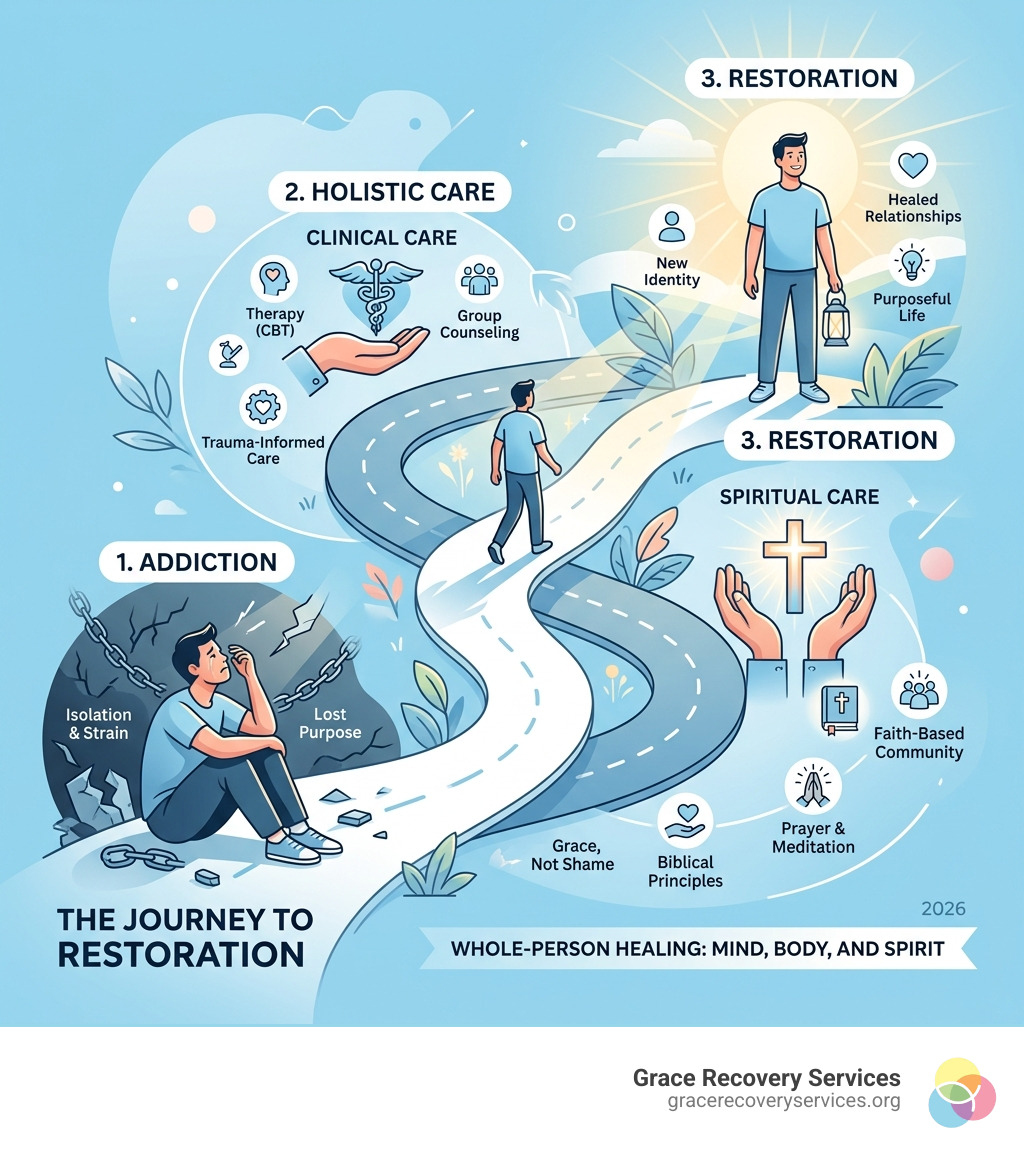
- What makes it different: Whole-person healing — mind, body, and spirit — grounded in grace, not shame
- Levels of care: Typically includes outpatient programs (IOP, PHP), individual counseling, group therapy, and aftercare support
- Who can attend: Most faith recovery centers welcome people of all backgrounds, including those with little or no religious history
Addiction takes a lot from a person. It strains relationships, erodes identity, and leaves people feeling cut off from themselves — and from hope.
For many people in recovery, something is still missing even after the substances are gone. That’s where faith-based recovery can make a real difference.
At Grace Recovery Services, we’ve seen this in the Pittsburgh area and across Western Pennsylvania. When clinical treatment is paired with spiritual grounding — real community, biblical principles of redemption, and trauma-informed care — people don’t just get sober. They find purpose.
This guide walks you through everything you need to know about faith recovery centers: how they work, what programs they offer, and how to find the right fit for yourself or someone you love.
What is a Faith Recovery Center?

A faith recovery center is much more than just a place to stop using substances. It is a sanctuary designed for total life transformation. While secular programs often focus primarily on the physical and psychological aspects of addiction, a faith-based approach recognizes that we are spiritual beings.
The core philosophy of these centers is built on identity restoration. We believe that addiction often stems from a lost sense of self and purpose. By integrating Christian Recovery Services, we help clients rediscover who they were created to be. This involves a spiritual awakening that moves a person from the “bondage” of substance use into a life characterized by freedom and peace.
In Western Pennsylvania, centers like ours provide a safe haven where compassionate care meets professional expertise. We don’t just see a “patient” or a “case number”; we see a valued individual with a God-given purpose. This perspective is vital because it replaces the heavy weight of shame with the light of grace.
The Core Philosophy of a Faith Recovery Center
The heartbeat of a faith recovery center is the belief that no one is beyond redemption. Our philosophy is rooted in biblical foundations that emphasize hope and renewal.
When someone enters our doors in North Huntingdon or Penn Hills, they are often at their lowest point. They might feel like they’ve failed too many times to count. However, we stand on the promise that “old things have passed away; behold, all things have become new.” Understanding how faith helps with addiction is about realizing that while we may be powerless over our addiction on our own, there is a Higher Power—specifically the grace found in Christ—that provides the strength to change.
This isn’t about following a set of religious rules. It’s about building a relationship with a Creator who offers unconditional love. This spiritual anchor provides the “why” behind the hard work of recovery, giving clients a reason to stay sober that is larger than themselves.
Integrating Clinical Excellence with Spiritual Guidance

You might wonder, “If it’s about faith, do they still use science?” The answer is a resounding yes. A high-quality faith recovery center does not choose between God and medicine; we embrace both. We believe that clinical excellence is a form of stewardship—using the best tools available to heal the mind and body that God created.
At Grace Recovery Services, we utilize evidence-based practices such as:
- Cognitive Behavioral Therapy (CBT): Helping clients identify and change destructive thought patterns.
- Dialectical Behavior Therapy (DBT): Providing tools for emotional regulation and distress tolerance.
- Trauma-Informed Care: Recognizing that many addictions are rooted in past wounds and providing a safe environment to process that pain.
Research available through resources like the Wilkinsburg Public Library highlights the importance of comprehensive health resources in our community. By offering Christian Integrated Addiction Treatment, we bridge the gap between traditional clinical psychology and spiritual care. This means a client might spend an hour in a specialized trauma session and the next hour in a group discussing how biblical principles apply to their daily struggles.
Spiritually Grounded Approaches in a Faith Recovery Center
While the clinical work addresses the “how” of recovery, our spiritual practices address the “soul.” We integrate various spiritually grounded approaches to ensure the spirit is nourished alongside the mind.
Some of these practices include:
- Morning Meditation and Prayer: Starting the day with intentionality and connection to God.
- Group Bible Study: Exploring scripture to find practical wisdom for overcoming life’s obstacles.
- 12-Step Integration: Many centers use a Christ-centered 12-step model (like Celebrate Recovery) that acknowledges Jesus as the Higher Power.
- Pastoral or Christian Counseling: One-on-one sessions that allow clients to explore their spiritual questions and hurdles.
We focus on Higher Power Higher Purpose Biblical Principles for Addiction to help clients move beyond just “not using” and toward “thriving” in their new life.
Levels of Care in Outpatient Recovery
Understanding the different levels of care is essential for choosing the right path. As an outpatient-only agency in Western PA, we offer flexible options that allow clients to receive high-level care while still living at home and, in many cases, maintaining their work or family commitments.
| Program Type | Hours Per Week | Focus Area |
|---|---|---|
| Partial Hospitalization (PHP) | 20+ Hours | Intensive stabilization and deep therapeutic work |
| Intensive Outpatient (IOP) | 9-15 Hours | Skill-building, relapse prevention, and group support |
| General Outpatient | 1-5 Hours | Long-term maintenance and individual counseling |
These programs are designed to be flexible. We know that life in the Pittsburgh area doesn’t stop just because you are in recovery. Our Faith-Based Outpatient Addiction Treatment ensures that you get the clinical intensity you need without being separated from your support system. For those needing a structured but flexible schedule, our Christian Intensive Outpatient Treatment is an excellent bridge to long-term sobriety.
Navigating the Admission Process at a Faith Recovery Center
The first step is often the hardest, but we aim to make it as gentle as possible. When you reach out to a faith recovery center, the process usually begins with a compassionate conversation.
- Initial Intake: A brief call to understand your situation and ensure we are the right fit for your needs.
- Comprehensive Chemical Health Assessment: A deeper dive with a licensed professional to evaluate the severity of the substance use and any co-occurring mental health issues.
- Tailored Treatment Planning: We don’t believe in “cookie-cutter” recovery. Your plan will be unique to your history, your faith journey, and your goals.
- Insurance Verification: Most major insurance plans are accepted, and our team handles the heavy lifting of verifying your benefits.
If you are looking for Western PA Christian Addiction Counseling, our team in Westmoreland and Allegheny counties is ready to guide you through these steps with dignity and respect.
The Benefits of a Faith-Based Approach to Healing
Why choose a faith-based approach? The statistics and outcomes speak for themselves. While national averages for treatment completion can be discouragingly low, faith-integrated programs often see much higher rates of engagement.
Research into programs similar to ours shows significant improvements in mental health:
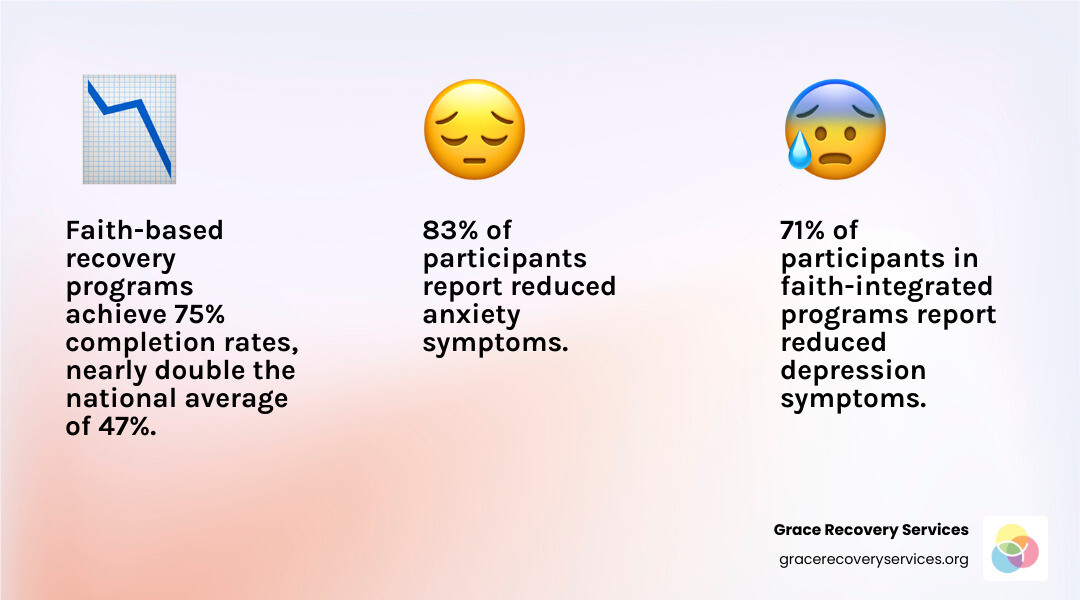
- 71% of participants report a reduction in symptoms of depression.
- 83% of participants report a reduction in symptoms of anxiety.
- 75% completion rates are common in high-quality faith programs, nearly double the national average of 47%.
Beyond the numbers, the primary benefit is community accountability. In a faith recovery center, you aren’t just a client; you are a brother or sister in Christ. This sense of belonging is a powerful deterrent to relapse. Whether you are looking at Pennsylvania Christian recovery options or specifically seeking Christian Rehab Pittsburgh, the focus remains on loving people into wholeness.
Holistic Amenities and Community Support
Recovery is about more than just attending groups. It’s about rebuilding a life. A holistic faith recovery center provides additional layers of support that address the practical side of living.
- Nutritional Support: Learning how to fuel the body for healing.
- Vocational Guidance: Helping clients find meaningful work or return to their careers with a new perspective.
- Family Involvement: Healing the relational wounds that addiction often leaves behind.
- Peer Mentoring: Connecting with others who have walked the path and are now thriving.
- Mindfulness and Movement: Incorporating physical health through gentle activities.
Our approach to Christian Addiction Recovery Pittsburgh ensures that every aspect of a client’s life is considered, from their physical health to their professional future.
Frequently Asked Questions about a Faith Recovery Center
Is a faith recovery center only for Christians?
This is a common question! While our foundation is firmly Christian, we welcome everyone. You do not have to be a member of a specific church or even identify as a Christian to receive help. We serve agnostics, atheists, and people from all religious backgrounds. Our goal is to provide a space where you can explore your spiritual growth at your own pace. Learn more about us and our non-judgmental approach to care.
What types of addiction are treated in these programs?
We treat a wide range of substance use disorders. This includes:
- Alcohol
- Opioids and Fentanyl
- Methamphetamine and Stimulants
- Prescription Medication misuse
- Benzodiazepines
- Cocaine
We also specialize in dual diagnosis, which means we treat the addiction alongside underlying mental health issues like PTSD, depression, or anxiety. If you are seeking a Faith-Based Rehab Pittsburgh, we are equipped to handle complex cases with both clinical and spiritual expertise.
How long does the recovery process typically take?
Recovery is a journey, not a sprint. Most of our outpatient programs last between 30 and 90 days, but we don’t put a stopwatch on healing. Some clients may benefit from longer-term services or continued aftercare and individual counseling to ensure they have a firm foundation for the future. We work with you to determine the pace that is right for your specific situation.
Conclusion
If you or a loved one are searching for a way out of the cycle of addiction, know that there is hope. A faith recovery center offers a unique path that honors your spiritual needs while providing the highest level of clinical care.
At Grace Recovery Services, under the leadership of Stephen A. Luther, MSEd, MEd, LPC, we are dedicated to the restoration of families and individuals throughout Western Pennsylvania. From our offices in Penn Hills and North Huntingdon, we offer a warm, compassionate environment where you can find the grace to start over.
You don’t have to carry this burden alone. Reach out to us today to learn more about our services and how we can support your journey toward a life of purpose, peace, and lasting sobriety.
Contact Grace Recovery Services Today
This article was researched with AI and heavily edited by Stephen Luther for accuracy and relevance.
Stephen Luther is the Executive Director and Founder of Grace Christian Counseling, Grace Recovery Services, WPA Counseling, NuWell Online Counseling and Coaching, and NuWell Health. He holds a Master’s degree in Education from the University of Georgia and a Master’s degree in Marriage and Family Therapy from Duquesne University. He is a licensed professional counselor in Pennsylvania.
Since 1997, Steve has been helping children, adolescents, and adults overcome a wide range of emotional and relational challenges. He specializes in working with hurting families, including those with foster, adopted, or traumatized children. Steve uses Attachment-Based Therapy, Splankna Healing, and Therapeutic Parent Coaching to support healing and restoration.
This guide is for educational and spiritual encouragement and is not a substitute for personalized professional counseling. If you are in crisis, please reach out for immediate help.