
Find Support for Sobriety Through Faith and Fellowship
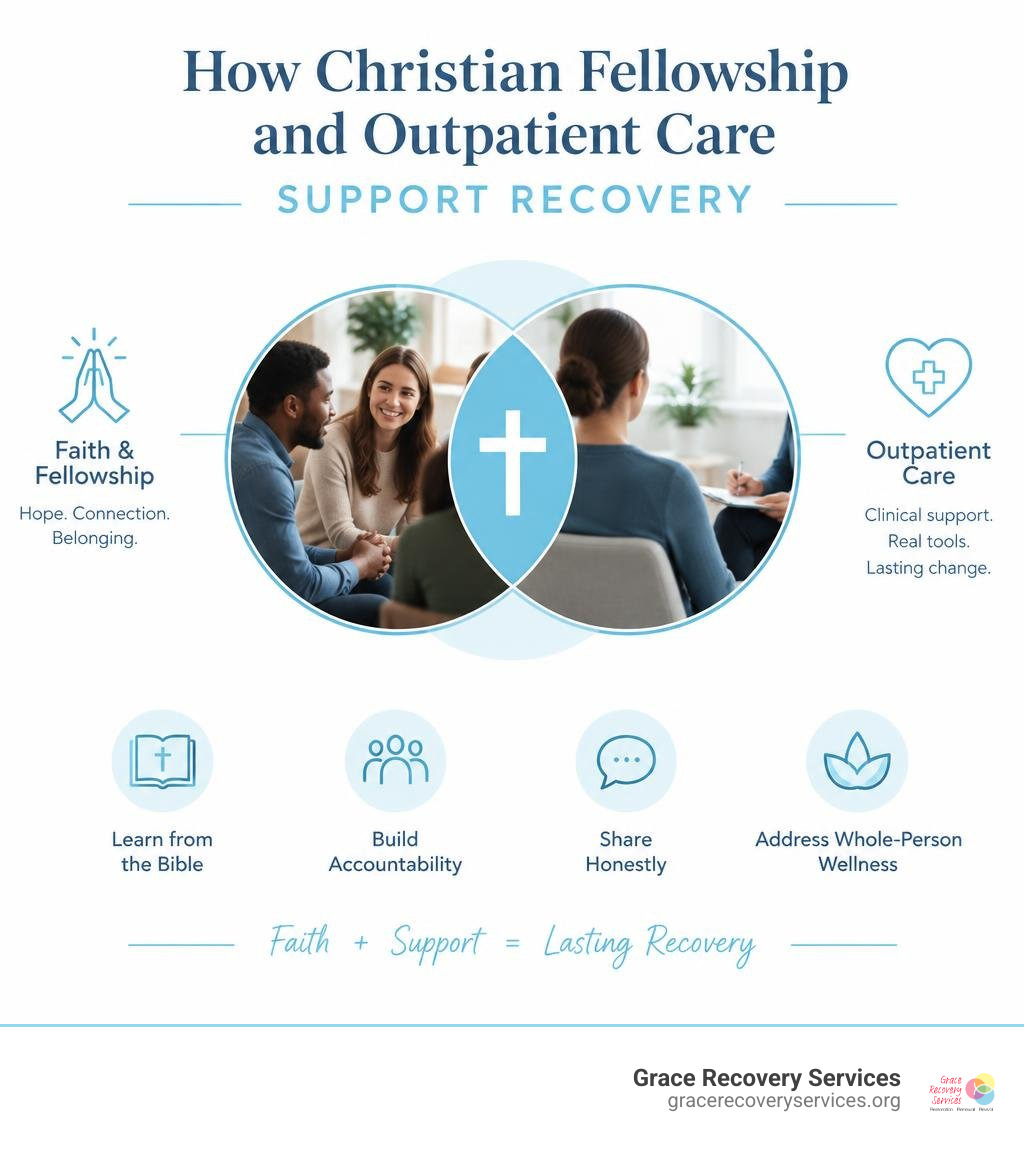
A Christian addiction support group can offer a safe place to share honestly, pray, learn from the Bible, and build accountability with others in recovery. When choosing a group, look for one that welcomes questions, protects confidentiality, avoids shame, and supports professional outpatient care when it is needed.
At Grace Recovery Services, we believe faith and evidence-based treatment can work together. Christian fellowship may bring hope, meaning, and connection, while trauma-informed counseling, intensive outpatient programs (IOP), partial hospitalization programs (PHP), and aftercare can help clients address substance use and co-occurring mental health concerns with clinical support.
Recovery does not require having all the answers or a perfect faith. Whether you are seeking Christ-centered support for yourself or someone you love in the Pittsburgh and Western Pennsylvania area, you deserve compassionate care that honors the whole person: mind, body, and spirit.
Basic christian addiction support group terms:
Understanding the Foundations of Christ-Centered Addiction Recovery
When substance use takes hold, it often fractures our deepest relationships—with loved ones, with our own sense of self, and with God. Christ-centered recovery recognizes that addiction is not merely a physical dependence or a lack of willpower; it touches every part of the human experience. In our work throughout Western Pennsylvania, we understand that finding sustainable healing means addressing the underlying emotional pain, relational trauma, and spiritual disconnection that fuel addictive patterns.
A core foundation of faith-based recovery is the concept of spiritual surrender. In standard 12-step models, clients are encouraged to yield their lives to a “Higher Power as they understand Him.” In a Christian recovery setting, that Higher Power is explicitly identified as Jesus Christ. This distinction is profound. Rather than turning to an abstract concept, clients are invited into a personal, loving relationship with a Savior who understands suffering, offers unconditional grace, and provides the strength to change.
Spiritual renewal works best when it honors both spiritual truths and the science of the human brain. We focus on integrating scripture with clinical therapy, ensuring that clients receive trauma-informed care alongside biblical wisdom. Through the three pillars of Restoration, Renewal, and Revival, individuals learn that their past choices do not define their future identity.
To guide this transformation, we frequently utilize our core Counseling Blueprint, a four-stage healing journey:
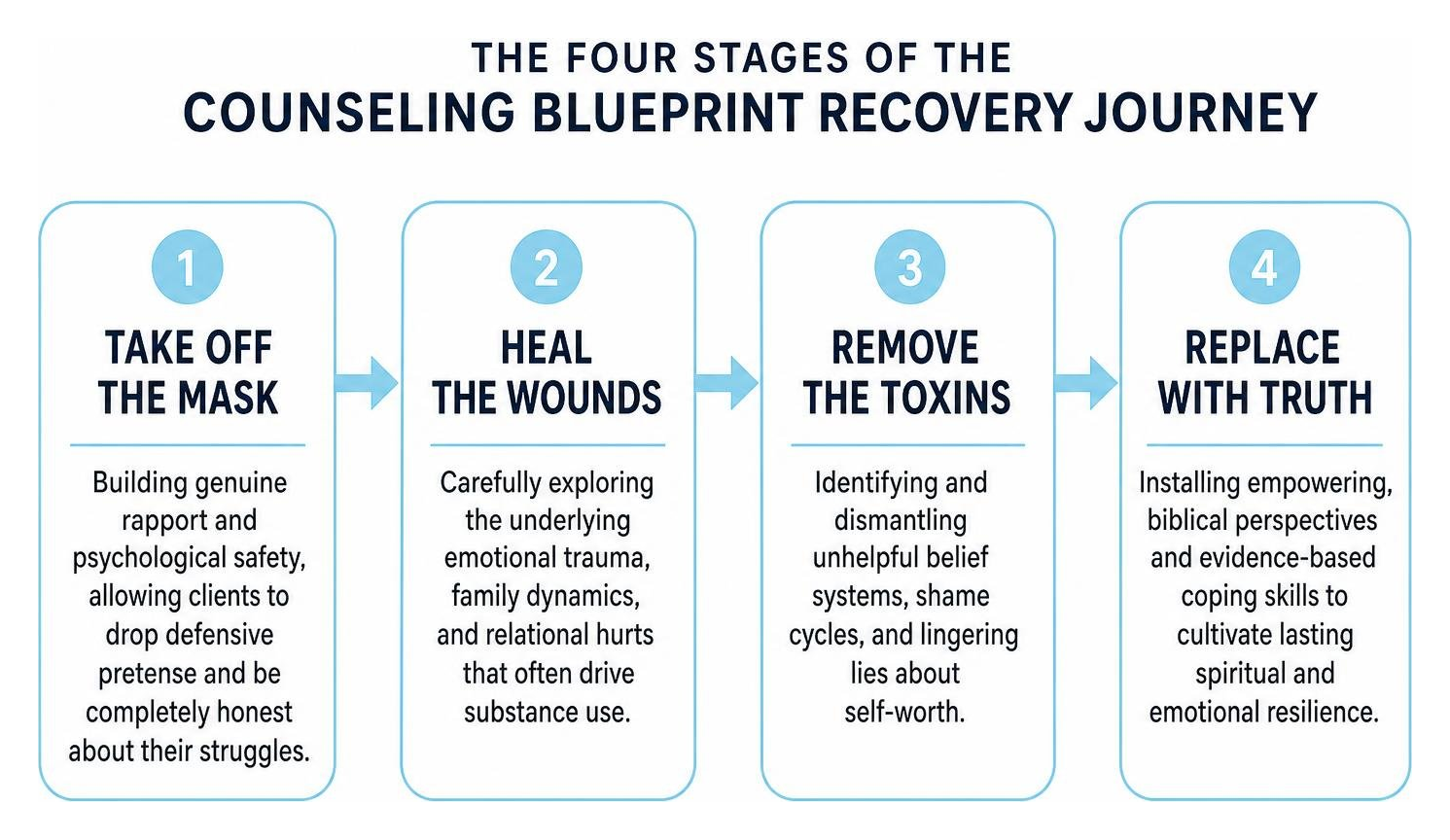
- Take Off the Mask: Building genuine rapport and psychological safety, allowing clients to drop defensive pretense and be completely honest about their struggles.
- Heal the Wounds: Carefully exploring the underlying emotional trauma, family dynamics, and relational hurts that often drive substance use.
- Remove the Toxins: Identifying and dismantling unhelpful belief systems, shame cycles, and lingering lies about self-worth.
- Replace with Truth: Installing empowering, biblical perspectives and evidence-based coping skills to cultivate lasting spiritual and emotional resilience.
Spiritual Practices That Strengthen Sobriety
Spiritual practices serve as practical anchor points throughout the day. When cravings, stress, or negative emotions arise, these disciplines help ground the mind and re-center the heart.

Key practices integrated into daily recovery include:
- Daily Prayer and Meditation: Engaging in honest conversation with God allows individuals to release burdens, express anxiety, and invite peace into moments of emotional turbulence.
- Scripture Reflection: Reading and meditating on biblical passages helps renew cognitive thought patterns, replacing catastrophic thinking with promises of hope and strength.
- Fellowship Accountability: Maintaining transparent, honest communication with trusted peers in recovery breaks the isolation that often precedes a relapse.
- Holistic Wellness: Honoring the body as a temple through adequate rest, balanced nutrition, and emotional regulation, recognizing that physical vulnerability directly impacts spiritual and mental clarity.
The Role of a Christian Addiction Support Group in Long-Term Sobriety
Isolation is one of the most dangerous environments for someone in recovery. Substance use disorders thrive in secrecy, often convincing individuals that no one understands their specific pain or that they are beyond help. A faith-based support group disrupts this cycle by surrounding clients with peers who have walked similar paths and found renewal through faith.
Community accountability provides real-time relapse prevention. When life becomes overwhelming, having a network of supportive believers to call makes all the difference. Community initiatives such as Hope in Christ: Spiritual Support for Addiction illustrate the growing recognition across church communities that spiritual fellowship plays an indispensable role in maintaining sobriety.
While peer fellowship provides vital daily encouragement, it works most effectively alongside structured clinical support. Professional faith-based outpatient addiction treatment gives clients the clinical tools, behavioral therapies, and psychiatric care necessary to address deep-rooted triggers, while their support group offers ongoing community and shared prayer.
What to Expect in a Christian Addiction Support Group Meeting
Walking into a recovery meeting for the first time can feel intimidating. Knowing the standard structure helps alleviate anxiety and allows clients to engage comfortably.

A typical meeting often includes:
- Opening Prayer and Welcome: Grounding the meeting in God’s presence, setting a tone of warmth, safety, and mutual respect.
- Reading of Core Principles: Reviewing biblical recovery principles, group guidelines, and expectations regarding absolute confidentiality.
- Personal Testimonies and Teaching: A leader or group member shares a brief message focusing on a specific recovery theme, such as overcoming fear, navigating amends, or managing grief.
- Open, Confidential Sharing: Clients are invited to share their current victories, struggles, and prayer requests without fear of unsolicited advice or judgment.
- Closing Prayer and Fellowship: Ending with collective prayer, followed by informal conversation, coffee, and exchange of contact information for week-round support.
Integrating Clinical Care with Pastoral Support
Faith-based recovery is not about choosing between prayer and professional therapy; it is about embracing both. Many individuals experiencing substance use disorders also navigate co-occurring mental health challenges, including depression, generalized anxiety, PTSD, and panic disorders.
Psychiatric wellness and clinical interventions are vital components of God’s healing provision. Chaplains, pastoral counselors, and licensed clinical therapists can work in harmony to support the whole person. When clinicians address neurobiological factors and trauma histories through evidence-based modalities like Cognitive Behavioral Therapy (CBT) or Eye Movement Desensitization and Reprocessing (EMDR), spiritual practices can flourish more freely. Our comprehensive approach to Christian recovery services bridges this gap, providing clinical excellence rooted deeply in Christian compassion.
Overcoming Spiritual Hurdles: Guilt, Shame, and Toxic Dogma
One of the heaviest obstacles individuals face in recovery is the weight of religious guilt. In some environments, addiction has been mischaracterized as purely a moral failure or a simple lack of faith. Such perspectives can foster toxic shame, driving individuals deeper into hiding and despair.
True biblical spirituality stands in direct opposition to condemnation. Healthy recovery spaces emphasize that grace precedes transformation. When communities confuse conviction (a gentle prompting toward healing) with condemnation (a destructive message of unworthiness), recovery stalls. Ethical spiritual care protects clients by promoting healthy personal boundaries, welcoming open questions, and rejecting manipulative or authoritarian group dynamics.
| Condemnation-Based Views | Grace-Centered Recovery Principles |
|---|---|
| Views addiction solely as a willful moral failure | Recognizes addiction as a complex condition involving body, mind, and spirit |
| Uses shame, fear, and guilt as motivators for change | Uses unconditional love, grace, and empathy to inspire healing |
| Discourages psychiatric care or professional counseling | Actively integrates professional outpatient therapy with spiritual support |
| Demands emotional suppression and “perfect faith” | Welcomes doubts, honest struggles, and authentic emotional expression |
| Imposes isolation and fear of judgment | Fosters restorative community, mutual accountability, and safety |
How a Christian Addiction Support Group Addresses Guilt and Shame
Guilt says, “I made a mistake.” Shame says, “I am a mistake.” Addiction often leaves a trail of damaged relationships, broken trust, and painful memories that fuel persistent shame.
In a grace-based Christian support group, the focus shifts from past regrets to present redemption. Clients learn that their worth is anchored in Christ’s finished work, not their previous missteps. Group members walk alongside one another through the biblical process of reconciliation—learning to receive divine grace, extend forgiveness to themselves, make thoughtful amends to those they have hurt, and step into spiritual freedom.
Ensuring Safe and Inclusive Faith Communities
An effective Christian recovery group must be safe for individuals at every stage of their spiritual journey. Clients come from varied denominational backgrounds, while others may be stepping into a faith setting for the first time in decades, carrying skepticism or past spiritual hurts.
A healthy group culture ensures that:
- Denominational differences take a back seat to unity in Christ and shared recovery goals.
- People with doubts, anger toward God, or questions are met with patience rather than correction.
- Spiritual discussions remain person-centered, encouraging genuine personal discovery rather than forced conformity.
How to Connect with Faith-Based Recovery Communities
Finding the right support group is a crucial step in building a long-term recovery ecosystem. Whether you are transitioning out of an intensive program or seeking proactive community support, several avenues exist across the Pittsburgh and Western Pennsylvania region.
You can connect with healthy faith communities through:
- Local Church Ministries: Many churches in Allegheny County and Westmoreland County host weekly recovery fellowships that provide open, community-based support.
- Outpatient Aftercare Groups: Professional clinical centers often provide structured aftercare groups that help clients maintain momentum after completing intensive outpatient treatment.
- Specialized Fellowship Directories: If you are unsure where to start, our comprehensive guide on how to find Christian sobriety support groups outlines what qualities to look for and red flags to avoid.
- Local Recovery Networks: Accessing specialized resources for Christian addiction recovery in Pittsburgh helps you connect with therapists, pastors, and peer networks who understand the unique needs of our local communities.
Frequently Asked Questions About Faith-Based Recovery Groups
Do I have to be a devout Christian to attend a faith-based recovery group?
No. True Christ-centered groups open their doors to anyone seeking healing, regardless of their religious background or current level of faith. You do not need to sign a statement of faith, memorize scripture, or have your life sorted out before attending. The environment is designed for honest exploration, mutual encouragement, and compassionate support.
How do Christian recovery groups differ from traditional 12-step programs?
Traditional 12-step programs, such as Alcoholics Anonymous, use open-ended language regarding a “Higher Power” so that people of all spiritual backgrounds can participate. Christian recovery groups use a similar structural framework but explicitly identify Jesus Christ as the source of healing. Meetings integrate scripture, Christian prayer, and discussions centered on biblical teachings alongside practical recovery tools.
Can faith-based support groups replace professional addiction therapy?
Support groups are a powerful source of community and spiritual strength, but they are not a substitute for licensed clinical care. Overcoming substance use disorders often requires professional assistance to manage underlying trauma, family conflict, and co-occurring mental health conditions. Faith-based support groups are most effective when combined with outpatient therapy, partial hospitalization programs (PHP), or intensive outpatient programs (IOP) that provide individualized clinical treatment.
Conclusion
Recovery is a journey of restoration, renewal, and revival. While addiction can leave you feeling isolated and disconnected, you never have to walk this path alone. By combining the loving fellowship of a Christian community with compassionate, evidence-based outpatient care, you can build a resilient foundation for long-term health and sobriety.
At Grace Recovery Services, we walk alongside individuals and families throughout Western Pennsylvania, offering trauma-informed Christian counseling, intensive outpatient programs, and aftercare support tailored to your unique needs. We invite you to discover how faith, clinical insight, and supportive community come together to bring true healing. To explore scriptural encouragement for your journey, read our guide on scriptural encouragement and Bible verses for sobriety, or contact our team today for a confidential, personalized assessment.
This article was researched with AI and heavily edited by Stephen Luther for accuracy and relevance.
Stephen Luther is the Executive Director and Founder of Grace Christian Counseling, Grace Recovery Services, WPA Counseling, NuWell Online Counseling and Coaching, and NuWell Health. He holds a Master’s degree in Education from the University of Georgia and a Master’s degree in Marriage and Family Therapy from Duquesne University. He is a licensed professional counselor in Pennsylvania.
Since 1997, Steve has been helping children, adolescents, and adults overcome a wide range of emotional and relational challenges. He specializes in working with hurting families, including those with foster, adopted, or traumatized children. Steve uses Attachment-Based Therapy, Splankna Healing, and Therapeutic Parent Coaching to support healing and restoration.
This guide is for educational and spiritual encouragement and is not a substitute for personalized professional counseling. If you are in crisis, please reach out for immediate help.