
Why a biblical sobriety program in Pittsburgh Could Be the Missing Piece in Your Recovery
If you’re looking for a biblical sobriety program in Pittsburgh, here are the key options available in Western Pennsylvania:
| Program Type | What It Offers | Who It Serves |
|---|---|---|
| Faith-integrated outpatient (IOP/OP) | Evidence-based therapy + optional Christian principles | Adults with addiction and co-occurring trauma |
| Spiritual Companionship training | Faith-based peer support certification | Clergy, clinicians, laity |
| Parish recovery meetings | 12-step + sacramental integration | Catholic community members |
| Trauma-informed Christian counseling | ACT, DBT, Seeking Safety + Scripture | Anyone seeking whole-person healing |
Recovery is rarely just about stopping a substance. For many people in Western Pennsylvania, it’s about finding out who you are again — and rebuilding something worth holding onto.
That’s where a biblical approach to sobriety offers something different.
When addiction strips away relationships, purpose, and self-worth, clinical tools alone don’t always fill the gap. Research consistently shows that addressing spiritual wellbeing alongside clinical treatment improves long-term recovery outcomes — especially for people navigating both addiction and trauma at the same time.
Pittsburgh and the surrounding communities have a growing network of faith-based recovery resources: from trained Spiritual Companions working within local parishes, to outpatient programs that weave evidence-based therapies like ACT and DBT together with optional Christian principles.
You don’t have to choose between good clinical care and your faith. The two can work together — and for many people, that combination is what finally makes recovery stick.
This guide walks through what biblical sobriety programs look like in the Pittsburgh area, who they serve, and how to take your first step.
Understanding the Role of a biblical sobriety program in Pittsburgh

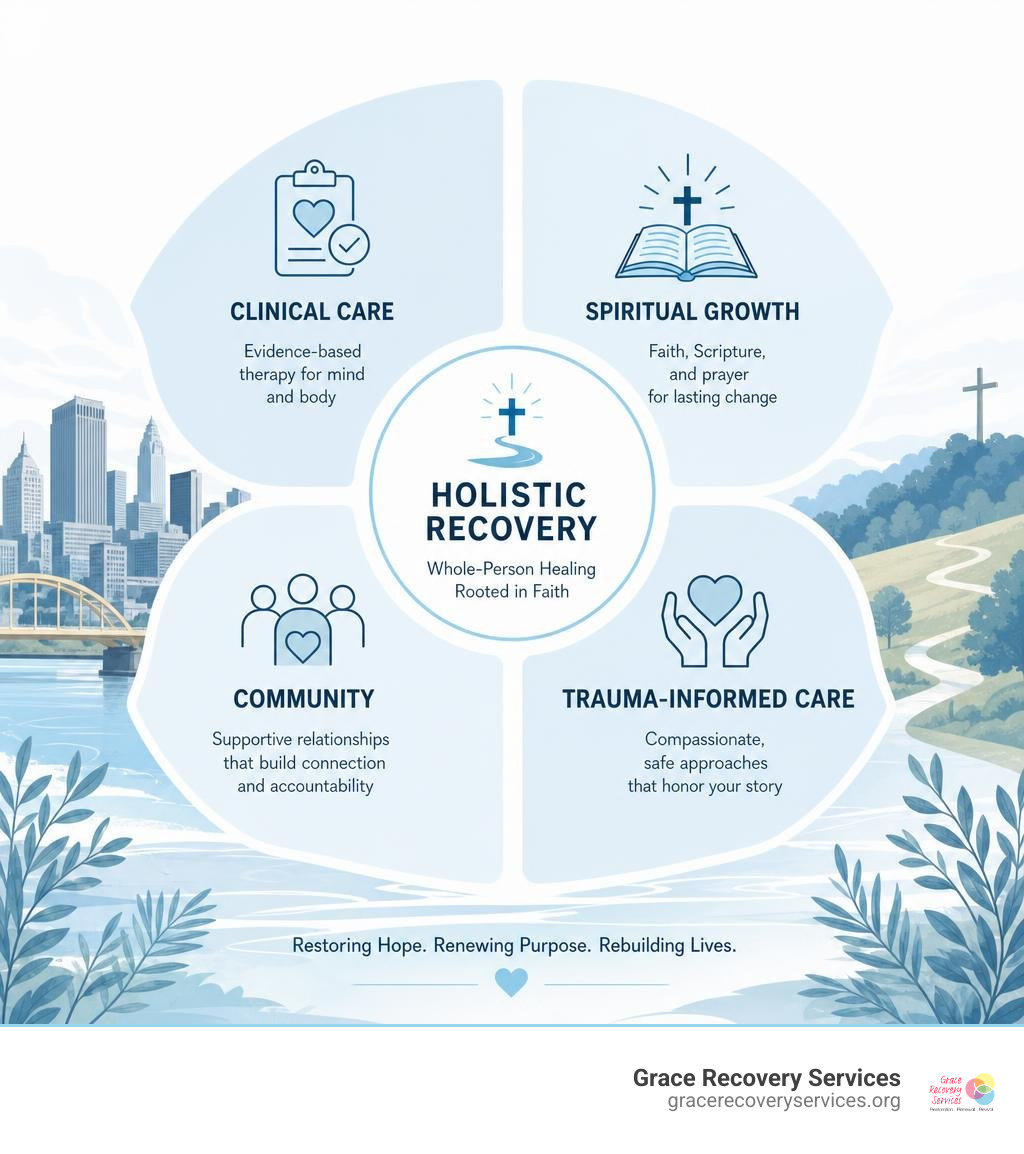
When we look at addiction through a holistic lens, we see that it impacts every level of a person’s existence: physical, mental, emotional, and spiritual. While secular recovery programs focus heavily on the cognitive and behavioral aspects of sobriety, a biblical sobriety program in Pittsburgh introduces an essential dimension—the restoration of the human spirit through a relationship with God.
Historically, there has been an unnecessary divide between science and faith in the recovery space. Some view addiction strictly as a moral failing or a series of poor choices, while others view it purely as a chronic brain disease. In our view, the truth is far more compassionate.
Addiction is a deeply complex issue. While choices are involved, those choices are heavily influenced by biology, trauma, environmental stressors, and spiritual isolation. If you are driving on a treacherous road after a exhausting day, a sudden loss of temper or control is influenced by the weight of your circumstances, your history, and your immediate environment. Similarly, a person experiencing a substance use disorder is often operating under immense internal and external pressures.
By utilizing person-first language and treating every individual with the utmost dignity, we can reduce the stigma that so often prevents people from seeking help. Stigma creates shame, and shame drives people back into isolation. A biblical approach dismantles this shame by emphasizing that every person is made in the image and likeness of God. True healing begins when we replace judgment with compassionate, grace-filled support.
Integrating Scripture, Sacraments, and the 12 Steps
For decades, the traditional 12-step model has served as a cornerstone of recovery. What many do not realize is that the 12 steps are deeply rooted in Christian principles and Scripture. In Western Pennsylvania, several initiatives work to bring these scriptural foundations back to the forefront of recovery.
One prominent example is Catholic in Recovery, which blends the spiritual wisdom of the 12 steps with the sacramental life of the Church. These peer-led meetings are open to anyone struggling with addictions, compulsions, or unhealthy attachments, as well as their families. By reflecting on the Sunday Mass readings and connecting them to the recovery journey, clients find a natural bridge between their faith and their daily sobriety.
Another powerful resource is the iThirst initiative, which has established a presence in the region. This program provides 48 hours of comprehensive, academically credited, faith-based formation. It is designed to train clergy, religious sisters, clinicians, and everyday laity to become certified Spiritual Companions.
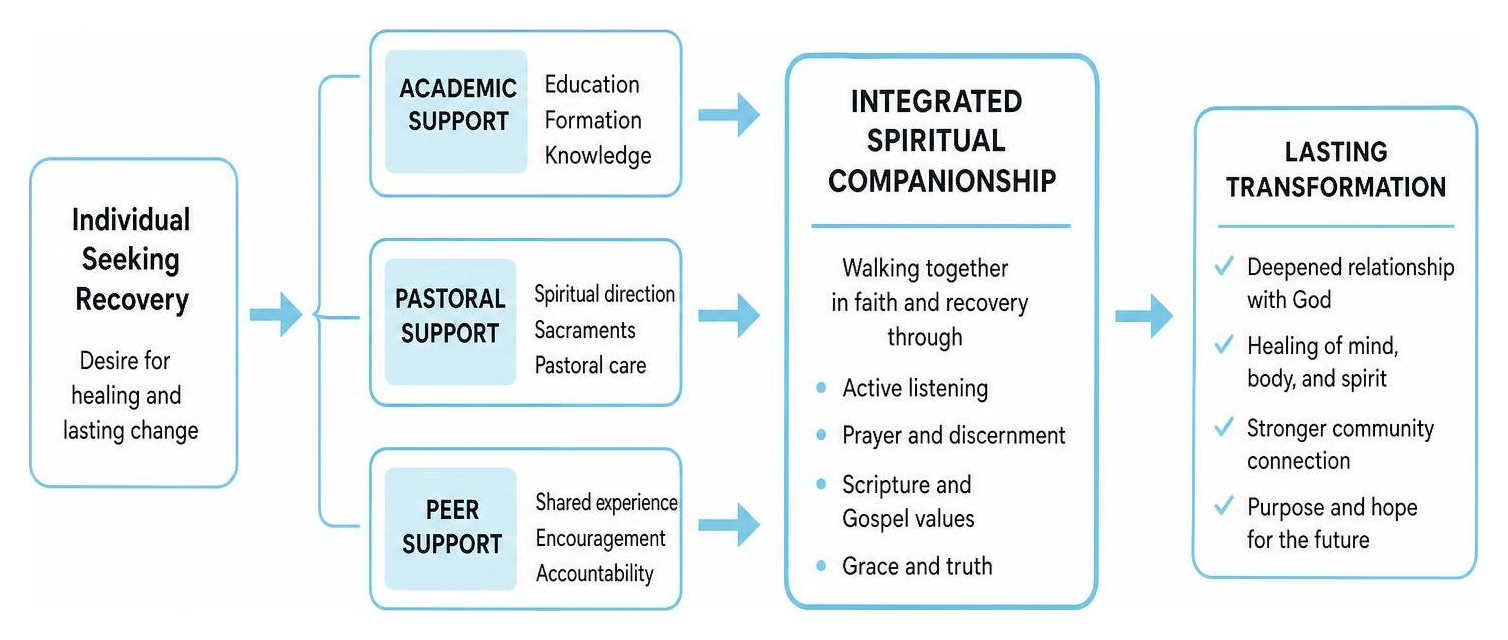
These Spiritual Companions are trained in pastoral care, active listening, and the spiritual dimensions of recovery. They walk alongside individuals and families, helping them recognize the face of Christ in their struggles and providing a supportive, non-judgmental presence. To learn more about how this training equips leaders in our communities, you can explore the iThirst information – Addiction Recovery Ministry resource.
Local Parish Support and Community Recovery Ministries
In Western Pennsylvania, local parishes and community ministries serve as the hands and feet of recovery care. They provide safe, confidential spaces where individuals can gather without fear of judgment.
An excellent example of this localized care is found in communities like Charleroi, Donora, and Monongahela. Local ministries work to train parish members to offer spiritual accompaniment to those affected by the opioid epidemic, alcohol use disorders, and behavioral compulsions. You can find more details about these localized peer-support networks by visiting the Addiction Recovery Ministry – Saint Andrew the Apostle – Charleroi, Donora, Monongahela, PA page.
To understand how these community-based spiritual resources fit into a broader recovery plan, it helps to look at how peer-led ministries compare to clinical outpatient treatment:
| Feature | Peer-Led Parish Ministry | Clinical Outpatient Therapy |
|---|---|---|
| Primary Focus | Spiritual fellowship, prayer, and shared experience | Clinical healing, behavioral tools, and trauma therapy |
| Facilitated By | Trained companions, clergy, or volunteer peers | Licensed professional counselors and clinical experts |
| Setting | Local church halls, parish rooms, or community spaces | Accredited clinical offices or outpatient centers |
| Modalities Used | Scripture, sacraments, and 12-step reflection | ACT, DBT, Seeking Safety, and psychotherapy |
| Structure | Drop-in meetings, flexible spiritual direction | Structured program hours (IOP/OP) with clinical assessments |
Combining Clinical Excellence with Faith-Based Principles

While peer groups and spiritual companionship are invaluable, many individuals require clinical intervention to overcome the deep-seated roots of addiction. This is where we believe science and faith work hand-in-hand.
At Grace Recovery Services, we offer trauma-informed, outpatient-only programs that treat co-occurring disorders (such as depression, anxiety, and PTSD alongside substance use). We utilize evidence-based therapies like:
- Acceptance and Commitment Therapy (ACT): Helping clients accept their inner experiences without judgment while committing to actions that align with their deepest values.
- Dialectical Behavior Therapy (DBT): Providing concrete tools for emotional regulation, distress tolerance, and interpersonal effectiveness.
- Seeking Safety: A specialized, trauma-informed curriculum designed to help clients build safety in their relationships, thinking, and daily lives.
We weave these clinical strategies into our proprietary Counseling Blueprint, a four-stage healing journey designed to bring about lasting restoration, renewal, and revival:
- Take Off the Mask: We focus on building genuine rapport and trust. Clients can let down their guard and speak honestly about their struggles without fear of condemnation.
- Heal the Wounds: We explore the emotional, relational, and trauma-related hurts that often drive addictive behaviors in the first place.
- Remove the Toxins: Together, we identify unhelpful beliefs, coping mechanisms, and lingering lies that keep clients trapped in cycles of defeat.
- Replace with Truth: We help clients install empowering, accurate perspectives about themselves, God, and the world, building a firm foundation for their future.
How to Access a biblical sobriety program in Pittsburgh
If you or a loved one is ready to take the next step toward recovery, accessing support in the Pittsburgh metro area is straightforward. Because we operate as an outpatient-only facility, our clients can receive high-quality clinical care while continuing to live at home, care for their families, and maintain their employment.
We serve communities across Allegheny County and Westmoreland County, with convenient locations in Penn Hills (Pittsburgh area) and North Huntingdon (Irwin area).
To make care as accessible as possible, we offer:
- Flexible Scheduling: With both day and evening hours available, clients can find a schedule that fits their daily lives.
- Insurance and Sliding Scale Options: We accept most major insurance plans and offer a sliding scale fee structure for those with limited coverage, ensuring that financial barriers do not stand in the way of life-saving care.
- No Referral Required: You do not need a doctor’s referral to get started. You can contact our team directly to schedule a confidential, no-obligation exploratory call.
Frequently Asked Questions About Faith-Based Recovery
What makes a biblical sobriety program in Pittsburgh different from secular rehab?
While secular programs utilize excellent clinical tools, they often leave the spiritual dimension unaddressed. A biblical sobriety program integrates spiritual wellbeing into the recovery process, viewing faith as a vital source of meaning, hope, and identity. At the same time, we ensure that our clinical standards are just as rigorous as any secular program, offering a truly holistic approach to healing.
Do I have to be a Christian to participate in a biblical sobriety program in Pittsburgh?
Absolutely not. At Grace Recovery Services, faith integration is entirely optional. We welcome clients from all backgrounds, beliefs, and walks of life. Our clinical therapies (such as DBT and ACT) are highly effective on their own, and we respect each individual’s personal journey. We provide a warm, non-judgmental environment where you can explore spiritual themes at your own pace—only if and when you feel comfortable doing so.
Does insurance cover faith-integrated outpatient addiction treatment?
Yes. Because our programs are fully licensed, clinical outpatient services (including our Intensive Outpatient Program and standard Outpatient Program), they are covered by most major insurance plans. We can help you verify your benefits during your initial phone call.
Finding Hope and Healing Today
No matter how long you have been struggling, or how many times you have tried to find sobriety in the past, please know that your story is not over. Healing is possible, and you do not have to carry this weight alone.
At Grace Recovery Services, we are committed to walking with you through every step of your recovery journey, offering the clinical excellence you need and the faith-based hope you deserve. We invite you to explore these Bible verses for strength in recovery for immediate encouragement and spiritual inspiration.
When you are ready to take that first step toward a restored life, reach out to our compassionate team in Penn Hills or North Huntingdon. Let us help you take off the mask, heal your wounds, and discover the truth of who you were created to be.
This article was researched with AI and heavily edited by Stephen Luther for accuracy and relevance.
Stephen Luther is the Executive Director and Founder of Grace Christian Counseling, Grace Recovery Services, WPA Counseling, NuWell Online Counseling and Coaching, and NuWell Health. He holds a Master’s degree in Education from the University of Georgia and a Master’s degree in Marriage and Family Therapy from Duquesne University. He is a licensed professional counselor in Pennsylvania.
Since 1997, Steve has been helping children, adolescents, and adults overcome a wide range of emotional and relational challenges. He specializes in working with hurting families, including those with foster, adopted, or traumatized children. Steve uses Attachment-Based Therapy, Splankna Healing, and Therapeutic Parent Coaching to support healing and restoration.
This guide is for educational and spiritual encouragement and is not a substitute for personalized professional counseling. If you are in crisis, please reach out for immediate help.