
Compassionate Christian Rehab in Pittsburgh Starts With Choice and Respect
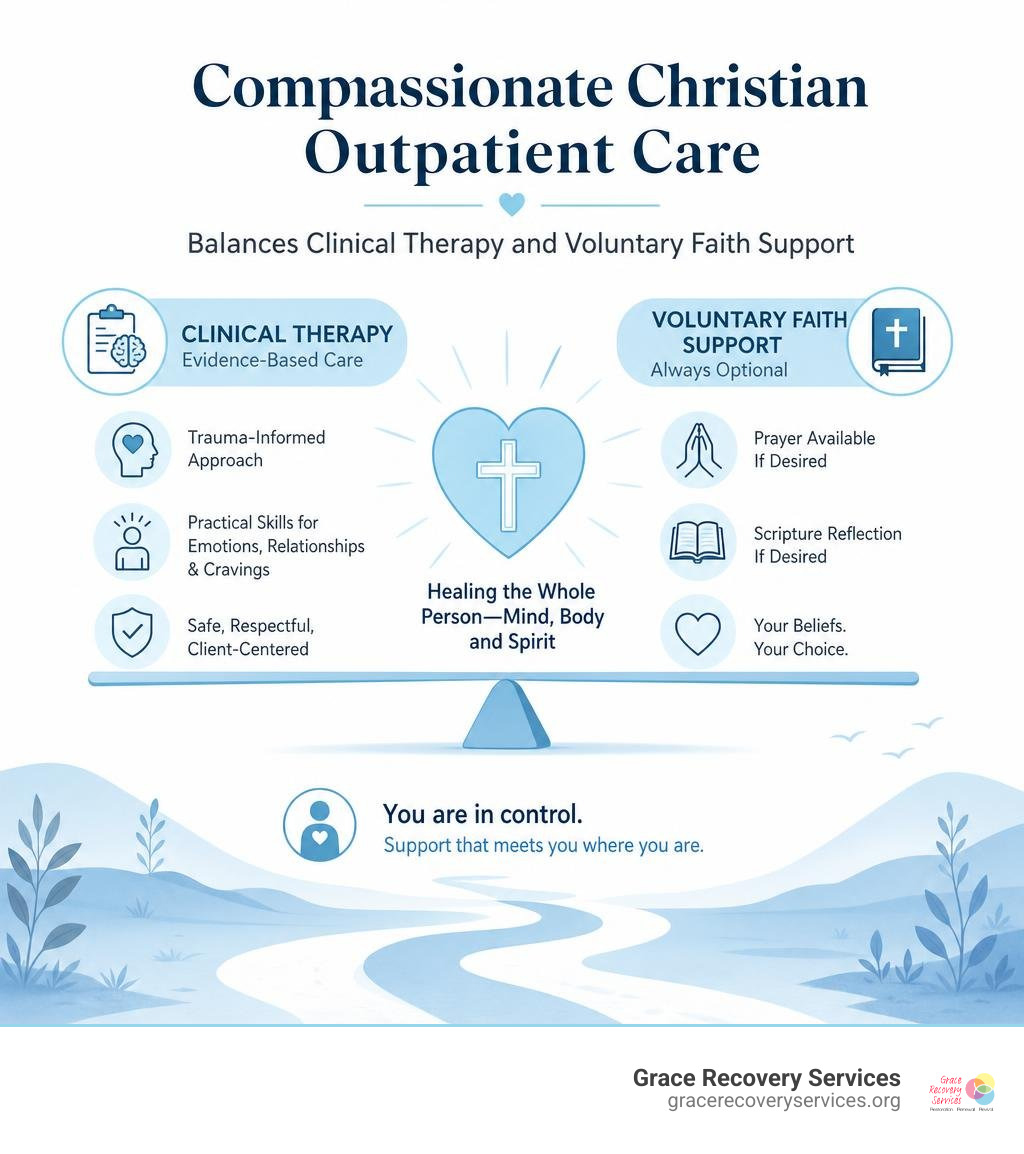
A compassionate Christian rehab Pittsburgh program should make clients feel safe, heard, and respected – not pressured to perform faith or share more than they are ready to share. At Grace Recovery Services, outpatient addiction support combines proven therapies with optional Christian practices, so clients can explore recovery in a way that fits their beliefs, needs, and boundaries.
For someone experiencing substance use disorder, especially alongside trauma, effective care looks beyond the substance itself. It offers practical skills for managing cravings, emotions, relationships, and painful experiences while recognizing that spiritual meaning can also matter deeply to recovery.
Grace Recovery Services serves Greater Pittsburgh from Irwin, Pennsylvania, with trauma-informed outpatient care for clients of faith, clients who are unsure what they believe, and clients who prefer clinical treatment without faith integration. The clinical foundation remains evidence-based, including approaches such as ACT, DBT, and Seeking Safety. Prayer and Scripture reflection are available only when a client wants them.
Quick look at compassionate Christian rehab options in Pittsburgh:
- Christian aftercare programs in Pittsburgh
- Christian outpatient treatment in PA
- Western PA faith-based counseling
The Core Pillars of Compassionate Christian Rehab Pittsburgh Programs
True compassion in addiction care begins by stripping away shame, coercion, and judgment. Historically, some people have encountered faith-based programs that relied heavily on guilt, strict dogmatism, or the mistaken idea that substance use is simply a lack of willpower or personal devotion. At Grace Recovery Services, we operate from a fundamentally different perspective: addiction is a complex health challenge that affects the whole person—mind, body, and spirit.

A truly supportive environment offers emotional safety from the moment you walk through the door. We build our care around several non-negotiable pillars:
- Non-Coercive Support: Faith is an invitation, never a demand. We honor where you are in your spiritual journey, whether your faith is central to your life, you are wrestling with doubt, or you prefer a completely secular track.
- Clinical Excellence: Compassion without effective clinical tools is incomplete. We utilize established, evidence-based therapeutic models led by experienced clinicians.
- Individualized Care Plans: No two recovery journeys are identical. Every client receives a tailored plan addressing their specific triggers, mental health history, and life goals.
- Relational Dignity: We treat every client as a person of infinite worth, focusing on strengths, personal resilience, and long-term well-being.
When seeking quality faith-based rehab in Pittsburgh, finding a center that balances genuine clinical rigor with warm, unconditional regard is essential for meaningful, sustainable healing.
How a Compassionate Christian Rehab Pittsburgh Approach Treats Underlying Trauma
Substance use rarely happens in isolation. Research highlighted by the Substance Abuse and Mental Health Services Administration (SAMHSA) consistently shows that untreated trauma is one of the primary drivers of substance use disorders. Whether rooted in childhood adversity, relationship loss, or acute crisis, emotional pain often leads individuals to seek relief through substances. Treating the addiction without healing the underlying trauma creates an unstable foundation where relapse remains a persistent risk.
At Grace Recovery Services, we emphasize a dual-focus approach that addresses both substance use and co-occurring mental health challenges simultaneously. Utilizing trauma-informed methodologies like the Seeking Safety curriculum, our clinicians help clients build emotional stability, establish healthy personal boundaries, and develop grounding techniques without forcing them to relive traumatic memories before they are ready.
By integrating trauma sensitivity into every aspect of Christian addiction recovery in Pittsburgh, we help clients discover safe pathways to process pain, release unresolved shame, and regain control over their emotional lives.
Evidence-Based Clinical Modalities Blended with Spiritual Meaning
Integrating faith into clinical care is not about substituting prayer for therapy; it is about allowing them to complement each other harmoniously. Our clinicians utilize modern, evidence-backed therapeutic modalities:
- Acceptance and Commitment Therapy (ACT): Helps clients stop fighting difficult emotions and instead commit to actions aligned with their core values and spiritual convictions.
- Dialectical Behavior Therapy (DBT): Teaches practical skills for distress tolerance, mindfulness, emotion regulation, and interpersonal effectiveness.
- Seeking Safety: An evidence-based present-focused coping skills program designed specifically for individuals navigating trauma and substance use.
- Cognitive Reframing: Encourages clients to identify distorted, harmful thought patterns and replace them with truthful, life-giving perspectives.
For clients who desire spiritual integration, these therapies can be enriched with Scripture reflection, discussion of spiritual purpose, and personal prayer. If you are discerning the right path for your situation, learning how to pick a Christian rehab can help ensure the program you choose upholds both clinical and spiritual integrity.
The Four-Step Journey to Spiritual and Clinical Restoration
At Grace Recovery Services, our care is guided by our core Counseling Blueprint. This four-stage clinical and spiritual framework provides a clear path out of the chaos of substance use into authentic, sustainable healing.
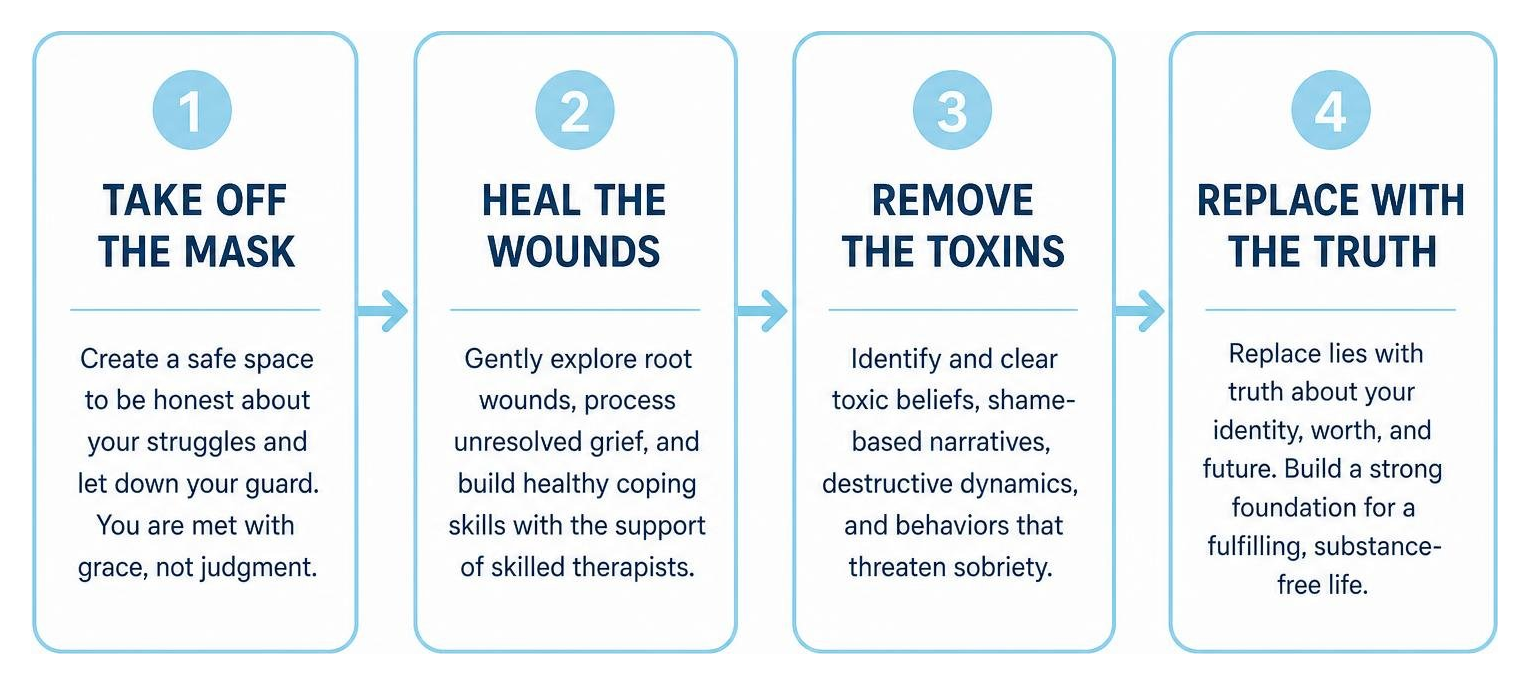
- Take Off the Mask: Many people use substances or false personas to hide their pain, fear, and perceived inadequacies. In this first stage, we create a safe space where you can let down your guard, speak honestly about your struggles, and be met with grace rather than condemnation.
- Heal the Wounds: Addiction often serves as an emotional bandage over deep relational, emotional, or traumatic injuries. In this stage, clients work alongside skilled therapists to gently explore root wounds, process unresolved grief, and build healthy coping mechanisms.
- Remove the Toxins: Beyond physical abstinence from drugs or alcohol, this stage focuses on identifying and clearing out toxic belief systems, destructive relationship dynamics, shame-based narratives, and behavioral patterns that threaten sobriety.
- Replace with the Truth: Lasting recovery requires establishing a sturdy, genuine foundation. Clients learn to replace old lies with truth regarding their personal identity, inherent worth, and future potential, grounding themselves in values that support a fulfilling, substance-free life.
| Blueprint Stage | Clinical Focus | Optional Spiritual Integration | Practical Outcome |
|---|---|---|---|
| 1. Take Off the Mask | Building therapeutic rapport; honest self-assessment | Experiencing grace without judgment (Matthew 11:28) | Reduced isolation and shame |
| 2. Heal the Wounds | Trauma-informed processing; Seeking Safety skills | Finding comfort and restoration in community | Emotional regulation and stability |
| 3. Remove the Toxins | DBT emotion regulation; boundary setting; relapse triggers | Renouncing shame-based narratives | Healthier relationships and habits |
| 4. Replace with the Truth | ACT value-based goal setting; cognitive restructuring | Internalizing identity as a beloved person | Clear life purpose and lasting recovery |
This structured progression ensures that clients in our Pittsburgh Christian sobriety programs move beyond short-term abstinence into comprehensive, lasting transformation.
Navigating Flexible Outpatient Treatment Close to Home
Navigating recovery should not require placing your entire life on pause. Grace Recovery Services delivers outpatient-centered care that allows clients to receive rigorous, compassionate treatment while maintaining their family commitments, employment, and daily responsibilities across Western Pennsylvania.
We proudly serve individuals and families throughout the greater Pittsburgh area, including Westmoreland County, Allegheny County, North Huntingdon, Penn Hills, Greensburg, Monroeville, and Irwin.
To ensure care is accessible, we work with major commercial insurance plans and offer flexible sliding-scale payment options for clients who are underinsured or paying out of pocket. If you are comparing Christian recovery options in Pittsburgh, our outpatient structure provides a balanced, realistic bridge between intensive care and everyday living.
Levels of Outpatient Care in Compassionate Christian Rehab Pittsburgh Settings
Every person’s journey requires a different level of support depending on their recovery stage, stability, and personal responsibilities.

Grace Recovery Services provides two primary levels of outpatient care:
- Intensive Outpatient Program (IOP): Designed for individuals who need structured, multi-day support each week. IOP combines structured group therapy, individual counseling, and skill-building sessions. It offers intensive clinical care while allowing clients to sleep at home every night and stay connected with family.
- Standard Outpatient (OP): Typically involves weekly or bi-weekly individual therapy and targeted group sessions. This level serves as an ideal step-down from IOP or an entry point for clients requiring flexible, ongoing support to reinforce relapse prevention, manage stress, and deepen their emotional wellness.
Both levels offer daytime and evening scheduling options to help working adults and parents receive high-quality clinical care without sacrificing their everyday responsibilities.
Frequently Asked Questions About Faith-Based Recovery
Is faith integration mandatory if I want to enroll in outpatient care?
No, faith integration is never mandatory. At Grace Recovery Services, we believe that spiritual healing cannot be forced. Our evidence-based therapies (such as ACT, DBT, and Seeking Safety) are fully effective on their own. Clients who do not identify as Christian or who prefer a strictly clinical approach receive the exact same high standard of trauma-informed care, in an atmosphere of complete warmth and non-judgmental respect.
How do outpatient programs address co-occurring trauma and addiction together?
We utilize an integrated dual-diagnosis model. Rather than treating trauma and substance use in separate silos, our clinicians address how they interact with one another. Using modalities like Seeking Safety, we help clients understand how trauma triggers cravings and teach present-focused coping strategies to self-soothe safely, establish healthy emotional boundaries, and reduce the likelihood of relapse.
What payment options and insurance plans are accepted for treatment?
Grace Recovery Services accepts most major commercial health insurance plans. For individuals without insurance or with high deductibles, we provide sliding-scale self-pay options to keep quality outpatient addiction treatment accessible. You can easily contact our team for a confidential benefits verification and personalized guidance on your coverage.
Conclusion
Recovery is a journey of reclaiming your life, healing hidden wounds, and rediscovering a sense of purpose. Whether you are seeking clinical care enriched by Christian values or a trauma-informed outpatient program that respects your personal boundaries, you do not have to walk this road alone. Grace Recovery Services is dedicated to walking alongside you with clinical excellence, relational warmth, and genuine hope.
Take the first step toward whole-person healing today. We invite you to explore our compassionate outpatient addiction services or reach out to our team to schedule a confidential exploratory consultation.
This article was researched with AI and heavily edited by Stephen Luther for accuracy and relevance.
Stephen Luther is the Executive Director and Founder of Grace Christian Counseling, Grace Recovery Services, WPA Counseling, NuWell Online Counseling and Coaching, and NuWell Health. He holds a Master’s degree in Education from the University of Georgia and a Master’s degree in Marriage and Family Therapy from Duquesne University. He is a licensed professional counselor in Pennsylvania.
Since 1997, Steve has been helping children, adolescents, and adults overcome a wide range of emotional and relational challenges. He specializes in working with hurting families, including those with foster, adopted, or traumatized children. Steve uses Attachment-Based Therapy, Splankna Healing, and Therapeutic Parent Coaching to support healing and restoration.
This guide is for educational and spiritual encouragement and is not a substitute for personalized professional counseling. If you are in crisis, please reach out for immediate help.