When Recovery Feels Uncertain: What Aftercare Programs Pittsburgh Christian Communities Offer Can Change Everything
If you or someone you love has just completed an intensive treatment program and you’re wondering what comes next, finding the right Christian aftercare support in the Pittsburgh area is a vital next step.
At Grace Recovery Services, we offer faith-integrated outpatient programs (including Intensive Outpatient Programs and Outpatient Programs) in Western Pennsylvania. Our services combine evidence-based therapies with optional Christian principles, trauma-informed care, and dedicated aftercare planning to help you transition smoothly into daily life.
Recovery does not end when an initial treatment program does. For many people, the real work begins after.
Completing a clinical program is a huge step. But stepping back into everyday life — with its stress, triggers, and relational wounds — is where lasting sobriety is truly built or broken. That gap between structured treatment and independent living is exactly where aftercare matters most.
In Allegheny County, the stakes are high. Roughly 52% of individuals cycling through the Allegheny County Jail return, and the region’s homeless population has grown by 24% since 2022. These numbers tell a story: without sustained, holistic support after initial treatment, many people in our community are left to navigate recovery alone.
That’s where faith-based aftercare comes in.
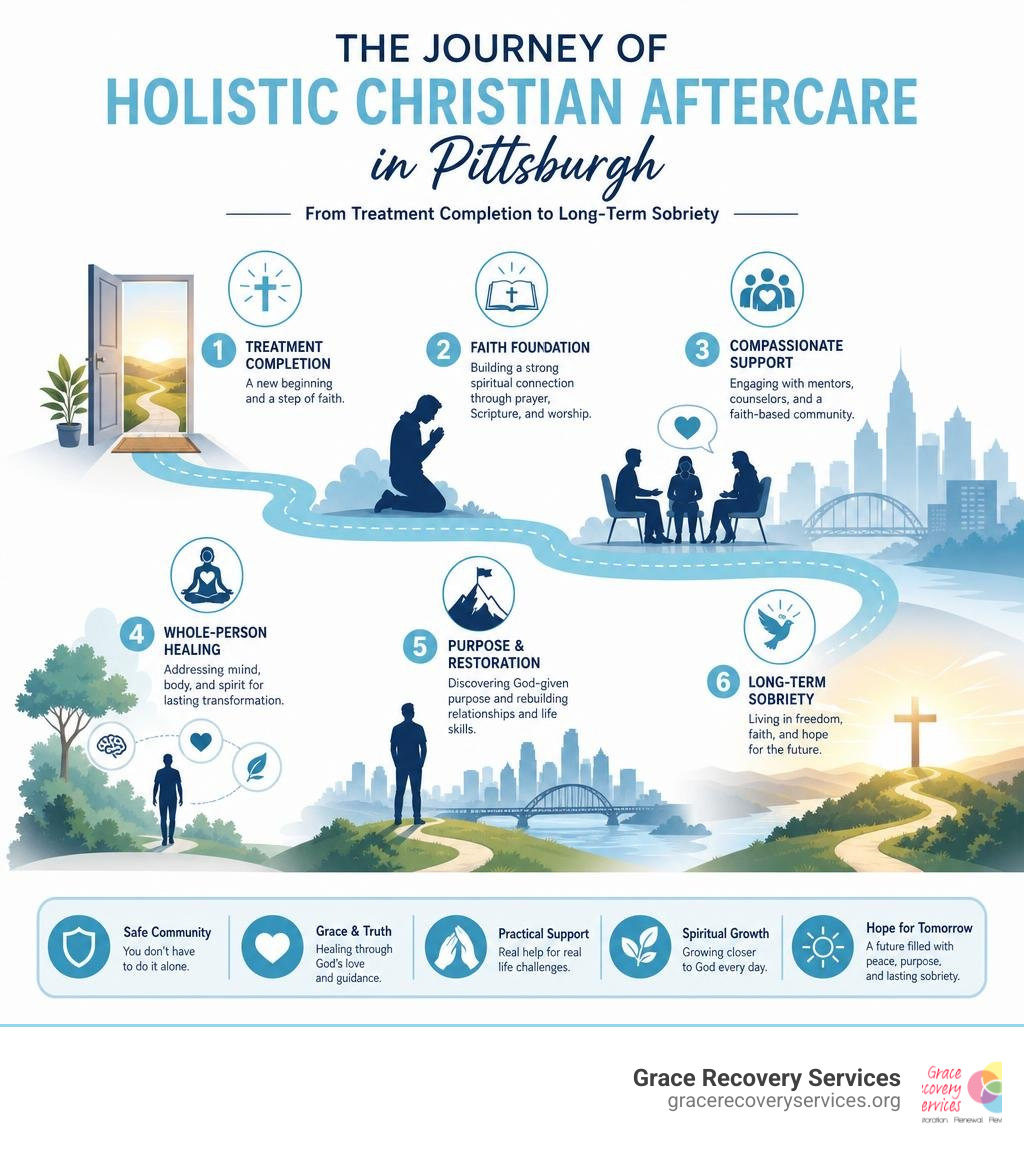
Christian aftercare programs in Pittsburgh go beyond relapse prevention checklists. They address the whole person — mind, body, and spirit. They pair evidence-based clinical support with community, mentoring, and a sense of purpose rooted in something deeper than willpower alone.
At Grace Recovery Services, we believe healing is possible for everyone — regardless of where you are in your faith journey. Our outpatient programs in Western Pennsylvania are built on compassion, trauma-informed care, and the conviction that grace, not shame, is the foundation of lasting recovery.
Aftercare programs pittsburgh christian terms to know:
Why Aftercare Programs Pittsburgh Christian Communities Trust Build a Lasting Foundation
Transitioning back to daily life in Western Pennsylvania after primary substance use treatment can feel like walking a tightrope. The initial bubble of a structured environment is gone, and the realities of work, family, and old environments return. This is why having a robust aftercare plan is not just helpful—it is essential for long-term relapse prevention.
When we look at the local landscape in June 2026, the challenges are clear. The 52% recidivism rate in the Allegheny County Jail and the 24% growth in our local homeless population since 2022 highlight how easy it is to fall back into old, destructive cycles without a safety net. Addiction is a chronic, relapsing condition that requires ongoing management, much like other long-term health struggles.

Faith-based aftercare programs pittsburgh christian communities trust provide a unique bedrock for this transition. Rather than viewing recovery as merely “not using,” Christian aftercare focuses on building a brand-new lifestyle. It addresses the isolation that so often triggers a return to substance use by immediately plugging clients into a warm, non-judgmental community of peers, mentors, and local church networks.
By engaging in structured aftercare, you are not just monitoring your sobriety; you are actively working on the underlying issues that drove the substance use in the first place. For practical steps on navigating this delicate phase, you can read our guide on How to Stay Sober After Rehab.
Faith-Based vs. Secular Aftercare: What Makes the Difference?
While traditional secular aftercare programs offer valuable clinical tools, cognitive behavioral strategies, and peer accountability, faith-based aftercare introduces a deeply personal, spiritual dimension to the healing process.
The primary difference lies in how we view the root of addiction. Secular programs focus heavily on behavioral modification and coping skills. Faith-based aftercare, however, recognizes that deep-seated addiction is often accompanied by a profound “spiritual injury”—a sense of brokenness, guilt, shame, and separation from God.
Instead of defining yourself by your past choices or labeling yourself permanently by your struggles, Christian aftercare invites you to discover your true identity in Christ. This identity shift—moving from “addict in recovery” to “redeemed child of God”—provides a powerful, intrinsic motivation that goes far beyond avoiding negative consequences.
| Component | Secular Aftercare | Christian Aftercare |
|---|---|---|
| Primary Focus | Behavioral modification, symptom reduction, and coping strategies. | Holistic restoration of mind, body, spirit, and relationship with God. |
| Source of Strength | Personal willpower, peer groups, and clinical tools. | Reliance on the Holy Spirit, Scripture, grace, and community. |
| Identity | Often centers on managing a chronic diagnosis. | Centers on a new identity in Christ as redeemed and valued. |
| View of Shame | Addressed through psychological cognitive reframing. | Dissolved through biblical grace, forgiveness, and unconditional love. |
| Community Integration | Support groups, clinical alumni networks. | Church partnerships, discipleship, and local faith families. |
By blending clinical excellence with spiritual depth, faith-based options provide a double-layered shield against relapse. If you want to dive deeper into this comparison, explore our article on Faith-Based Aftercare in Pittsburgh for Lasting Sobriety.
Core Services Offered by Christian Aftercare Programs in Pittsburgh
To support long-term restoration, Christian aftercare programs in the Pittsburgh area provide a comprehensive suite of services designed to rebuild a client’s life from the ground up. These services are holistic, acknowledging that spiritual growth must be accompanied by practical stability.
- One-on-One Mentoring & Discipleship: Clients are paired with mature believers or individuals further along in their own recovery journeys. These mentors celebrate milestones, offer a listening ear during tough moments, and provide real-life accountability.
- Employment Counseling & Career Guidance: Finding meaningful work is a critical piece of the recovery puzzle. Many faith-based initiatives help clients build resumes, practice interview skills, and connect with local, recovery-friendly employers. For young adults looking to integrate their faith with professional leadership development, the Pittsburgh Fellows | Christian business leadership development program is an excellent local resource that helps bridge the gap between spiritual growth and career readiness.
- Family Support & Reunification: Addiction impacts the entire family system. Aftercare programs frequently host family support groups, counseling sessions, and parenting classes to help repair relational wounds and establish healthy, grace-filled boundaries.
- Practical Reentry Assistance: For those transitioning out of institutional settings, programs offer hands-on help with basic needs, transportation coordination, and navigating local housing resources.
Essential Requirements for Aftercare Programs: Pittsburgh Christian Eligibility Criteria
While faith-based aftercare programs are highly compassionate, they do maintain certain requirements to ensure a safe, supportive, and focused environment for all clients.
- Commitment to Sobriety: For outpatient aftercare, clients must be medically stable and committed to a sober lifestyle. While slips and relapses are met with grace and therapeutic support rather than immediate rejection, active participation requires a sincere desire to walk in recovery.
- Program Length and Consistency: Outpatient aftercare is not a quick fix. Programs typically expect active engagement for several months, often transitioning to a less intensive, weekly check-in model as the client stabilizes.
- Background and Safety Clearances: Depending on the specific services utilized—especially those involving volunteer programs or family-centered environments—basic background checks and clearances may be required to protect vulnerable populations.
- Active Engagement: Clients are expected to show up for scheduled counseling sessions, participate in group discussions, and actively work on their personalized recovery plans.
How Local Churches and Community Partnerships Strengthen Aftercare Programs: Pittsburgh Christian Networks
One of the greatest strengths of faith-based recovery in Western Pennsylvania is the active involvement of the local church. Christian aftercare does not operate in a clinical vacuum; it is deeply woven into the fabric of our communities.
In areas like Penn Hills, North Huntingdon, and Irwin, local congregations partner with recovery ministries to provide safe spaces, meals, volunteer mentors, and a genuine sense of belonging. Instead of feeling isolated after treatment, clients step into a ready-made community that welcomes them with open arms.
These community partnerships extend to local educational and family resources as well. For example, organizations like the Penn Hills After School Program – Allegheny Intermediate Unit demonstrate how community-centered networks support local families, creating a broader environment of stability and care that benefits parents walking through their recovery journey.
Addressing Trauma, Mental Health, and Spiritual Injury in Recovery
At Grace Recovery Services, we recognize that you cannot treat substance use without addressing what lies beneath. Approximately 32% of the local homeless population faces a diagnosed mental health condition, and a vast majority of individuals struggling with substance use disorders have experienced significant, unaddressed trauma.
Our approach is deeply trauma-informed. We understand that trauma and “spiritual injury”—such as feeling abandoned by God or carrying deep shame from past hurts—must be healed for recovery to last.

To guide this deep healing, we utilize our signature Counseling Blueprint, a four-stage journey that beautifully integrates clinical therapy with biblical truth:
- Take Off the Mask: We focus on building genuine rapport and trust. In this safe, confidential space, you don’t have to pretend to have it all together. You can be completely honest about your struggles.
- Heal the Wounds: We gently explore the emotional and relational hurts, past trauma, and family dynamics that have fueled the addiction.
- Remove the Toxins: Together, we identify unhelpful beliefs, lingering lies, and toxic shame that keep you trapped in old patterns.
- Replace with Truth: We install empowering, accurate, and biblical perspectives about who you are, how much you are loved, and the bright future God has planned for you.
By combining evidence-based clinical modalities like Cognitive Behavioral Therapy (CBT) and Dialectical Behavior Therapy (DBT) with this spiritually grounded blueprint, we help clients find true freedom. To learn more about how this looks in our intensive outpatient sessions, explore our Christian Intensive Outpatient Treatment options.
Accessibility, Affordability, and Family Involvement in Western PA
We firmly believe that financial limitations should never stand in the way of life-saving care. That is why we work hard to make our faith-integrated outpatient programs as accessible and affordable as possible for families across Western Pennsylvania, Westmoreland County, and the greater Pittsburgh area.
We accept most major insurance plans, including UPMC, Highmark, and Blue Cross Blue Shield, and we offer sliding scale fee structures for those who qualify.
Furthermore, we place a heavy emphasis on family involvement. True restoration involves the entire family unit. We help families navigate the complex emotions of recovery, providing biblical principles for establishing healthy boundaries, rebuilding broken trust, and fostering mutual forgiveness. Through our Faith-Based Outpatient Addiction Treatment, we walk alongside both the individual and their loved ones as they step into a new season of life together.
Frequently Asked Questions About Faith-Based Aftercare
Do I need to be religious to participate in a Christian aftercare program?
Absolutely not. At Grace Recovery Services, our doors are open to everyone. We welcome individuals who have doubts, those from different faith backgrounds, or those who are simply curious about how spirituality can aid in their healing. Our environment is entirely non-judgmental and supportive; we meet you exactly where you are on your journey, without any pressure.
How long do these aftercare programs typically last?
While recovery is a lifelong journey, formal aftercare programs generally focus heavily on the critical first year of sobriety. Many clients participate in structured outpatient therapy or support groups multiple times a week initially, gradually transitioning to weekly or bi-weekly check-ins. Even after completing the formal program, clients are welcomed into our alumni network for ongoing mentorship and community connection.
Is faith-based aftercare affordable in the Pittsburgh area?
Yes. Many faith-based outpatient programs accept major health insurance plans (such as Highmark and UPMC) to help cover the costs of clinical care. Additionally, sliding scale fees and local nonprofit support ensure that cost is not a barrier to receiving the help you need.
Finding Your Path to Renewal with Grace Recovery Services
If you are ready to take the next step in your recovery journey, you do not have to walk this path alone. True healing—healing that restores your mind, heals your body, and revives your spirit—is within reach.
At Grace Recovery Services, we are dedicated to helping you experience lasting restoration and hope. Located in the Penn Hills area of Pittsburgh and North Huntingdon (Irwin, PA), our compassionate team is ready to welcome you with open arms and a personalized plan for your future.
We invite you to take a step toward grace today. Explore Our Christian Recovery Services and contact our team for a compassionate, confidential assessment. Your story of renewal starts here.
This article was researched with AI and heavily edited by Stephen Luther for accuracy and relevance.
Stephen Luther is the Executive Director and Founder of Grace Christian Counseling, Grace Recovery Services, WPA Counseling, NuWell Online Counseling and Coaching, and NuWell Health. He holds a Master’s degree in Education from the University of Georgia and a Master’s degree in Marriage and Family Therapy from Duquesne University. He is a licensed professional counselor in Pennsylvania.
Since 1997, Steve has been helping children, adolescents, and adults overcome a wide range of emotional and relational challenges. He specializes in working with hurting families, including those with foster, adopted, or traumatized children. Steve uses Attachment-Based Therapy, Splankna Healing, and Therapeutic Parent Coaching to support healing and restoration.
This guide is for educational and spiritual encouragement and is not a substitute for personalized professional counseling. If you are in crisis, please reach out for immediate help.