Why So Many Western Pennsylvania Families Are Turning to Faith-Based Counseling
Western PA faith counseling brings together two things that matter deeply to a lot of people in our region: professional mental health care and a living, active faith.
If you’re looking for faith-based counseling options in Western Pennsylvania, here’s a quick overview of the primary pathways available:
- Individual Christian Counseling – Focuses on personal mental health, anxiety, depression, and spiritual growth with a licensed professional.
- Family and Marital Faith-Based Therapy – Helps couples and families restore relationships, build communication, and heal wounds using lowercase biblical principles.
- Specialized Christian Addiction Recovery – Outpatient programs (like IOP and PHP) that combine clinical therapy with spiritual discipleship to overcome substance use disorders.
- Pastoral Care and Support Groups – Church-led guidance and peer support focused on spiritual encouragement and community connection.
- Grace Recovery Services – Outpatient faith-based addiction recovery and trauma-informed counseling in the Pittsburgh / Western PA area; IOP, PHP, and aftercare support rooted in lowercase biblical principles.
For many people across Allegheny County, Westmoreland County, and the broader Pittsburgh region, faith isn’t separate from healing — it is part of healing.
Yet finding a counselor who takes both your mental health and your faith seriously can feel harder than it should be.
That’s a real gap. And it’s one that a growing number of faith-based counseling providers in Western Pennsylvania are working hard to close.
Whether you’re navigating addiction, anxiety, trauma, or a season of deep personal loss, the right counselor can make all the difference. At Grace Recovery Services, we believe healing touches every part of a person — mind, body, and spirit. That’s not just a tagline. It shapes how we walk alongside every client who comes through our doors.
This guide compares the major faith counseling options across Western PA so you can make an informed, confident choice for yourself or someone you love.
Western pa faith counseling vocabulary:
The Role of Western PA Faith Counseling in Mental Health and Recovery
When we look at the landscape of mental health care today in July 2026, we see a growing realization that human beings are not just biological machines. We are emotional, relational, and deeply spiritual creatures. Traditional secular counseling does an excellent job of addressing cognitive patterns and behavioral habits. However, it often stops short of exploring a person’s spiritual foundation.
For those who hold a Christian worldview, ignoring faith during therapy can feel like trying to heal with one hand tied behind your back. This is where western pa faith counseling steps in to bridge the gap.

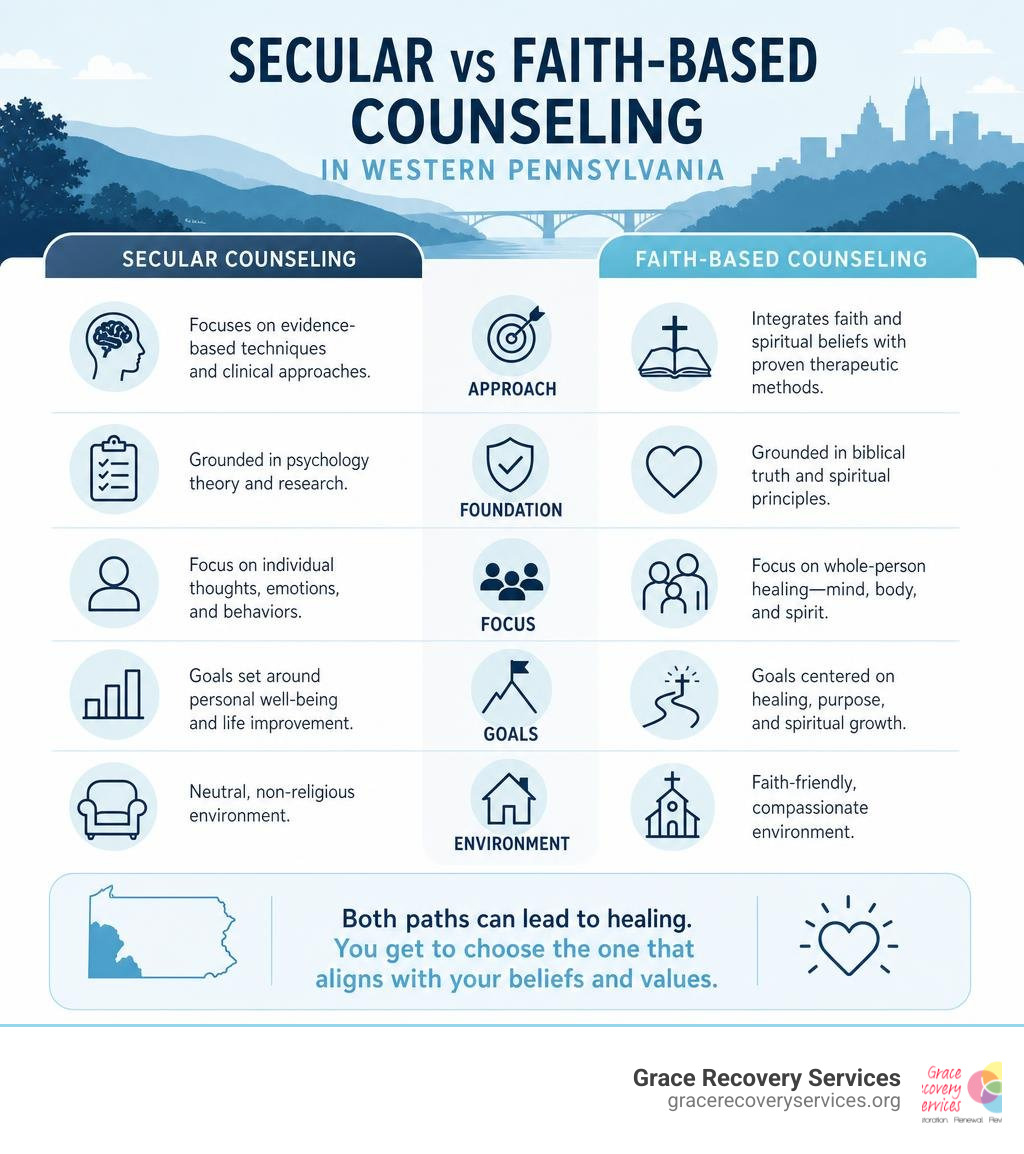
Faith-based counseling differs from secular therapy not by rejecting clinical science, but by expanding it. While secular counseling relies strictly on humanistic psychological theories, faith-integrated therapy views psychology as the study of God’s intricate design for the human mind and relationships. It uses the same evidence-based tools but anchors them in eternal truths, prayer, and Scripture.
By choosing this path, clients don’t have to leave their deepest convictions at the waiting room door. Instead, they can experience a holistic approach where clinical psychology and biblical principles work hand-in-hand. If you want to dive deeper into how this integration brings lasting restoration, you can read more about Finding Peace Through Western PA Christian Counseling.
What to Expect from Western PA Faith Counseling for Addiction
Navigating a substance use disorder is one of the most grueling battles a person or family can face. In our outpatient programs in Penn Hills and North Huntingdon, we see that addiction affects the whole person. It damages the body, clouds the mind, isolates the individual from loved ones, and wounds the spirit.
When you seek faith-based counseling for addiction in Western Pennsylvania, you can expect an approach that refuses to treat your struggle as merely a chemical problem. You will experience outpatient care that combines clinical excellence with intentional spiritual growth. This means you will receive professional therapeutic interventions to manage cravings, process trauma, and rebuild life skills, while simultaneously exploring biblical truths that restore your identity and purpose.
This dual focus is essential because lasting recovery rarely happens without addressing the spiritual void that addiction so often tries to fill. To understand how these spiritual and clinical elements come together in early recovery, check out our Faith-Based Addiction Counseling Beginner’s Guide. For a broader look at local resources, you can also read about Western PA Christian Addiction Counseling and explore Everything You Need to Know About Christian Addiction Counseling.
The Benefits of Spiritually Integrated Therapy
Why does integrating spirituality into clinical therapy yield such profound results? First and foremost, it establishes a deep sense of emotional safety. When clients know their counselor shares their foundational beliefs, a barrier immediately drops. There is no fear of being judged for practicing prayer, quoting Scripture, or expressing spiritual struggles like feeling abandoned by God.
Furthermore, spiritually integrated therapy offers a framework of grace-filled support. Shame is one of the greatest obstacles to mental health recovery and sobriety. Secular models can offer self-compassion, but faith-based counseling introduces the ultimate antidote to shame: the unconditional love and redemptive grace of God.
This perspective is incredibly powerful for reducing the stigma surrounding mental health issues and addiction within faith communities. Seeking professional help is not a failure of faith; rather, it is an active step of stewardship, acknowledging our human limitations and inviting God’s healing through the hands of trained professionals.
Integrating Clinical Excellence with Spiritual Truth
A common misconception is that faith-based counselors only offer prayer and Bible verses, skipping the hard clinical work. In reality, reputable Christian counselors in Western PA are highly trained professionals who utilize the exact same evidence-based practices as their secular peers.

At our centers, we combine clinical tools like Cognitive Behavioral Therapy (CBT), Dialectical Behavior Therapy (DBT), and trauma-informed care with a Christian worldview. We believe that “all truth is God’s truth.” If a psychological tool helps untangle a distorted thinking pattern or calms a hyperactive nervous system, it aligns perfectly with God’s desire for our wholeness. For readers who want a neutral overview of how psychotherapy can support mental health, the National Institute of Mental Health offers helpful information on psychotherapies and evidence-based treatment approaches.
By blending clinical rigor with spiritual depth, we help clients build a resilient foundation for long-term mental health. To learn more about how to find local professionals who practice this balanced approach, view our Faith-Based Counseling Near Me: Local Experts Guide.
The Four Stages of the Counseling Blueprint
To guide our clients from a state of merely surviving to truly thriving, we utilize a structured, compassionate framework we call the Counseling Blueprint. This four-stage healing journey ensures we address both clinical symptoms and spiritual blockages methodically.
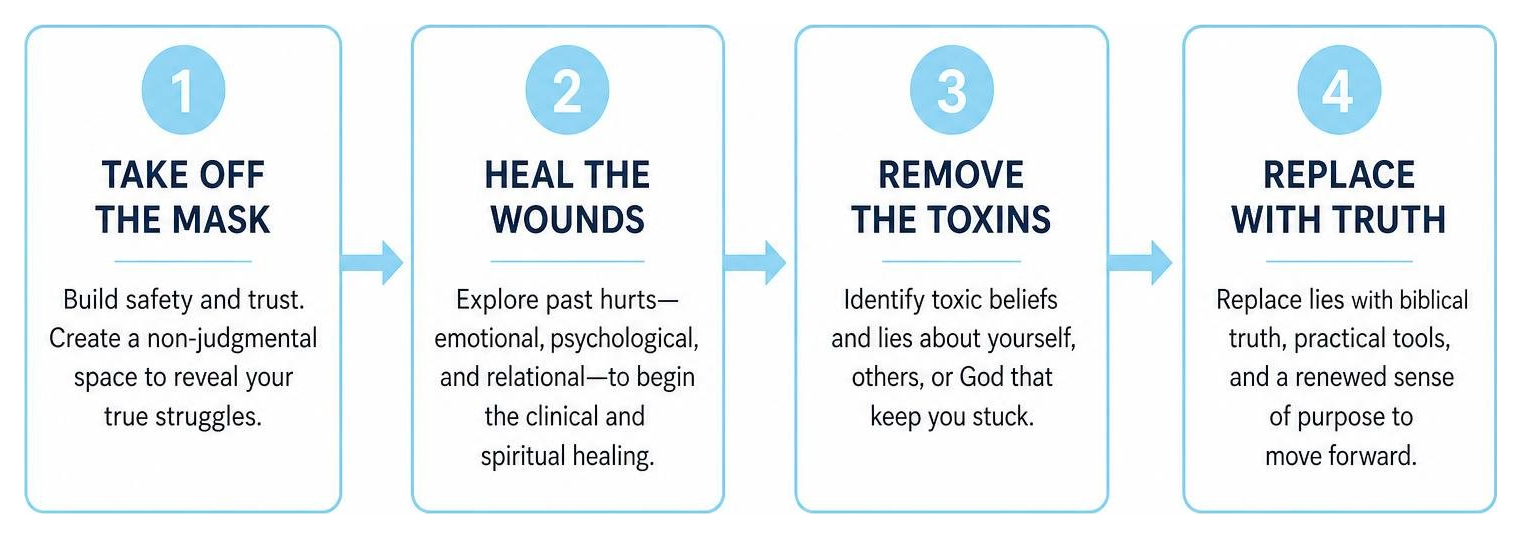
- Take Off the Mask: We begin by building genuine rapport, safety, and trust. Many people enter therapy wearing a mask of perfection or strength to protect themselves. We create a non-judgmental space where you can safely take off that mask and reveal your true struggles.
- Heal the Wounds: Next, we gently explore the emotional, psychological, and relational hurts of your past. Whether these wounds stem from childhood trauma, family rejection, or the fallout of addiction, we bring them into the light to begin the clinical and spiritual healing process.
- Remove the Toxins: In this stage, we identify the unhelpful, toxic beliefs and lingering lies you may have embraced about yourself, others, or God (such as “I am unlovable,” “I am a failure,” or “God has given up on me”).
- Replace with Truth: Finally, we work to install empowering, accurate, and biblically sound perspectives. We replace toxic lies with the truth of who you are in Christ, equipping you with practical coping strategies and a renewed sense of purpose to move forward.
Comparing Faith-Based Counseling Options in Western Pennsylvania
Western Pennsylvania is blessed with several dedicated pathways offering faith-integrated care. Depending on your location—whether you are in Allegheny County, Westmoreland County, or the surrounding areas—and your specific clinical needs, different formats of care may suit you best.
To help you navigate your options, we have compiled an objective comparison of the primary regional formats providing faith-based care:
| Care Format | Primary Service Focus | Best Suited For | Key Distinctives |
|---|---|---|---|
| Pastoral Support & Lay Counseling | Spiritual guidance, prayer, and biblical discipleship | Mild situational distress, spiritual questions, and general encouragement | Provided by church staff; non-clinical; highly accessible and community-focused |
| General Christian Counseling | Mental health, marriage, family, and trauma therapy | Anxiety, depression, relationship issues, and personal growth | Licensed professionals (LPCs, LMFTs); integrates clinical tools with biblical truth |
| Specialized Outpatient Recovery (IOP/PHP) | Intensive substance use treatment and co-occurring trauma care | Individuals overcoming addiction who need structured, daily clinical and spiritual support | Highly specialized; combines medical/clinical evidence-based practices with deep spiritual restoration |
Each of these approaches plays a vital role in our community. If you are specifically seeking specialized, intensive support for substance use or co-occurring mental health challenges, exploring dedicated Christian Recovery Services can help you find the precise level of outpatient care required for lasting sobriety.
Choosing the Right Western PA Faith Counseling Provider
With several excellent pathways available, how do you choose the right provider? We recommend looking at three main practical factors:
- Licensing and Credentials: Ensure the counselors on staff are Licensed Professional Counselors (LPCs), Licensed Marriage and Family Therapists (LMFTs), or Licensed Clinical Social Workers (LCSWs). True faith-based counseling should never sacrifice clinical credentials for theological alignment; you deserve both.
- Insurance and Accessibility: Verify if the provider accepts your insurance plan. Many regional networks accept major carriers like Highmark, UPMC, and Aetna, which significantly lowers the financial barrier to care.
- Telehealth vs. In-Person: If you live in a rural pocket of Western PA or have a demanding schedule, look for providers that offer robust, HIPAA-compliant telehealth platforms.
For those residing in the Westmoreland County area, finding localized care is incredibly convenient. For instance, clients can easily access professional support through our outpatient services in North Huntingdon and the surrounding areas to receive compassionate, faith-integrated therapy close to home.
Specialized Faith-Based Support for Addiction and Trauma
There is a profound connection between trauma and substance use disorders. Often, addiction begins as an attempt to self-medicate deep, unresolved emotional pain or traumatic memories. When treating these co-occurring challenges, a standard counseling session once a week is sometimes not enough.
For individuals requiring structured, comprehensive support, specialized outpatient programs—such as Intensive Outpatient Programs (IOP)—provide the perfect balance of intensive therapy and daily real-world application. At our facilities, we focus heavily on trauma-informed care. This means we don’t ask, “What is wrong with you?” Instead, we gently ask, “What happened to you?” and walk with you toward spiritual and psychological resolution.
If you or a loved one are ready to take this step in the Pittsburgh area, you can explore specialized programs like Christian Addiction Recovery Pittsburgh, locate a dedicated Christian Rehab Pittsburgh outpatient program, or find hope through Faith-Based Recovery Pittsburgh. For those seeking a fully unified clinical and spiritual treatment path, our Christian Integrated Addiction Treatment options offer a seamless way to heal.
Healing Relational and Family Wounds
Addiction and mental health struggles never occur in a vacuum. They ripple outward, affecting spouses, children, parents, and siblings. Therefore, true restoration must extend beyond the individual client to encompass the entire family unit.
In our counseling sessions, we emphasize family restoration guided by grace over shame. We help families rebuild shattered trust, establish healthy boundaries, and learn compassionate communication patterns. By involving loved ones in the recovery process, we help establish a stable, supportive home environment that is vital for long-term sobriety.
Furthermore, we connect families to broader faith-based community support groups, ensuring they never have to walk this challenging road alone.
Frequently Asked Questions About Faith-Based Therapy
Starting therapy can bring up a lot of questions. Here are some of the most common inquiries we receive from families looking into western pa faith counseling:
Does faith-based counseling accept major insurance plans?
Yes, the vast majority of established faith-based counseling organizations in Western Pennsylvania accept major health insurance plans. This includes widely used regional and national carriers such as:
- Highmark Blue Cross Blue Shield
- UPMC Health Plan
- Aetna
- UnitedHealthcare / Optum
- TRICARE (for military families)
We always recommend calling your insurance provider or contacting the counseling office directly before your first session to verify your specific coverage, copays, or deductible requirements.
What is the difference between pastoral counseling and professional faith-based counseling?
While both are valuable, they serve different purposes:
- Pastoral Counseling is typically provided by church pastors or ministry leaders. It focuses primarily on spiritual guidance, biblical discipleship, prayer, and navigating faith crises. Pastors are spiritual authorities, but they are generally not clinically licensed to treat moderate-to-severe mental health disorders or complex trauma.
- Professional Faith-Based Counseling is conducted by state-licensed therapists (such as LPCs or LMFTs) who hold master’s or doctoral degrees in counseling or psychology. They are clinically trained to diagnose and treat mental health conditions, use evidence-based therapeutic modalities, and adhere to strict state ethical codes—while fully integrating biblical principles and Christian spirituality into the clinical process.
If you are looking for this professional, clinically licensed level of care in the eastern suburbs of Pittsburgh, our team at Grace Recovery Services offers dedicated outpatient support in the Penn Hills area, combining clinical excellence with a compassionate, faith-integrated approach.
Can I receive faith-integrated therapy online?
Absolutely. Almost all major faith counseling providers in Western PA now offer secure, HIPAA-compliant telehealth options. This allows you to meet with your licensed therapist from the comfort and privacy of your home anywhere in Pennsylvania, making consistent care highly accessible regardless of transportation or scheduling barriers.
Conclusion
If you or someone you love is struggling with mental health challenges, trauma, or a substance use disorder, please know that you do not have to carry this burden in isolation. Healing is entirely possible, and you deserve a safe space where your clinical needs and your spiritual heart are treated with equal respect.
At Grace Recovery Services, we are deeply committed to providing compassionate, faith-centered, and trauma-informed outpatient care in Western Pennsylvania. With convenient locations in North Huntingdon and the Pittsburgh area (Penn Hills), our team of dedicated professionals is ready to walk with you through every stage of our Counseling Blueprint—from taking off the mask to standing firmly in God’s truth.
We invite you to take that courageous first step toward restoration today. Explore our compassionate recovery services and let us support you on your journey toward a renewed, whole, and thriving life.
This article was researched with AI and heavily edited by Stephen Luther for accuracy and relevance.
Stephen Luther is the Executive Director and Founder of Grace Christian Counseling, Grace Recovery Services, WPA Counseling, NuWell Online Counseling and Coaching, and NuWell Health. He holds a Master’s degree in Education from the University of Georgia and a Master’s degree in Marriage and Family Therapy from Duquesne University. He is a licensed professional counselor in Pennsylvania.
Since 1997, Steve has been helping children, adolescents, and adults overcome a wide range of emotional and relational challenges. He specializes in working with hurting families, including those with foster, adopted, or traumatized children. Steve uses Attachment-Based Therapy, Splankna Healing, and Therapeutic Parent Coaching to support healing and restoration.
This guide is for educational and spiritual encouragement and is not a substitute for personalized professional counseling. If you are in crisis, please reach out for immediate help.