
When Faith and Healing Meet: Finding the Right Support Near You
If you’re searching for faith-based counseling near me, here’s a quick answer to help you get started:
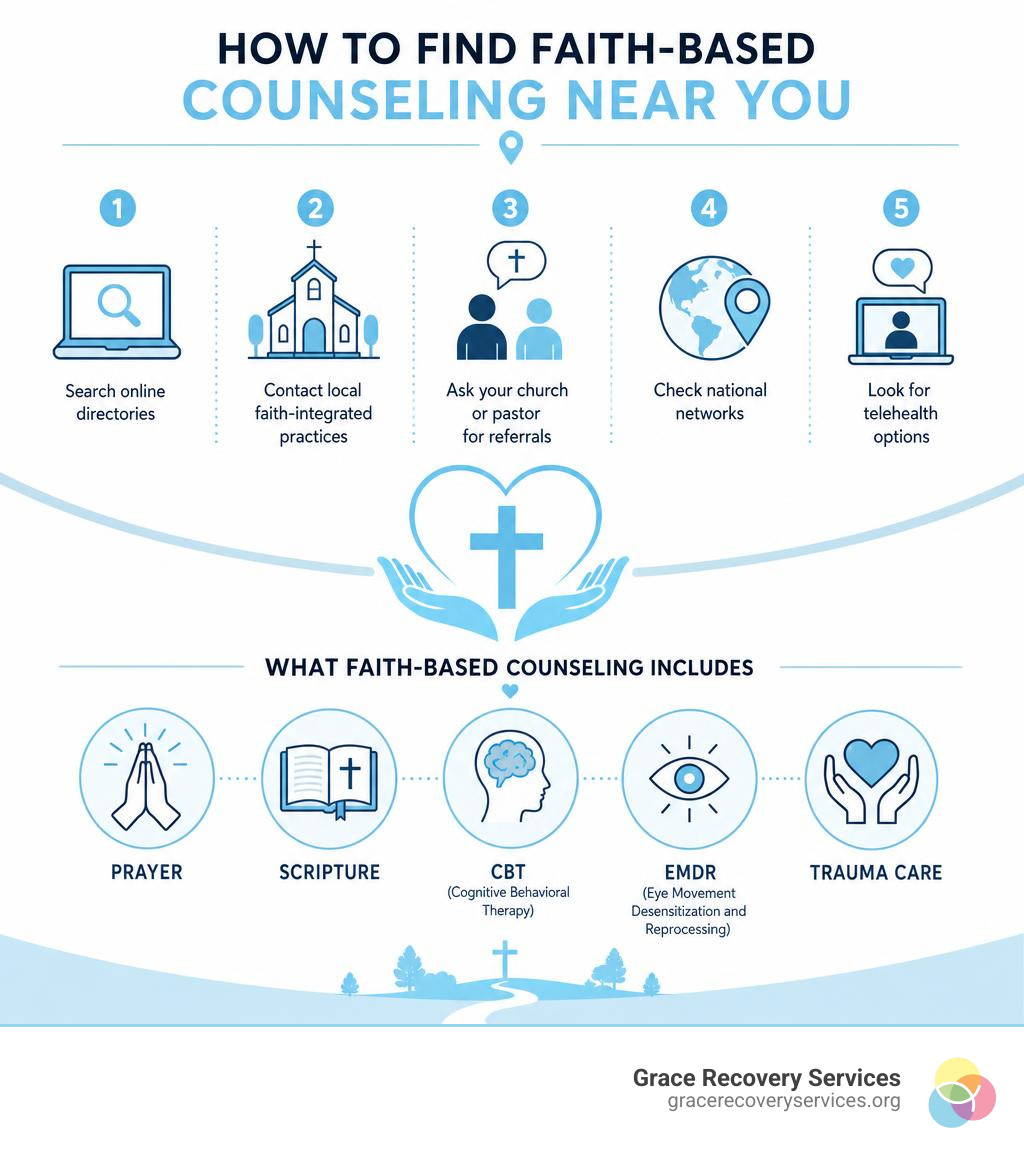
How to find faith-based counseling near you:
- Search reputable online directories and filter by “Christian,” “faith-based,” or “spirituality” under therapist specialties
- Contact local faith-integrated practices in your area, including those serving Western Pennsylvania and the Pittsburgh region
- Ask your church or pastor for referrals to licensed, faith-integrated counselors
- Review counselor credentials carefully to confirm clinical licensing, faith integration, insurance options, and areas of specialty
- Look for telehealth options because many licensed Christian counselors offer secure video sessions when local access is limited
About 65% of Americans say their faith is important to their mental health — yet many still feel they have to choose between professional therapy and their spiritual beliefs. They don’t.
Faith-based counseling brings those two things together. It combines clinical mental health care with the values, beliefs, and spiritual practices that already guide your life. For many people — especially those navigating addiction, trauma, grief, or anxiety — that integration makes healing feel more whole.
At Grace Recovery Services, we’ve seen how powerful it is when someone in Western Pennsylvania finds support that doesn’t ask them to leave their faith at the door. Whether you’re in Pittsburgh, Allegheny County, or the surrounding area, compassionate, faith-centered help is closer than you might think.
What Is Faith-Based Counseling and How Does It Differ from Traditional Therapy?
At its core, faith-based counseling near me is the intentional integration of clinical psychology with a spiritual worldview. While traditional therapy focuses primarily on the mental, emotional, and behavioral aspects of a person, faith-based counseling recognizes that we are also spiritual beings.
Traditional therapy is incredibly valuable. It uses evidence-based frameworks to help you understand your thoughts, process trauma, and develop healthy coping mechanisms. Faith-based counseling doesn’t throw those clinical tools away. Instead, it builds upon them. By bringing biblical values and a connection to God into the clinical space, this approach addresses the whole person—mind, body, and spirit.
For many Christians, separating their faith from their emotional struggles feels incomplete. If your relationship with God is the foundation of how you view the world, it only makes sense that your faith should also be a cornerstone of your healing process. Faith-based counseling provides a safe, non-judgmental environment where you can explore emotional pain without having to hide your spiritual convictions.
To help visualize how these two approaches compare, consider the following breakdown:
| Feature | Traditional Therapy | Faith-Based Counseling |
|---|---|---|
| Primary Focus | Mental, emotional, and behavioral health | Mental, emotional, behavioral, and spiritual health |
| Core Foundation | Clinical psychology and evidence-based theories | Clinical psychology integrated with biblical truth |
| View of the Human Experience | Mind, body, and social environment | Mind, body, spirit, and relationship with God |
| Tools & Techniques | CBT, EMDR, talk therapy, mindfulness | CBT, EMDR, scripture reflection, prayer, grace-based frameworks |
| Handling Spiritual Doubts | Often referred out or treated as secondary | Welcomed as a natural part of personal growth and healing |
The Role of Scripture and Prayer in Healing
In a faith-integrated setting, the Bible is not used as a tool for shame or legalistic judgment. Instead, scripture serves as an anchor of hope, truth, and emotional restoration. When we face overwhelming challenges like trauma, grief, or substance use disorders, our internal narrative can easily become dominated by lies: “I am not enough,” “I am broken beyond repair,” or “I am completely alone.”
Integrating biblical principles allows us to counter those destructive narratives with the truth of God’s grace and love. Under the guidance of a compassionate therapist, scripture is used to remind you of your inherent worth, the promise of redemption, and the reality that you are never abandoned.
Prayer is another profound spiritual practice that we naturally weave into the therapeutic process. When appropriate and guided by your comfort level, prayer in a session acts as a moment to slow down, quiet racing thoughts, and surrender burdens that feel too heavy to carry alone. It invites the Holy Spirit into the room, fostering a deep sense of peace and emotional safety. If you are looking for a program that beautifully blends these spiritual elements with professional clinical care, our Christian Recovery Services are designed to support you every step of the way.
Finding the Right Faith Based Counseling Near Me
When you begin searching for faith-based counseling near me, it’s essential to find a provider who matches both your clinical needs and your spiritual values. If you live in Western Pennsylvania—whether in Pittsburgh, Penn Hills, North Huntingdon, or Irwin—you want local experts who understand the unique dynamics of our communities.
Finding the right counselor is highly personal. You want someone who offers a warm, welcoming environment where you can let your guard down.

At Grace Recovery Services, we emphasize local accessibility because we know that healing happens best within a supportive community. Connecting with a local provider makes it easier to attend consistent outpatient sessions, build a reliable support network, and access specialized care tailored to our region. If you or a loved one are seeking comprehensive help for substance use paired with spiritual support, our Western PA Christian Addiction Counseling program is specifically designed to meet those local needs.
Evaluating Credentials for Faith Based Counseling Near Me
As you look at different counseling options, you will likely encounter various types of credentials. Understanding these titles is crucial to ensuring you receive safe, ethical, and clinically sound care.
- Licensed Professional Counselors (LPCs), Licensed Marriage and Family Therapists (LMFTs), and Licensed Clinical Social Workers (LCSWs): These professionals have completed accredited graduate programs, accumulated thousands of hours of supervised clinical experience, and passed rigorous state licensing exams. When they practice faith-based counseling, they are integrating their high-level clinical training with a Christian worldview.
- Pastoral Counselors: These individuals typically have theological training and may be certified by organizations like the National Christian Counselors Association. While they offer deep spiritual wisdom and biblical guidance, it is important to verify if they also hold clinical licenses, especially if you are dealing with complex mental health issues, trauma, or substance use.
At Grace Recovery Services, we believe in clinical excellence. Our team is led by licensed professionals who combine evidence-based clinical training with a deep commitment to biblical principles. This ensure you don’t have to sacrifice high-quality clinical care to get the faith-integrated support you deserve. To learn more about how we merge professional credentials with spiritual integrity, explore our approach to Christian Integrated Addiction Treatment.
Tailoring Sessions to Your Comfort Level with Faith Based Counseling Near Me
One of the most common misconceptions about faith-based counseling is that it is rigid, preachy, or forced. In reality, professional faith-integrated therapy is entirely client-centered.
Your spiritual journey is unique, and a skilled therapist will always meet you exactly where you are. If you want to start every session with prayer and dive deeply into scripture, your counselor will happily facilitate that. On the other hand, if you are currently experiencing spiritual burnout, church hurt, or doubts, your counselor will provide a quiet, grace-filled space to process those feelings without any pressure to perform.
We believe that you should always control the pace and depth of faith integration in your sessions. Our goal is to foster genuine spiritual growth and emotional healing, never to impose beliefs or make you feel guilty. For those living in the eastern suburbs of Pittsburgh, our Christian Counseling in Penn Hills offers a highly personalized, compassionate space where your preferences are always respected.
How Faith-Integrated Therapy Addresses Anxiety, Trauma, and Addiction
Life’s heaviest burdens rarely come in isolation. Often, anxiety, unresolved trauma, and substance use disorders are deeply intertwined. When we try to treat these challenges using only secular tools, we can miss the profound spiritual wounds that lie beneath the surface—wounds of shame, isolation, and a lost sense of purpose.
By combining trauma-informed clinical care with faith-integrated perspectives, we can address these issues holistically.
- Anxiety: Faith-based counseling helps quiet racing thoughts by pairing cognitive tools with biblical truths about God’s sovereignty, peace, and care for us.
- Trauma: A trauma-informed approach recognizes that traumatic experiences impact the nervous system and the soul. We help clients process painful memories in a safe space, leaning on the ultimate promise of restoration and renewal.
- Addiction: Substance use often begins as an attempt to self-medicate deep emotional pain or trauma. Through our outpatient programs, we help clients break the cycle of addiction by replacing shame with grace and building a life anchored in faith.
If you are navigating the complex intersection of substance use and emotional pain, our specialized Western PA Christian Addiction Counseling provides a compassionate, structured path to lasting recovery.
Combining Evidence-Based Modalities with Spiritual Truth
We firmly believe that clinical science and spiritual truth are not enemies—they are partners in healing. God has gifted us with incredible insights into how the human brain and body function, and we utilize these evidence-based modalities alongside spiritual practices.
- Cognitive Behavioral Therapy (CBT): CBT focuses on identifying and changing negative, distorted thought patterns. In a faith-based setting, we align this clinical tool with scripture. We take “every thought captive” (2 Corinthians 10:5) and replace destructive mental narratives with God’s truth.
- Eye Movement Desensitization and Reprocessing (EMDR): EMDR is a highly effective, trauma-focused therapy that helps the brain reprocess traumatic memories. We use EMDR to help clients find relief from the physical and emotional triggers of trauma, while spiritually supporting them with the comforting truth of Christ’s presence during their hardest moments.
By weaving these advanced clinical tools together with spiritual disciplines, we help our clients build deep, lasting emotional resilience. To discover how we put this integrated philosophy into practice, read about our Christian Integrated Addiction Treatment programs.
What to Expect During a Faith-Based Counseling Session
If you’ve never been to therapy before—or if you’ve only experienced secular counseling—you might wonder what actually happens behind closed doors in a faith-integrated session.
First and foremost, you can expect a warm, comfortable, and confidential space. There are no clipboards, cold clinical stares, or judgment. Instead, you will find a collaborative partner who is dedicated to listening to your story with empathy and respect.

During your very first session, we will focus on getting to know you. We’ll discuss what brings you to counseling, what challenges you are currently facing, and what your goals are for therapy. We will also have an open conversation about your faith: what role it plays in your life, how you would like to integrate it into your sessions, and any boundaries you’d like to set.
While every session is tailored to your unique needs, a typical faith-based counseling session often includes the following components:
- A Welcoming Check-In: A brief moment to settle in, catch up on your week, and transition into the therapeutic space.
- Client-Guided Prayer or Reflection (Optional): If you desire, we can begin with a brief prayer or a moment of quiet reflection to focus our minds and hearts.
- Therapeutic Processing: Utilizing evidence-based techniques (like CBT or trauma-informed talk therapy) to explore specific struggles, behavioral patterns, or emotional wounds.
- Spiritual Integration: Connecting your clinical goals with biblical principles, exploring grace, discussing forgiveness, or reflecting on how God is moving in your life.
- Actionable Takeaways: Collaboratively developing practical, real-world tools and exercises to practice before your next session.
Insurance, Costs, and Accessibility Considerations
We understand that taking the step to seek counseling often comes with practical questions about costs and accessibility. At Grace Recovery Services, we believe that high-quality, faith-integrated care should be accessible to everyone in our Western Pennsylvania community.
Many people are pleased to learn that faith-based counseling is often covered by standard health insurance plans, just like traditional therapy. Because our programs are led by licensed clinical professionals, many major insurance providers, including regional plans in Westmoreland and Allegheny counties, help cover the cost of outpatient services.
To make care as accessible as possible, we offer:
- In-person outpatient sessions at our welcoming offices in Pittsburgh (Penn Hills area) and North Huntingdon.
- Flexible outpatient programs, including Intensive Outpatient Programs (IOP), which allow you to receive comprehensive care while maintaining your daily work and family commitments.
- Telehealth options for clients throughout Pennsylvania who prefer the convenience of secure, online video sessions from the comfort of home.
If you have questions about your specific insurance plan or want to discuss how to start your healing journey, we encourage you to reach out to our team. For more information on our local services and office locations, visit our guide on Christian Counseling in Penn Hills.
Frequently Asked Questions About Faith-Based Therapy
Is faith-based counseling suitable for everyone?
Yes, faith-based counseling can be incredibly beneficial for anyone, but it is entirely client-centered. At Grace Recovery Services, we welcome individuals from all backgrounds, regardless of where they are on their spiritual journey. If you do not identify as a Christian but are looking for compassionate, values-honoring care, our therapists will respect your beliefs and tailor their approach to your comfort level.
However, it is important to note that outpatient faith-based counseling has clinical boundaries. For individuals experiencing acute psychiatric emergencies, active psychosis, or severe suicidal ideation, a higher level of immediate medical or psychiatric intervention is necessary before transitioning into outpatient counseling.
Can I receive faith-based counseling if I am struggling with my faith?
Absolutely. In fact, struggling with your faith is one of the most common and healthy reasons to seek faith-based counseling. Life can bring painful seasons—such as the loss of a loved one, a traumatic event, or a prolonged struggle with addiction—that cause us to question God, feel spiritually disconnected, or experience “church hurt.”
Our offices are a safe, zero-judgment zone. We do not expect you to have it all figured out. Your counselor will walk beside you through your doubts, helping you process your grief and anger honestly, and offering a gentle path toward spiritual renewal at your own pace.
How do counselors handle serious mental health conditions?
Licensed faith-based counselors are trained to adhere to the highest clinical and ethical standards. When working with serious mental health conditions—such as bipolar disorder, severe clinical depression, or co-occurring substance use and mental health disorders—we combine spiritual support with rigorous clinical protocols. This often includes collaborating with psychiatrists for medication management, utilizing evidence-based trauma therapies like EMDR, and implementing structured safety plans. We believe that medical science and psychiatric support are gifts that work hand-in-hand with spiritual healing.
Conclusion
If you have been searching for faith-based counseling near me, please know that you do not have to walk this road alone. True healing is possible when we stop separating our mental health from our spiritual lives and instead allow grace, clinical excellence, and biblical truth to work together.
At Grace Recovery Services, our mission is to provide a compassionate haven of restoration, renewal, and revival for individuals and families across Western Pennsylvania. From our offices in Pittsburgh (Penn Hills) and North Huntingdon, we are dedicated to helping you heal from trauma, overcome addiction, and rediscover your God-given purpose.
No matter how dark the road has seemed, there is always hope for a bright tomorrow. If you are ready to take the first step toward a restored mind, body, and spirit, we invite you to reach out to us today. Explore our Christian Recovery Services and let us walk with you on your journey to wholeness.
This article was researched with AI and heavily edited by Stephen Luther for accuracy and relevance.
Stephen Luther is the Executive Director and Founder of Grace Christian Counseling, Grace Recovery Services, WPA Counseling, NuWell Online Counseling and Coaching, and NuWell Health. He holds a Master’s degree in Education from the University of Georgia and a Master’s degree in Marriage and Family Therapy from Duquesne University. He is a licensed professional counselor in Pennsylvania.
Since 1997, Steve has been helping children, adolescents, and adults overcome a wide range of emotional and relational challenges. He specializes in working with hurting families, including those with foster, adopted, or traumatized children. Steve uses Attachment-Based Therapy, Splankna Healing, and Therapeutic Parent Coaching to support healing and restoration.
This guide is for educational and spiritual encouragement and is not a substitute for personalized professional counseling. If you are in crisis, please reach out for immediate help.