
The Spiritual Connection: How Faith Supports Lasting Recovery
Bible verses for sobriety provide spiritual strength, clear-minded wisdom, and comforting reassurance to help you overcome cravings and navigate daily recovery. Grounding yourself in scripture offers practical guidance for managing temptation, replacing shame with God’s grace, and renewing emotional resilience throughout your journey.
Recovery touches every dimension of who we are: mental, physical, emotional, and spiritual. When a person is healing from a substance use disorder, addressing only the biological or psychological facets leaves an important piece of the picture incomplete. Exploring your faith offers a grounded sense of meaning that helps anchor daily life.
Clinical addiction research continually reinforces the power of spiritual practices during recovery. A 2006 study published in Alcoholism Treatment Quarterly revealed that spirituality, religious involvement, and a deep sense of life purpose significantly reduce stress and improve overall quality of life for individuals walking out of substance dependency. Furthermore, research published in Alcoholism: Clinical and Experimental Research found that 12-step recovery groups lower substance use largely by encouraging and deepening participants’ spiritual practices.
The Substance Abuse and Mental Health Services Administration (SAMHSA) identifies Purpose as one of the four foundational dimensions supporting a life in recovery—alongside Health, Home, and Community. Cultivating spiritual wellness gives individuals a compelling reason to stay sober when life presents unexpected hurdles.
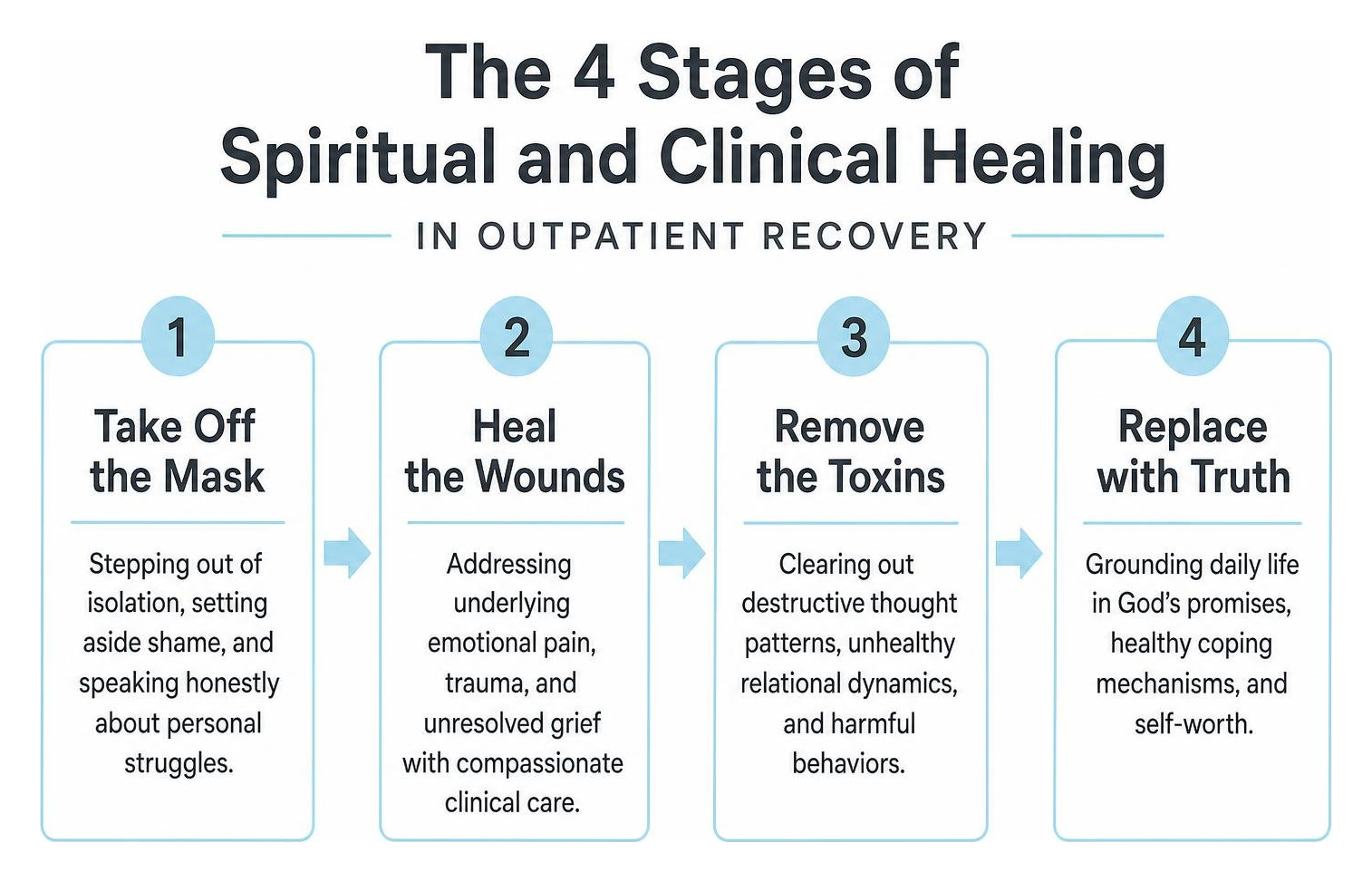
In our outpatient treatment programs across Western Pennsylvania, we walk alongside clients using our four-stage Counseling Blueprint:
- Take Off the Mask: Stepping out of isolation, setting aside shame, and speaking honestly about personal struggles.
- Heal the Wounds: Addressing underlying emotional pain, trauma, and unresolved grief with compassionate clinical care.
- Remove the Toxins: Clearing out destructive thought patterns, unhealthy relational dynamics, and harmful behaviors.
- Replace with Truth: Grounding daily life in God’s promises, healthy coping mechanisms, and self-worth.
Integrating biblical insights with clinical care creates a safe space to heal. As physician and addiction specialist Olapeju Simoyan discusses in Faith & Sobriety: What The Bible Says About Drinking Alcohol, understanding scripture within a thoughtful medical context helps individuals build sustainable habits. Engaging with comforting scriptures to help with addiction and reclaim your life equips you with a dependable spiritual toolkit whenever cravings or difficult emotions arise.
12 Powerful Bible Verses for Sobriety and Healing
Scripture provides encouragement, gentle boundary markers, and constant reminders of God’s grace. Below are twelve foundational verses grouped by practical themes to help guide your daily walk in sobriety.
biblical Warnings and Wisdom on Alcohol
1. Proverbs 20:1
“Wine is a mocker, strong drink is a brawler, and whoever is led astray by it is not wise.” — Proverbs 20:1 – Bible Gateway
This proverb speaks directly to the deceptive nature of intoxicating substances. Alcohol often promises relaxation, confidence, or temporary relief, but it frequently delivers conflict, impaired judgment, and emotional distress. Recognizing that substances distort our perception allows us to value clear-headed wisdom. Studying what the Bible says about substance abuse helps clarify why scripture consistently encourages clear-minded awareness.
2. Ephesians 5:18
“And do not get drunk with wine, for that is debauchery, but be filled with the Spirit.” — Eph_5:18 – Bible Gateway
The Apostle Paul presents a helpful contrast here: instead of looking outside ourselves for chemical numbness or artificial peace, we are invited to be guided internally by the Holy Spirit. This verse encourages a positive trade-off—replacing habits that diminish our awareness with spiritual connection, gratitude, and genuine peace.
Top Bible Verses for Sobriety to Overcome Temptation
3. 1 Corinthians 10:13
“No temptation has overtaken you that is not common to man. God is faithful, and he will not let you be tempted beyond your ability, but with the temptation he will also provide the way of escape, that you may be able to endure it.”
When a strong craving strikes, it can feel all-consuming. This passage reassures us that our struggles are shared by others and that we are never trapped without options. God provides practical ways of escape—whether that means reaching out to an accountability partner, stepping away from a triggering environment, or pausing for prayer. Reading sober strength Bible verses 7 encouraging picks can reinforce your toolkit for managing triggers.
4. James 4:7
“Submit yourselves therefore to God. Resist the devil, and he will flee from you.”
Sobriety often requires intentional surrender. By placing our worries, triggers, and past mistakes into God’s hands, we find the inner resolve to say “no” to old coping mechanisms. Resisting temptation gets easier when we are spiritually grounded and connected to supportive peers.
5. Matthew 26:41
“Watch and pray that you may not enter into temptation. The spirit indeed is willing, but the flesh is weak.”
Spoken by Jesus in the Garden of Gethsemane, this verse acknowledges human vulnerability with compassion. Having good intentions is a wonderful starting point, but maintaining sobriety requires proactive vigilance, daily spiritual practices, and honest self-awareness.
Comforting Bible Verses for Sobriety and Daily Strength
6. Philippians 4:13
“I can do all things through him who strengthens me.”
This verse is a constant source of encouragement in recovery. It reminds us that sustainable sobriety is not fueled by willpower alone, but through relying on God’s strength during difficult moments. You can explore more Bible verses that provide strength in recovery to help anchor your mornings.
7. 2 Timothy 1:7
“For God gave us a spirit not of fear but of power and love and self-control.”
Anxiety and self-doubt can be challenging hurdles in early recovery. Paul reminds Timothy that our spiritual inheritance does not include paralyzing fear. Instead, God equips us with strength, healthy love for ourselves and others, and a sound, sober mind.
8. Psalm 107:19–20
“Then they cried to the Lord in their trouble, and he saved them from their distress. He sent out his word and healed them, and delivered them from their destruction.”
Recovery often begins with a simple cry for help. The Psalms consistently celebrate how God meets us in deep emotional valleys, offering healing and deliverance rather than condemnation.
9. Isaiah 41:10
“Fear not, for I am with you; be not dismayed, for I am your God; I will strengthen you, I will help you, I will uphold you with my righteous right hand.”
Navigating life without numbing substances can sometimes feel unsettling. Isaiah offers comfort by reminding us that we are steadily supported, step by step, throughout our recovery journey.
Verses for Freedom, Community, and God’s Deliverance
10. Galatians 5:1
“For freedom Christ has set us free; stand firm therefore, and do not submit again to a yoke of slavery.”
Addiction can feel like an exhausting form of bondage. True sobriety provides freedom—freedom to enjoy clear mornings, rebuild meaningful relationships, and live with genuine peace. Standing firm is made easier when walking alongside counselors and peers who share your commitment.
11. James 5:16
“Therefore, confess your sins to one another and pray for one another, that you may be healed. The prayer of a righteous person has great power as it is working.”
Isolation allows substance use challenges to thrive, while honest vulnerability fosters deep healing. When we share our burdens in a safe, confidential environment, shame loses its power. Reviewing healing verses for comfort and recovery can offer comfort as you step into supportive community settings.
12. John 8:36
“So if the Son sets you free, you will be free indeed.”
This promise reminds us that past mistakes do not define our future. In Christ, forgiveness is complete, offering a clean slate and renewed purpose each day.
Understanding Context: biblical Perspectives on Medicinal Use and Moderation
A common question among individuals exploring faith and sobriety is how the Bible handles the topic of alcohol across various contexts. Scripture contains a nuanced collection of writings spanning centuries, and understanding the cultural and historical background brings helpful clarity.
Throughout the Bible, wine is occasionally referenced as a symbol of hospitality or harvest blessings (such as in Deuteronomy 14 or the wedding at Cana in John 2). However, scripture consistently warns against drunkenness, loss of emotional control, and impaired discernment.
The Bible also references the historical use of fermented drinks for medicinal and palliative care:
- 1 Timothy 5:23: Paul encourages Timothy, *”No longer drink only water, but use a little wine for the sake of your stomach and your frequent ailments”*. In antiquity, unpurified water frequently carried bacteria, and small amounts of fermented wine served as a digestive aid and antiseptic.
- Proverbs 31:6–7: The writer notes, *”Give strong drink to the one who is perishing, and wine to those in bitter distress”*. In ancient times, this served as an early form of palliative sedation to soothe severe physical suffering near the end of life.
While scripture addresses ancient medical practices and warns against overconsumption, clinical addiction science demonstrates that for individuals with genetic vulnerabilities, environmental risk factors, or a diagnosed substance use disorder, total abstinence is the safest, healthiest, and most sustainable path forward. Embracing complete sobriety removes the guesswork and protects mental and physical well-being, allowing you to live out the wisdom found in 25 be sober minded scripture passages to keep you sharp.
Practical Steps: Integrating Scripture into Daily Recovery Routines

Knowing scripture is encouraging, but weaving it into daily life provides lasting practical strength. Here are simple, manageable ways to integrate biblical encouragement into your recovery routine:
- Start with Morning Reflection: Dedicate five to ten minutes each morning to reading a single psalm or New Testament passage. Beginning your day with truth helps set a calm, intentional tone. You can find inspiration through sober scriptures daily strength 7 quick ways to start your day.
- Keep a Dedicated Recovery Journal: Use a wide-margin or note-taking Bible alongside a personal journal. Write out verses that speak directly to what you are experiencing, and jot down prayers for moments when cravings arise.
- Memorize “Go-To” Verses: Memorize two or three brief verses (such as Philippians 4:13 or 2 Timothy 1:7). When you encounter stress at work or home, reciting these truths helps calm your nervous system.
- Share Scripture in Community: Recovery is not meant to be walked alone. Discuss the verses you are reading with your counselor, sponsor, or small group to deepen mutual encouragement.
Frequently Asked Questions About Faith and Sobriety
What does the Bible say about overcoming addiction and drunkenness?
The Bible addresses drunkenness and addiction by highlighting their tendency to impair self-control, disrupt relationships, and damage spiritual clarity. Passages throughout Proverbs and the New Testament encourage believers to live alert, sober-minded lives. Scripture offers hope by emphasizing that through repentance, personal renewal, and relying on God’s strength, freedom from chemical dependency is fully possible. You can discover additional encouragement in our guide on 10 Bible verses about being sober to help you stay strong.
Can reading scripture alone cure substance use disorder?
While reading scripture provides vital spiritual grounding, substance use disorder is a multifaceted medical and psychological condition that often requires comprehensive clinical care. Engaging in outpatient therapy, working with licensed Christian counselors, and utilizing evidence-based treatment methods work hand-in-hand with spiritual growth. Seeking professional outpatient support is an act of wisdom and stewardship over your health.
How does Christian fellowship help prevent relapse?
Christian fellowship breaks the cycle of isolation that often accompanies substance use challenges. By participating in supportive groups where members practice open vulnerability and mutual prayer—as highlighted in James 5:16—individuals build accountability and deep emotional safety. Engaging with a recovery-focused group, such as exploring our Celebrate Recovery Bible verses complete guide, helps provide consistent community encouragement.
Conclusion
Embracing sobriety is a courageous journey of renewal for your mind, body, and spirit. Scripture offers a dependable source of daily hope, reminding us that we are unconditionally loved, capable of change, and never walking this path alone. When combined with evidence-based clinical therapy, spiritual practices provide a solid foundation for sustainable recovery.
At Grace Recovery Services, we offer compassionate, trauma-informed outpatient treatment designed to support you every step of the way. With outpatient locations serving Western Pennsylvania—including our offices in the Pittsburgh area (Penn Hills), North Huntingdon, and Irwin—our dedicated team is here to help you heal the underlying wounds and step into lasting freedom.
If you or a loved one are ready to take the next step, explore our compassionate faith-based outpatient addiction treatment services and reach out to our team today for a confidential, personalized assessment.
This article was researched with AI and heavily edited by Stephen Luther for accuracy and relevance.
Stephen Luther is the Executive Director and Founder of Grace Christian Counseling, Grace Recovery Services, WPA Counseling, NuWell Online Counseling and Coaching, and NuWell Health. He holds a Master’s degree in Education from the University of Georgia and a Master’s degree in Marriage and Family Therapy from Duquesne University. He is a licensed professional counselor in Pennsylvania.
Since 1997, Steve has been helping children, adolescents, and adults overcome a wide range of emotional and relational challenges. He specializes in working with hurting families, including those with foster, adopted, or traumatized children. Steve uses Attachment-Based Therapy, Splankna Healing, and Therapeutic Parent Coaching to support healing and restoration.
This guide is for educational and spiritual encouragement and is not a substitute for personalized professional counseling. If you are in crisis, please reach out for immediate help.