
Trauma Doesn’t Heal in Pieces — Here’s Why a Whole-Person Approach Works
Holistic rehab for trauma is a whole-person approach to healing that addresses the mind, body, spirit, and soul together — rather than treating symptoms in isolation.
What it includes:
- Mind: Talk therapy, EMDR, CBT, and cognitive healing
- Body: Somatic experiencing, yoga, breathwork, nutrition, and movement
- Spirit: Faith-based support, mindfulness, and meaning-making
- Soul: Creative expression, connection, and identity restoration
Who it’s for: Anyone carrying unresolved trauma — including veterans, first responders, survivors of abuse, and people navigating addiction alongside PTSD or depression.
Why it matters: Left untreated, trauma doesn’t just stay in your memories. Research and clinical experience both show it lives in the body, shapes your nervous system, and quietly drives behaviors like substance use, emotional shutdown, and relational struggles.
Trauma is not a sign of weakness. It is what happens when an overwhelming experience exceeds your ability to process it. And for many people in Western Pennsylvania — and across the country — that experience has never fully been addressed.
That’s where holistic rehab changes things. Instead of asking, “How do we manage these symptoms?” it asks, “What does this whole person need to genuinely heal?”
At Grace Recovery Services, we’ve seen what happens when clients stop being treated as a diagnosis and start being seen as a full human being — with a history, a spirit, and a capacity for restoration that goes far deeper than symptom relief.
I’m Stephen A. Luther, MSEd, MEd, LPC — a licensed professional counselor, founder of Grace Recovery Services, and someone who has spent decades working at the intersection of trauma-informed care and faith-integrated recovery in Western Pennsylvania. My clinical training at Duquesne University, combined with years of walking alongside individuals and families in the Pittsburgh region, has shaped my deep belief that holistic rehab for trauma is not a trend — it is the most complete and compassionate path toward lasting freedom.
Understanding Holistic rehab for trauma and the Mind-Body Connection
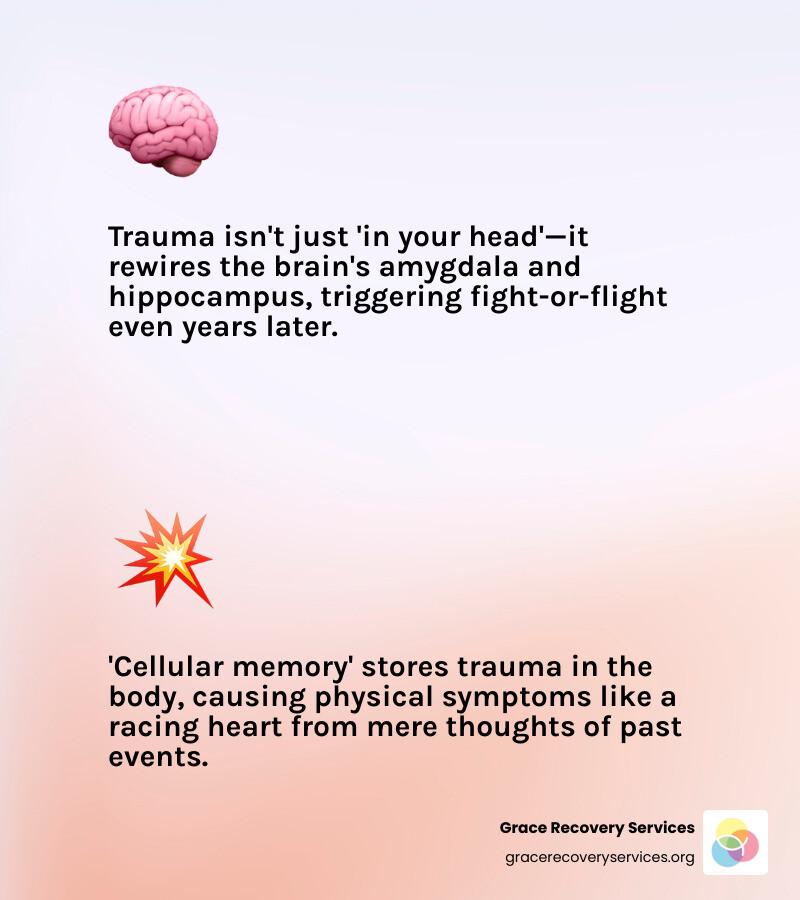
When we talk about trauma in April 2026, we understand it much differently than we did a decade ago. We now know that trauma isn’t just “in your head.” It is a physiological reality. Whether it is Post-Traumatic Stress Disorder (PTSD) or Complex PTSD (C-PTSD) caused by prolonged exposure to stress, trauma leaves a chemical and electrical footprint on the brain and the body.
Traditional treatment often focuses heavily on the “mind” through talk therapy. While talking is vital, it sometimes misses the “body” part of the equation. Have you ever felt your chest tighten or your heart race just by thinking about a past event? That is your nervous system reacting to a memory as if it were a present-day threat. This is often called “cellular memory”—the idea that our tissues and nervous systems “remember” the trauma even when our conscious minds are trying to move on.

A holistic rehab for trauma approach works to regulate this overactive nervous system. By integrating practices that calm the body, we create a safe foundation for the mind to process the difficult memories. In Western Pennsylvania, we are blessed with serene landscapes that provide the perfect backdrop for this work. Finding a center that prioritizes this integrated approach is essential for those who feel like traditional therapy hasn’t quite reached the root of their pain.
Personalized Holistic rehab for trauma Clients
No two stories are the same. A veteran returning to Pittsburgh after multiple deployments has a different set of triggers than a survivor of domestic abuse in North Huntingdon. This is why “one-size-fits-all” rehab programs often fail. They treat the addiction or the symptom, but they don’t treat the story.
Holistic care is inherently personalized. For veterans and first responders, it might focus on “moral injury” and the high-stakes stress of their professions. For survivors of childhood neglect or abuse, it might focus on rebuilding a sense of self-worth and safety. At Grace Recovery Services, we emphasize Trauma-Informed Care because we know that understanding the “why” behind a client’s struggle is the only way to help them find a sustainable “how” for their future.
Core Pillars of Healing: Mind, Body, Spirit, and Soul
In our experience, true restoration requires four pillars. If one is missing, the structure of recovery can feel shaky.
- The Mind: We use evidence-based tools like Cognitive Behavioral Therapy (CBT) to identify the lies trauma tells us—lies like “I’m not safe” or “It was my fault.”
- The Body: We use movement and nutrition to repair the physical toll of stress. Regular exercise has been shown to reduce depression and increase the stamina needed for the hard work of recovery.
- The Spirit: This is about finding meaning. For us, this involves biblical hope and the reminder that you are a beloved creation, not a broken product of your past.
- The Soul: This is the seat of our emotions and our “authentic self.” Trauma often causes us to disconnect from who we really are. Soul healing uses creativity, connection, and ritual to bring that person back to life.

For many in the Pittsburgh area, a Faith-Based Rehab Pittsburgh offers the spiritual anchor needed to weather the storms of early recovery. It provides a sense of purpose that goes beyond just “staying sober.”
The Role of Mindfulness in Holistic rehab for trauma
Mindfulness is often misunderstood as just “sitting still.” In the context of holistic rehab for trauma, it is a survival skill. Mindfulness-Based Relapse Prevention (MBRP) helps clients notice their triggers before they turn into actions.
When a client feels a wave of anxiety, their instinct might be to reach for a substance to numb the feeling. Mindfulness teaches them to “surf” that wave—to acknowledge the feeling, breathe through it, and stay grounded in the present moment. This regulation of the nervous system is a cornerstone of effective Trauma Therapy.
Evidence-Based and Experiential Therapies for Lasting Recovery
What does a typical day look like in a holistic program? It’s a blend of high-level clinical science and experiential activities that engage the senses.
| Therapy Type | Focus | How it Helps Trauma |
|---|---|---|
| EMDR | Eye Movement Desensitization | Reprocesses traumatic memories so they lose their “sting.” |
| Somatic Experiencing | Body Awareness | Releases pent-up “fight or flight” energy stored in the muscles. |
| Yoga & Breathwork | Physical Regulation | Lowers cortisol and teaches the body it is safe to relax. |
| Acupuncture | Neurotransmitter Balance | Can reduce drug-seeking behaviors and soothe the nervous system. |
| Equine Therapy | Relational Connection | Builds trust and self-esteem through interaction with horses. |
These aren’t just “extra” activities; they are vital components of Holistic Drug Rehabilitation. For example, acupuncture has been shown to impact brain pathways associated with addiction, making it a powerful ally in trauma recovery.
Addressing Co-occurring Disorders: Trauma, Addiction, and Mental Health
It is a staggering statistic: roughly 20-40% of individuals with PTSD also struggle with a substance use disorder. We often see this as “self-medication.” If your world feels loud, terrifying, or numb because of trauma, drugs or alcohol can seem like a temporary volume knob.
However, the “relief” is a trap. Eventually, the addiction creates its own trauma, leading to a cycle of shame and isolation. A holistic approach treats both simultaneously. We don’t wait for the addiction to be “fixed” before we talk about the trauma, because the trauma is usually what’s driving the addiction.
Whether it’s depression, anxiety, or an eating disorder, these co-occurring issues are all parts of the same puzzle. Our Faith-Based Trauma Recovery programs are designed to address these layers all at once, ensuring that as you get sober, you also get well.
Navigating Treatment: Levels of Care and Insurance in Western PA
We know that for families in Westmoreland County and Allegheny County, the logistics of care can feel overwhelming. At Grace Recovery Services, we focus on outpatient care, which allows you to receive world-class treatment while still living at home and maintaining your connections to the community.
Levels of Care Available:
- Partial Hospitalization Program (PHP): A high level of support for several hours a day, providing a structured environment for deep healing.
- Intensive Outpatient Program (IOP): A flexible but rigorous schedule that balances therapy with daily responsibilities.
- Aftercare Support: Ongoing counseling and groups to ensure that the tools you learn in rehab stay sharp for years to come.
Many people wonder about the cost. Most holistic centers in Pennsylvania accept PPO insurance, and our team in North Huntingdon is happy to help you navigate your benefits. For more information on local resources, you can check 2026’s Top Rehab Centers near North Huntingdon, PA (5 Free).
Frequently Asked Questions about Holistic Trauma Healing
What is the difference between traditional and holistic trauma care?
Traditional care often focuses on symptom management (medication) and talk therapy. While these are important, holistic rehab for trauma goes further by integrating the body and spirit. It uses somatic work, nutrition, and spiritual development to ensure the whole person is healing, not just their thoughts.
Does insurance cover holistic trauma programs in Pennsylvania?
Yes, many private insurance plans (PPO) cover the clinical portions of holistic rehab, including therapy, psychiatric assessments, and intensive outpatient programs. While some specific “alternative” therapies might be out-of-pocket, the core of the program is often covered. We recommend a personalized insurance verification to be sure.
How long does a typical outpatient holistic program last?
Recovery is a journey, not a race. Most intensive programs last between 30 to 90 days, but we often see the best results when clients transition into long-term aftercare. At Grace Recovery Services, we tailor the duration to your specific needs and progress.
Conclusion
Trauma can make you feel like your life is a series of broken fragments. But you don’t have to live in the “aftermath” forever. By choosing a holistic rehab for trauma, you are choosing to honor every part of yourself—your tired body, your racing mind, and your longing spirit.
In Western Pennsylvania, from the streets of Pittsburgh to the quiet neighborhoods of Irwin and North Huntingdon, Grace Recovery Services is here to walk with you. We offer more than just a program; we offer a community rooted in Christian counseling, evidence-based excellence, and the unwavering belief that restoration is possible for everyone.
If you are ready to stop managing your trauma and start healing it, we are ready to help. Start your journey to restoration today and see what it feels like to finally come home to yourself.
This article was researched with AI and heavily edited by Stephen Luther for accuracy and relevance.
Stephen Luther is the Executive Director and Founder of Grace Christian Counseling, Grace Recovery Services, WPA Counseling, NuWell Online Counseling and Coaching, and NuWell Health. He holds a Master’s degree in Education from the University of Georgia and a Master’s degree in Marriage and Family Therapy from Duquesne University. He is a licensed professional counselor in Pennsylvania.
Since 1997, Steve has been helping children, adolescents, and adults overcome a wide range of emotional and relational challenges. He specializes in working with hurting families, including those with foster, adopted, or traumatized children. Steve uses Attachment-Based Therapy, Splankna Healing, and Therapeutic Parent Coaching to support healing and restoration.
This guide is for educational and spiritual encouragement and is not a substitute for personalized professional counseling. If you are in crisis, please reach out for immediate help.