
The Root Causes: How Trauma Fuels Substance Use Disorders
Trauma-informed drug rehab transforms recovery by treating the underlying nervous system dysregulation and emotional root causes of addiction within a safe, non-punitive environment. At Grace Recovery Services, we see this transformation every day: when clients understand why their bodies and minds respond the way they do, shame begins to lose its grip and lasting sobriety becomes possible.
The connection between unhealed emotional distress and substance use disorders is deeply biological and psychological. Landmark findings from the Adverse Childhood Experiences (ACE) study demonstrate that early adversity directly increases the risk of developing a substance use challenge later in life. When someone experiences profound fear, instability, or chronic stress during formative years, brain development adapts around survival rather than calm emotional regulation.
Trauma alters the brain’s stress response systems, particularly the hypothalamic-pituitary-adrenal (HPA) axis. This leaves the nervous system locked in a chronic state of fight, flight, or freeze. Under constant physiological distress, alcohol or drugs frequently become a form of self-medication—an attempt to artificially supply the calm, safety, or numbness that the nervous system cannot naturally sustain.
Over time, this dynamic creates emotional regulation barriers. When difficult emotions arise, the body perceives them as immediate threats. Clinical research highlights how systemic and chronic stressors, including racial trauma, induce profound psychological and physical distress that requires structured, empathetic intervention rather than punitive judgment (Williams et al., 2023). Our step-by-step guide to healing from addiction and trauma explains how identifying these underlying wounds opens the door to genuine restoration.
Overt vs. Covert Trauma and Their Impact on Recovery
Not all trauma looks the same. To build an effective recovery plan, clinicians must distinguish between overt and covert forms of emotional injury:
- Overt Trauma: These are visible, distinct events that overwhelm an individual’s coping capacity. Examples include physical assaults, severe car accidents, sudden losses, or surviving natural disasters. Because these occurrences are easily identifiable, individuals often recognize them as traumatic milestones.
- Covert Trauma: These are subtle, repetitive, and relational injuries that often go unnoticed or unacknowledged. Examples include chronic emotional neglect, persistent criticism, growing up in an unpredictable household, or enduring microaggressions.
Covert trauma can be just as damaging to the nervous system as overt trauma. When a person grows up without emotional safety or validation, they may internalize a deep sense of unworthiness. In our outpatient programs across Western Pennsylvania, we design individualized care plans that honor the reality of both overt and covert experiences, ensuring no pain is overlooked.
The Neurobiology of Stress, Shame, and Dissociation
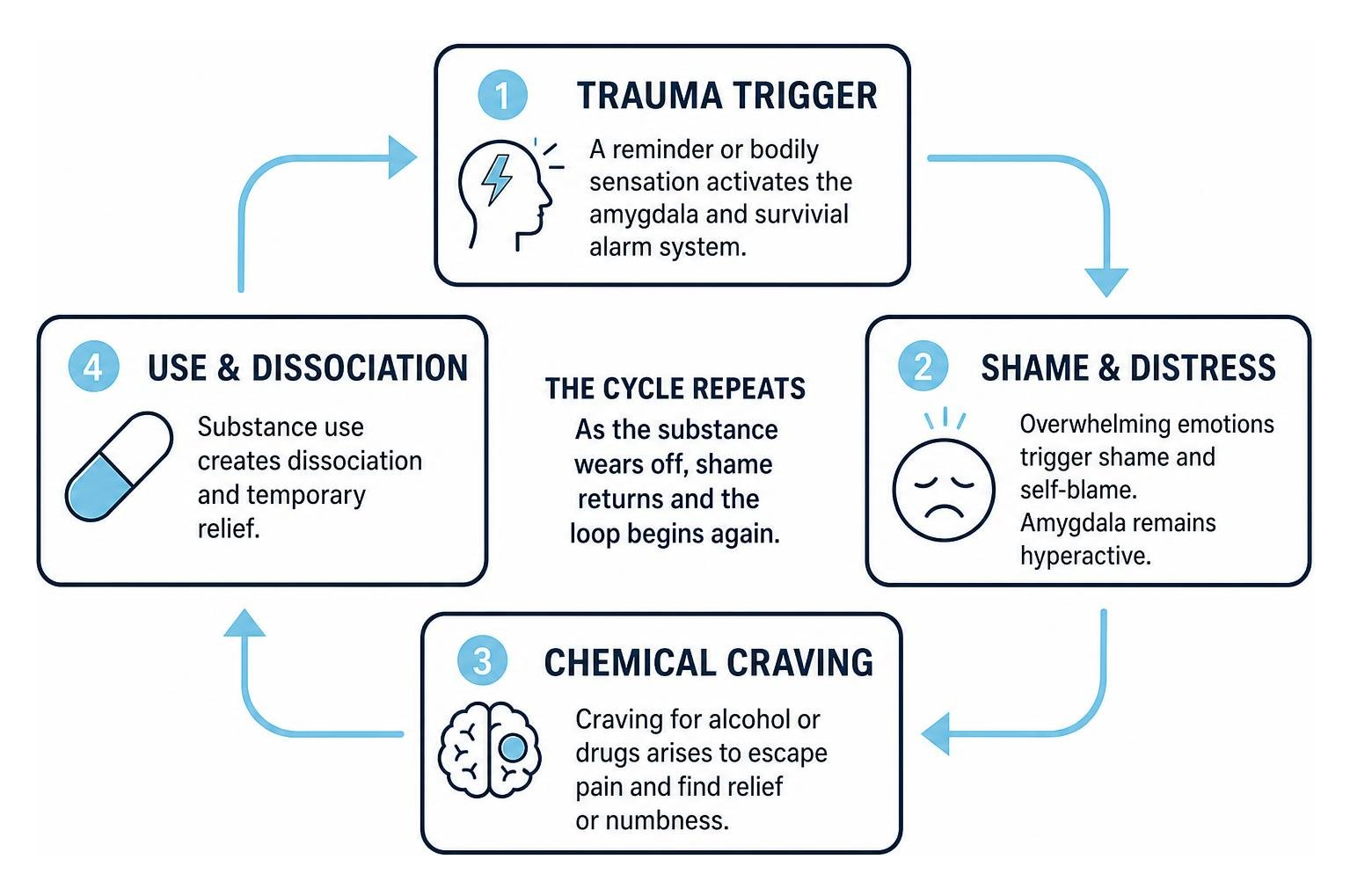
When an unhealed trigger is touched, the brain’s alarm system—the amygdala—becomes hyperactive. This survival response bypasses the prefrontal cortex, which governs logic, impulse control, and long-term planning. For someone with a history of trauma, this physiological hijack can make substance cravings feel irresistible.
Addiction can fundamentally be understood as an act of dissociation—a protective coping mechanism designed to detach the mind from unbearable bodily sensations and emotional overwhelm. However, when the effects of a substance wear off, it often leaves behind intense shame and self-blame. This shame triggers the amygdala once more, fueling a painful, cyclical loop:
- Trauma Trigger: A reminder or bodily sensation activates the survival alarm.
- Dissociation & Substance Use: Substances are used to mute pain or achieve emotional safety.
- Shame & Regret: The person experiences intense guilt, self-condemnation, and isolation.
- Heightened Vulnerability: The nervous system becomes more dysregulated, increasing future cravings.
Breaking this cycle requires replacing shame with understanding. By guiding clients through our four-stage Counseling Blueprint—Take Off the Mask, Heal the Wounds, Remove the Toxins, and Replace with Truth—we help people dismantle shame and rediscover their God-given dignity.
Core Pillars of a Trauma Informed Drug Rehab
Trauma-informed care is an organizational culture and clinical framework that ensures every interaction promotes safety and empowerment.
| Feature | Traditional Addiction Treatment | Trauma-Informed Addiction Care |
|---|---|---|
| Core Perspective | “What is wrong with your behavior?” | “What happened to you, and what do you need?” |
| Relapse Response | Punitive rules, guilt, or discharge | Clinical curiosity, safety planning, and nervous system regulation |
| Client Role | Passive recipient following rigid compliance | Active collaborator with real voice and personal choice |
| Safety Focus | Rules enforcement and behavioral compliance | Physical, emotional, and psychological safety |
| Underlying Pain | Often deferred until long after initial sobriety | Addressed concurrently as a primary driver of addiction |
A trauma-responsive rehab adheres to the six core principles established by SAMHSA:
- Safety: Ensuring physical and psychological safety across all clinical settings.
- Trustworthiness and Transparency: Clear communication and consistent boundaries.
- Peer Support: Building mutual connection with others who understand the journey.
- Collaboration and Mutuality: Leveling power differences between clinicians and clients.
- Empowerment, Voice, and Choice: Cultivating personal autonomy and self-advocacy.
- Cultural, Historical, and Gender Sensitivity: Recognizing unique backgrounds and systemic challenges.
Our clinical framework for trauma-informed care ensures that clients are actively involved in every decision regarding their treatment path.
Addressing Dual Diagnosis and Co-Occurring Mental Health Needs
Post-Traumatic Stress Disorder (PTSD), generalized anxiety, and major depression frequently co-occur with substance use disorders. Attempting to treat an addiction while ignoring an underlying anxiety disorder or PTSD symptom cluster almost always leads to distress.
Through our comprehensive outpatient co-occurring treatment, we provide integrated assessments and dual diagnosis care. Clients in our North Huntingdon and Penn Hills offices receive targeted support that addresses both behavioral symptoms and emotional challenges together, creating a unified foundation for lasting health.
Trauma-Responsive Relapse Prevention Strategies
Relapse prevention in a trauma-informed environment goes beyond avoiding “people, places, and things.” It focuses on internal regulation and somatic awareness:
- Interoceptive Awareness: Learning to safely notice subtle bodily sensations (tightness in the chest, clenching of the jaw) before they escalate into intense cravings.
- Personalized Safety Planning: Mapping out grounding techniques, trusted contacts, and safe environments for moments of acute stress.
- Non-Punitive Reflection: Approaching setbacks with clinical curiosity to identify which emotional or nervous system needs were unmet.
- Resilience Building: Cultivating healthy daily rhythms of rest, biblical reflection, community support, and positive coping mechanisms.
Therapeutic Approaches to Healing Underlying Trauma
Healing trauma requires a comprehensive, multi-modal clinical approach. When clinicians integrate mind, body, and spirit, clients can process unresolved memories without feeling overwhelmed. Our clinicians utilize evidence-based trauma treatment protocols, collaborating with regional resources such as Drug and Alcohol Resources & Treatment Facilities to ensure clients have comprehensive local support.
Evidence-Based Modalities in Trauma Informed Drug Rehab
Evidence-based therapies help reprocess maladaptive memories and restore cognitive clarity:
- EMDR (Eye Movement Desensitization and Reprocessing): Utilizes bilateral stimulation (visual tracking, auditory tones, or tactile taps) to help the brain reprocess traumatic memories. EMDR diminishes the emotional charge associated with past events, allowing individuals to remember the past without reliving its distress.
- Cognitive Behavioral Therapy (CBT): Identifies and reframes destructive cognitive distortions, helping clients replace negative self-beliefs with truthful, empowering perspectives.
- Memory Reconsolidation Therapy: Focuses on unlocking specific emotional memories, updating them with new, positive experiences of safety and validation, and permanently altering the brain’s automatic threat response.
Somatic, Body-Based, and Holistic Therapies
Because trauma is deeply held within the body, cognitive talk therapy alone is not always enough. Somatic practices help restore healthy interoception—the ability to accurately perceive internal physical signals.
Through holistic drug rehabilitation approaches, clients learn breathwork, gentle trauma-sensitive movement, and somatic grounding. These practices regulate the vagus nerve, lower resting heart rate, and give individuals practical tools to calm their nervous systems without reaching for a substance.
Whole-Person Healing: Integrating Faith and Clinical Care
At Grace Recovery Services, we believe that true transformation encompasses emotional renewal and spiritual restoration. We combine clinically sound interventions with Christian counseling to offer a compassionate path to freedom.
Our Christian integrated addiction treatment invites clients to discover their worth through biblical truths of grace, forgiveness, and redemption. By repairing relational wounds, addressing spiritual doubts, and fostering a supportive community, we walk alongside individuals as they experience genuine renewal in mind, body, and spirit.
How to Find Compassionate, Trauma-Responsive Care
Finding the right support requires understanding which level of outpatient care fits your circumstances:
- Partial Hospitalization Programs (PHP): A structured day program offering intensive therapeutic support, group therapy, and skill development while allowing clients to return home in the evening.
- Intensive Outpatient Programs (IOP): Multiple weekly sessions providing focused therapy, relapse prevention, and peer connection with flexibility for work, school, or family commitments.
- Outpatient Counseling & Aftercare: Ongoing individual and group sessions designed to maintain long-term recovery momentum and community integration.
Key Questions to Ask a Trauma Informed Drug Rehab
When seeking care for yourself or a loved one, consider asking potential providers the following questions:
- Are your clinical staff formally trained in trauma-specific modalities like EMDR and somatic therapies?
- How do your intake assessments evaluate both trauma history and mental health conditions?
- What is your approach to setbacks, and how do you maintain a non-punitive, supportive environment?
- How do you integrate family counseling to heal relational wounds?
- Do you offer faith-integrated and holistic counseling options tailored to personal preferences?
Frequently Asked Questions About Trauma-Informed Addiction Treatment
What are the main signs that substance use is rooted in trauma?
Common indicators include chronic hypervigilance (feeling constantly on edge), intrusive thoughts or memories, emotional numbness, persistent feelings of shame, unexplained panic attacks, and using drugs or alcohol to sleep or silence distressing memories.
How does trauma-informed care transform relapse prevention?
Traditional approaches often focus entirely on external behavioral rules. Trauma-informed relapse prevention focuses on internal nervous system regulation. It teaches clients to identify emotional triggers early, view setbacks with compassionate curiosity, and build somatic and relational coping mechanisms that make sobriety feel sustainable.
How does dual diagnosis treatment support long-term recovery?
Dual diagnosis treatment simultaneously addresses mental health challenges—such as PTSD, anxiety, or depression—alongside substance use. By healing the underlying emotional pain, it eliminates the need to self-medicate, creating a stable foundation for long-term sobriety.
Taking the Next Step Toward Whole-Person Recovery
You do not have to carry the weight of past wounds or substance use alone. Compassionate, trauma-responsive care can help you break free from the cycles of shame, quiet the alarms of chronic stress, and rebuild a life filled with purpose, peace, and healthy relationships.
At Grace Recovery Services, our outpatient programs in Pittsburgh and North Huntingdon are here to support your journey with evidence-based therapies, experienced clinicians, and faith-integrated counseling. Explore our complete range of outpatient services or reach out to our team today to schedule a confidential assessment.
This article was researched with AI and heavily edited by Stephen Luther for accuracy and relevance.
Stephen Luther is the Executive Director and Founder of Grace Christian Counseling, Grace Recovery Services, WPA Counseling, NuWell Online Counseling and Coaching, and NuWell Health. He holds a Master’s degree in Education from the University of Georgia and a Master’s degree in Marriage and Family Therapy from Duquesne University. He is a licensed professional counselor in Pennsylvania.
Since 1997, Steve has been helping children, adolescents, and adults overcome a wide range of emotional and relational challenges. He specializes in working with hurting families, including those with foster, adopted, or traumatized children. Steve uses Attachment-Based Therapy, Splankna Healing, and Therapeutic Parent Coaching to support healing and restoration.
This guide is for educational and spiritual encouragement and is not a substitute for personalized professional counseling. If you are in crisis, please reach out for immediate help.
References
Williams MT, Holmes S, Zare M, Haeny A, Faber S. “An Evidence-Based Approach for Treating Stress and Trauma due to Racism..” Cognitive and behavioral practice, 2023. PMCID PMC10686550.