
When Faith Meets Healing: What to Know About a Trauma Recovery Christian Retreat
A trauma recovery Christian retreat is a structured, faith-integrated program that combines clinical trauma therapy with biblical principles — helping survivors process pain, rebuild identity, and reconnect with God in a safe, supportive community.
Here is a quick overview of what these retreats typically offer:
| Feature | What to Expect |
|---|---|
| Format | Weekend to 5-day intensive programs |
| Approach | Licensed therapy + prayer, worship, and biblical teaching |
| Who It’s For | Adults with trauma from abuse, grief, PTSD, addiction, or loss |
| Key Outcomes | Reduced anxiety and depression, shame relief, renewed hope |
| Follow-Up | Outpatient care, homework, and community support groups |
| Eligibility | Trauma at least 3 months prior; non-acute, stable presentation |
Trauma has a way of quietly robbing people of the abundant life they were made for. It doesn’t just live in the mind — it settles into the body, the soul, and every relationship it touches. For people of faith, the wound can feel even deeper when spiritual connection is disrupted alongside everything else.
That is exactly why trauma recovery Christian retreats exist — not as a retreat from reality, but as a focused, intentional step toward wholeness. They bring together licensed clinical care and the healing power of faith in ways that neither approach can fully accomplish alone.
Research from faith-based treatment programs shows that 83% of clients report reduced anxiety symptoms and 71% experience reduced depression following faith-integrated care — results that speak to the power of treating the whole person, not just the symptoms.
At Grace Recovery Services, we see this every day. I’m Stephen A. Luther, MSEd, MEd, LPC — a licensed professional counselor, founder of Grace Recovery Services in Western Pennsylvania, and a specialist in trauma-informed, faith-integrated addiction and mental health treatment with over two decades of experience walking alongside individuals on their healing journey, including those seeking a trauma recovery Christian retreat as a starting point. In the sections below, we will break down exactly what these retreats involve, who they are designed for, and how outpatient care in the Pittsburgh area can carry that healing forward.
Understanding the Impact of a Trauma Recovery Christian Retreat
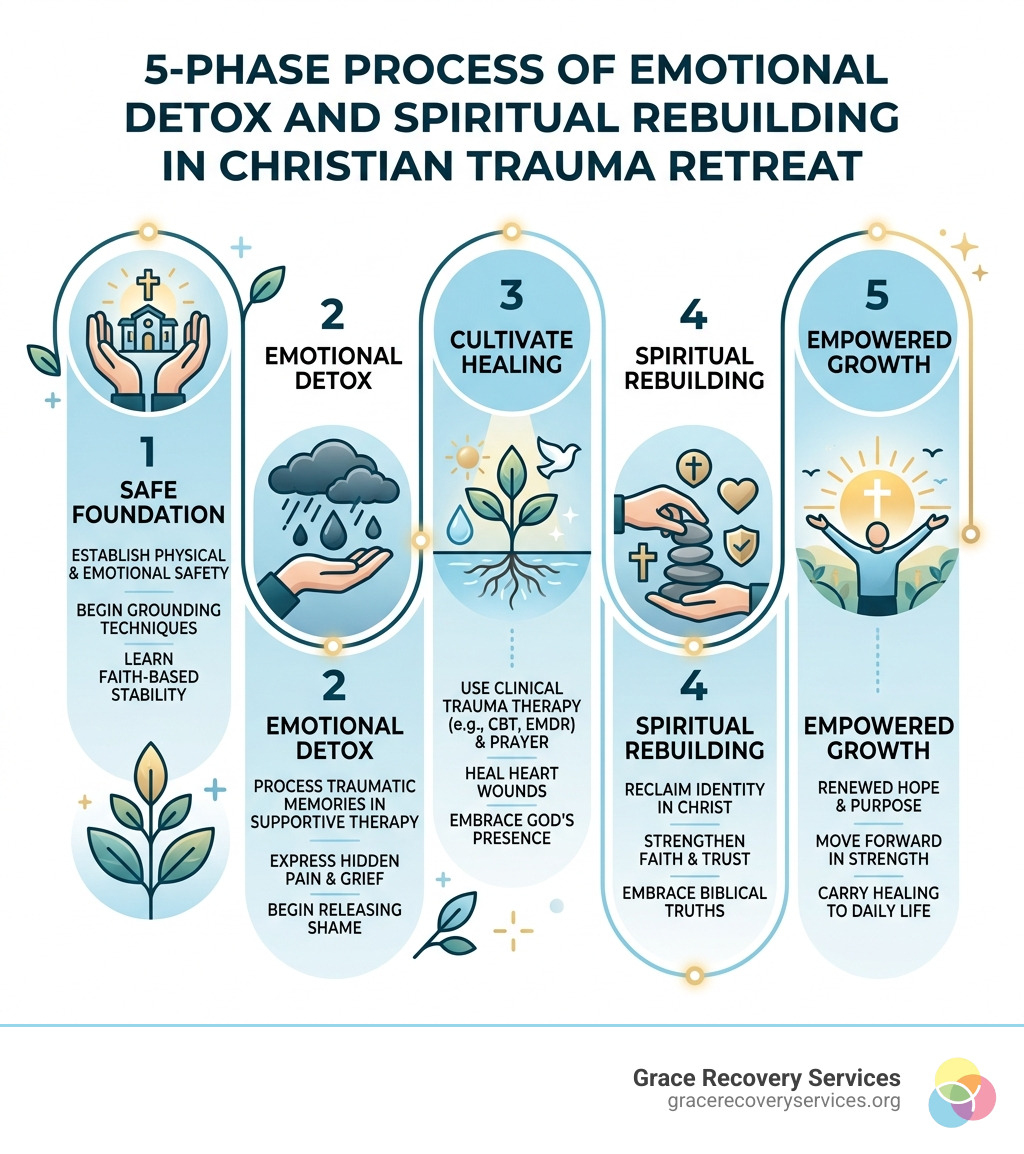
When we talk about a trauma recovery Christian retreat, we are describing a specialized environment designed to address the “whole person.” Trauma is rarely just a mental hurdle; it is a physiological and spiritual experience. It affects how our brains process fear, how our bodies react to stress, and how our souls perceive God’s presence.
In these retreats, clients often engage in psycho-education. This simply means learning how trauma impacts the mind, body, and soul. When you understand that your “fight or flight” response is a natural reaction to an unnatural event, the shame begins to lift. You start to see that you aren’t “broken” or “unfaithful” — you are experiencing a trauma response that needs a faith-based trauma recovery approach.

The goal of these intensives is to help you identify trauma triggers and develop healthy coping mechanisms. By stepping away from the noise of daily life in Western Pennsylvania, you can focus entirely on the “abundant life” Jesus promised in John 10:10. This isn’t about ignoring the past; it’s about bringing those dark memories into the light of Christ’s grace so they no longer have the power to control your present.
Benefits of Attending a Trauma Recovery Christian Retreat
The benefits of a focused trauma recovery Christian retreat are backed by both scripture and statistics. For many, the most immediate benefit is the realization that they are not alone. Sharing your story in a safe, confidential group of like-minded individuals fosters a “sisterhood” or “brotherhood” that shatters the isolation trauma loves to create.
- Significant Symptom Reduction: Statistics indicate that 71% of clients experience reduced symptoms of depression, and 83% experience reduced symptoms of anxiety after engaging in faith-integrated recovery treatment.
- Shame Dissipation: Trauma often carries a heavy weight of false guilt. Through biblical teaching and community support, participants learn to replace the lies of the enemy with the truth of their identity in Christ.
- High Engagement: Faith-based programs often see a 75% treatment completion rate, nearly double the national average of 47%. This is likely because when our spiritual values are integrated into our healing, we are more invested in the process.
At Grace Recovery Services, we emphasize trauma-informed care because we know that addressing the root cause of distress is the only way to achieve lasting peace.
What to Expect at a Trauma Recovery Christian Retreat
If you are considering a trauma recovery Christian retreat, you might wonder what a typical day looks like. These programs are often “intensives,” meaning they pack a significant amount of healing work into a short period. You might experience:
- biblical assignments: Reflective exercises that help you apply scripture to your specific wounds.
- Small Group Sessions: Led by licensed specialists or certified facilitators, these groups provide a space to process “sacred stories” and practice vulnerability.
- Worship and Prayer: Intentional time to sit in God’s presence, which can be incredibly restorative for a nervous system stuck in high alert.
- Boundary Work: Learning how to set healthy boundaries in relationships, which is a vital part of recovery.
Many organizations, such as Faith On The Journey, offer these types of specialized retreats to help individuals move from surviving to thriving.
Core Components of Faith-Integrated Healing
What makes a trauma recovery Christian retreat different from a secular wellness retreat? It is the belief that true transformation requires the Holy Spirit. While secular programs may offer excellent somatic (body-based) tools or mindfulness, a Christian retreat integrates these with the foundational truth of the Gospel.
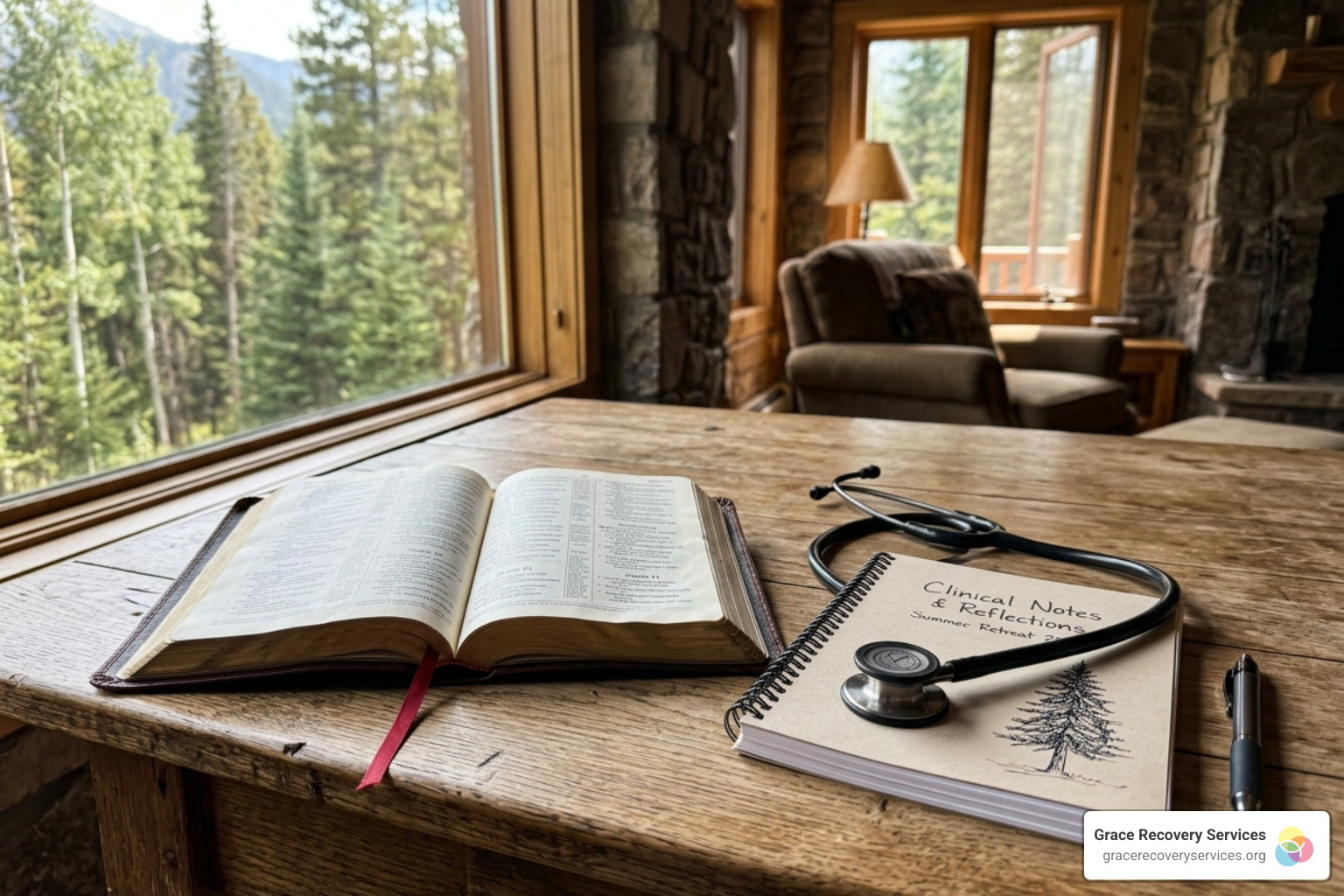
We combine clinical expertise — such as understanding how the brain’s amygdala reacts to religious trauma — with the grace-based principles found in the Bible. This creates a “dynamic synthesis” where science and faith work together. For example, practicing “stillness” is both a clinical tool for grounding and a biblical command to “be still and know that I am God.”
| Feature | Christian Trauma Retreat | Secular Wellness Program |
|---|---|---|
| Primary Goal | Spiritual restoration & clinical healing | Emotional wellness & stress reduction |
| View of Suffering | Redemptive; God can use brokenness | Something to be managed or eliminated |
| Community | Body of Christ; shared faith values | General peer support |
| Tools Used | Prayer, Scripture, EMDR, Counseling | Meditation, Yoga, Somatic Experiencing |
| Post-Care | Church community & Christian outpatient | General therapy or wellness apps |
Specialized Retreats for Diverse Healing Needs
Trauma is not one-size-fits-all. A woman recovering from domestic abuse has different needs than a pastor experiencing burnout or a veteran struggling with PTSD. That is why many trauma recovery Christian retreats are tailored to specific groups.
- Women’s Healing: Often focuses on reclaiming dignity after abuse, addressing lies about self-worth, and finding “radiance” in place of shame.
- Men’s Intensives: Frequently center on breaking the silence of trauma, addressing “victim behaviors,” and stepping into healthy leadership and vulnerability.
- Pastors and Caregivers: These retreats provide a rare safe space for leaders to take off the “mask” and receive the care they usually give to others.
- Abuse Survivors: Programs like Grief to Grace focus specifically on the wounds of physical, emotional, or sexual abuse, helping survivors reclaim their human dignity through a sacramental and therapeutic approach.
Transitioning from Intensive Retreats to Sustained Outpatient Care
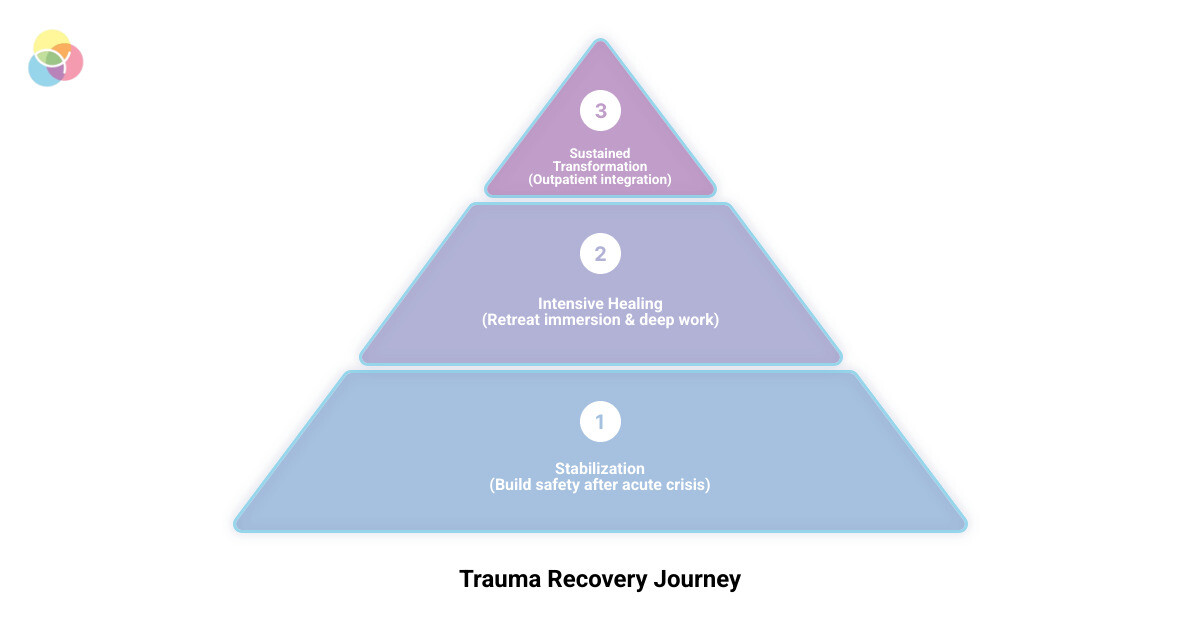
While a 2-day or 5-day trauma recovery Christian retreat can provide a massive jumpstart — sometimes accomplishing what feels like six months of therapy in a week — the journey doesn’t end when you drive home. For those of us in Western Pennsylvania, the transition back to “real life” in Pittsburgh or Westmoreland County is where the real work of sustained recovery begins.
At Grace Recovery Services, we specialize in this “next step.” Whether you’ve just finished a retreat or you’re looking for a way to start your healing without leaving your family for a week, our outpatient services provide the clinical and spiritual scaffolding you need. We offer mental health and addiction services that keep the momentum of a retreat alive through:
- Intensive Outpatient Programs (IOP): Perfect for those who need a high level of support while staying connected to their local community in North Huntingdon or Penn Hills.
- Christian Counseling: One-on-one sessions that continue the deep work of processing trauma triggers and building healthy patterns.
- Group Support: Staying connected with others who understand the unique intersection of faith and recovery.
Frequently Asked Questions about Christian Trauma Recovery
Who is eligible to attend these retreats?
Generally, a trauma recovery Christian retreat is designed for individuals who have experienced a traumatic event at least three months prior. This ensures that the client is out of the “acute” phase of crisis and is stable enough to engage in deep emotional work. Most retreats will screen for active self-harm, suicidal ideation, or active substance use disorders to ensure the safety of all clients. If you are currently in an acute crisis, we recommend starting with our clinical outpatient services to build stability first.
How do these retreats differ from traditional therapy?
Think of a retreat as a “deep dive” or a “fast-track.” Traditional therapy usually happens one hour a week. A retreat provides a condensed curriculum, often lasting 4 to 10 days, where you are immersed in a healing environment. This allows you to stay “in the work” without the distractions of work, chores, or social media. It combines the community sharing aspect with intensive spiritual integration that you might not get in a standard clinical setting. This is a powerful way to apply biblical principles for addiction recovery and trauma healing simultaneously.
Is follow-up support available after the retreat ends?
Yes! Follow-up is the most critical part of the healing process. Many retreats offer 30 days of follow-up “homework,” Zoom check-ins, or alumni groups. For those in the Pittsburgh area, Grace Recovery Services acts as a bridge. We can provide the ongoing Christian integrated addiction treatment and trauma counseling necessary to ensure the breakthroughs you had at a retreat become permanent lifestyle changes. You can always contact us for support to discuss how to integrate your retreat experience into a long-term outpatient plan.
Conclusion
Healing from trauma is a journey of restoration, renewal, and revival. Whether you are seeking a trauma recovery Christian retreat to jumpstart your healing or you are looking for local, faith-based support in Western Pennsylvania, know that hope is never out of reach. Trauma may have robbed you of your peace for a season, but it does not get to have the final word in your story.
At Grace Recovery Services, we believe that no one is beyond redemption and no wound is too deep for the Great Physician. Under the guidance of our Executive Director, Stephen A. Luther, and our dedicated team of licensed professionals, we are here to provide a safe, non-judgmental space for you to heal your mind, body, and spirit.
If you are ready to move from the shadows of your past into the light of a hopeful future, we invite you to take that first step today. Whether you need a referral to a specialized retreat or you are ready to begin Christian Intensive Outpatient care right here in the Pittsburgh area, we are standing by to walk with you.
“For I know the plans I have for you,” declares the Lord, “plans to prosper you and not to harm you, plans to give you hope and a future.” — Jeremiah 29:11
This article was researched with AI and heavily edited by Stephen Luther for accuracy and relevance.
Stephen Luther is the Executive Director and Founder of Grace Christian Counseling, Grace Recovery Services, WPA Counseling, NuWell Online Counseling and Coaching, and NuWell Health. He holds a Master’s degree in Education from the University of Georgia and a Master’s degree in Marriage and Family Therapy from Duquesne University. He is a licensed professional counselor in Pennsylvania.
Since 1997, Steve has been helping children, adolescents, and adults overcome a wide range of emotional and relational challenges. He specializes in working with hurting families, including those with foster, adopted, or traumatized children. Steve uses Attachment-Based Therapy, Splankna Healing, and Therapeutic Parent Coaching to support healing and restoration.
This guide is for educational and spiritual encouragement and is not a substitute for personalized professional counseling. If you are in crisis, please reach out for immediate help.