What Is Christian Addiction Recovery — and How Can It Help You?
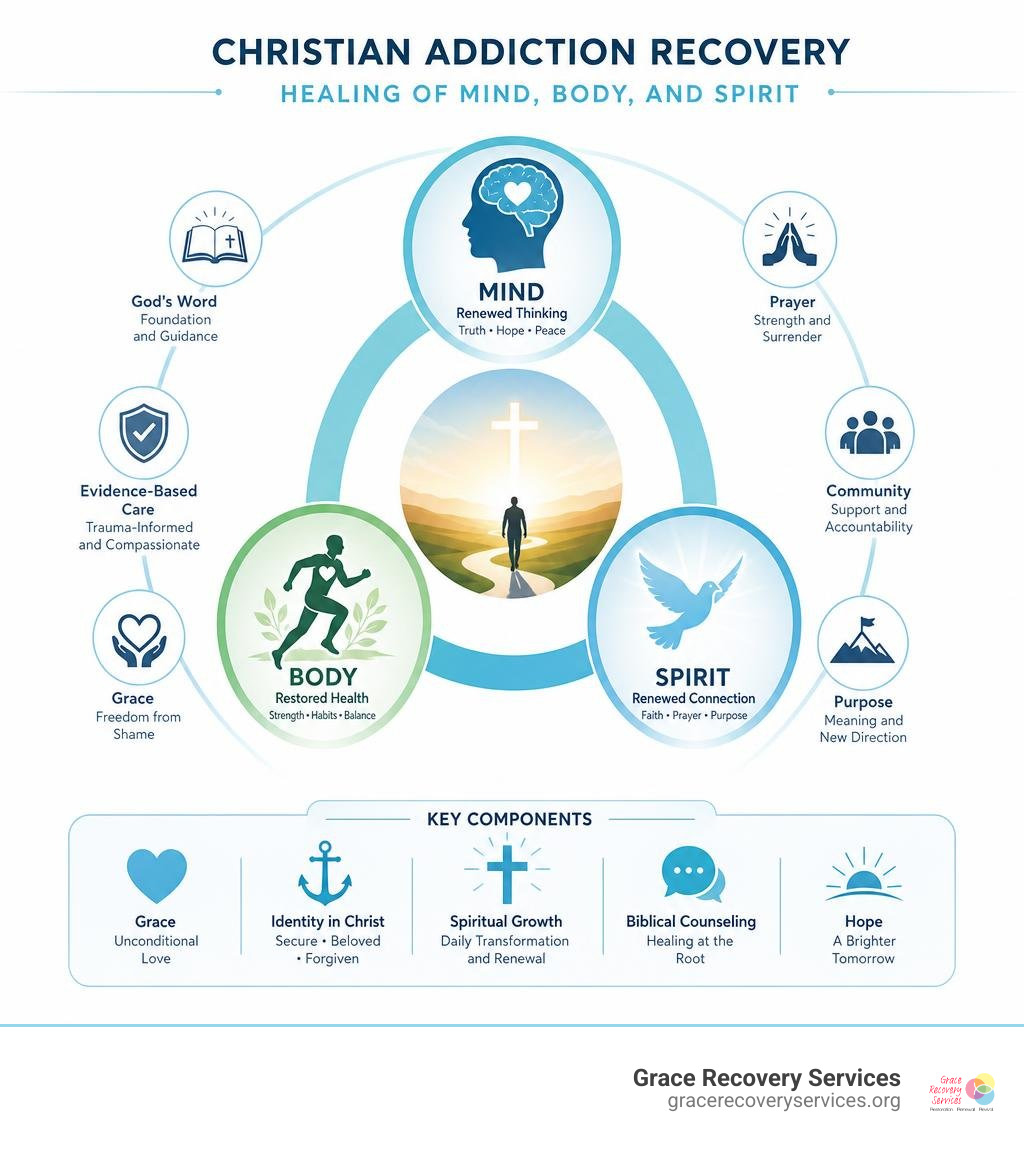
Christian addiction recovery is a holistic approach to healing from substance use that combines evidence-based clinical treatment with biblical principles, prayer, community support, and faith in God’s grace. If you’re looking for a faith-integrated path to sobriety — one that heals the whole person, not just the behavior — here’s what you need to know:
- What it is: Outpatient addiction treatment grounded in Christian faith, trauma-informed care, and clinical counseling
- Who it’s for: Anyone struggling with substance use — whether deeply religious or simply faith-curious
- What makes it different: It addresses the root causes of addiction — trauma, shame, identity wounds — through both therapy and spiritual truth
- Where to find it: Faith-based outpatient programs like Grace Recovery Services serve the Pittsburgh and Western Pennsylvania area
Addiction is rarely just about the substance. For many people, it’s about pain — buried trauma, relational wounds, shame that runs deep.
Christian recovery takes that seriously.
It doesn’t offer a quick fix or a formula. Instead, it offers something more lasting: a path toward genuine healing of mind, body, and spirit — rooted in grace rather than guilt.
Research backs this up. According to a survey by the National Association of Christian Recovery, 68% of people in Christian recovery programs said their faith was a very important factor in getting and staying sober. And data suggests that faith-based clients show a notably higher rate of long-term abstinence compared to those in secular-only programs.
At Grace Recovery Services in Western Pennsylvania, we’ve seen this firsthand. When someone feels seen, safe, and spiritually supported, real transformation becomes possible — not just sobriety, but restoration.
Christian addiction recovery further reading:
Understanding Christian Addiction Recovery vs Secular Treatment
When exploring options for overcoming substance use disorder, individuals and families often wonder how faith-based recovery differs from standard secular models. While both approaches aim to reduce harm, promote sobriety, and equip individuals with practical coping mechanisms, their underlying philosophies and frameworks diverge in meaningful ways.
Secular treatment programs primarily view addiction through a biological, psychological, and social lens. They focus on rebalancing brain chemistry, identifying behavioral triggers, and developing cognitive tools to prevent relapse. These clinical foundations are undeniably crucial and forms an essential part of effective care.
However, christian addiction recovery goes a step further. It recognizes that human beings are spiritual creatures. Addiction is not only a physical dependence or a behavioral habit; it deeply affects the soul, damaging a person’s sense of identity, purpose, and relationship with God and others. While secular approaches often leave spiritual exploration as an optional add-on, faith-integrated recovery weaves spiritual truth into every step of the process.
In a grace-filled environment, treatment replaces guilt and condemnation with unconditional love and hope. Rather than treating someone simply as a set of symptoms, we emphasize holistic restoration. This means addressing underlying trauma, unhealing emotional wounds, and identity issues while offering a safe harbor where clients can experience freedom. Learn more about our localized care at Christian Addiction Recovery Pittsburgh and explore How Faith Helps with Addiction.
Research published in the Journal of Substance Abuse Treatment revealed that clients participating in faith-integrated programs demonstrated a 30% higher rate of long-term abstinence compared to those in purely secular programs. Furthermore, a study tracking outcome metrics observed that 75% of clients in faith-based recovery cohorts reported sustained sobriety after one year. According to data from the Substance Abuse and Mental Health Services Administration (SAMHSA), approximately 20% of addiction treatment facilities across the United States now offer faith-based or Christian-oriented specialized tracks to meet this vital need.
Core biblical Principles in Christian Addiction Recovery
At the heart of faith-based recovery are timeless truths drawn from the Bible that offer hope to those who feel utterly defeated by addiction. Substance use often locks individuals in a prison of shame, telling them they are broken beyond repair. Scriptural principles challenge those lies with foundational truths:
- Spiritual Redemption and Grace: Addiction often convinces people that they are defined by their worst mistakes. The Bible teaches that God’s grace is greater than any past behavior, offering a clean slate and complete forgiveness (Ephesians 2:8-9).
- Renewal of the Mind: Overcoming addiction requires restructuring how we think. Romans 12:2 calls for transformation through the renewing of the mind, aligning our self-talk and thought patterns with God’s loving perception of us.
- Identity in Christ: In recovery, clients learn that their true identity is not “addict,” but beloved child of God. Understanding this shift relieves the desperate need to self-medicate emotional pain.
- Honesty and Surrender: Recovery begins when we stop hiding. Acknowledging personal helplessness and surrendering control to God opens the door to supernatural strength and healing.
To dive deeper into applying these biblical foundation stones, check out our Biblical Approach to Recovery Beginners Guide.
Integrating Faith with Evidence-Based Addiction Counseling
A common misconception is that faith-based recovery relies solely on prayer and Bible reading while ignoring modern medical science and clinical psychology. True faith-integrated care does not choose between clinical excellence and spiritual truth — it seamlessly unifies them.
At Grace Recovery Services, we firmly believe that clinical psychology and scientific tools are gifts that help us understand human behavior and brain science. When paired with the healing presence of Christ, clinical tools become even more powerful.

Our outpatient treatment model incorporates trauma-informed care, cognitive behavioral therapy (CBT), and dialectical strategies within a compassionate Christian framework. Many individuals struggling with addiction have experienced significant developmental trauma, attachment injuries, or co-occurring mental health disorders like anxiety and depression. Ignoring these psychological components can leave recovery on fragile ground.
By combining clinical therapy with spiritual guidance, we ensure clients receive balanced, evidence-based care. For those seeking structured outpatient care in Western Pennsylvania, our Christian Intensive Outpatient Treatment provides rigorous therapy without disrupting daily home and work life. Discover full details in our article Everything You Need to Know About Christian Addiction Counseling.
The Four-Stage Counseling Blueprint for Lasting Renewal
To guide our clients through deep, sustainable healing, our clinical team utilizes a proprietary framework known as the Counseling Blueprint. This structured, four-stage journey ensures that treatment addresses both surface-level behaviors and deep-seated heart issues.

- Take Off the Mask: Addiction thrives in secrecy and performance. In this initial stage, we focus on establishing deep trust and safety. Clients learn to drop the defensive masks they have worn to protect themselves from judgment, stepping into an atmosphere of genuine rapport and unconditional acceptance.
- Heal the Wounds: Addiction is frequently a symptom of unaddressed pain. Here, our counselors gently help clients explore emotional, relational, and developmental trauma. By uncovering historical hurts, we begin the gentle process of applying therapeutic intervention and Christ’s healing power to broken places.
- Remove the Toxins: Over time, unhealed wounds generate toxic lies and unhealthy coping strategies — such as core beliefs that say “I am unlovable” or “I must control everything.” In this stage, clients identify and discard unhelpful thought cycles, unhealthy defense mechanisms, and lingering spiritual burdens.
- Replace with Truth: Empty spaces must be filled with good things. In the final stage, counselors help clients install empowering, clinically sound, and biblically accurate perspectives regarding their identity, worth, relationships, and future possibilities.
Spiritual Disciplines and Community Support for Long-Term Sobriety
Achieving initial sobriety is a wonderful milestone, but maintaining long-term recovery requires daily nourishment and spiritual strength. Spiritual disciplines act as vital tools that protect emotional equilibrium and prevent relapse.
Key daily practices include:
- Daily Prayer and Reflection: Prayer is not a religious ritual; it is a direct line of communication with a loving God. Practicing daily surrender through prayer builds emotional resilience and relieves stress.
- Scripture Study and Meditation: Immersing oneself in scripture grounds the mind in peace, providing actionable wisdom when facing daily stressors or cravings.
- Mindful Gratitude: Cultivating a heart of gratitude shifts focus away from fear and craving toward the abundant blessings present in daily life.
To explore practical daily routines, refer to our Step-by-Step Guide to Overcoming Addiction Through Faith.

The Role of Church Fellowship and Recovery Communities
Sobriety was never meant to be a solo journey. Isolation is one of addiction’s greatest allies, whereas authentic community provides an insurmountable defense.
A survey conducted by the Barna Group found that 45% of practicing Christians who struggled with addiction reported that their church community played a pivotal role in their long-term recovery. Being surrounded by non-judgmental peers who encourage spiritual growth, provide accountability, and celebrate small victories builds a protective buffer against relapse.
Faith-based support groups (such as Celebrate Recovery or localized church recovery ministries) offer safe environments where individuals can speak openly about their struggles without fear of ostracization. Within these grace-filled networks, clients experience peer encouragement and discover that they are truly not alone.
Family Support and Finding Local Recovery Resources
Addiction rarely affects only one individual; it impacts entire family systems. Spouses, parents, children, and siblings often experience trauma, chronic anxiety, and boundary confusion when a loved one struggles with substance use.
For recovery to be complete, family dynamics must undergo healing as well. A critical aspect of family support is learning the distinction between healthy love and enabling behavior:
- Enabling vs. Helping: Enabling occurs when family members shield the individual from the natural consequences of their choices, often out of fear or love. Helping, on the other hand, means encouraging accountability and supporting professional treatment while maintaining firm personal boundaries.
- Setting Healthy Boundaries: Establishing clear boundaries protects the family’s emotional stability and motivates the individual struggling with substance use to seek professional assistance.
- Relational Restoration: As the individual walks through counseling, family therapy can help heal broken trust, improve communication, and restore healthy home environments.
For specialized outpatient programs designed to fit modern family schedules, explore our Faith-Based Outpatient Addiction Treatment options and see how Christian Rehab Pittsburgh services help families heal together.
Finding Local Christian Addiction Recovery Options
If you or a loved one are ready to take the next step toward freedom, finding high-quality, local outpatient care is essential. When researching faith-integrated programs in Western Pennsylvania, consider the following criteria:
- Clinical Accreditation & Qualifications: Ensure the facility utilizes licensed professional counselors (LPCs) and credentialed addiction specialists who provide evidence-based, trauma-informed therapy.
- Outpatient Flexibility: Outpatient care allows clients to receive intensive treatment while staying connected to their family, job, and community.
- Holistic Integration: Look for programs that respect both clinical science and spiritual truth, honoring your personal faith journey.
Grace Recovery Services operates accessible outpatient centers across Allegheny County and Westmoreland County, including locations in Pittsburgh (Penn Hills area) and North Huntingdon / Irwin, PA. Learn more about our regional care through our Faith-Based Recovery Pittsburgh page and our comprehensive overview of Christian Recovery Services.
Frequently Asked Questions About Faith-Based Recovery
How does faith-integrated treatment address co-occurring mental health challenges?
Faith-integrated care recognizes that addiction frequently co-occurs with mental health conditions such as anxiety, clinical depression, and post-traumatic stress disorder (PTSD). Our licensed clinical counselors use evidence-based psychological therapies alongside spiritual support to care for both emotional and spiritual needs simultaneously.
Do I need to be a practicing Christian to join a faith-based program?
Not at all. Our doors are open to everyone, regardless of where you are on your spiritual journey. Whether you are a devoted churchgoer, someone who has felt hurt by church in the past, or simply faith-curious, you will be met with unconditional grace, dignity, and non-judgmental support.
How does a faith-based outpatient program support daily recovery?
Outpatient programs provide clinical therapy, group support, and spiritual counseling while allowing clients to live at home. This format enables individuals to immediately practice new coping strategies, boundary-setting skills, and spiritual disciplines in their real-world environment every day.
Conclusion
Addiction can make you feel trapped, isolated, and exhausted — but your story does not end here. Through christian addiction recovery, transformation, emotional freedom, and complete restoration are within reach. By uniting evidence-based clinical therapy with the life-changing power of God’s grace, you can step into a vibrant future filled with hope and purpose.
At Grace Recovery Services, our outpatient programs in Western Pennsylvania (serving Pittsburgh, Penn Hills, North Huntingdon, Irwin, and surrounding areas) are designed to walk with you every step of the way. You don’t have to carry this burden alone.
Reach out to our compassionate team today to speak with a specialist and start your personal journey of renewal. Explore inspirational scripture and encouraging guides through our pillar article: Scriptures to Help with Addiction and Reclaim Your Life.
This article was researched with AI and heavily edited by Stephen Luther for accuracy and relevance.
Stephen Luther is the Executive Director and Founder of Grace Christian Counseling, Grace Recovery Services, WPA Counseling, NuWell Online Counseling and Coaching, and NuWell Health. He holds a Master’s degree in Education from the University of Georgia and a Master’s degree in Marriage and Family Therapy from Duquesne University. He is a licensed professional counselor in Pennsylvania.
Since 1997, Steve has been helping children, adolescents, and adults overcome a wide range of emotional and relational challenges. He specializes in working with hurting families, including those with foster, adopted, or traumatized children. Steve uses Attachment-Based Therapy, Splankna Healing, and Therapeutic Parent Coaching to support healing and restoration.
This guide is for educational and spiritual encouragement and is not a substitute for personalized professional counseling. If you are in crisis, please reach out for immediate help.