
When Faith Meets Recovery: Understanding Christian Counseling Addiction Help
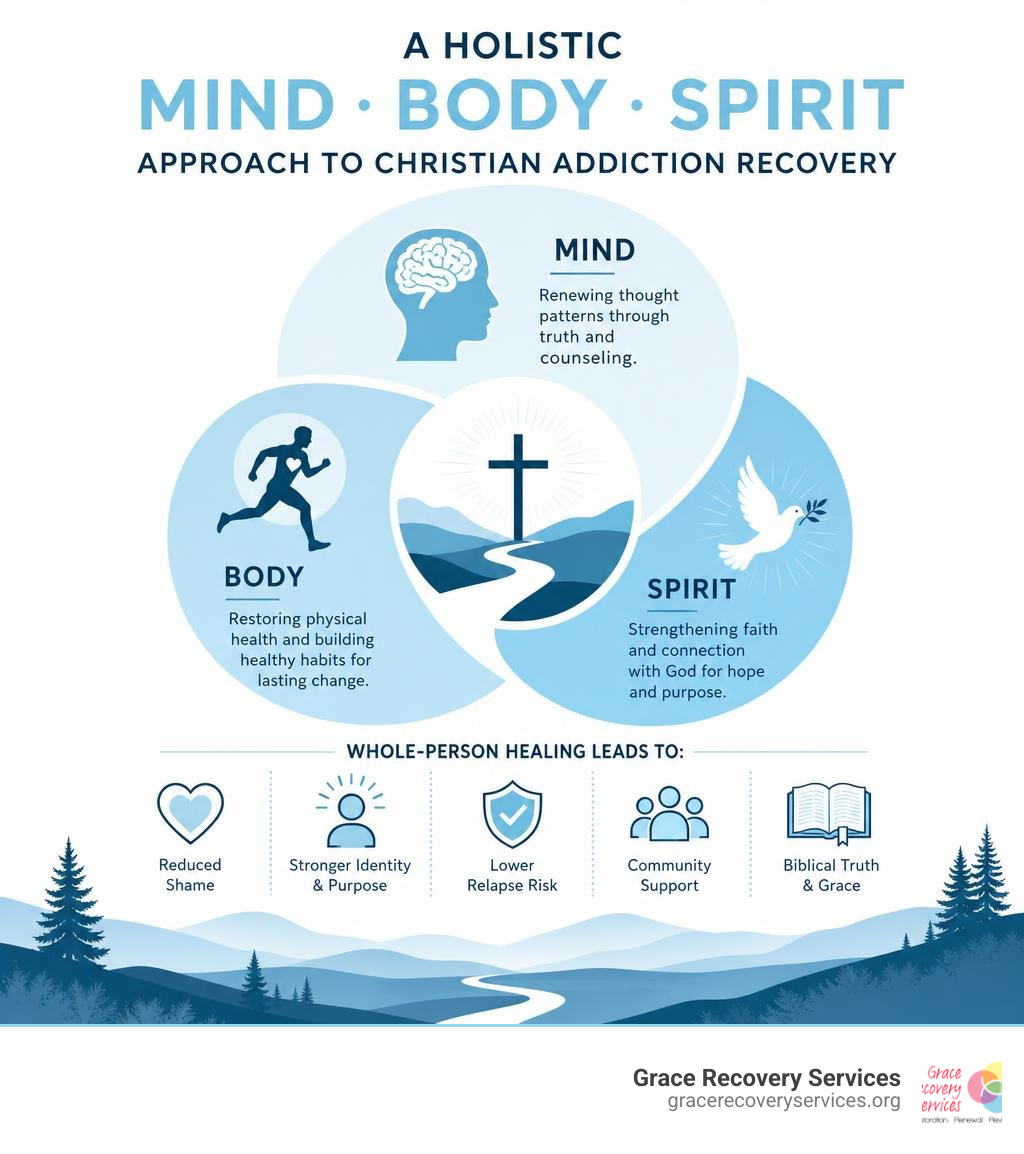
Christian counseling addiction help brings together evidence-based therapy and biblical principles to support healing of the whole person — mind, body, and spirit.
If you or someone you love is struggling with substance use, here is a quick overview of what Christian addiction counseling offers:
- What it is: Professional counseling that integrates faith, scripture, and clinical therapy to treat addiction
- Who it helps: Individuals struggling with alcohol, drugs, or other compulsive behaviors — and their families
- How it works: Counselors address the emotional, relational, spiritual, and physical roots of addiction together
- Key benefits: Reduced shame, stronger identity and purpose, lower relapse risk, and community support
- Who provides it: Licensed professional counselors who incorporate a Christian worldview into clinical practice
Addiction is one of the most painful things a person — or a family — can go through. And for many people in Western Pennsylvania, standard treatment alone leaves something missing. A spiritual void that clinical tools, on their own, can’t always reach.
That is exactly where faith-integrated recovery makes a difference.
At Grace Recovery Services, we believe that lasting healing goes deeper than behavior change. It reaches into the wounds beneath the surface — the shame, the trauma, the broken sense of identity — and replaces them with truth, grace, and genuine hope.
Whether you are just beginning to explore recovery or you have tried other approaches before, this guide will walk you through everything you need to know about Christian addiction counseling: what it is, how it works, and how it can support you right where you are.
Terms related to Christian counseling addiction help:
- Pittsburgh Christian recovery center
- Bible verses about being sober
- faith integrated recovery Pittsburgh
What is Christian Counseling for Addiction?
When we talk about Christian counseling addiction help, we are describing a specialized form of therapy that bridges the gap between clinical excellence and biblical wisdom. In Western Pennsylvania, many individuals experiencing substance use disorders struggle with feelings of isolation, guilt, and spiritual disconnection. Our approach does not ask you to leave your faith at the door; instead, we invite it directly into the therapeutic process to act as a source of strength, identity, and healing.
This form of treatment is provided by licensed professional counselors who are clinically trained to understand the neurobiology of addiction, trauma-informed care, and evidence-based therapeutic modalities. However, unlike purely secular therapists, Christian counselors also understand that human beings are spiritual creatures.
By utilizing person-first language and treating every client with the utmost dignity, we ensure that you are never defined by your struggles. You are not “an addict” trying to manage a disease; you are a person of infinite worth seeking restoration. For those in our local communities, seeking Western PA Christian Addiction Counseling provides a pathway to recovery that respects both your clinical needs and your spiritual values.
How Faith-Based Care Differs from Secular Approaches
The primary difference between secular addiction treatment and Christian counseling lies in how we view the root of human suffering and the ultimate source of healing. Secular models often view addiction through a purely biological or behavioral lens. While these insights are incredibly valuable and scientifically sound, they frequently overlook the spiritual void that many clients report feeling deep within their souls.
In secular environments, the ultimate goal is often symptom management or behavior modification. In contrast, Christian counseling aims for complete heart transformation. We believe that true freedom is found in an identity shift — moving from the shame of past choices to a firm understanding of your identity in Christ.
While secular therapies might teach you to manage cravings through willpower, faith-based care introduces you to the concept of grace over shame. This perspective is backed by academic research; for instance, the curriculum within the M.A. in Human Services | Addictions and Recovery | Liberty University emphasizes that integrating a biblical worldview with clinical practice equips helpers to address the deep, multifaceted needs of clients in a way that clinical tools alone cannot achieve.
Addressing Both the Spiritual and Physical Aspects of Addiction
A common misconception is that Christian counseling ignores the physical or biological realities of substance use disorders, relying solely on prayer or spiritual disciplines. In reality, high-quality Christian counseling is deeply holistic, addressing the mind, body, and spirit simultaneously.
We recognize that prolonged substance use alters brain chemistry, impacts organ health, and often co-occurs with physical trauma. Therefore, our outpatient support in Western Pennsylvania combines clinical tools with spiritual resources.
| Aspect of Care | Secular Counseling Approach | Christian Counseling Approach (Grace Recovery Services) |
|---|---|---|
| Primary Focus | Behavioral modification, symptom reduction, and neurological coping mechanisms. | Holistic transformation of mind, body, and spirit, addressing root trauma and spiritual identity. |
| Source of Identity | Focuses on self-reliance, coping strategies, and accepting the label of recovery. | Focuses on identity in Christ, moving from guilt and shame to grace and redemption. |
| Root Cause Analysis | Explores genetic predisposition, environmental triggers, and emotional trauma. | Explores genetic and emotional factors alongside spiritual voids and relational worship struggles. |
| Relapse Prevention | Relies on clinical coping skills, behavioral strategies, and support groups. | Integrates clinical coping skills with spiritual disciplines, prayer, and a faith community. |
The Theology of Recovery: Understanding Addiction as a Worship Disorder
To understand how Christian counseling addiction help works on a deeper level, we must look at the practical theology behind it. In biblical counseling circles, addiction is often understood not merely as a physical disease, but as a “worship disorder.” This concept, beautifully explored in theological works such as RAY/Sabbath, suggests that all human beings are wired for worship. We are designed to seek satisfaction, safety, comfort, and joy in something greater than ourselves.
When we experience trauma, pain, or spiritual emptiness, we are tempted to turn to substances or compulsive behaviors to find immediate relief. In a theological sense, these substances become functional idols. We look to alcohol, prescription medications, or illicit drugs to do what only God can do: quiet our anxieties, heal our emotional wounds, and give us peace.
By reframing addiction as a worship disorder, we remove the clinical coldness of the struggle and get to the heart of the matter. Recovery then becomes a beautiful journey of redirecting our worship away from the things that destroy us and back toward the Creator who restores us.
Finding Christian Counseling Addiction Help for Deep Spiritual Renewal
Once we understand that the root of addiction often involves a misplaced search for comfort, the path to recovery becomes clear: we need deep spiritual renewal. This renewal is grounded in the core Christian principles of grace, forgiveness, and redemption.
Shame is one of the most powerful drivers of continued substance use. When a person slips or struggles, secular guilt can lead them right back to the substance to numb the pain. However, Christian counseling introduces a different narrative.
Through the lens of scripture, we learn that we are not defined by our worst days. God’s grace is sufficient, and His forgiveness is absolute. By working with a counselor to experience this grace, clients undergo a profound identity shift. You stop viewing yourself as a broken addict and begin viewing yourself as a beloved child of God. If you are ready to explore this path, utilizing a Faith-Based Counseling Near Me Local Experts Guide can help connect you with local professionals in Western Pennsylvania who understand this transformative process.
The Counseling Blueprint: Our Four-Stage Journey to Wholeness
At Grace Recovery Services, we do not believe in a one-size-fits-all approach to recovery. Our clinical team utilizes a proprietary framework called the Counseling Blueprint. This is a four-stage healing journey designed to address trauma-informed care, emotional healing, relational wounds, and long-term sobriety in a structured, compassionate manner.

Stage 1 and 2: Take Off the Mask and Heal the Wounds
The first stage of the Counseling Blueprint is Take Off the Mask. Many people arriving at our outpatient centers in Penn Hills or North Huntingdon have spent years hiding their pain behind a mask of self-sufficiency, anger, or high-functioning anxiety. In this initial stage, our priority is building genuine rapport and trust. We create a safe, non-judgmental space where you can finally lay down your guard and speak honestly about your struggles.
Once the mask is off, we transition into Stage 2: Heal the Wounds. Addiction rarely exists in a vacuum; it is almost always an attempt to self-medicate deeper emotional and relational hurts. During this stage, our counselors guide you through trauma resolution, exploring past family dynamics, and addressing the relational wounds that have fueled your substance use. We look at the painful chapters of your story not to condemn you, but to bring Christ’s healing touch to those exact areas.
Stage 3 and 4: Remove the Toxins and Replace with Truth
After addressing the emotional wounds, we move to Stage 3: Remove the Toxins. In this phase, we work together to identify unhelpful beliefs, cognitive distortions, and lingering lies that you may have accepted about yourself or the world around you. These “toxins” might sound like: “I am beyond saving,” “I will always be a disappointment,” or “I need this substance to survive.”
Finally, we enter Stage 4: Replace with Truth. It is not enough to simply remove negative thoughts; we must install empowering, accurate perspectives about your self-worth, your future, and your relationship with God. We replace the toxic lies with biblical truth, helping you build a resilient mind and a solid foundation for long-term sobriety.
Practical Strategies and Christian Counseling Addiction Help for Families
Addiction is often described as a family disease because its impact ripples outward, affecting spouses, parents, siblings, and children. When one member of a family struggles, the entire family system experiences stress, trauma, and relational fractures. That is why Christian counseling addiction help must extend to the entire family unit.

Through family support sessions, Christian counselors help loved ones establish healthy boundaries. In many cases, well-meaning family members fall into patterns of codependency or enabling, trying to protect the individual from the consequences of their substance use.
We provide compassionate guidance to help families break these dysfunctional cycles, teaching them how to speak the truth in love while maintaining their own emotional and spiritual health. By healing relational wounds and fostering open, honest communication, we help build a supportive home environment that actively encourages long-term recovery.
Accessing Christian Counseling Addiction Help in Western Pennsylvania
If you are living in Western Pennsylvania, finding local, high-quality care is essential for building a sustainable recovery routine. Grace Recovery Services offers outpatient-only programs designed to fit into your daily life, allowing you to maintain your commitments to work, school, and family while receiving professional care.
Our local offices serve communities across the region:
- Penn Hills / Pittsburgh Area: Providing accessible, trauma-informed outpatient care for individuals and families in Allegheny County. If you are nearby, you can learn more about your Christian Counseling in Penn Hills to see how our local team can support your journey.
- North Huntingdon / Irwin Area: Serving Westmoreland County with compassionate, faith-integrated intensive outpatient programs (IOP) and individual counseling.
Frequently Asked Questions About Christian Addiction Recovery
Can non-Christians benefit from Christian counseling?
Absolutely. While our counseling is firmly grounded in Christian principles and biblical truth, we meet every client exactly where they are on their spiritual journey. The core values of our practice — deep compassion, non-judgmental support, honesty, forgiveness, and respect for human dignity — are universal.
We never force our beliefs on anyone. Instead, we offer a safe, warm, and professional environment where you can explore healing at your own pace, regardless of your religious background.
How does faith-integrated therapy help prevent relapse?
Studies show that faith-based care significantly lowers the overall risk of relapse. Faith-integrated therapy achieves this by providing a deeper sense of purpose and hope that goes beyond simple behavior modification.
By helping you establish daily spiritual disciplines (such as prayer, scripture study, and reflection) and connecting you with a supportive faith community, we help you fill the spiritual void that substance use once occupied. Combined with clinical coping skills, this holistic foundation keeps you anchored during difficult times.
Is medication-assisted treatment (MAT) compatible with Christian counseling?
Yes, we believe that clinical excellence and biblical truth work hand-in-hand. Medication-Assisted Treatment (MAT) is an evidence-based clinical tool that uses FDA-approved medications to manage physical withdrawal symptoms and cravings, particularly for opioid or alcohol use disorders.
Using medical protocols to stabilize the body is entirely compatible with Christian counseling. By treating the physical symptoms of addiction, MAT allows clients to focus their energy on the emotional, relational, and spiritual work of recovery.
Conclusion: Take Your First Step Toward Restoration
Recovery from addiction can often feel like an isolated, overwhelming journey. But you do not have to walk this path alone. True, lasting restoration is possible when you address the physical, emotional, and spiritual aspects of your life together.
At Grace Recovery Services, our outpatient-only programs in Pittsburgh (Penn Hills area) and North Huntingdon are designed to provide the clinical expertise and compassionate, faith-centered care you need to heal. Through our structured Counseling Blueprint, we are committed to helping you take off the mask, heal your wounds, remove the toxic beliefs holding you back, and replace them with life-giving truth.
No matter how dark your past has been, your story is not over. Grace, redemption, and a restored life are waiting for you.
To take your first step toward healing, Begin your healing journey today by reaching out to our compassionate team for a personalized assessment.
This article was researched with AI and heavily edited by Stephen Luther for accuracy and relevance.
Stephen Luther is the Executive Director and Founder of Grace Christian Counseling, Grace Recovery Services, WPA Counseling, NuWell Online Counseling and Coaching, and NuWell Health. He holds a Master’s degree in Education from the University of Georgia and a Master’s degree in Marriage and Family Therapy from Duquesne University. He is a licensed professional counselor in Pennsylvania.
Since 1997, Steve has been helping children, adolescents, and adults overcome a wide range of emotional and relational challenges. He specializes in working with hurting families, including those with foster, adopted, or traumatized children. Steve uses Attachment-Based Therapy, Splankna Healing, and Therapeutic Parent Coaching to support healing and restoration.
This guide is for educational and spiritual encouragement and is not a substitute for personalized professional counseling. If you are in crisis, please reach out for immediate help.