Why a Christian IOP Program in Penn Hills Could Be the Missing Piece in Your Recovery
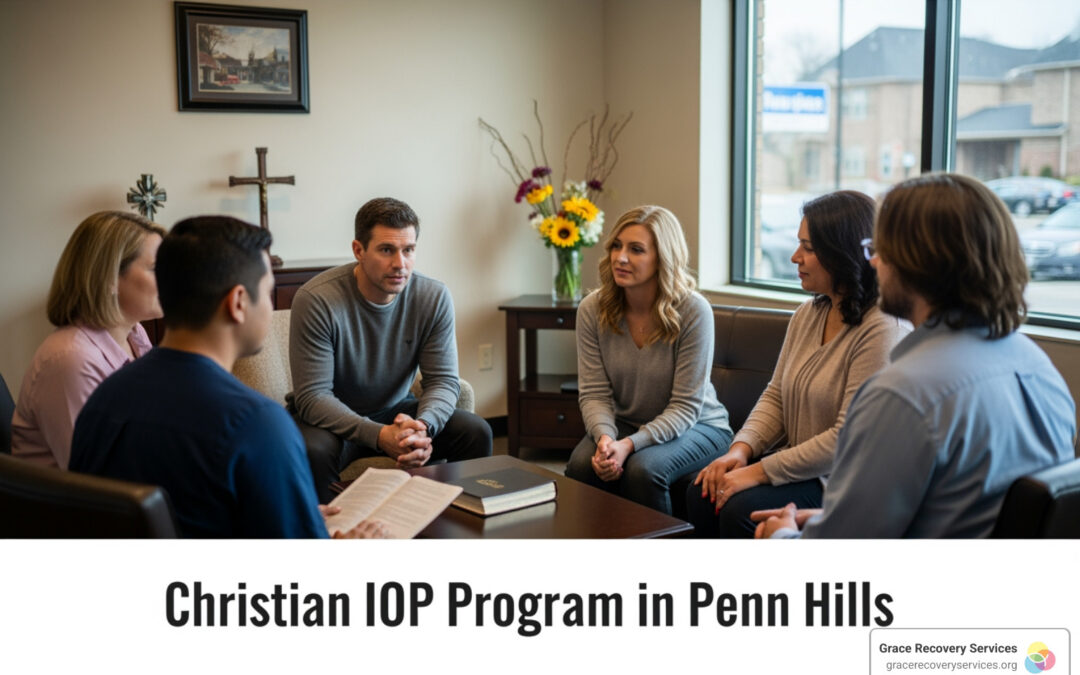
If you or someone you love is looking for a Christian IOP program in Penn Hills, here is what you need to know right away:
Quick Answer: What Is a Christian IOP Program in Penn Hills?
- A Christian Intensive Outpatient Program (IOP) combines licensed, evidence-based addiction treatment with biblical principles and spiritual care.
- Clients attend 3-5 sessions per week (typically 9-15 hours total) while living at home, keeping jobs, and staying connected to family.
- Programs address substance use disorders, co-occurring mental health conditions such as anxiety, depression, and PTSD, along with the spiritual wounds that can accompany addiction.
- Both in-person and telehealth options are available in the Penn Hills and greater Pittsburgh area.
- Insurance is accepted by most major providers, including UPMC, Highmark, and Aetna.
- You do not need to be a lifelong Christian or have a perfect faith history to enroll.
When we talk about addiction recovery in Western Pennsylvania, we are talking about more than just stopping a substance. We are talking about healing the whole person – mind, body, and spirit.
At Grace Recovery Services, we see this every day. Many clients who reach out to us have already tried other forms of support. They learned coping tools and gained insight, but something still felt missing. For many people in Penn Hills, Pittsburgh, and across Allegheny County, that missing piece is faith-integrated care rooted in grace, restoration, and renewal.
Research backs this up. Approximately 73% of substance use treatment programs in the United States include some form of spiritual element, and broader national data from the Substance Abuse and Mental Health Services Administration (SAMHSA) continues to highlight the importance of individualized, whole-person care in recovery.
A Christian IOP in Penn Hills brings together the structure of intensive clinical care with the hope, identity restoration, and compassionate support that can come from a grace-centered, biblical worldview. It is not a Bible study dressed up as therapy. It is a thoughtful blend of clinical excellence and spiritual depth.
Whether you are carrying the weight of trauma, struggling with anxiety or depression alongside addiction, or simply wondering if God still has a place for you in recovery, this guide will walk you through how a Christian IOP program can help.
Understanding the Christian IOP Program Penn Hills Difference
A Christian IOP program Penn Hills is more structured than standard weekly counseling and more flexible than higher levels of outpatient care. In simple terms, it gives clients a meaningful amount of support each week without pulling them out of everyday life.
That matters because recovery does not happen in a vacuum. Real healing happens while you are still navigating work, parenting, school, relationships, church, and the stressors that used to trigger substance use.
In our setting, an intensive outpatient program typically includes:
- Multiple treatment sessions each week
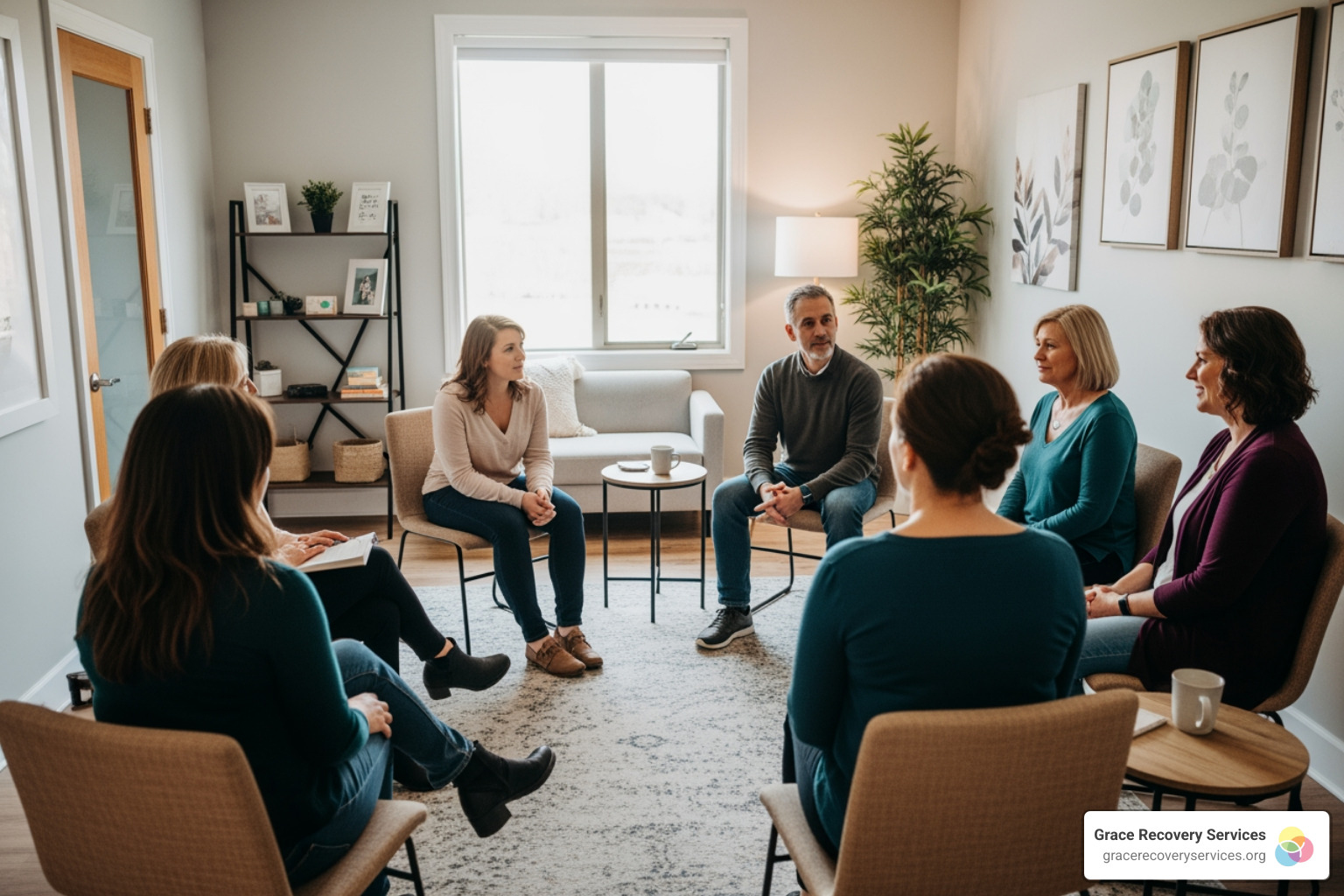
- Individual and group counseling
- support for both addiction and mental health concerns
- relapse prevention and recovery planning
- optional biblical integration for clients who want faith included directly in care
If you want to learn more about our approach, visit Christian Intensive Outpatient Treatment.
Bridging Clinical Care and Spiritual Restoration
One of the biggest differences in a Christian IOP is worldview.
A standard program may focus only on behavior change, coping skills, and relapse prevention. Those pieces matter a lot, and we use them too. But a Christian approach also asks deeper questions:
- What pain is underneath the substance use?
- Where did shame begin to take over?
- How has trauma shaped your beliefs about yourself?
- How can recovery include restoration in your relationship with God?
Many people describe addiction as more than a physical habit. It can feel like emptiness, disconnection, or a constant search for relief that never quite satisfies. We do not use spiritual language to oversimplify addiction. We use it to acknowledge that many clients are hurting on multiple levels at once.
That is why our work blends faith and clinical care. We want clients to gain skills, yes, but also hope, identity, and a renewed sense of dignity. You can learn more about this whole-person model through our Christian Recovery Services.
A Non-Judgmental Environment for Lasting Change
Shame is terrible at helping people heal. It is very good at helping people hide.
That is why a grace-centered environment matters so much. We use person-first language because people are more than a diagnosis, more than a relapse, and definitely more than the worst thing they did on a hard day.
In a healthy Christian IOP environment, clients are not expected to show up polished, cheerful, or spiritually impressive. They are invited to show up honest.
We work to create a space that is:
- non-judgmental
- trauma-informed
- emotionally safe
- spiritually safe
- grounded in dignity and compassion
For many people, that shift alone is powerful. Instead of asking, “What is wrong with me?” they begin asking, “What happened to me, and how can healing begin?” That is a very different conversation, and usually a much more hopeful one.
If this resonates with you, our article Your Path to Recovery with Christian Counseling in Penn Hills goes deeper into what that experience can look like.
Integrating Faith with Evidence-Based Clinical Therapies
A common question we hear is, “Is this real therapy, or is it mainly spiritual support?”
The answer is yes to the first question, and also yes to the second.
At Grace Recovery Services, faith does not replace clinical care. It strengthens it for clients who want that integration. A helpful way to picture it is this: evidence-based treatment provides the foundation and walls, while faith becomes the roof that gives meaning, shelter, and direction.
Here is a simple comparison:
| Feature | Standard Outpatient Counseling | Christian IOP |
|---|---|---|
| Frequency | Often 1-2 hours per week | Usually 9-15 hours per week |
| Intensity | Lower | Higher, with more accountability |
| Focus | Maintenance and support | Active stabilization and skill-building |
| Group component | Sometimes limited | Usually central to treatment |
| Faith integration | Typically none | Available through biblical reflection, prayer, and Christian counseling |
| Co-occurring support | Varies | Often integrated into the treatment plan |
About half of people with substance use disorders also live with a co-occurring mental health condition such as anxiety, depression, or PTSD. That is one reason integrated care matters so much. Resources from the National Institute on Drug Abuse also emphasize that treatment is most effective when it addresses both substance use and mental health needs together.
Renewing the Mind through Clinical Modalities
We use evidence-based therapies because they are effective, practical, and teachable.
These may include:
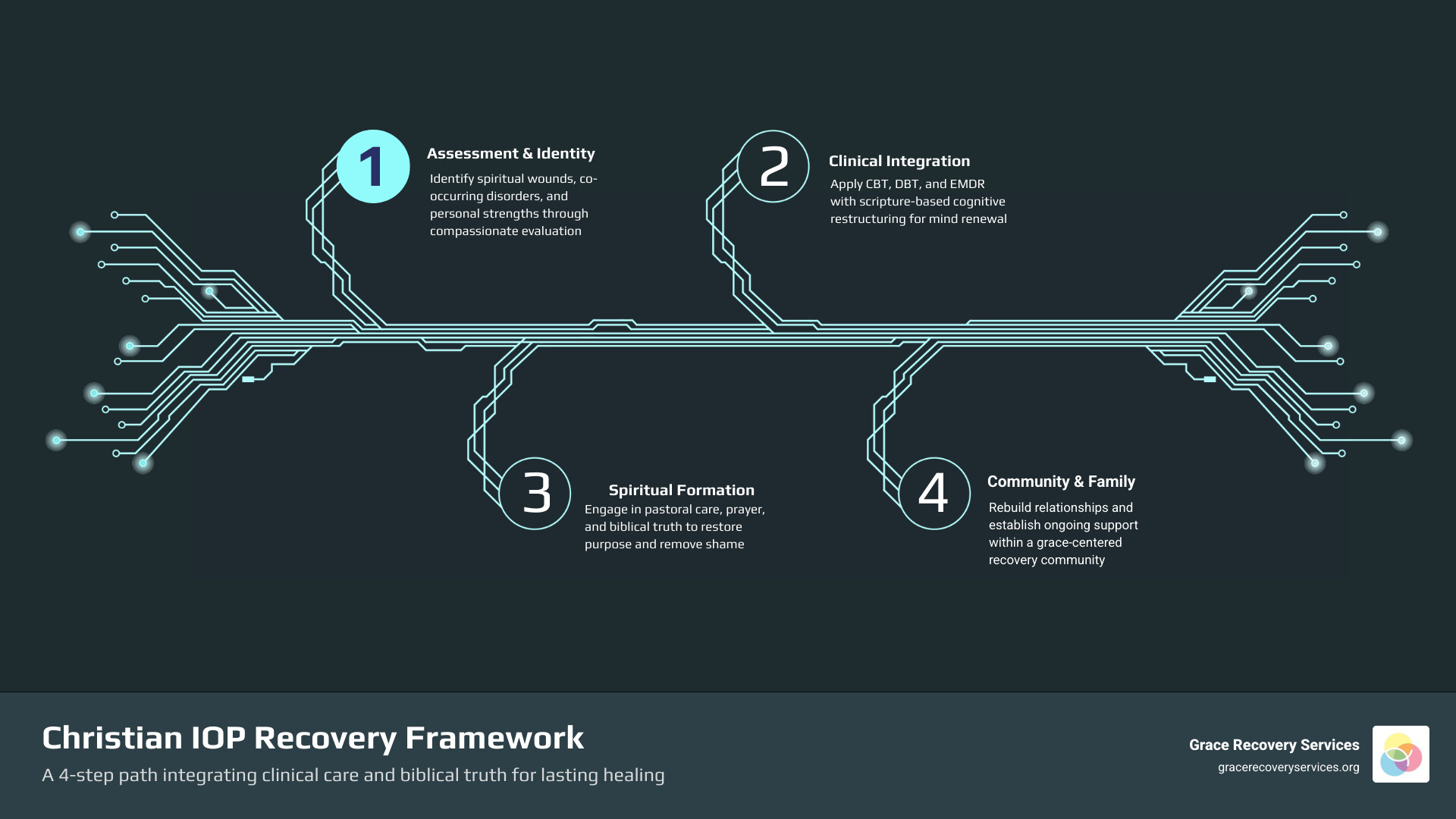
- CBT, or Cognitive Behavioral Therapy
- DBT, or Dialectical Behavior Therapy
- EMDR for trauma processing when clinically appropriate
- ACT, or Acceptance and Commitment Therapy
- Seeking Safety for trauma and substance use
CBT helps clients identify distorted thinking patterns and replace them with healthier, more accurate thoughts. In Christian terms, many people connect this with the idea of renewing the mind. If someone has spent years believing “I am hopeless” or “I always ruin everything,” therapy helps challenge those beliefs. Faith integration may go a step further by replacing those lies with biblical truth about identity, worth, and redemption.
DBT helps with emotional regulation, distress tolerance, and relationship skills. That is especially useful for clients who feel overwhelmed quickly or who use substances to manage intense emotions.
EMDR can help clients process traumatic memories that still feel “stuck.” For some clients, pairing trauma work with biblical themes of grace, safety, and restoration can make that healing feel more grounded.
To learn more about how we blend these tools with compassionate, faith-based care, visit Faith-Based Outpatient Addiction Treatment.
Trauma-Informed Care and Spiritual Healing
Trauma-informed care means we do not ask, “Why are you acting like this?” We ask, “What have you lived through?”
That matters because addiction is often rooted in unresolved pain. Sometimes that pain comes from family dysfunction, grief, abuse, neglect, betrayal, or spiritual harm. Sometimes it comes from years of trying to survive without safe support.
Our trauma-informed approach helps clients:
- understand their triggers
- build coping skills without substances
- process painful experiences safely
- reduce shame
- reconnect with their values and purpose
For clients who want it, spiritual themes can also be part of treatment. Some people describe feeling trapped not only in unhealthy patterns, but in painful beliefs about who they are. In that sense, spiritually grounded counseling can involve identifying destructive beliefs and replacing fear, condemnation, or self-hatred with truth, hope, and redemption.
We often describe healing as a process of:
- Taking off the mask
- Healing the wounds
- Removing the toxins
- Replacing them with truth
No, it is not as fast as assembling furniture from a box. But unlike some furniture, it actually holds together when done well.
Addressing Co-Occurring Disorders and Trauma in Penn Hills
Substance use rarely travels alone. Anxiety, depression, trauma symptoms, grief, and relationship pain often come along for the ride.
That is why our Christian IOP program Penn Hills addresses more than addiction itself. We care about the underlying drivers too.

At Grace Recovery Services, we support clients dealing with:
- alcohol use disorder
- opioid and other drug misuse
- stimulant misuse
- polysubstance use
- anxiety
- depression
- trauma and PTSD symptoms
- grief and loss
- relational wounds
- spiritual struggle connected to addiction
Our broader Services page gives an overview of the kinds of support we offer in Western Pennsylvania.
Healing the Roots of Addiction
Recovery gets stronger when we address roots, not just symptoms.
If someone uses substances to numb panic, escape traumatic memories, quiet shame, or avoid grief, simply telling them to “stop using” is not enough. Without deeper healing, the pressure usually comes back.
That is why we pay attention to the pain underneath the behavior. Depending on a client’s needs, this can include support around:
- unresolved trauma
- grief counseling
- church hurt or spiritual abuse
- sexual addiction concerns
- identity struggles
- chronic shame and self-condemnation
For some clients, church hurt is a very real barrier. They may love God and still feel wary of Christian spaces. We understand that. A grace-based program should never pressure people to perform religion. It should help them heal safely, at a pace they can tolerate.
For more on our approach to whole-person recovery, see Christian Addiction Recovery Pittsburgh.
Family Restoration and Relational Healing
Addiction affects families, not just individuals. Trust gets strained. Communication breaks down. Roles get distorted. People start walking on eggshells, and nobody enjoys that flooring plan.
A quality Christian IOP can help families move from chaos to healthier patterns by including:
- family therapy when appropriate
- education about addiction and recovery
- boundary-setting skills
- communication repair
- support for rebuilding trust over time
We also recognize that healing can involve couples work, parenting support, and breaking generational cycles. Some families need help learning how to be supportive without becoming controlling. Others need help expressing hurt honestly without constant blame.
When family members participate in recovery work, the entire system can begin to change. Learn more about this relational dimension through Western PA Christian Addiction Counseling.
Structure and Flexibility of a Christian IOP Program Penn Hills
One reason people seek an IOP is that they need significant help, but they also need to keep living life. Bills still show up. Kids still need rides. Employers still expect you to know what day it is.
That is where IOP can be such a practical fit.
Most intensive outpatient schedules involve:
- 3-5 treatment days per week
- about 9-15 total hours weekly
- a mix of group and individual sessions
- a treatment length often measured in months rather than days
- continued work on relapse prevention, emotional regulation, and recovery planning
Because every client starts from a different place, duration can vary. Some people need a shorter period of high support, while others benefit from a longer step-down process before moving to standard outpatient care.
You can learn more about how this level of care works on our Intensive Outpatient page.
Specialized Features of the Christian IOP Program Penn Hills
Not every Christian IOP looks the same, so it helps to know what specialized features may be part of care.
At Grace Recovery Services, our faith-based approach may include:
- Christian counseling
- biblical reflection integrated into sessions when desired
- prayer when clinically and personally appropriate
- trauma-informed treatment
- co-occurring disorder support
- relapse prevention planning
- family involvement
- support for spiritual growth alongside sobriety
Some clients also appreciate Christian perspectives on recovery fellowship and accountability. For people whose faith is central to identity, this can make treatment feel more aligned and more sustainable.
If you want to understand how faith-based treatment fits into the larger recovery journey, visit Christian Rehab Pittsburgh.
Telehealth and In-Person Options in Allegheny County
Accessibility matters. The best program in the world is not very helpful if getting there feels impossible.
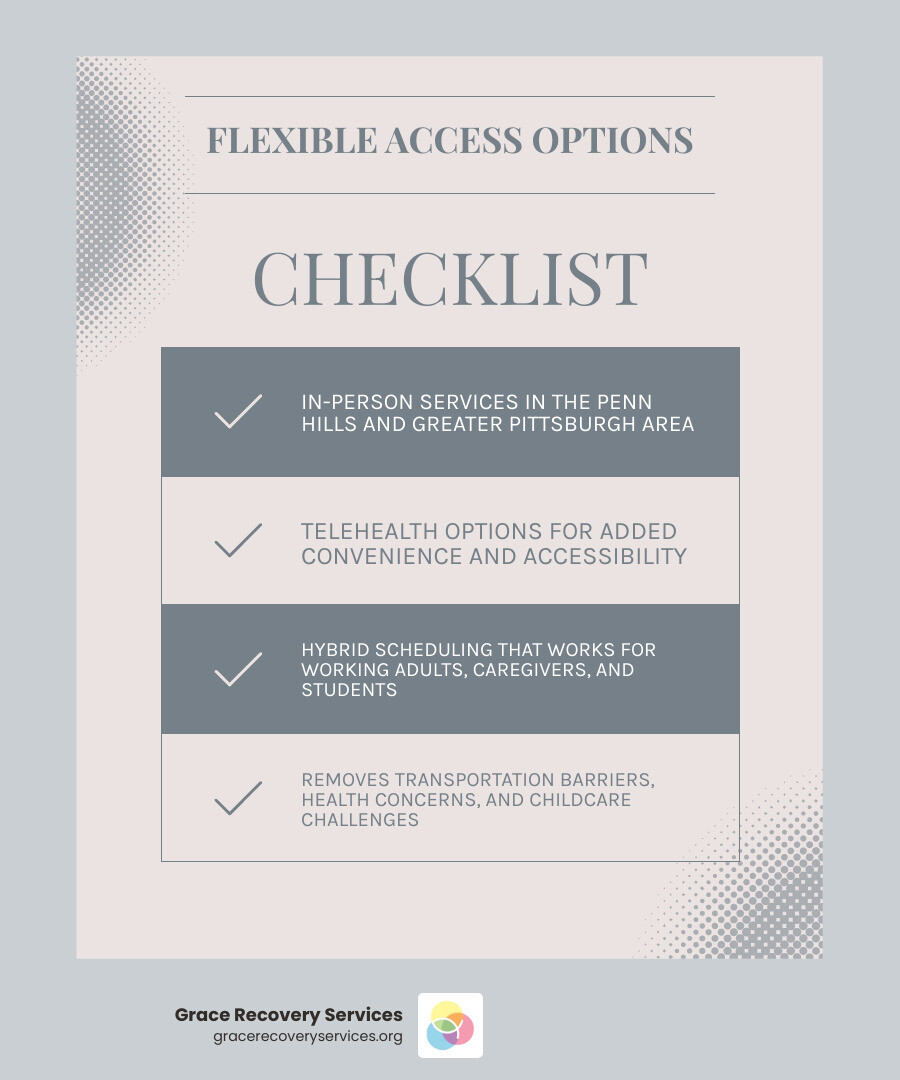
That is why flexibility is such an important part of outpatient care. Depending on clinical appropriateness and scheduling, clients may have access to:
- in-person services in the Penn Hills and greater Pittsburgh area
- telehealth options for added convenience
- scheduling that works better for working adults, caregivers, and students
Telehealth can be especially helpful if someone faces:
- transportation barriers
- health concerns
- childcare challenges
- work schedule limitations
- anxiety about starting treatment in person
For many people in Allegheny County and surrounding Western PA communities, a hybrid or flexible model can remove barriers that might otherwise delay care. Learn more through Faith-Based Rehab Pittsburgh.
Frequently Asked Questions about Christian Recovery
How does a Christian IOP differ from secular programs?
The main difference is not that one uses therapy and the other does not. A strong Christian IOP still uses evidence-based care. The difference is that the work is viewed through a biblical lens.
That means we address:
- substance use patterns
- mental health symptoms
- trauma history
- identity and shame
- spiritual disconnection and meaning
A secular program may help someone stop using substances. A Christian IOP aims for that too, but also for deeper restoration of mind, body, and spirit. We focus on grace over shame and long-term transformation, not just white-knuckling sobriety.
Do I have to be a “perfect Christian” to enroll?
Absolutely not.
You do not need to know Bible verses by memory, have a spotless church history, or feel spiritually confident. In fact, many clients come in feeling distant from God, angry at religion, unsure what they believe, or simply curious.
Our approach is grace-based and non-dogmatic. We want treatment to feel emotionally and spiritually safe. Faith integration is there as a resource, not a hammer.
Some clients are deeply rooted in Christian faith. Others are rebuilding after church hurt. Others are exploring whether faith might be part of healing at all. All can be treated with dignity.
Is insurance accepted for the Christian IOP program?
In many cases, yes. Faith-integrated treatment is often covered similarly to other licensed behavioral health services when it is provided within a clinical framework.
Plans commonly asked about include:
- UPMC
- Highmark
- Aetna
- other major commercial plans
Coverage can vary, so the best next step is to contact us for a benefits check. We can also talk with you about available financial support options, including sliding-scale possibilities when appropriate. We do not believe confusion about insurance should be the thing that keeps someone stuck.
Conclusion
Choosing a Christian IOP program Penn Hills is not about choosing between serious treatment and serious faith. At Grace Recovery Services, we believe you should not have to choose at all.
Our goal is to offer care that is clinically grounded, trauma-informed, and spiritually hopeful. We support clients in Penn Hills, Pittsburgh, North Huntingdon, and the broader Western Pennsylvania area who want help for substance use, co-occurring mental health concerns, and the deeper wounds that often sit beneath addiction.
If you are wondering what comes next, a good first step is simple:
- Reach out to us for a confidential conversation
- Ask about scheduling an assessment
- Verify your insurance benefits
- Explore whether in-person or telehealth care fits your life best
Recovery does not begin when you have everything figured out. It often begins when you are honest enough to ask for help.
If you would like to learn more about the hope that can support lasting change, we also invite you to read Bible verses that provide strength in recovery.
At Grace Recovery Services, we believe restoration is possible. Healing is possible. Renewal is possible. And no, you do not have to walk that road alone.
This article was researched with AI and heavily edited by Stephen Luther for accuracy and relevance.
Stephen Luther is the Executive Director and Founder of Grace Christian Counseling, Grace Recovery Services, WPA Counseling, NuWell Online Counseling and Coaching, and NuWell Health. He holds a Master’s degree in Education from the University of Georgia and a Master’s degree in Marriage and Family Therapy from Duquesne University. He is a licensed professional counselor in Pennsylvania.
Since 1997, Steve has been helping children, adolescents, and adults overcome a wide range of emotional and relational challenges. He specializes in working with hurting families, including those with foster, adopted, or traumatized children. Steve uses Attachment-Based Therapy, Splankna Healing, and Therapeutic Parent Coaching to support healing and restoration.
This guide is for educational and spiritual encouragement and is not a substitute for personalized professional counseling. If you are in crisis, please reach out for immediate help.