Your Roadmap to Substance Abuse Treatment: What to Know Right Now
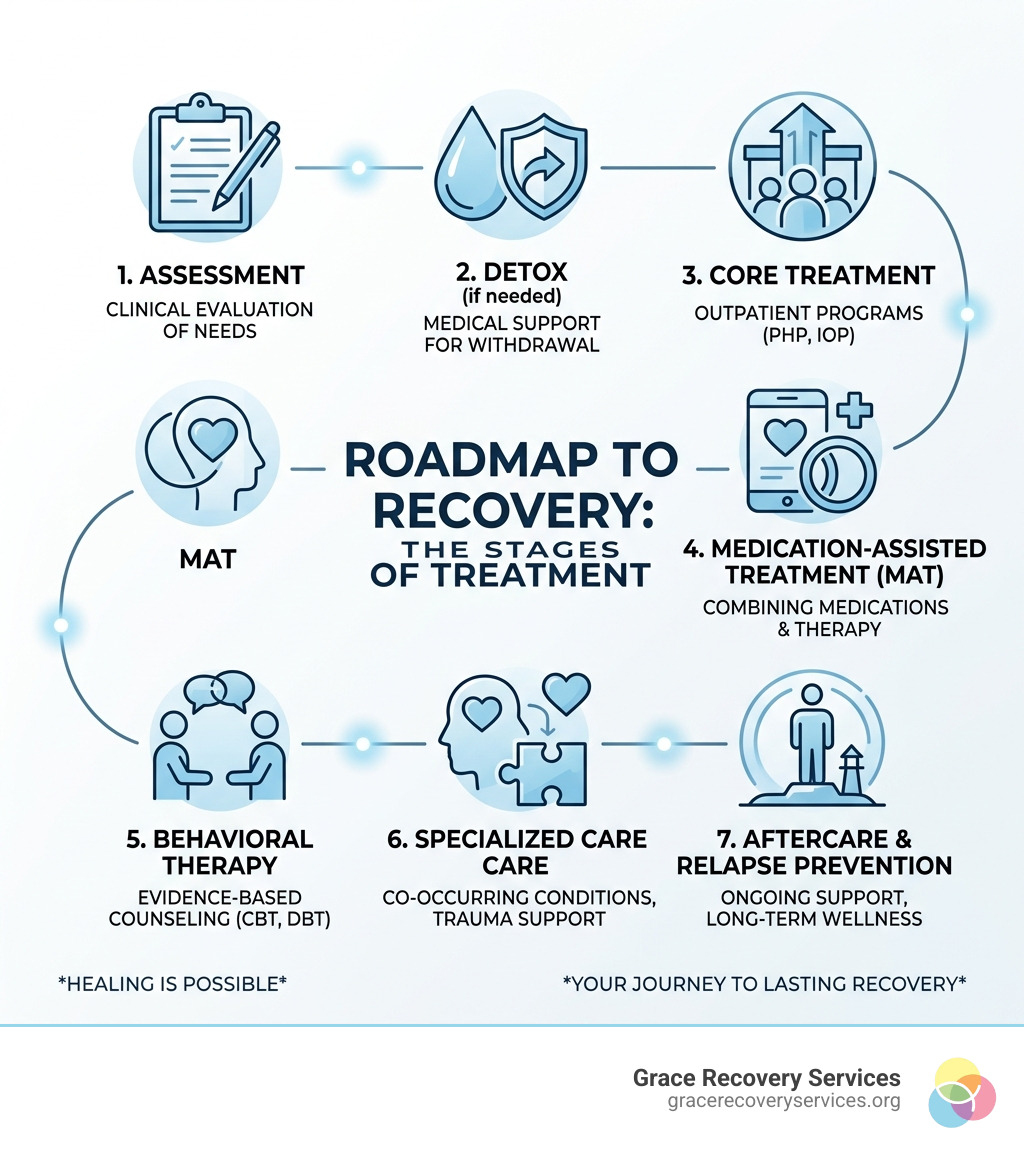
Substance abuse treatment is a structured, evidence-based process that helps people overcome dependence on alcohol or drugs and rebuild their lives. Here is a quick overview of what effective treatment looks like:
- Assessment – A clinician evaluates your physical, emotional, and social needs.
- Detox (if needed) – Medical support to safely manage withdrawal symptoms.
- Core treatment – Outpatient programs (PHP, IOP, or standard outpatient) with therapy and counseling.
- Medication-Assisted Treatment (MAT) – FDA-approved medications combined with therapy for certain substance use disorders.
- Behavioral therapy – Evidence-based approaches like CBT and DBT to address root causes.
- Specialized care – Support for co-occurring mental health conditions, trauma, and unique populations.
- Aftercare & relapse prevention – Ongoing support to protect and strengthen long-term recovery.
If you or someone you love is struggling, know this: healing is possible. Substance use disorder is not a moral failure. It is a recognized, treatable medical condition — one that responds well to the right care, support, and community.
Millions of Americans are living with substance use disorders right now. Research consistently shows that people who complete quality treatment experience real, lasting improvements — less substance use, better health, stronger relationships, and renewed purpose. And yet, many people wait far too long to seek help, often because they don’t know where to start or fear being judged.
This guide exists to change that. Whether you are personally struggling, searching for answers on behalf of someone you love, or simply trying to understand your options, this roadmap will walk you through every stage — from recognizing the problem to finding lasting recovery.
You don’t have to figure this out alone.
My name is Stephen A. Luther, MSEd, MEd, LPC, Executive Director and Founder of Grace Recovery Services in Western Pennsylvania — I have worked in substance abuse treatment and Christian counseling since the late 1990s, specializing in trauma-informed addiction recovery, co-occurring disorders, and holistic healing rooted in grace and restoration. In the sections ahead, I’ll share what the research says, what real recovery looks like, and how compassionate, faith-integrated care can make all the difference.
Understanding Substance Use Disorder and the Path to Healing
To find the right substance abuse treatment, we must first understand what we are treating. Substance Use Disorder (SUD) is a complex, chronic brain disease, not a lack of willpower. When someone uses substances over time, their brain chemistry actually changes. Specifically, substances hijack the brain’s reward system, flooding it with dopamine—the “feel-good” chemical.
Over time, the brain becomes less responsive to natural rewards like food or social connection, leading to a cycle of craving and use just to feel “normal.” This is why Facts of Addiction are so important to grasp; understanding the biological roots helps strip away the shame that often prevents people from seeking help. According to Scientific research on the science of addiction, addiction alters decision-making and self-control regions of the brain, making professional intervention necessary for many to find their way back.
In our experience at Grace Recovery Services, we view this not just as a medical crisis, but as a call for Restoration, Renewal, and Revival. We believe that while the brain is impacted, the spirit remains resilient. Healing involves addressing both the physical changes in the brain and the underlying emotional or spiritual wounds that may have led to substance use in the first place.
Can Substance Use Disorder Be Successfully Treated?
The short answer is a resounding yes. However, it is important to understand that “treated” does not always mean “cured” in the traditional sense. Much like asthma, diabetes, or hypertension, SUD is a chronic condition that requires ongoing management.
Relapse rates for drug use are actually quite similar to those for other chronic illnesses. This doesn’t mean treatment failed; it means the treatment plan needs to be adjusted. Recovery is a lifelong journey of growth. At Grace, we lean into biblical hope, believing that no one is beyond the reach of grace. If you are wondering How to Help Someone with Substance Abuse, the most important first step is acknowledging that recovery is a process, not a one-time event. With the right tools, individuals can stop using substances and resume productive, joyful lives in their communities.
Navigating the Levels of substance abuse treatment
Finding help in Western Pennsylvania can feel overwhelming because there are so many options. The goal is to find the “least restrictive” level of care that still provides the safety and structure you need. This is often referred to as the “continuum of care.”
For many, the journey begins with detoxification. Many individuals in the Pittsburgh area transition directly into outpatient programs once they are medically stable.
Understanding Outpatient Addiction Treatment is crucial. Our focus at Grace Recovery Services is on high-quality outpatient care. This allows clients to receive intensive therapy while remaining connected to their families and jobs in Allegheny County or Westmoreland County.
The Role of Outpatient substance abuse treatment
Outpatient treatment offers a level of flexibility that allows you to apply the tools you learn in therapy to your real life in real-time. In the Pittsburgh area, we offer several tiers of support:
- Partial Hospitalization Program (PHP): This is our most intensive level of outpatient care. Clients spend the majority of their day with us, receiving clinical support, but return home in the evenings.
- Intensive Outpatient Program (IOP): Our Intensive Outpatient services typically involve several sessions per week. It is designed for those who need more than standard counseling but have work or family commitments.
- Standard Outpatient Program: This involves weekly or bi-weekly sessions and is often used as a step-down for those who have completed a more intensive Outpatient Program.
| Level of Care | Hours Per Week | Best For… |
|---|---|---|
| PHP | 20+ Hours | Those needing high structure without overnight stays. |
| IOP | 9-15 Hours | Balancing recovery with work/family in Western PA. |
| Outpatient | 1-5 Hours | Long-term maintenance and ongoing support. |
Considerations for Paying for Treatment
We know that “How do I pay for this?” is one of the first questions families ask. Most major insurance providers cover substance abuse treatment as an essential health benefit. This includes coverage for assessments, therapy, and medications.
When planning for treatment, it is helpful to consult resources like Substance Use Disorder Treatment | SAMHSA to understand your rights and options. At Grace, we work with many insurance plans to ensure our neighbors in North Huntingdon and Penn Hills can access the care they need without unnecessary financial stress.
Evidence-Based Therapies and Medication-Assisted Treatment
Effective substance abuse treatment isn’t just about “not using”; it’s about learning new ways to live. To do this, we use evidence-based therapies—methods that have been scientifically proven to work.
One of the most common is Cognitive Behavioral Therapy (CBT), which helps clients identify and change the thought patterns that lead to substance use. We also utilize Dialectical Behavior Therapy (DBT) to help with emotional regulation and distress tolerance. By integrating these with Behavioral Therapy techniques, we help clients build a “toolbox” for navigating life’s challenges. You can read more about these Scientific research on treatment approaches to see how they modify attitudes and behaviors related to drug use.

How Medications Assist in Recovery
Medication-Assisted Treatment (MAT) is the use of FDA-approved medications, in combination with counseling and behavioral therapies, to provide a “whole-patient” approach. It is often the gold standard for treating opioid and alcohol use disorders.
Common medications include:
- Buprenorphine & Methadone: These help stabilize brain chemistry by reducing cravings and withdrawal symptoms for opioids.
- Naltrexone: This blocks the sedative and euphoric effects of opioids and alcohol, helping to prevent relapse.
At Grace, we believe MAT can be a vital bridge to stability. It isn’t “replacing one drug with another”; it is using medicine to stabilize the brain so that the hard work of Evidence-Based Addiction Treatment can actually take hold.
Counseling and Behavioral Approaches
While medications stabilize the body, Addiction Counseling heals the heart and mind. Our approach is uniquely faith-based, meaning we offer Christian counseling for those who want to integrate their spiritual walk into their recovery.
We also recognize that addiction is a “family disease.” It affects everyone in the household. That is why Family Support in Addiction Recovery is a core part of what we do. We help families communicate better, set healthy boundaries, and heal the relational wounds that addiction often leaves behind.
Specialized Care for Co-Occurring Disorders and Unique Populations
About half of the people who struggle with a substance use disorder also experience a mental health condition, such as depression, anxiety, or PTSD. This is known as a “dual diagnosis” or “co-occurring disorder.”
If you only treat the addiction and ignore the underlying mental health issue, the risk of relapse is much higher. That’s why we provide Co-Occurring Treatment that addresses both simultaneously. Our care is deeply Trauma-Informed Care, recognizing that many people use substances as a way to cope with past pain. By addressing Trauma and Addiction together, we offer a more complete path to freedom through Integrated Treatment for Addiction and Mental Health.
Treatment for Specific Demographics
Different people have different needs. A pregnant woman needs a different support structure than a first responder or an adolescent.
- Pregnant Women: Prioritizing the health of both mother and child through specialized perinatal support.
- First Responders & Military: Addressing the unique high-stress environments and specific traumas these heroes face.
- Adolescents: Focusing on peer pressure, family dynamics, and early intervention.
Sustaining Long-Term Recovery and Relapse Prevention
The day you finish an intensive program is not the end of the journey—it’s the beginning of a new chapter. Long-term success depends on a solid Aftercare Plan.
Relapse Prevention involves identifying your personal triggers—people, places, or feelings that make you want to use—and having a plan to deal with them. We teach our clients How to Stay Sober After Treatment by building a lifestyle that supports sobriety, including regular meetings, healthy hobbies, and a strong spiritual foundation. True Addiction Recovery and Relapse Prevention is about creating a life you don’t feel the need to escape from.
Finding Resources for substance abuse treatment
If you are in Western PA, you are surrounded by a community that cares. From the city of Pittsburgh to the surrounding areas like Westmoreland County, help is available. You can find local facilities through the Drug and Alcohol Resources & Treatment Facilities page or by reaching out to us for a consultation on Substance Use Treatment.
Frequently Asked Questions about Substance Abuse Treatment
Does relapse mean that treatment has failed?
Absolutely not. Because addiction is a chronic disease, relapse is often a part of the journey for many. Think of it as a signal to adjust the treatment plan, not a reason to give up. As noted in Scientific research on relapse rates, relapse rates for SUD are similar to those for asthma and high blood pressure. It is a time for more grace, not more shame.
What is the difference between PHP and IOP?
The main difference is the intensity and time commitment. PHP (Partial Hospitalization) is like a full-time job focused on recovery, usually meeting 5 days a week for several hours. IOP (Intensive Outpatient) is more flexible, often meeting 3 days a week for 3 hours a day. We offer Christian Intensive Outpatient Treatment for those who need that extra layer of spiritual support while maintaining their daily lives.
How can I prevent substance use disorders in my family?
Prevention starts with open, honest communication. Educate your children about the risks, but also focus on building their self-esteem and healthy coping skills. Recognizing the early Signs of Substance Abuse—like changes in mood, sleep patterns, or social circles—can help you intervene before a problem becomes a crisis.
Conclusion
At Grace Recovery Services, we believe that no one is ever too far gone for a fresh start. Whether you are in Pittsburgh, Penn Hills, or North Huntingdon, our team is here to offer you a path toward healing that honors your mind, body, and spirit. We combine the best of evidence-based science with the transformative power of faith to help you find lasting freedom.
If you’re ready to take that first step on your roadmap to recovery, we are ready to walk beside you. You can find More info about our services on our website or reach out to us directly.
There is hope. There is healing. There is a seat at the table for you.
This article was researched with AI and heavily edited by Stephen Luther for accuracy and relevance.
Stephen Luther is the Executive Director and Founder of Grace Christian Counseling, Grace Recovery Services, WPA Counseling, NuWell Online Counseling and Coaching, and NuWell Health. He holds a Master’s degree in Education from the University of Georgia and a Master’s degree in Marriage and Family Therapy from Duquesne University. He is a licensed professional counselor in Pennsylvania.
Since 1997, Steve has been helping children, adolescents, and adults overcome a wide range of emotional and relational challenges. He specializes in working with hurting families, including those with foster, adopted, or traumatized children. Steve uses Attachment-Based Therapy, Splankna Healing, and Therapeutic Parent Coaching to support healing and restoration.
This guide is for educational and spiritual encouragement and is not a substitute for personalized professional counseling. If you are in crisis, please reach out for immediate help.
Stephen A. Luther, MSEd, MEd, LPC Executive Director, Grace Recovery Services