
Why a Trauma-Informed Organizational Toolkit Matters
A trauma-informed organizational toolkit helps a program turn good intentions into daily practices that protect safety, build trust, and support recovery. Start with a baseline trauma-informed assessment of current policies, staff training, physical spaces, client feedback, and cultural responsiveness. Then choose a few clear improvements, assign ownership, and review progress regularly.
At Grace Recovery Services, we see trauma-informed care as more than a clinical approach. It is a way to shape every interaction across our partial hospitalization program and faith-based trauma-informed addiction treatment options. For clients and families in the Pittsburgh and Western Pennsylvania area, a calm, respectful, choice-centered environment makes it easier to engage in healing.
A strong toolkit also recognizes that trauma affects staff. Regular supervision, peer support, clear crisis plans, and space to debrief after difficult situations can reduce secondary traumatic stress and help teams provide steadier care.
The goal is not to ask people to disclose painful experiences. It is to use universal precautions: assume trauma may be present, avoid practices that can trigger or shame someone, and offer dignity, voice, privacy, and practical choices.
Understanding the Trauma-Informed Organizational Toolkit and Its Core Principles
Transforming institutional culture begins by viewing trauma-informed practice as a universal precaution. In physical medicine, universal precautions mean washing hands and wearing protective gear for every patient to prevent infection, regardless of known risks. In human services and healthcare, universal precautions mean treating every client and colleague with profound dignity, assuming trauma may be part of their story, and intentionally avoiding re-traumatizing practices.
When an agency relies on a Trauma-informed Organizational Toolkit – SAMHSA, it stops treating trauma as an isolated client symptom and starts viewing it as a systemic consideration. Trauma alters how the brain and nervous system perceive safety, authority, and unpredictability. If an organization features rigid rules, cold waiting areas, dismissive communication, or punitive attendance policies, it inadvertently mirrors the dynamics of past abuse and neglect.
True organizational health requires aligning leadership, human resources, facilities management, and direct clinical services around safety and transparency.
Foundational Pillars of a Trauma-Informed Organizational Toolkit
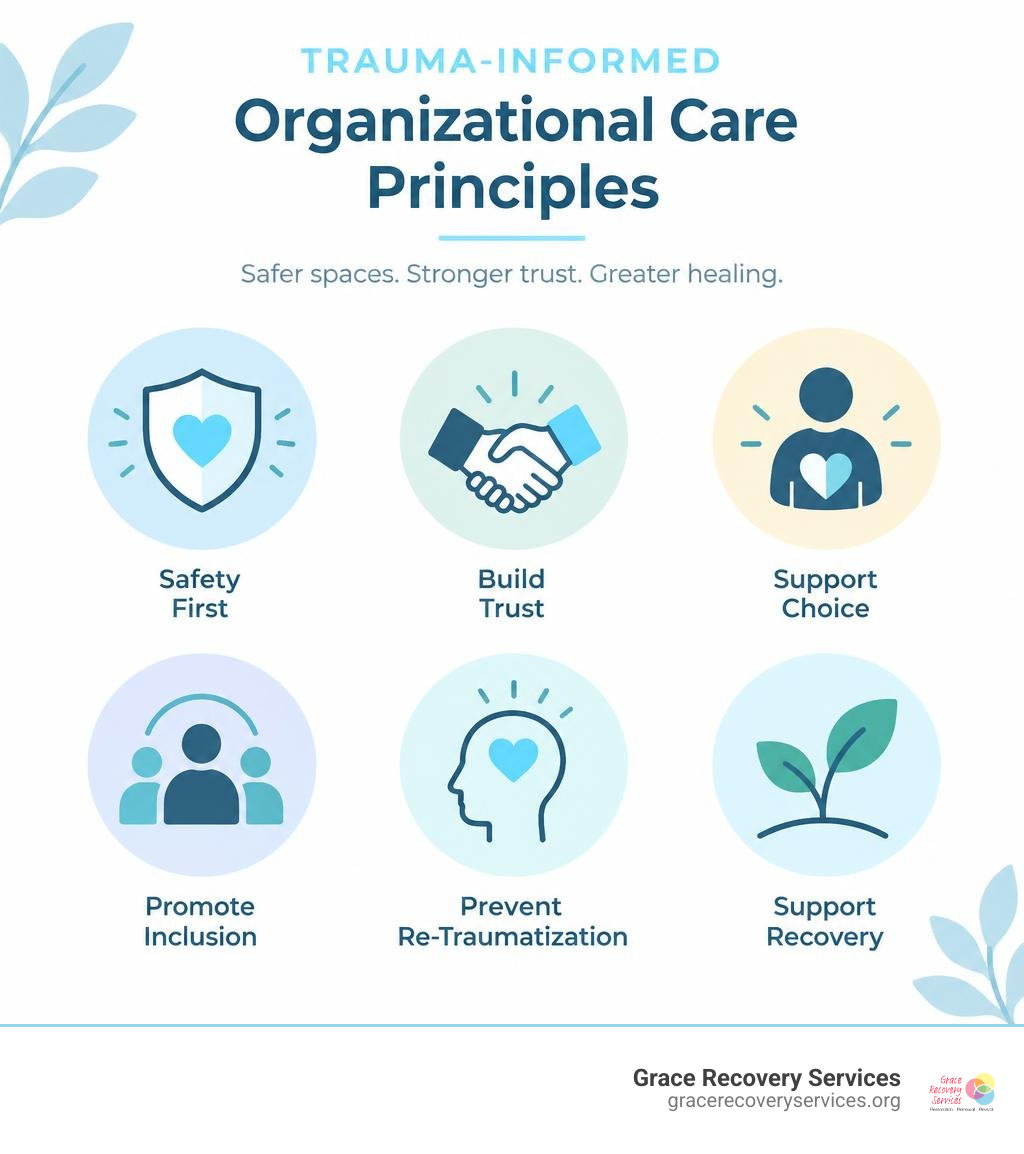
A comprehensive toolkit rests on six core pillars established by SAMHSA and refined by behavioral health leaders:
- Safety: Ensuring both physical environments and interpersonal interactions promote emotional security.
- Trustworthiness and Transparency: Building clarity into operational decisions, service expectations, and organizational policies.
- Peer Support: Valuing shared lived experience as a vehicle for emotional validation and hope.
- Collaboration and Mutuality: Flattening traditional power hierarchies so clients and staff partner together in goal setting.
- Empowerment, Voice, and Choice: Prioritizing autonomy and client-directed decisions rather than prescriptive compliance.
- Cultural Humility and Responsiveness: Actively dismantling biases, respecting diverse traditions, and recognizing historical trauma.
Integrating these principles into clinical practice strengthens evidence-based trauma treatment. In our outpatient programs across Allegheny County and Westmoreland County, we align these pillars with our core Counseling Blueprint:
- Take Off the Mask: Establishing genuine rapport and safety.
- Heal the Wounds: Processing emotional injuries without judgment.
- Remove the Toxins: Identifying harmful beliefs and chronic shame.
- Replace with Truth: Installing empowering biblical truths and healthy coping strategies.
Why Homeless Services and Healthcare Systems Need Systemic Change
Human services often support individuals walking through complex, chronic distress. Nationally, nearly 600,000 families and more than 1.3 million children experience homelessness each year. Most of these families consist of a young, single mother in her late 20s caring for two children under age six. For these mothers and children, chronic instability, economic stress, and interpersonal trauma are deeply intertwined.
When human service agencies, healthcare systems, or housing programs operate through fragmented, authoritarian structures, they risk retraumatizing vulnerable families. Viewing organizations through a living systems framework—often termed a biocracy—reminds us that organizations behave like living organisms. When exposed to chronic, unaddressed stress, workplaces become reactive, rigid, and defensive.
By applying a specialized Trauma-Informed Organizational Toolkit, providers shift their focus from asking “What is wrong with you?” to asking “What happened to you, and how can we support your recovery?”
The Five Essential Domains of Organizational Self-Assessment
Before implementing new policies, an organization must measure its baseline readiness. The foundational self-assessment instrument in the toolkit was originally developed with over 200 items, then refined into a streamlined 87-item survey instrument after extensive multi-site piloting.

This validated instrument evaluates organizational readiness across five distinct domains:
- Program Policies and Procedures: Written protocols governing confidentiality, consumer rights, and crisis de-escalation.
- Physical Environment: Sensory elements, layout, lighting, and physical safety measures.
- Staff Development and Support: Quality of onboarding, ongoing trauma training, and reflective supervision.
- Cultural Competence and Responsiveness: Multilingual access, inclusion practices, and respect for cultural identities.
- Consumer Involvement: Genuine opportunities for clients to shape program design, governance, and evaluation.
The table below contrasts standard organizational practices with trauma-informed approaches across these core areas:
| Operational Domain | Standard Workplace Policy | Trauma-Informed Practice |
|---|---|---|
| Physical Space | Sterile waiting rooms, open desks, fluorescent lights | Warm lighting, private intake spaces, lockable storage |
| Intake Process | Repetitive questionnaires, rigid compliance checklists | Conversational pacing, transparent rationale for questions |
| Supervision | Productivity audits, punitive error reviews | Reflective check-ins, vicarious trauma monitoring |
| Disciplinary Rules | Zero-tolerance bans, immediate administrative discharge | Collaborative de-escalation, relational repair, restorativeness |
| Client Feedback | Sporadic annual satisfaction cards | Active advisory boards, peer leadership, co-designed policies |
Evaluating Practices with a Trauma-Informed Organizational Toolkit
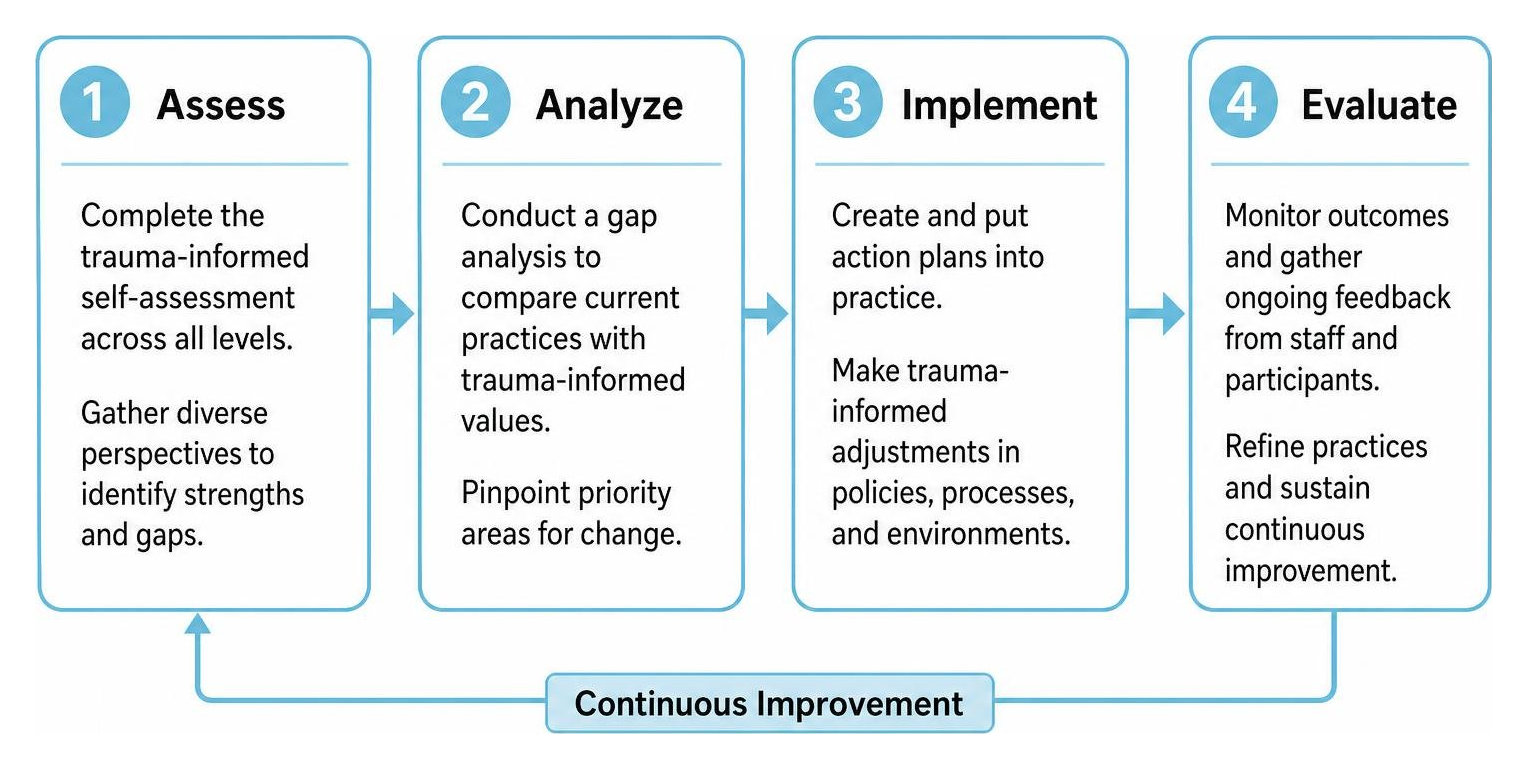
Completing an organizational self-assessment takes approximately 30 to 40 minutes per staff member. It uses a Likert-scale scoring system (ranging from “Not at all” to “Completely”) to evaluate day-to-day practices.
To gain an accurate picture, every level of the organization should participate—including executive leadership, clinical staff, case managers, administrative assistants, and facilities teams. Gathering diverse perspectives prevents blind spots and highlights discrepancies between administrative policy and client-facing reality.
Once individual surveys are submitted, leadership teams conduct a gap analysis. This diagnostic process mirrors how clinicians use trauma-informed assessment tools to identify individual needs. Organizations can pinpoint exact areas where operational practices conflict with trauma-informed values and create clear action plans for improvement.
Physical Safety, Cultural Humility, and Consumer Leadership
Safety begins the moment someone walks through the front door. Physical spaces can either induce hypervigilance or invite relaxation. Trauma-informed facility adjustments include:
- Warm, adjustable lighting instead of harsh fluorescent bulbs.
- Clearly marked exits, wide hallways, and noise-dampening acoustic panels.
- Lockable private spaces for personal belongings and private, lockable restroom doors.
- Child-friendly, welcoming spaces equipped with calming sensory materials.
Cultural humility requires examining whether services are accessible to all individuals. This means providing intake documents in multiple languages, displaying culturally diverse art, offering dietary accommodations, and respecting the intersection of faith and heritage.
Consumer leadership ensures that trauma-informed transformation is done with participants rather than to them. Agencies should create lived-experience advisory boards, invite program graduates into paid peer-specialist positions, and maintain transparent suggestion systems.
Mitigating Vicarious Trauma, Burnout, and Moral Injury in Staff
Providing compassionate care to individuals walking through severe distress carries an emotional toll. Human service and recovery professionals frequently experience secondary traumatic stress, compassion fatigue, and burnout. Research indicates that 76% of full-time U.S. employees report at least one mental health symptom, and unmanaged workplace stress costs employers hundreds of billions annually in lost productivity and absenteeism.

When organizations fail to support their workforce, staff turnover rises, institutional memory erodes, and client care suffers. Mitigating secondary trauma is not a wellness luxury; it is an ethical and operational necessity.
Understanding the Hidden Costs of Workplace Stress
Workplace distress is often misdiagnosed as simple exhaustion when it is actually moral injury or vicarious traumatization.
- Moral Injury: The psychological and spiritual distress that occurs when staff are forced by institutional constraints, underfunding, or rigid rules to act in ways that violate their personal ethics. For example, discharging someone from outpatient support due to administrative technicalities creates deep moral distress.
- Vicarious Trauma: The gradual shift in a clinician’s or counselor’s worldview resulting from cumulative exposure to clients’ traumatic stories.
- Parallel Process: When organizational leadership becomes authoritarian and reactive under stress, staff mirror those dynamics by becoming punitive or detached with clients.
Resource toolkits, such as the WorkplaceToolkit, emphasize that resilience is an organizational responsibility, not just an individual employee obligation. While yoga and wellness apps have their place, they cannot cure systemic understaffing, unmanageable caseloads, or lack of reflective supervision.
Building Empathy-Driven Leadership and Peer Support Systems
Trauma-informed leadership centers on empathy, clarity, and psychological safety. Leaders must model vulnerability and create space where team members can discuss emotional challenges without fear of professional reprimand.
Practical strategies for supporting workforce wellness include:
- Reflective Supervision: Shifting supervision meetings from administrative checklist reviews to collaborative conversations addressing countertransference, ethical dilemmas, and emotional regulation.
- Crisis Debriefings: Holding structured, non-punitive debriefings following client crises to process stress and reinforce team solidarity.
- Flexible Wellness Policies: Providing adaptable scheduling, mental health days, and peer support check-ins.
- Whole-Person Care: Supporting staff through a holistic approach to healing that addresses emotional, physical, and spiritual well-being.
Step-by-Step Implementation and Sustainability Roadmap
Adopting a trauma-informed organizational model is an ongoing cultural shift rather than a quick administrative checklist. Organizations progress through three clear phases:
- Pre-Implementation: Assessing organizational readiness, forming a multidisciplinary change committee, completing baseline self-assessments, and establishing leadership buy-in.
- Implementation: Updating policies, training all staff tiers, restructuring physical environments, adapting clinical intake workflows, and launching peer advisory boards.
- Sustainability and Evaluation: Embedding trauma-informed competencies into annual performance reviews, tracking organizational climate metrics, and reviewing policies continuously.
Adapting Intake Policies and Crisis Prevention Plans
The intake process sets the tone for the entire recovery journey. Standard intakes often feel like interrogations, requiring vulnerable individuals to recount painful histories before establishing rapport.
Trauma-sensitive intake policies adjust this process by:
- Using people-first language throughout all written and verbal communications.
- Explaining the exact purpose of every question and affirming the client’s right to pause or skip questions.
- Conducting intakes in private, comfortable settings that protect confidentiality.
- Developing proactive crisis prevention and safety plans during the initial sessions.
Proactive safety plans identify personal triggers, early warning signs of distress, preferred grounding strategies, and trusted support contacts. This approach is fundamental to outpatient trauma-informed addiction treatment options, helping clients maintain autonomy and self-regulation during emotional spikes.
Embedding Continuous Quality Improvement and DEIA Frameworks
To remain effective over time, trauma-informed practices must integrate with Diversity, Equity, Inclusion, and Accessibility (DEIA) initiatives. Trauma is not experienced in a vacuum; systemic discrimination, historical trauma, and socioeconomic barriers shape individual well-being.
Agencies can follow the implementation frameworks detailed in the TRAUMA-INFORMED ORGANIZATIONAL CHANGE MANUAL to maintain continuous quality improvement:
- Climate Monitoring: Administering validated tools like the Trauma-Informed Climate Scale (TICS-10) annually to track changes in workplace culture.
- Data-Driven Policy Audits: Reviewing attendance, discharge, and incident reports to ensure policies are applied equitably.
- Anti-Oppressive Workplace Standards: Ensuring hiring, promotion, and grievance procedures are transparent, fair, and accessible.
Frequently Asked Questions About Trauma-Informed Systems
How long does the organizational self-assessment take to complete?
The self-assessment takes approximately 30 to 40 minutes per person. It features 87 refined questions covering key operational areas. For best results, all staff levels across the organization should complete the assessment annually.
What are the five key domains evaluated in the toolkit?
The toolkit evaluates five core domains: program policies and procedures, physical environment, staff development and support, cultural competence and responsiveness, and consumer involvement.
How does a trauma-informed culture reduce staff turnover?
A trauma-informed culture reduces turnover by addressing secondary traumatic stress, providing regular reflective supervision, promoting psychological safety, and replacing punitive management with collaborative problem-solving.
Conclusion
Transforming an organization into a trauma-informed environment requires dedication, self-reflection, and a willingness to evaluate daily practices. By assessing current systems, addressing secondary stress among staff, and committing to physical and emotional safety, organizations build environments where both clients and care teams thrive.
At Grace Recovery Services, our outpatient programs throughout Western Pennsylvania combine evidence-based clinical practices with Christian counseling and faith-integrated support. We believe every person is worthy of dignity, renewal, and hope.
If your organization is seeking to deepen its practices, or if you or a loved one are seeking compassionate, outpatient addiction recovery and trauma-informed care in the Pittsburgh area, reach out to our team today for a personalized assessment.
This article was researched with AI and heavily edited by Stephen Luther for accuracy and relevance.
Stephen Luther is the Executive Director and Founder of Grace Christian Counseling, Grace Recovery Services, WPA Counseling, NuWell Online Counseling and Coaching, and NuWell Health. He holds a Master’s degree in Education from the University of Georgia and a Master’s degree in Marriage and Family Therapy from Duquesne University. He is a licensed professional counselor in Pennsylvania.
Since 1997, Steve has been helping children, adolescents, and adults overcome a wide range of emotional and relational challenges. He specializes in working with hurting families, including those with foster, adopted, or traumatized children. Steve uses Attachment-Based Therapy, Splankna Healing, and Therapeutic Parent Coaching to support healing and restoration.
This guide is for educational and spiritual encouragement and is not a substitute for personalized professional counseling. If you are in crisis, please reach out for immediate help.