
What Is Christian Therapy for Substance Use — and Could It Help You?
Christian therapy for substance use is a treatment approach that combines evidence-based clinical methods with biblical principles, spiritual support, and faith-centered community to help people find lasting freedom from addiction.
If you’re looking for a quick answer, here’s what you need to know:
- What it is: Counseling and outpatient treatment that integrates Christian faith with proven therapeutic practices like cognitive-behavioral therapy (CBT)
- Who it’s for: Anyone struggling with alcohol, drugs, or other chemical dependencies — especially those who want faith to be part of their healing
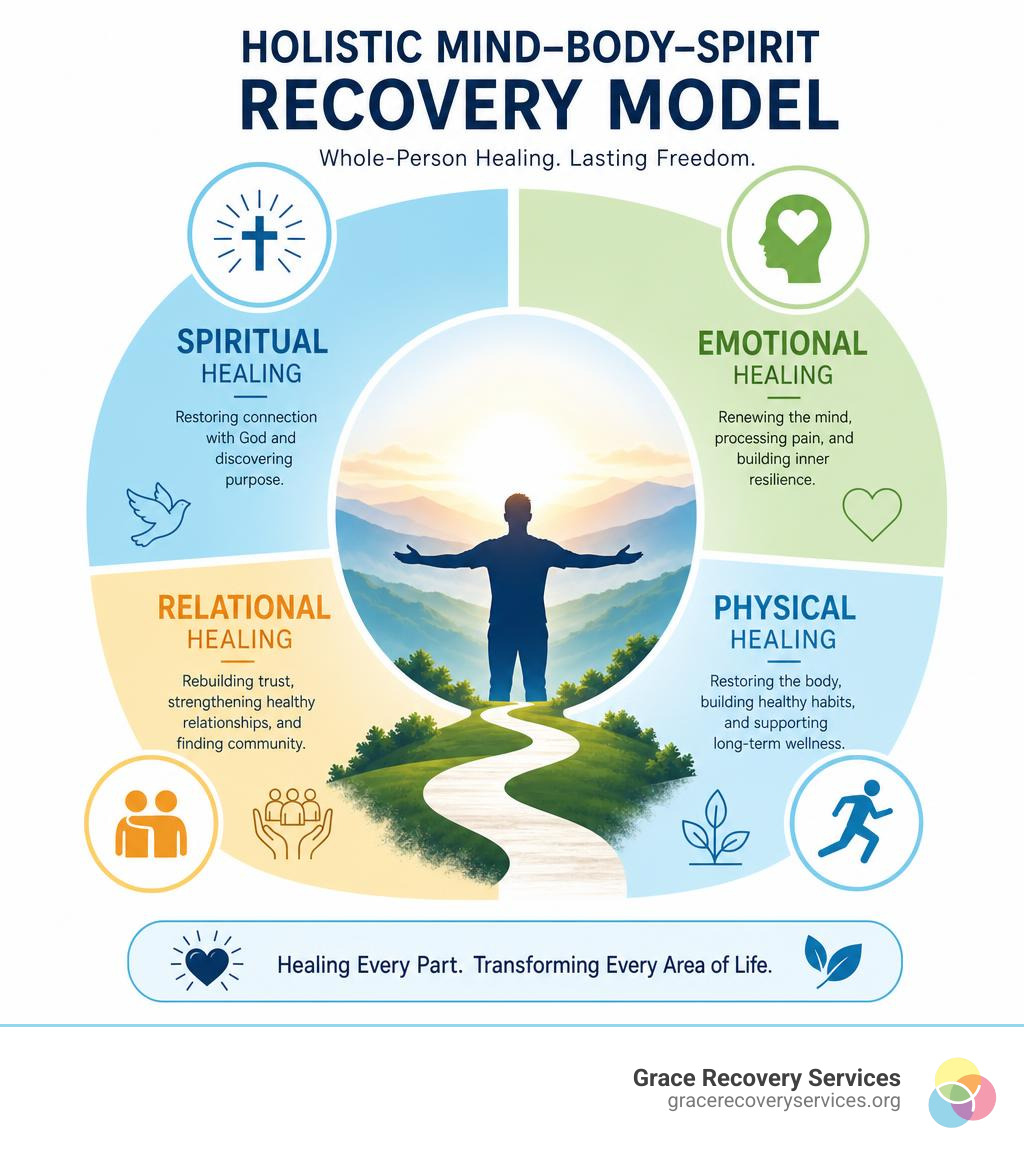
- How it works: Addresses the whole person — mind, body, and spirit — by uncovering root causes like trauma, rebuilding relationships, and fostering spiritual renewal
- What makes it different: Goes beyond behavior change to address the spiritual emptiness that often underlies addiction
- Where to start: Reach out to a licensed Christian counselor or a faith-based outpatient program in your area
Nearly 20 million Americans are living with a substance use disorder. For many, conventional treatment helps — but leaves something missing. Something deeper.
That gap is often spiritual.
Research backs this up. Studies show that faith is a positive factor in recovery in the vast majority of scientific literature reviewed. One longitudinal study found that people in faith-based treatment showed significantly higher levels of spiritual growth across treatment — and that growth directly predicted abstinence after treatment ended.
At Grace Recovery Services in Western Pennsylvania, we see this reality every day. People come to us carrying not just the weight of addiction, but shame, relational wounds, and a sense of separation from God and others. Christian therapy creates a space where all of that can be addressed — with grace, not judgment.
You don’t have to figure this out alone.
Why Choose Christian Therapy Substance Use Treatment
When exploring options for overcoming a substance use disorder, it is common to wonder how faith-based recovery compares to secular programs. Secular treatment typically relies on a bio-psychosocial model, focusing on biological, environmental, and psychological triggers. While these clinical elements are incredibly valuable, they sometimes treat the spirit as an afterthought.
In contrast, a Christian approach to recovery views addiction as a multifaceted challenge that includes a deep spiritual component. It recognizes that substance use often begins as an attempt to fill a spiritual void or mask unresolved pain. By integrating clinical excellence with spiritual renewal, clients do not just learn to stop a behavior; they experience a profound transformation of their identity.
In our outpatient programs, we emphasize grace over shame. Many believers who struggle with substance use carry a heavy double burden: the physical dependency itself, and the intense guilt of feeling like they have failed God or their faith community. Christian therapy addresses this head-on by anchoring the recovery process in the truth of God’s unconditional love and redemption.
The clinical effectiveness of this integration is well-supported. For instance, a longitudinal study published in peer-reviewed literature examined the dynamic role of faith in recovery. The study demonstrated that higher levels of spiritual development during treatment directly mediated and improved after-treatment abstinence rates. If you want to learn more about how this works in a practical, day-to-day setting, you can explore our faith-based outpatient addiction treatment options.
The Core Components of Christian Chemical Dependency Counseling

Effective Christian chemical dependency counseling is not about sitting in a room being lectured. It is an active, collaborative, and deeply compassionate process. We focus on five core components to ensure holistic restoration:
- Encouragement: Recovery is hard work, and there will be messy days. We provide a warm, non-judgmental space where you are met with encouragement and hope, reminding you that your past does not define your future.
- Uncovering the Root Trauma: Addiction is rarely just about the substance; it is often a coping mechanism for underlying pain. We help clients look beneath the surface to uncover root causes, such as past trauma, emotional wounds, or childhood neglect.
- Personal Growth: True recovery requires developing new ways of thinking and reacting. We combine clinical strategies like Cognitive-Behavioral Therapy (CBT) with biblical wisdom to foster healthy self-regulation and personal development.
- Family Support: Substance use never happens in a vacuum; it impacts the entire family system. We involve loved ones in the counseling process to repair trust, establish healthy boundaries, and heal relational wounds.
- Spiritual Renewal: We guide clients in rebuilding their relationship with God, helping them find their ultimate security and peace in Him rather than in a substance.
This holistic framework is supported by academic research. A landmark dissertation on holistic biblical approach to substance use treatment highlights how integrating attachment theory with biblical concepts of wholeness (addressing heart, soul, mind, and strength) dramatically improves recovery outcomes. It notes that childhood attachment breaches can leave emotional voids that individuals later attempt to fill with substances. By addressing these relational wounds both clinically and spiritually, clients find sustainable healing.
For those living in our local communities, we offer specialized care tailored to these exact needs. Learn more about our Western PA Christian addiction counseling services to see how we apply these core components in our local offices.
How Religiosity and Spiritual Practices Support Long-Term Sobriety

Long-term sobriety is built on daily habits and coping mechanisms. In Christian therapy, we help clients build a robust toolkit of spiritual practices that act as a protective buffer against triggers and stress.
Research published in the scientific research on faith-based intervention and abstinence indicates that a developing, active faith is one of the strongest predictors of maintaining long-term abstinence. This is because spiritual practices shift a person’s focus from self-reliance—which can fail during times of high stress—to reliance on God. To explore these concepts further, read about how faith helps with addiction.
Integrating biblical truth into Christian Therapy Substance Use Programs
One of the most practical ways we integrate faith into therapy is through Religiously Integrated Cognitive-Behavioral Therapy (RCBT). In standard CBT, clients learn to identify and challenge negative, distorted thoughts. In RCBT, we take those negative thoughts and compare them directly to biblical truth.
For example, when a client is overwhelmed by thoughts of shame and the belief that they are “beyond saving,” we look to Scripture. We reflect on passages that highlight our identity in Christ, the depth of God’s grace, and the reality of forgiveness. This shifts the internal narrative from “I am an addict” to “I am a child of God, redeemed and loved” (referencing truths like Galatians 2:20). This shift from shame to grace is incredibly powerful for preventing relapse.
The Role of Community in Christian Therapy Substance Use Care
You were never meant to walk this path alone. Isolation is one of the primary drivers of substance use, whereas connection is the antidote.
In our programs, we actively emphasize the importance of Christian fellowship and accountability. We encourage clients to build relationships with peers who share their values, participate in faith-based peer support groups (such as Celebrate Recovery), and connect with local church communities. Having a network of believers who can pray with you, celebrate your victories, and hold you accountable during difficult moments makes a monumental difference in maintaining long-term sobriety.
Recognizing the Signs of Chemical Dependency and Seeking Help
Recognizing that you or a loved one needs professional support is a courageous first step. Chemical dependency can develop gradually, often starting as a way to cope with stress or anxiety before turning into a physical and psychological need.
Some of the primary signs and symptoms of chemical dependency include:
- Increased Tolerance: Needing more of the substance to achieve the same effect.
- Withdrawal Symptoms: Experiencing physical or emotional distress when trying to stop.
- Loss of Control: Using more of the substance or using it longer than originally planned.
- Neglecting Responsibilities: Letting work, school, or family obligations slide.
- Relational Strain: Experiencing frequent conflicts, mood swings, or emotional distance with loved ones.
- Continued Use Despite Consequences: Continuing to use the substance even when it causes physical, financial, or emotional harm.
| Chemical Dependency Symptom | Healthy biblical coping mechanism |
|---|---|
| Using substances to numb emotional pain or trauma | Processing pain in clinical therapy while seeking God’s comfort |
| Isolating from family, friends, and church community | Engaging in Christian fellowship and honest accountability groups |
| Relying on self-strength to overcome triggers (leading to relapse) | Surrendering control to God and relying on Holy Spirit strength |
| Hiding use and living in fear of judgment or exposure | Walking in the light, embracing grace, and seeking help |
If you recognize these patterns in your own life or in a family member, professional guidance can help you navigate the next steps safely. At Grace Recovery Services, we offer comprehensive assessments and personalized care plans. To find out how our outpatient structure can fit into your daily life, read more about our christian intensive outpatient treatment.
Frequently Asked Questions about Faith-Based Recovery
Do I need to be deeply religious to benefit from Christian therapy?
Absolutely not. We meet every client exactly where they are on their spiritual journey. Whether you have a lifelong faith, are struggling with doubts, or are simply curious about spiritual things, you are welcome here. Our approach is client-centered and gentle; we offer spiritual integration as a supportive resource, never as a rigid requirement.
Does insurance cover outpatient faith-based addiction treatment?
Yes, many commercial insurance plans cover outpatient substance use treatment, even when it incorporates faith-based counseling elements. Because we operate as an outpatient clinical facility, our services meet high standards of professional medical and psychological care. We can help you verify your insurance benefits to determine your coverage and explore affordable options.
How does Christian counseling address co-occurring mental health issues?
We utilize a dual-diagnosis, trauma-informed approach. We know that mental health conditions like depression, anxiety, or PTSD are frequently intertwined with substance use. Our licensed professional counselors are fully trained to treat these co-occurring disorders simultaneously, combining evidence-based clinical interventions with biblical principles of peace, hope, and restoration.
Conclusion
Recovering from a substance use disorder is a journey of restoration, renewal, and revival. It is not just about physical abstinence; it is about reclaiming your joy, rebuilding your relationships, and deepening your connection with God.
At Grace Recovery Services, we are committed to walking alongside you every step of the way. As an outpatient-only provider in Western Pennsylvania, we offer flexible, trauma-informed, and evidence-based care that allows you to receive high-quality treatment while continuing to live at home and care for your family. With offices in the Pittsburgh area (Penn Hills) and North Huntingdon (Irwin), professional, compassionate help is close to home.
Your journey of hope and healing can begin today. If you or a loved one is ready to take that courageous first step, please reach out to us.
Begin your healing journey with Christian recovery services today.
This article was researched with AI and heavily edited by Stephen Luther for accuracy and relevance.
Stephen Luther is the Executive Director and Founder of Grace Christian Counseling, Grace Recovery Services, WPA Counseling, NuWell Online Counseling and Coaching, and NuWell Health. He holds a Master’s degree in Education from the University of Georgia and a Master’s degree in Marriage and Family Therapy from Duquesne University. He is a licensed professional counselor in Pennsylvania.
Since 1997, Steve has been helping children, adolescents, and adults overcome a wide range of emotional and relational challenges. He specializes in working with hurting families, including those with foster, adopted, or traumatized children. Steve uses Attachment-Based Therapy, Splankna Healing, and Therapeutic Parent Coaching to support healing and restoration.
This guide is for educational and spiritual encouragement and is not a substitute for personalized professional counseling. If you are in crisis, please reach out for immediate help.