
Find Affordable Christian Rehab Centers That Support Your Recovery
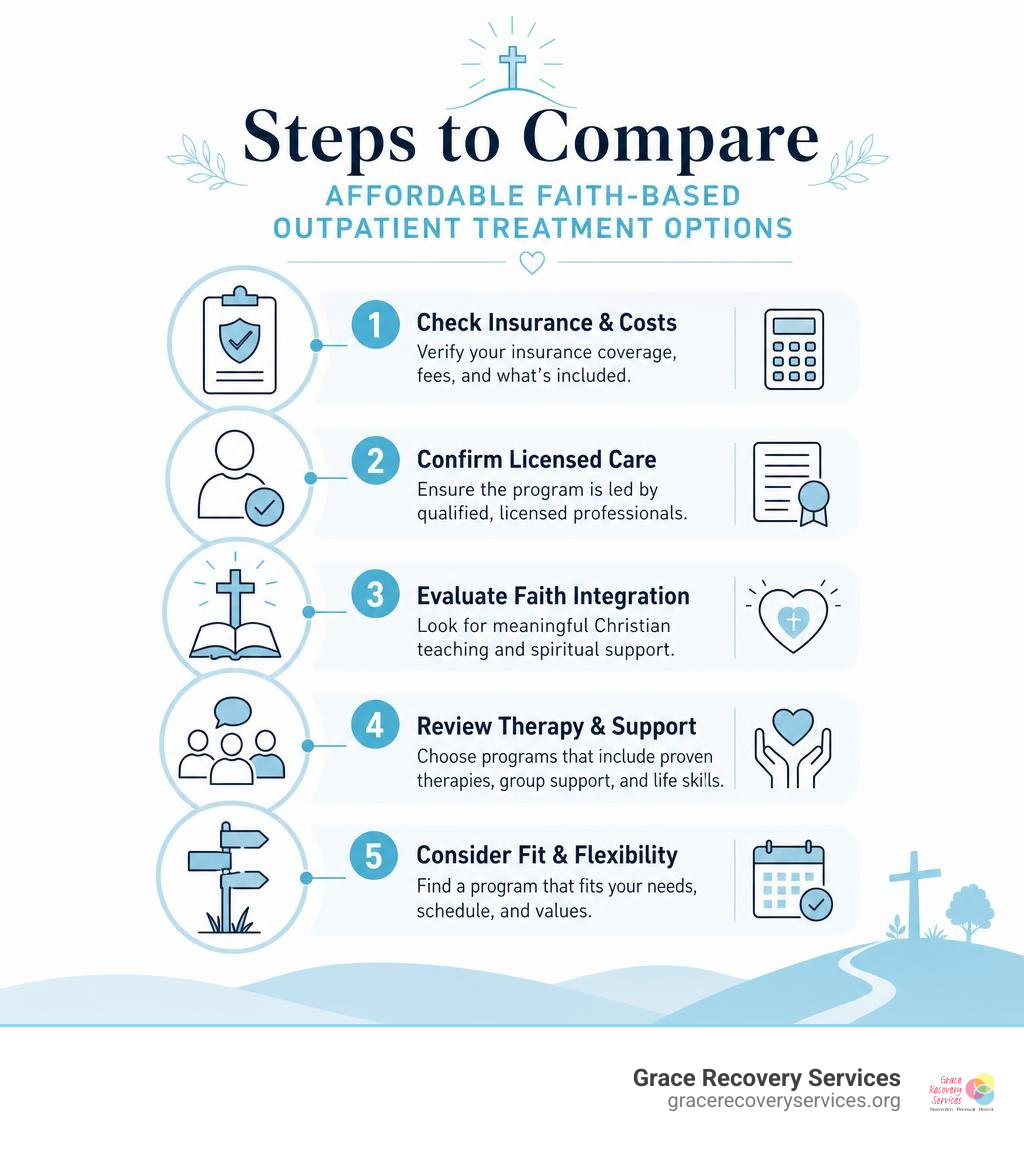
To find affordable Christian rehab centers, start by looking for an outpatient program that clearly explains its insurance options, fees, licensed clinical care, and faith-based support. Ask whether the program accepts your plan, offers payment arrangements or sliding-scale fees, and combines Christian practices with proven therapies such as counseling, group support, and relapse-prevention planning.
For clients and families in Western Pennsylvania, the right fit should feel both safe and hopeful. Faith can be part of recovery through prayer, Scripture reflection, and supportive community, while qualified clinicians address substance use and common mental health concerns such as anxiety, depression, or trauma.
At Grace Recovery Services, Christian principles are integrated with compassionate outpatient addiction care. The goal is not perfection. It is helping each client build practical tools, supportive connections, and renewed purpose for long-term recovery.
Similar topics to christian rehab centers:
Understanding Faith-Based Outpatient Care and Clinical Standards

Choosing a faith-based recovery path does not mean choosing between genuine spiritual support and professional clinical care. Quality Christian outpatient treatment brings both together, offering a safe environment where clients can explore their relationship with God while working through the root causes of substance use disorder.
Research highlighted by health agencies like the Substance Abuse and Mental Health Services Administration emphasizes that addressing emotional, social, and spiritual wellness together significantly enhances long-term outcomes. When clinical counseling is paired with prayer, Scripture reflection, and pastoral guidance, clients receive comprehensive care that addresses the whole person—mind, body, and spirit.
Integrating Clinical Therapy and Spiritual Principles
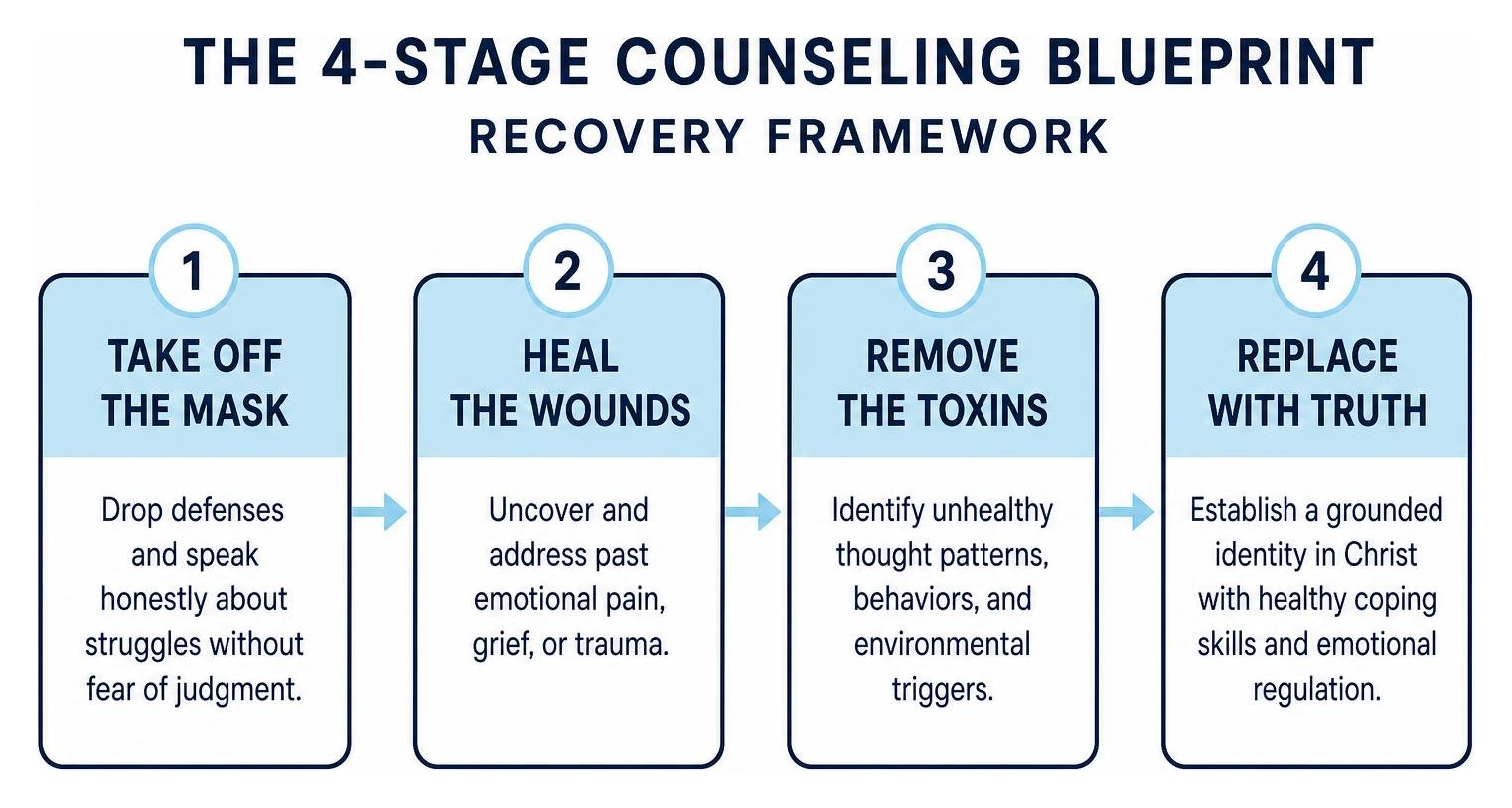
At Grace Recovery Services, our care is rooted in our Counseling Blueprint, which guides clients through four intentional stages:
- Take Off the Mask: Dropping defenses and speaking honestly about struggles without fear of judgment.
- Heal the Wounds: Uncovering and addressing past emotional pain, grief, or trauma.
- Remove the Toxins: Identifying unhealthy thought patterns, behaviors, and environmental triggers.
- Replace with Truth: Establishing a grounded identity in Christ alongside healthy coping mechanisms and emotional regulation skills.
This framework works alongside evidence-based modalities like Cognitive Behavioral Therapy (CBT), Dialectical Behavior Therapy (DBT) skills, and trauma-informed care. Through Christian integrated addiction treatment, clients learn to reframe negative thought cycles through biblical truth while mastering practical emotional regulation tools. In this compassionate setting, individuals discover that clinical therapies and Christian spiritual disciplines are complementary partners that reinforce sustained wellness and personal renewal.
Clients dealing with dual-diagnosis concerns—such as substance use coupled with anxiety or depression—benefit from having both clinical strategies and spiritual resources available. This balanced perspective is further explored in our holistic Christian addiction help faith-based recovery guide.
Evaluating Clinical Standards at Christian Rehab Centers
Not every faith-based ministry provides medical or clinical treatment. When searching for outpatient centers, it is vital to check clinical credentials alongside spiritual philosophy. A strong clinical foundation ensures that every client receives individualized, ethical, and evidence-informed counseling tailored to their specific recovery goals.
Reputable providers employ licensed professional counselors (LPCs), licensed clinical social workers (LCSWs), and credentialed addiction specialists. They also operate under state licensing standards in Pennsylvania and often follow accreditation guidelines from recognized bodies such as CARF International or The Joint Commission.
Knowing what standards matter helps families avoid programs that lack clinical accountability. For more insights on navigating these choices, read our guide on how to pick a Christian rehab without losing your mind or your faith.
Levels of Care: Navigating Affordable Outpatient Recovery

Outpatient recovery allows individuals to receive structured, high-quality clinical and spiritual care while continuing to live at home, care for their families, and maintain their work schedules. This structure helps make outpatient care accessible and manageable for many clients seeking support without disrupting their essential daily responsibilities.
Intensive Outpatient Programs (IOP)
For clients who need substantial structure while maintaining their everyday responsibilities, intensive outpatient treatment offers a focused continuum of care:
- Structured Weekly Support: Typically meeting for 9 to 20 hours per week across several days, IOP includes intensive group counseling, individual therapy, relapse prevention training, and spiritual growth workshops. Learn more about our Christian intensive outpatient treatment.
- Focused Skill-Building: Clients practice evidence-based coping mechanisms and emotional regulation strategies while applying them directly to real-world situations and daily routines.
- Community Connection: Group sessions provide a safe environment where participants build meaningful peer connections grounded in shared faith and mutual encouragement.
These structured formats provide vital group accountability and practical recovery tools. For a broader look at treatment models, explore a comprehensive guide to Christian recovery programs.
Outpatient Counseling and Dual-Diagnosis Care
As clients establish stability, standard outpatient counseling provides continuing support through weekly or bi-weekly sessions. This level focuses on long-term emotional health, marriage and family restoration, and ongoing dual-diagnosis management. Clients can explore deeper personal challenges, past trauma, and relational patterns in individual counseling sessions tailored to their pace.
Through faith-based outpatient addiction treatment, individuals learn to identify triggers, deepen their spiritual disciplines, and build a lasting foundation of hope in Western Pennsylvania communities such as Penn Hills, North Huntingdon, and Westmoreland County.
How to Fund Treatment and Reduce Out-of-Pocket Costs
Understanding the financial side of recovery can feel overwhelming, but several pathways exist to make care manageable.
| Funding Pathway | How It Works | Best For |
|---|---|---|
| Commercial Health Insurance | Covers essential health benefits under the ACA, reducing out-of-pocket expenses. | Clients with employer-sponsored or marketplace plans. |
| Sliding Scale Fees | Adjusts session costs based on verified household income and family size. | Individuals with limited income or out-of-network benefits. |
| Flexible Payment Plans | Breaks treatment costs into manageable monthly installments over time. | Clients managing deductibles or co-insurance payments. |
| Church & Ministry Scholarships | Local congregations often assist members with addiction counseling fees. | Clients connected to supportive local church communities. |
Insurance and Financing at Christian Rehab Centers
Under the Affordable Care Act (ACA), mental health and substance use disorder services are classified as essential health benefits. This means most commercial and employer health insurance plans are required to cover outpatient addiction treatment.
Navigating insurance policies begins with an insurance verification check to determine:
- In-network vs. out-of-network benefits
- Annual deductible requirements
- Co-pay or co-insurance responsibilities per session
Taking time to speak directly with an admissions coordinator can bring clarity to your coverage and remove financial uncertainty. For a detailed review of navigating benefits in 2026, consult our Christian addiction recovery guide 2026.
Sliding Scale Fees, Grants, and Ministry Support
If insurance does not fully cover care, many outpatient centers offer sliding-scale fees based on household income. In addition, local churches across Western Pennsylvania often partner with faith-based centers to provide financial support or ministry scholarships for individuals seeking recovery. These community partnerships ensure that financial limitations do not prevent someone in recovery from accessing high-quality outpatient care.
What to Look for in Affordable Christian Rehab Centers
Finding the right center involves balancing clinical excellence, spiritual alignment, and compassionate care. Knowing the key elements of effective outpatient treatment helps families make informed decisions with confidence.
Accreditations and Evidence-Based Approaches
Ensure the center utilizes evidence-based counseling alongside faith disciplines. A reputable Christian outpatient provider will clearly describe how they integrate clinical therapies like CBT, DBT, and trauma-informed care with Scripture and prayer. Clinicians should be state-licensed and open about their treatment approaches, ensuring that care meets rigorous professional standards while honoring your spiritual values.
Individualized Care Plans and Comprehensive Assessments
Every journey through recovery is distinct. Look for centers that conduct thorough intake assessments to understand your history, mental health needs, and spiritual goals. An individualized care plan ensures that treatment addresses underlying trauma, family dynamics, and co-occurring conditions rather than using a one-size-fits-all approach.
Continuing Care, Discipleship, and Community Support
Recovery flourishes in community. Sustainable outpatient care connects clients with long-term aftercare resources, including:
- Christian peer support and 12-Step programs (such as Celebrate Recovery)
- Local church discipleship and recovery small groups
- Ongoing individual counseling tune-ups
- Alumni support networks
Frequently Asked Questions About Faith-Based Addiction Treatment
Are non-Christians welcome at faith-based recovery programs?
Yes. Quality faith-based outpatient programs welcome individuals from all religious backgrounds, as well as those with no religious affiliation. Treatment is rooted in Christian compassion, respect, and grace. Clients are invited to explore spiritual concepts at their own comfort level without pressure or judgment.
Does health insurance cover faith-based outpatient treatment?
Yes. Most commercial insurance plans cover faith-based outpatient treatment as long as the care is delivered by licensed clinical professionals and meets clinical necessity guidelines under the Affordable Care Act. Contact our team for a confidential benefits verification.
How long do faith-based outpatient programs typically last?
Because recovery is an individualized journey, program lengths vary based on clinical needs. Intensive outpatient programs often run between 8 and 12 weeks, while standard outpatient therapy and aftercare support may continue for several months to help clients maintain long-term stability and spiritual growth.
Conclusion
Finding affordable, compassionate recovery care is possible. You do not have to carry the weight of substance use disorder alone, nor do you have to choose between clinical excellence and your Christian faith. At Grace Recovery Services, we walk alongside individuals and families throughout Pittsburgh, Penn Hills, North Huntingdon, and Westmoreland County, offering trauma-informed outpatient counseling designed to renew the mind, heal the heart, and restore the spirit.
If you or a loved one is seeking a supportive path forward, take the next step toward healing by exploring our faith-based outpatient recovery services or contacting us today for a confidential assessment.
This article was researched with AI and heavily edited by Stephen Luther for accuracy and relevance.
Stephen Luther is the Executive Director and Founder of Grace Christian Counseling, Grace Recovery Services, WPA Counseling, NuWell Online Counseling and Coaching, and NuWell Health. He holds a Master’s degree in Education from the University of Georgia and a Master’s degree in Marriage and Family Therapy from Duquesne University. He is a licensed professional counselor in Pennsylvania.
Since 1997, Steve has been helping children, adolescents, and adults overcome a wide range of emotional and relational challenges. He specializes in working with hurting families, including those with foster, adopted, or traumatized children. Steve uses Attachment-Based Therapy, Splankna Healing, and Therapeutic Parent Coaching to support healing and restoration.
This guide is for educational and spiritual encouragement and is not a substitute for personalized professional counseling. If you are in crisis, please reach out for immediate help.