
Christian Substance Abuse Recovery Starts With Whole-Person Care
Christian substance abuse recovery brings together proven addiction care, honest community, and the hope of the Gospel. It does not ask someone in recovery to choose between clinical support and faith. Instead, it addresses the body, mind, relationships, and spiritual life.
A helpful first step is to:
- Speak openly with a qualified addiction counselor about substance use and recovery needs.
- Build steady support through trusted family, peers, and a grace-centered church community.
- Practice daily spiritual rhythms, such as prayer, Scripture, and honest confession.
- Create a relapse-prevention plan that includes practical coping tools and people to contact.
For many clients, substances become a way to escape pain, fear, loneliness, or shame. Christian care takes those struggles seriously without reducing a person to their behavior. It recognizes both the real effects of substance use disorder and the deeper need for healing, belonging, forgiveness, and new purpose.
Research on faith-based recovery suggests that growing religious support and religious meaning over time can be linked with stronger abstinence outcomes. In one longitudinal study, religious support and a sense of religious meaning were among the strongest predictors of abstinence after treatment. The takeaway is simple: faith is not merely a label or a one-time decision. It can become a lived source of connection and strength.
At Grace Recovery Services in Western Pennsylvania, Christian principles can support compassionate outpatient recovery while clients receive practical tools for daily life. Recovery is not about earning acceptance from God or hiding setbacks. It is about taking the next honest step toward health, freedom, and hope.
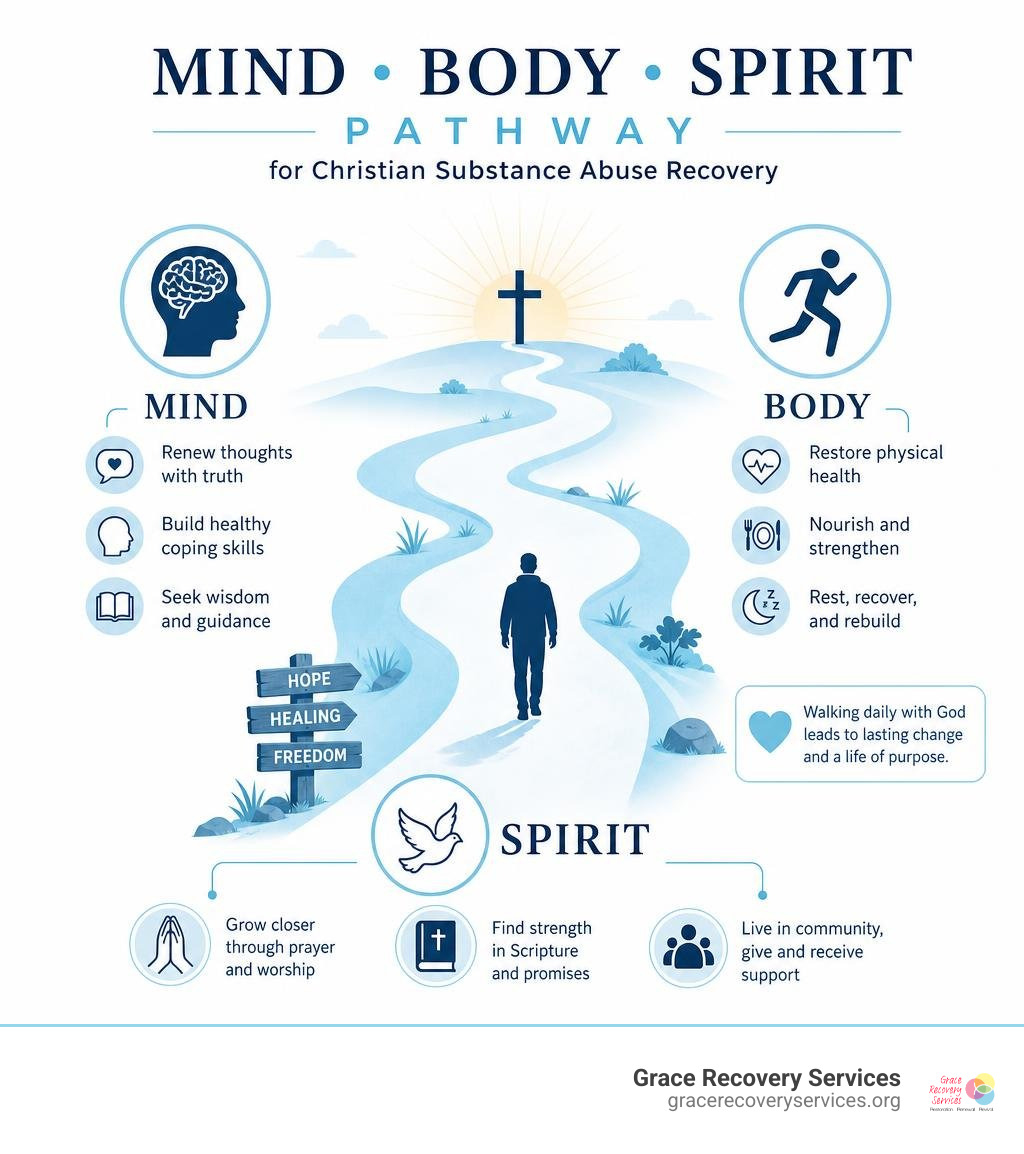
Christian substance abuse terms made easy:
Understanding Christian Substance Abuse: A biblical and Clinical Perspective

When addressing substance use disorders, clinical medicine and Christian theology do not oppose one another; they illuminate different dimensions of the same human condition. Clinically, chronic substance use alters neural pathways related to reward, stress regulation, and impulse control. It is vital to recognize understanding the different types of substance use disorders so evidence-based strategies can heal the brain and body.
At the same time, Scripture reveals a spiritual reality: addiction operates as a functional disorder of worship. What begins as an attempt to self-soothe emotional pain or manage stress gradually turns into an ultimate pursuit. The substance becomes a functional savior—a pseudo-refuge that promises relief, comfort, and peace, but delivers physical bondage and spiritual isolation.
| Dimension | Secular Medical Model | biblical Idolatry Framework | Integrated Christian Care |
|---|---|---|---|
| Primary Definition | Chronic, relapsing brain disease | Misplaced worship and bondage to sin | Neurobiological dysregulation paired with spiritual longing |
| View of the Individual | Patient with a physiological disorder | Image-bearer seeking comfort in created things | Broken person in need of biological and spiritual renewal |
| Root Cause | Genetics, neural chemistry, trauma | Hearts seeking life outside of God | Unresolved trauma, biological vulnerability, and spiritual thirst |
| Primary Solution | Psychotherapy and behavioral coping | Repentance, grace, and heart transformation | Evidence-based therapy coupled with Gospel grace |
| Ultimate Goal | Symptom remission and abstinence | Restored relationship with God and others | Sustained sobriety, emotional wholeness, and spiritual vitality |
Addressing Root Idolatry in Christian Substance Abuse
In the biblical worldview, an idol is anything we elevate above God to secure our peace, identity, security, or joy. When exploring theological insights on addiction as false worship, we see that substances often become counterfeit answers to legitimate human needs.
Identifying the early signs of substance abuse involves looking beneath observable behaviors to examine heart motives:
- Escape from suffering: Turning to chemicals to numb emotional wounds instead of taking grief to the “God of all comfort.”
- Control and anxiety: Using substances to regulate internal turmoil when life feels overwhelming.
- Relational disconnection: Relying on intoxication to feel accepted or to quiet underlying loneliness.
At Grace Recovery Services, our clinical work utilizes a dedicated framework called the Counseling Blueprint. We walk alongside clients across four vital stages:
- Take Off the Mask: Creating a safe space where clients drop pretenses, explore their honest challenges, and acknowledge where self-reliance has failed.
- Heal the Wounds: Identifying and processing the root pain, past trauma, and emotional injuries that drive the desire to escape.
- Remove the Toxins: Addressing unhelpful thought patterns, destructive behavioral cycles, and misplaced dependencies.
- Replace with Truth: Rooting one’s daily life, coping mechanisms, and core identity in biblical truth and healthy community.
Breaking Bondage and Shame Through the Gospel
Scripture speaks candidly about spiritual bondage: “Do you not know that if you present yourselves to anyone as obedient slaves, you are slaves of the one whom you obey?” (Romans 6:16). While the secular model often describes addiction solely in biological terms, the biblical framework recognizes that compulsive substance use creates true spiritual captivity.
This captivity is sustained by a toxic cycle of shame:
- Emotional distress or trauma triggers intense cravings.
- The person uses substances to numb the distress.
- The use is followed by profound guilt and debilitating shame (“I am fundamentally broken and unlovable”).
- The weight of shame becomes unbearable, triggering the next urge to use and escape.
Secular approaches often attempt to alleviate shame by minimizing moral responsibility, but this can leave the conscience unresolved. The Gospel offers a far more transformative solution. As explored by Pastor Billy Cerveny on brokenness and the Gospel, personal brokenness is not an obstacle to divine love; it is the very doorway through which grace enters.
Understanding how faith helps with addiction shows that when a person experiencing substance use disorder realizes they are fully known and fully loved by Christ, the engine of shame is disabled. Forgiveness replaces condemnation, allowing genuine freedom to take root.
The Science of Spiritual Growth and Long-Term Sobriety
General addiction research shows that post-treatment relapse rates range between 35% and 81.8%, highlighting the chronic, challenging nature of long-term recovery (Yeung, 2022). However, empirical studies demonstrate that faith-integrated care provides tangible, protective benefits.
In longitudinal research utilizing latent growth curve modeling across multiple waves of assessment, recovering individuals participating in faith-based treatment exhibited significant, dynamic growth in religiosity over time, which directly contributed to long-term abstinence (Yeung, 2022). In this research:
- Recovering individuals in faith-based treatment showed a 19.7% increase in the odds of after-treatment abstinence compared to those in secular-based treatment (Yeung, 2022).
- Religious Support emerged as the single strongest predictor of abstinence (b = 0.452, p < 0.001), with each unit increase yielding 57.1% higher odds of subsequent abstinence (Yeung, 2022).
- Religious Meaning was also deeply impactful (b = 0.405, p < 0.001), with each unit increase producing 49.9% higher odds of sustained abstinence (Yeung, 2022).
At Grace Recovery Services, our faith-based outpatient addiction treatment intentionally cultivates these vital protective factors by combining clinical excellence with active spiritual community.

Practical Theology and Daily Triggers in Christian Substance Abuse
Knowing theological concepts intellectually does not automatically prevent a relapse. Recovering clients often operate with an unexamined “practical theology”—deep-seated internal assumptions about God that manifest during times of stress.
Common spiritual roadblocks include:
- Unresolved Anger at God: Questioning God’s goodness due to past trauma or unresolved pain (“Why did God let this happen to me?”).
- Performance-Based Righteousness: Believing God’s love depends on maintaining unbroken sobriety, leading to despair after a setback.
- Compartmentalization: Isolating spiritual beliefs on Sunday while managing everyday stress through worldly habits during the week.
Using our biblical approach to recovery beginners guide, Christian counseling bridges this gap through cognitive restructuring. Counselors help clients confront internal lies and replace them with biblical promises, giving them practical tools to navigate daily cravings and high-stress moments.
Navigating Relational Dynamics and Marital Recovery
Interestingly, longitudinal research notes that married individuals in treatment can sometimes experience lower odds of abstinence if relational dynamics are strained or unaddressed (Yeung, 2022). When an individual enters recovery, established household patterns, unspoken resentments, and codependent behaviors often come to the surface.
Through our christian integrated addiction treatment, we emphasize relational restoration:
- Establishing healthy, biblical boundaries that promote mutual accountability without enabling substance use.
- Healing relational wounds through guided family and couples counseling sessions.
- Connecting both spouses to healthy spiritual communities and peer support networks so that the partner is not carrying the sole burden of accountability.
Essential biblical Foundations for Daily Sobriety
Recovery requires a theological foundation that can withstand life’s storms. Three biblical doctrines are particularly vital for daily sobriety:
- Union with Christ: Recovery is not about striving to become a better version of oneself; it is about living out of an entirely new identity. Because the believer is united with Christ, sin and addiction no longer define their core nature.
- Progressive Sanctification: Spiritual and behavioral transformation is a dynamic, lifelong process of growth rather than instant perfection. Setbacks are met with grace, renewed repentance, and practical adjustment rather than despair.
- The Fear of the Lord: A healthy, awe-filled reverence for God replaces the fear of people, the dread of circumstances, and the obsession with chemical relief.
Scientific research confirms that inner spiritual surrender plays a crucial role in preventing relapse. A 12-month study evaluating individuals in Christian addiction treatment demonstrated that both conscious (explicit) and deeper, automatic (implicit) surrender to God significantly reduced relapse risk (Seesink et al., 2026). Notably, clients with strong implicit surrender exhibited a 63% reduction in the odds of relapse over a one-year follow-up period (Seesink et al., 2026).
Surrender, Union with Christ, and Sanctification
In 12-step programs, Step Three invites individuals to turn their will over to the care of God. From a Christian perspective, this is not a vague resignation, but a joyful entrustment of one’s life to a loving Heavenly Father. As highlighted in this Step Three spiritual surrender perspective, true surrender occurs when we trade our exhausting efforts to control our lives for Christ’s peace.
Following an essential guide to biblical recovery steps reminds us of the promise in Ezekiel 36:26: “And I will give you a new heart, and a new spirit I will put within you. And I will remove the heart of stone from your flesh and give you a heart of flesh.” God does not simply patch up our broken coping mechanisms; He provides inner renewal that transforms our desires from the inside out.
The Church as a Spiritual Hospital
For faith-based recovery to flourish, local church communities must embody the heart of Jesus by acting as spiritual hospitals rather than performance showcases.
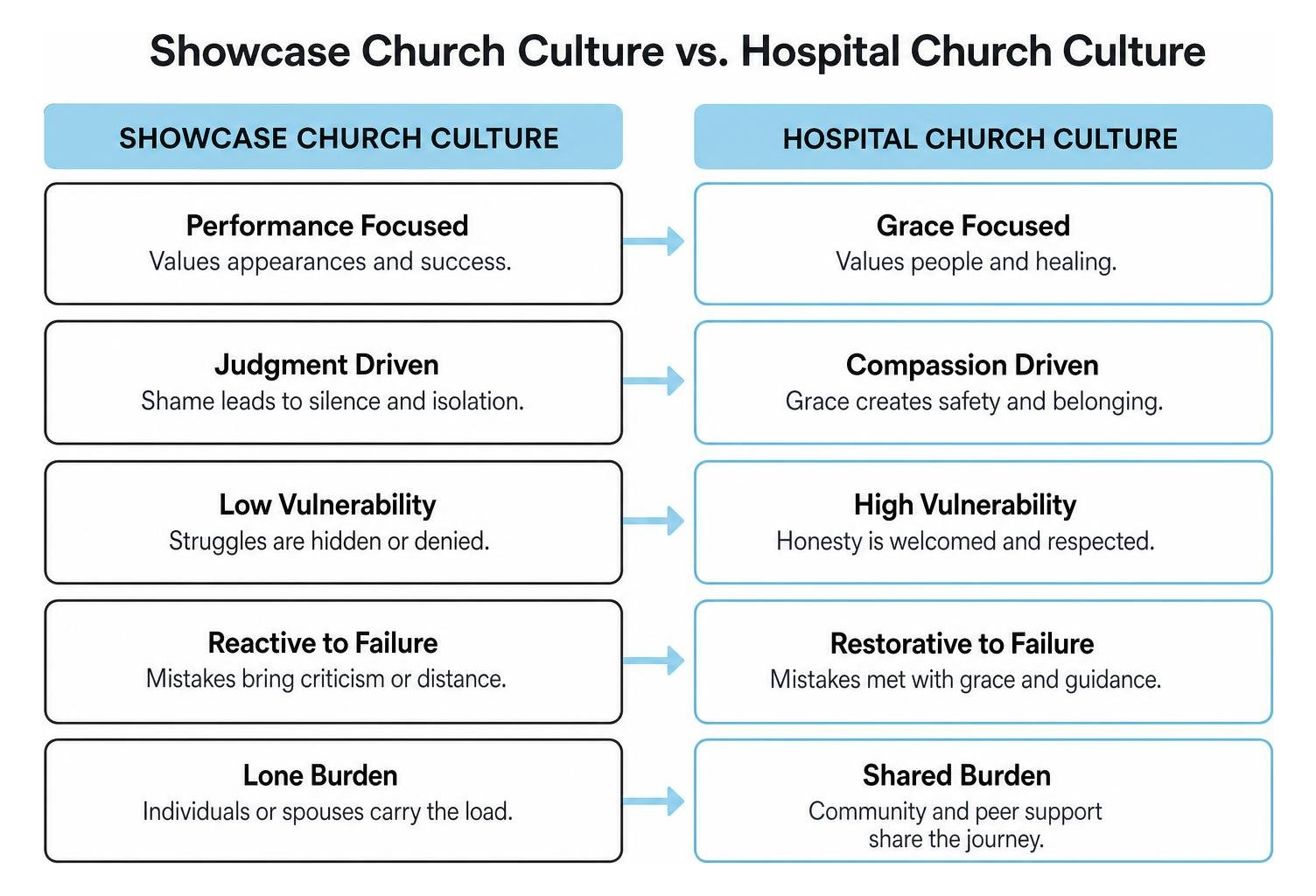
Understanding what the Bible says about substance abuse means realizing that all people stand in daily need of divine grace. When churches foster environments characterized by vulnerability, confidentiality, and active support—mirroring the authentic peer fellowship found in mutual-aid recovery groups—individuals in recovery find the safety needed to heal without fear of rejection.
Step-by-Step Pathway to Faith-Based Healing
Embarking on outpatient recovery is a structured, intentional process. If you or someone you care about is ready to take the next step, here is a clear pathway to begin:
- Step 1: Comprehensive Clinical and Spiritual Assessment Begin by connecting with an outpatient Christian addiction professional. This assessment evaluates physical health, substance use patterns, mental health concerns, and spiritual goals.
- Step 2: Engage in Trauma-Informed Outpatient Counseling Utilize structured individual and group therapy. At Grace Recovery Services, our Counseling Blueprint helps clients Take Off the Mask, Heal the Wounds, Remove the Toxins, and Replace with Truth.
- Step 3: Establish Clear Relapse Prevention Plans Learn evidence-based cognitive and behavioral tools to manage environmental triggers, process intense emotions, and build healthy daily routines.
- Step 4: Connect with Faith-Based Peer Support Engage in Christ-centered recovery groups and build relationships with mentors who can offer encouragement, prayer, and consistent accountability.
- Step 5: Cultivate Daily Spiritual Rhythms Explore practical guidance in our step-by-step guide to overcoming addiction through faith to establish daily prayer, Scripture reading, and honest self-examination.
Frequently Asked Questions About Faith-Based Recovery
How does Christian addiction counseling differ from traditional secular therapy?
Christian addiction counseling integrates proven, evidence-based clinical techniques—such as Cognitive Behavioral Therapy (CBT), Motivational Interviewing, and trauma-informed care—with biblical truth. While secular therapy often focuses exclusively on symptom reduction and psychological coping mechanisms, faith-based counseling addresses the spiritual root of addiction, helping clients find lasting identity, purpose, and moral healing through Christ.
Can someone have genuine faith and still struggle with substance relapse?
Yes. Substance use disorder involves real neurobiological changes and deeply ingrained behavioral patterns. Just as a Christian may battle chronic physical illness or emotional depression, someone in recovery may experience setbacks. Relapse does not mean a person lacks genuine faith or that God has abandoned them. In progressive sanctification, setbacks are opportunities to identify unmet emotional needs, refine coping strategies, and lean more deeply into God’s sustaining grace.
How do family members best support a loved one in Christian recovery?
Family members can support their loved one by establishing clear, loving boundaries that prevent enabling while offering consistent emotional encouragement. Participating in family therapy, learning about the dynamics of addiction, and committing the situation to regular prayer helps the entire family unit heal. Surrounding the family with a supportive church community ensures that everyone receives the care they need during the recovery journey.
Conclusion
Overcoming substance use disorder is a journey of holistic healing. By integrating clinical excellence, trauma-informed therapeutic care, and the life-changing truth of the Gospel, lasting freedom is fully possible. You do not have to carry the weight of addiction, guilt, or isolation alone.
At Grace Recovery Services, we provide compassionate, Christ-centered outpatient treatment for individuals and families across Western Pennsylvania, with convenient offices in Pittsburgh (Penn Hills) and North Huntingdon. Our clinical team is dedicated to walking alongside you through evidence-based, trauma-informed care tailored to your unique journey.
We invite you to reach out to our team today for a personalized, confidential assessment and take your next step toward hope, healing, and renewed purpose.
References
Yeung JWK. “Faith-based intervention, change of religiosity, and abstinence of substance addicts..” Revista brasileira de psiquiatria (Sao Paulo, Brazil : 1999), 2022. PMCID PMC8827378. Seesink HJ, Vrijmoeth C, Ostafin BD, Schaap-Jonker H, Wiers RW. “A One-Year longitudinal study on Surrender to God assessed during addiction treatment..” Addictive behaviors reports, 2026. PMCID PMC13085016.
This article was researched with AI and heavily edited by Stephen Luther for accuracy and relevance.
Stephen Luther is the Executive Director and Founder of Grace Christian Counseling, Grace Recovery Services, WPA Counseling, NuWell Online Counseling and Coaching, and NuWell Health. He holds a Master’s degree in Education from the University of Georgia and a Master’s degree in Marriage and Family Therapy from Duquesne University. He is a licensed professional counselor in Pennsylvania.
Since 1997, Steve has been helping children, adolescents, and adults overcome a wide range of emotional and relational challenges. He specializes in working with hurting families, including those with foster, adopted, or traumatized children. Steve uses Attachment-Based Therapy, Splankna Healing, and Therapeutic Parent Coaching to support healing and restoration.
This guide is for educational and spiritual encouragement and is not a substitute for personalized professional counseling. If you are in crisis, please reach out for immediate help.